Why Your Wrinkles Are Still There Despite Botox
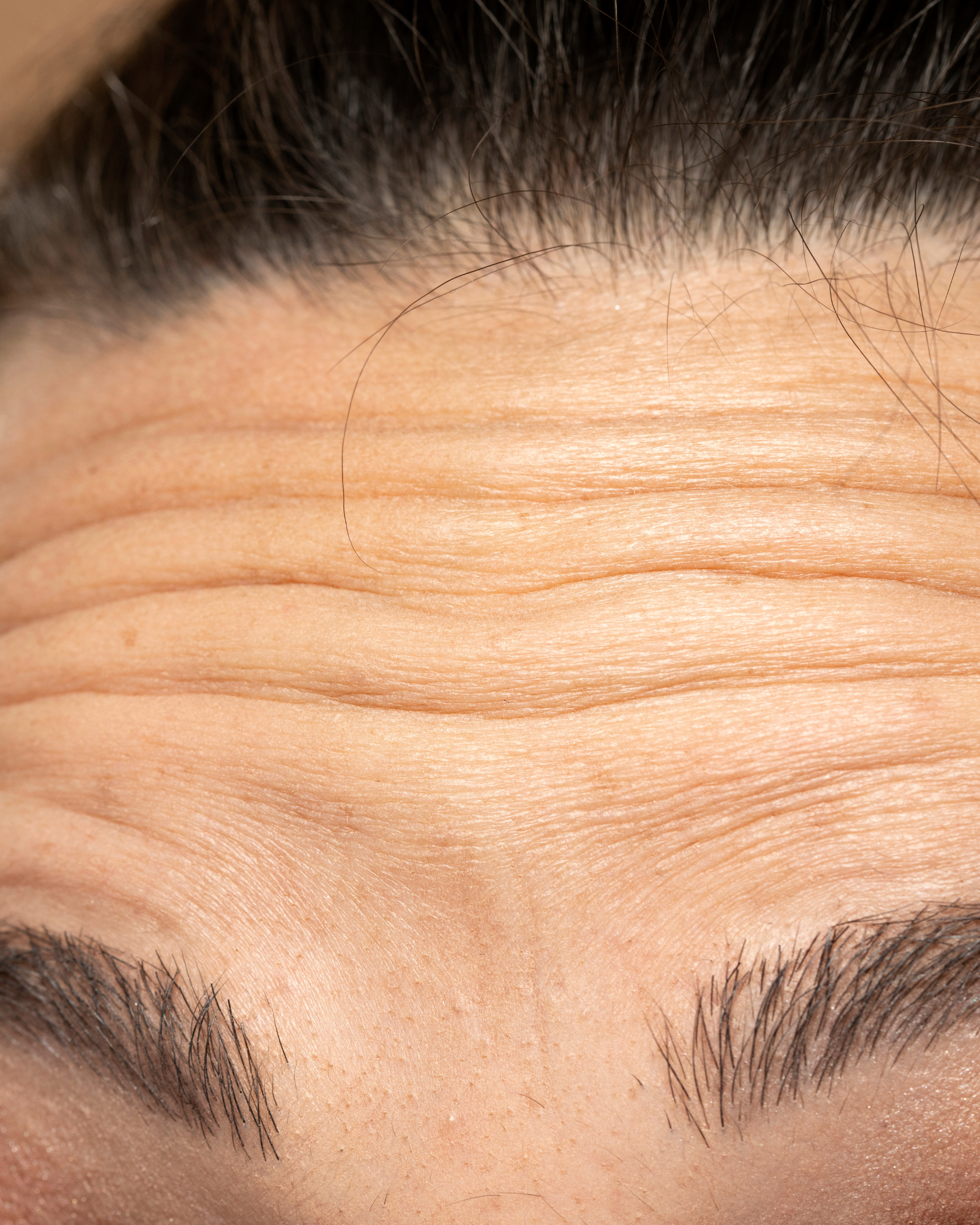
A GP and aesthetic doctor explains why muscle relaxation is only part of the answer.
Anti-wrinkle injections are one of the most effective treatments we have for facial lines. Even so, one of the most common things I hear in clinic is this:
"I have had Botox, but I can still see my wrinkles."
Patients are often surprised when forehead lines, frown lines or crow's feet remain visible after treatment. The explanation is usually simple, and it is rarely that the treatment failed.
Not all wrinkles are created in the same way. Botulinum toxin is excellent at treating lines caused by muscle movement. It cannot replace lost collagen, repair sun damage, restore hydration or rebuild the support structures of the face. Understanding which type of wrinkle you actually have is the difference between a result that satisfies you and one that quietly disappoints you every time you look in the mirror.
In This Article
- The short answer
- Dynamic wrinkles and static wrinkles are not the same problem
- How to tell which type you have, in ten seconds
- Why wrinkles form in the first place
- Six reasons your anti-wrinkle treatment may not be delivering
- Skin quality, the layer injections cannot reach
- Does microneedling improve wrinkles?
- What polynucleotides actually do
- When the real problem is collagen loss
- Does this mean Botox does not work?
- Building a plan that works, over twelve months
- Case study and frequently asked questions
The Short Answer
If a line is still visible when your face is completely still, it is no longer purely a muscle problem. It has become a skin problem. Muscle relaxation softens it. Rebuilding collagen and improving skin quality is what actually changes it.
Dynamic Wrinkles and Static Wrinkles Are Not the Same Problem
The first thing I explain in consultation is that there are two broad categories of facial line, and they respond to completely different treatments.
Dynamic Wrinkles
Dynamic wrinkles are created by repeated muscle movement. Every time you smile, frown, squint or raise your eyebrows, the skin above the muscle folds. Over years, those folds become more visible. Forehead lines, frown lines between the brows and crow's feet are the classic examples, and these respond very well to botulinum toxin.
Static Wrinkles
Static wrinkles remain visible when your face is completely relaxed. They develop because of changes within the skin itself: collagen loss, elastin damage, dehydration, cumulative sun exposure and thinning of the deeper support layers. Botulinum toxin can soften a static line. It cannot erase it, because the problem is no longer the muscle underneath.
Most people over forty have a combination of both, which is exactly why treating only one of them produces a partial result.
How to Tell Which Type You Have, in Ten Seconds
Stand in front of a mirror in daylight. Let your face go completely still, and resist the urge to raise your brows. Any line you can still see is a static line, or at least has a static component. Now raise your eyebrows and frown. Lines that appear or deepen only with movement are dynamic.
Most patients discover they have both, in different proportions, in different areas. That single observation usually reframes the whole conversation about what treatment can realistically achieve.
Why Wrinkles Form in the First Place
Many people assume wrinkles are simply the record of facial movement. The biology is more layered than that. From the mid twenties onwards, collagen production gradually declines and the skin becomes thinner and less elastic. At the same time we lose hydration, facial fat compartments descend and deflate, and even the underlying bone remodels and provides less support.
Sun exposure accelerates all of it. Research comparing sun-exposed and sun-protected skin in the same individuals found that visible signs of ageing, wrinkles included, are markedly worse in the areas that took the ultraviolet exposure.1 Which means a substantial share of what most of us call "ageing" is, in fact, accumulated and partly preventable damage.
This is why relaxing a muscle, on its own, is often not enough. I have written in more detail about why collagen declines and which treatments genuinely stimulate it.
Six Reasons Your Anti-Wrinkle Treatment May Not Be Delivering
When a patient tells me their treatment is not working as well as it used to, the cause is usually one of these.
1. The Line Has Become Static
By far the most common explanation. Movement has improved, but the etched component of the line remains because the skin itself has changed.
2. The Dose Was Too Conservative for the Muscle
Muscle strength varies enormously between individuals. A dose that gives one person a beautiful result gives another partial movement. This is a clinical judgement, and it is why a review appointment two weeks after treatment matters.
3. Compensation by Neighbouring Muscles
Treat one muscle group and its neighbours often work harder. The classic example is treating the frown alone and finding the forehead recruits more, or vice versa. Assessing the face as a whole prevents this.
4. The Expectation Was Never Achievable With Toxin Alone
A deep, long-established forehead line in skin with significant sun damage was never going to disappear with muscle relaxation. That is not a failure of treatment. It is a failure of the conversation before treatment.
5. Skin Quality Has Been Ignored
Injectables are often treated as the whole plan, with skincare as an afterthought. In my experience that is exactly backwards for anyone whose main complaint is texture, crepiness or etched lines.
6. Genuine Reduced Response, Which Is Rare
A small number of people develop reduced responsiveness to botulinum toxin over time. It is far less common than the internet suggests, and it should only be considered once dose, technique, interval and expectations have all been reviewed properly.
In clinic, "my Botox has stopped working" almost always turns out to mean "my skin has changed and my treatment plan has not."
Skin Quality: The Layer Injections Cannot Reach
If I could choose one intervention for long-term wrinkle prevention, it would not be an injectable. It would be a prescription retinoid.
Tretinoin
Tretinoin is one of very few topical ingredients that genuinely changes the biology of the skin rather than sitting on the surface of it. In a landmark study, treatment of photodamaged skin with tretinoin was associated with restoration of collagen formation in the dermis, confirmed on biopsy.2 Decades of subsequent research support its effects on fine lines, texture and pigmentation.
Realistic expectations matter here too. Tretinoin is a long game, measured in months rather than weeks, and it needs to be introduced carefully to avoid irritation. My full guide is here: why tretinoin remains the gold standard for healthy ageing skin.
Sunscreen, Every Single Day
Unglamorous, and the single highest-yield thing most people are not doing consistently. Given how strongly ultraviolet exposure drives visible ageing,1 daily broad-spectrum protection is not a finishing touch to a treatment plan. It is the foundation of one.
Does Microneedling Improve Wrinkles?
Yes, within realistic limits. Medical microneedling creates controlled micro-injuries that trigger the skin's own repair response, a process described in the literature as percutaneous collagen induction.3 The evidence supports improvements in texture, fine lines and scarring, with results developing gradually as new collagen is laid down.
In my clinic I frequently combine microneedling with exosomes for patients whose main concerns are skin quality, fine lines and early ageing changes. Patients typically notice texture and radiance first, with line softening following over subsequent months.
What Polynucleotides Actually Do
Polynucleotides have become one of the most talked-about treatments in regenerative aesthetics, and for once the interest is reasonably well founded. Rather than adding volume, they support tissue repair and improve skin quality. A 2025 systematic review of their use in aesthetic medicine found consistent reports of improvement in skin quality parameters, while also noting that study quality remains variable and larger trials are needed.4
They are particularly useful in delicate areas such as the under-eye, where skin thins with age and where adding volume is often the wrong answer. That combination of thin skin and visible lines is precisely the situation where more toxin will not help.
When the Real Problem Is Collagen Loss
Many patients who feel their anti-wrinkle treatment is no longer performing are actually experiencing age-related collagen loss and reduced facial support rather than a change in muscle activity.
Sculptra
Sculptra works differently from both botulinum toxin and dermal filler. It is a poly-L-lactic acid biostimulator, which means that rather than filling an individual line, it prompts your own tissue to produce new collagen over a period of months. Laboratory and clinical work supports its role in stimulating new collagen formation.5,6
Patients commonly report firmer skin, improved skin quality, better overall facial support and softening of etched lines, developing gradually and often continuing to improve for several months after a course is completed. It is not an instant treatment, and it is not right for everyone, but for the right patient it addresses a cause rather than a symptom. More detail here: what Sculptra is and how it works.
Does This Mean Botox Does Not Work?
Not at all, and I want to be clear about that. Botulinum toxin remains one of the most effective and best-evidenced treatments in aesthetic medicine for dynamic lines. The mistake is asking it to solve every aspect of facial ageing on its own.
There is also a reasonable case for its preventative value. A widely cited long-term comparison of identical twins, one treated regularly over thirteen years and one treated only twice, found noticeably fewer established forehead and glabellar lines in the regularly treated twin.7 A single twin pair is not definitive evidence, but it illustrates the principle neatly: preventing a line from being folded into the skin thousands of times is easier than removing it once it is etched there.
Botulinum toxin stops a line getting worse. Skin quality and collagen work is what makes an existing line better.
Building a Plan That Actually Works
The best outcomes come from combining treatments deliberately, in the right order, with realistic timeframes attached to each.
What a Realistic Twelve Months Looks Like
For a patient in their late forties with a combination of dynamic and static forehead lines, a sensible plan usually runs something like this. Skin health first, with daily SPF and a prescription retinoid introduced gradually. Anti-wrinkle treatment reviewed and adjusted, with a two-week review to fine-tune the dose. Collagen stimulation added where assessment shows genuine loss of support. Skin quality treatments layered in across the year. Reassessment at six and twelve months, in daylight, with photographs.
Every element of that plan is unremarkable on its own. The combination is what changes a face.
Case Study
A patient in her early fifties attended my Hale clinic concerned that her anti-wrinkle treatment was no longer giving her the result it once did. On assessment, her forehead movement had in fact reduced very well. What remained were deeper lines visible at complete rest, alongside skin thinning and a degree of sun damage.
Her plan involved prescription tretinoin introduced slowly, collagen stimulation, and ongoing attention to skin health rather than a larger dose of toxin. Over the following months she noticed improvement in skin quality and softening of the etched lines. Most usefully, she understood for the first time why her lines had stopped responding to muscle relaxation alone.
Individual results vary, and any treatment plan should follow a personal assessment.
Frequently Asked Questions
Why do I still have wrinkles after Botox?
Because botulinum toxin treats lines caused by muscle movement. Lines that are visible when your face is completely relaxed are static wrinkles, caused by collagen loss, sun damage and skin thinning, and those need treatments that work on the skin itself.
Can deep forehead lines be removed completely?
Deep lines can usually be improved significantly, and occasionally dramatically, but complete erasure is rarely a realistic goal with non-surgical treatment. A combined approach of muscle relaxation plus collagen stimulation and skin quality work gives the best chance of meaningful change.
Is Sculptra better than Botox?
They solve different problems, so the comparison does not really work. Botulinum toxin reduces movement-related lines. Sculptra stimulates collagen and restores support. Many patients benefit from both, for different reasons.
Does tretinoin really work for wrinkles?
Yes, and it is among the best-evidenced topical treatments available. Studies show it supports collagen formation in photodamaged skin, with improvements in fine lines, texture and pigmentation over months of consistent use.
At what age do wrinkles become permanent?
There is no fixed age. Lines become "etched" gradually as collagen declines and the skin loses its ability to recover from folding. Sun exposure, smoking, genetics and skincare habits all influence how early that happens.
Is microneedling good for wrinkles?
It helps most with fine lines, texture and overall skin quality rather than deep folds, and it works best as a course rather than a single session.
Can collagen actually be rebuilt?
Ageing cannot be stopped, but collagen production can be stimulated. Retinoids, microneedling and biostimulators such as Sculptra all work through that mechanism, which is why their results appear gradually rather than immediately.
What is the best treatment for forehead lines?
It depends entirely on whether the lines are dynamic, static or a combination, which is something a proper assessment answers in minutes. Treating a static line with more toxin is the most common wasted spend in aesthetics.
Can Botox prevent wrinkles?
Regular treatment can help slow the development of movement-related lines by reducing how often the skin is folded, which is the principle illustrated by long-term twin comparisons.
Why does my Botox seem to wear off faster than it used to?
Dose, muscle strength, treatment interval, metabolism and technique all play a part, and true reduced responsiveness is uncommon. It is worth reviewing the whole picture before assuming resistance.
Should I have more Botox if my lines are still visible?
Not necessarily, and often not. If the remaining lines are static, increasing the dose adds cost and risks an over-treated look without improving the thing that is bothering you.
What is the best anti-ageing treatment overall?
There is no single best treatment. The most effective approach is almost always a personalised combination of skin health, collagen stimulation and muscle relaxation where it is genuinely indicated.
Book a Consultation
If your wrinkles are not improving despite anti-wrinkle injections, it is probably time to look beyond muscle movement. At Dr Caroline Warden Skin & Aesthetic Clinic in Hale, Cheshire, I take a holistic approach to facial ageing, focusing on skin quality, collagen health and natural-looking results.
As both an NHS GP and an aesthetic doctor, I build personalised treatment plans designed to support long-term skin health rather than chasing individual lines. If the honest answer is that you need better skincare rather than another syringe, that is what I will tell you.
About the Author
Dr Caroline Warden is an NHS GP with over 19 years of clinical experience and an independent prescriber, holding a Level 7 postgraduate diploma in cosmetic injectables. She runs Dr Caroline Warden Skin & Aesthetic Clinic in Hale, Altrincham, Cheshire, a female-led, family-run, doctor-delivered clinic specialising in regenerative aesthetics, skin health and natural-looking results, recognised as Best Doctor-Led Aesthetic Clinic in Cheshire 2026 by GHP.
Further Reading
- Botox in Hale and Altrincham: A Doctor-Led Guide
- How Botox Can Make You Look Refreshed, Not Frozen
- Why Collagen Declines and the Treatments That Actually Stimulate It
- Why Tretinoin Remains the Gold Standard for Healthy Ageing Skin
- Sculptra Explained: How Collagen Stimulation Works
- The Ultimate Guide to Microneedling With Exosomes
- Anti-Wrinkle Injections, if your lines are movement related
- Sculptra, if collagen loss and facial support are the issue
- Polynucleotides, if thin, crepey skin is your main concern
Next Steps
Learn more about Dr Caroline Warden Clinic
Learn more about other treatments offered
References
- Flament F, Bazin R, Rubert V, et al. Effect of the Sun on Visible Clinical Signs of Aging in Caucasian Skin. Clinical, Cosmetic and Investigational Dermatology. 2013;6:221–232.
- Griffiths CEM, Russman AN, Majmudar G, Singer RS, Hamilton TA, Voorhees JJ. Restoration of Collagen Formation in Photodamaged Human Skin by Tretinoin (Retinoic Acid). New England Journal of Medicine. 1993;329(8):530–535.
- Litchman G, Alsaidan M, Nair PA, et al. Microneedling: Percutaneous Collagen Induction Therapy for Management of Scars and Photoaged Skin, Scientific Evidence and Review of the Literature. Aesthetic Plastic Surgery. 2020.
- Lampridou S, et al. The Effectiveness of Polynucleotides in Aesthetic Medicine: A Systematic Review. Journal of Cosmetic Dermatology. 2025.
- Avelar LE, et al. Unveiling the Mechanism: Injectable Poly-L-Lactic Acid's Evolving Role, Insights From Recent Studies. Journal of Cosmetic Dermatology. 2025.
- Lin CY, et al. Effect of Hyaluronic Acid and Poly-L-Lactic Acid Dermal Fillers on Collagen Synthesis: An In Vitro and In Vivo Study. Clinical, Cosmetic and Investigational Dermatology. 2020.
- Binder WJ. Long-Term Effects of Botulinum Toxin Type A on Facial Lines: A Comparison in Identical Twins. Archives of Facial Plastic Surgery. 2006;8(6):426–431.