Rosacea, Redness and Flushing: What Actually Works in 2026
Last updated: 1 October 2026
Written by Dr Caroline Warden, NHS GP and Level 7 trained Aesthetic Doctor, Dr Caroline Warden Skin & Aesthetic Clinic, Hale, Cheshire.
If you have rosacea, the chances are you have already tried a lot to fix it. Expensive skincare. A rotation of five different cleansers. Being told, more than once, that your skin is simply "sensitive".
And yet your cheeks are still red, you still flush after a glass of wine, and your skin still stings when you put almost anything on it.
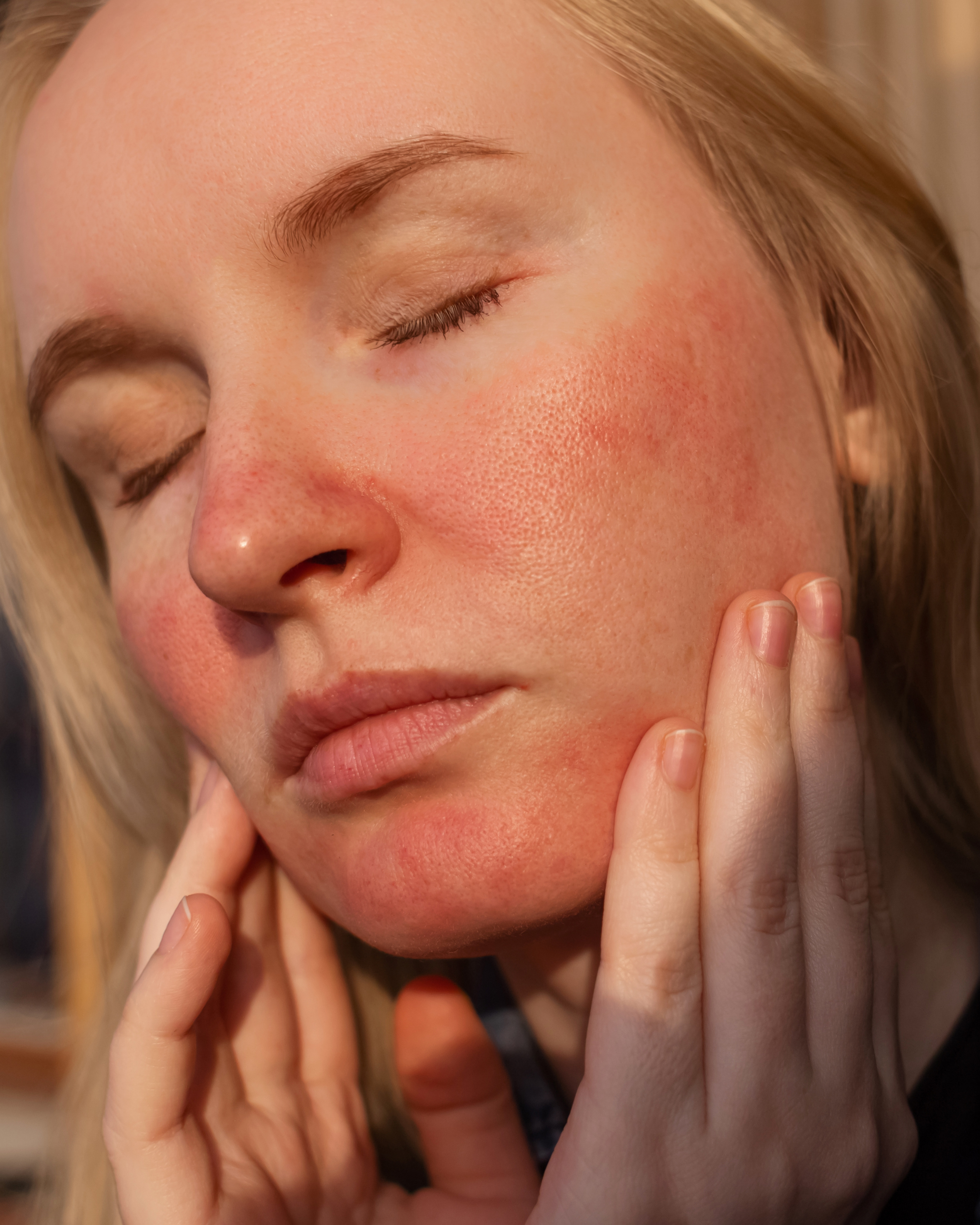
If that sounds familiar, you are not alone and you are not doing anything wrong. One of the biggest misconceptions about rosacea is that it is a skincare problem you can shop your way out of. It is not. Rosacea is a chronic inflammatory skin condition involving changes in the skin barrier, inflammation and blood vessel activity, which is exactly why the most effective plans involve considerably more than another serum.
A note on what this article is. I'm an NHS GP, and rosacea is a condition I see and treat in general practice. At my aesthetic clinic in Hale I don't diagnose or prescribe for it. What I can do is help you build a skincare routine your skin tolerates, protect the barrier, and treat isolated facial thread veins once any rosacea is being managed by your own GP or a dermatologist. The rest of this article is the advice I'd give a friend.
In this article:
- Why rosacea does not look the same on everyone
- The treatment most people do not expect
- Why your skin barrier is usually the first thing to fix
- The ingredients worth having, and the ones to leave alone
- The Demodex question
- Where prescription treatment fits, and who prescribes it
- Why daily SPF is non-negotiable
- Tretinoin, and why timing matters
- Flushing, triggers and menopause
- Facial thread veins: the one thing I can treat directly
- What I can and cannot help with
- When to see a doctor
- Frequently asked questions
Rosacea does not look the same on everyone
Part of what makes it so frustrating is that it presents very differently between people.
This is exactly why something that works brilliantly for one person does very little for somebody else, and why generic "just try this cream" advice so often falls flat. It is also why getting a proper assessment from your GP or a dermatologist is worth more than another product, because which presentation you have changes what will actually help.
The treatment most people do not expect
Most people arrive expecting me to recommend a more complicated routine. The first thing I usually suggest is the opposite: strip it back.
When skin is already inflamed and reactive, adding products makes things worse rather than better. The aim early on is to stop irritating it, not to overwhelm it with more active ingredients.
The most dramatic improvements I see usually come from subtraction rather than addition.
Why the skin barrier comes first
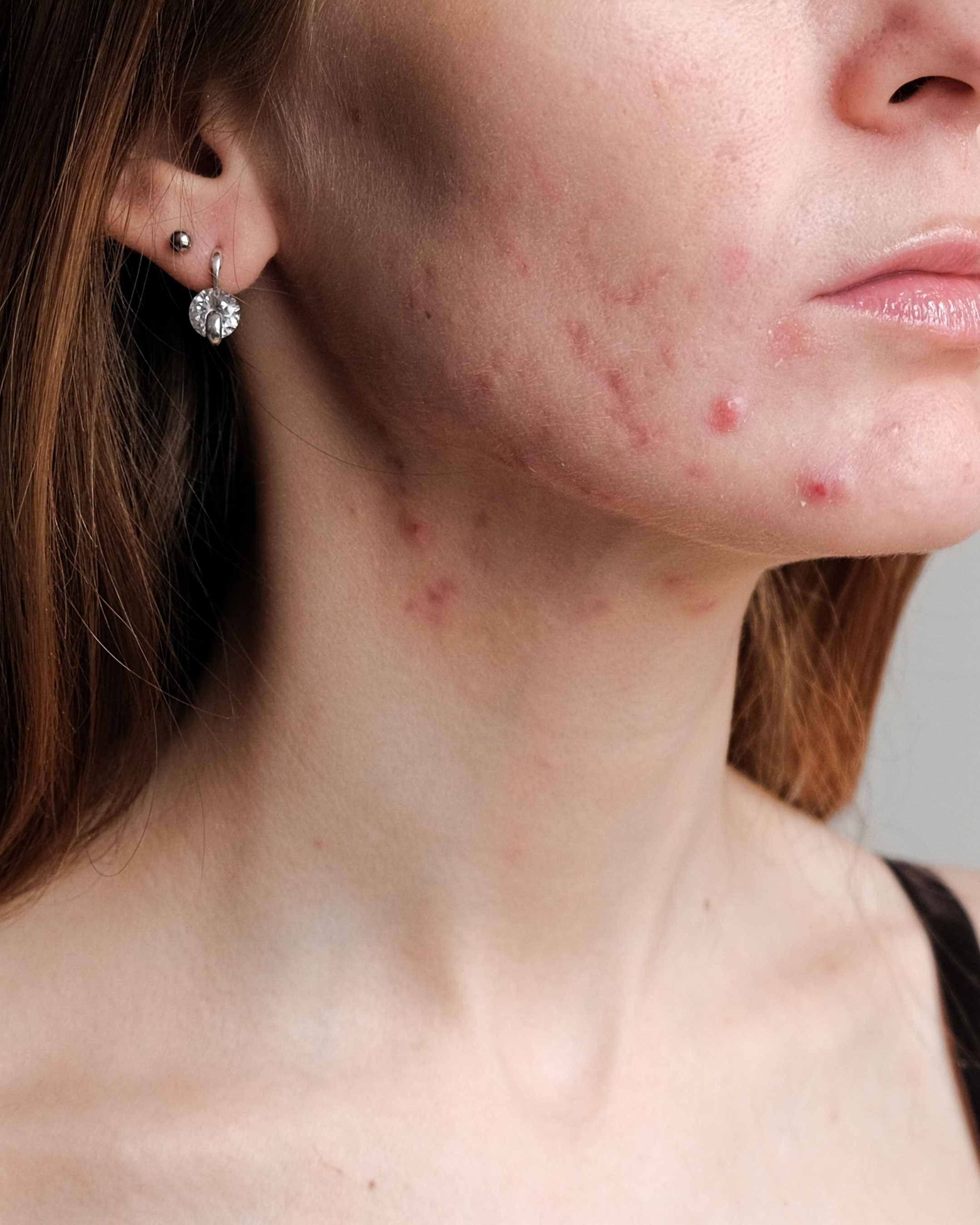
Think of your skin barrier as a protective shield. When it is damaged, irritants get in more easily and water escapes more readily, and the result is redness, burning, stinging and heightened sensitivity.
A great many people unknowingly make their symptoms worse with the things they are using to fix them.
In many cases, simplifying and repairing the barrier improves symptoms considerably before anything else is even considered.
The ingredients worth having
The Demodex question
This rarely comes up in a skincare aisle and it is one of the more useful things to understand.
Demodex folliculorum is a microscopic mite that lives naturally in human hair follicles. Almost everyone has some. The issue in rosacea is not presence but density.
A systematic review and meta-analysis of 23 case-control studies covering 1,513 adults with rosacea found that people with rosacea were around nine times more likely to have Demodex infestation than healthy controls, with the difference most marked in the papulopustular presentation (Chang and Huang). The authors were careful to say association is not causation, but it is a large and consistent signal.
I suggest you do not google image this mite if you want to sleep tonight. But it explains a great deal about why certain treatments work.
One popular recommendation that does not survive scrutiny
Hypochlorous acid sprays are widely marketed for Demodex and they do not work for it. When tested directly, 79% of mites survived 90 minutes of exposure to hypochlorous acid solution, while 4% terpinen-4-ol, a tea tree derivative, eliminated all of them within 40 minutes (Kabat). Hypochlorous acid is gentle and has a role in managing bacterial load, so it is not useless. It is simply not doing the job people buy it for.
Where prescription treatment fits, and who prescribes it
Skincare supports the barrier and reduces irritation. It does not switch off the inflammation underneath, and for many people that inflammation is the dominant problem.
The good news is that the evidence here is strong and the national guidance is clear. The British Association of Dermatologists guidelines set out which treatments suit which presentation (Hampton et al.), and their very first recommendation is the one most people skip:
"Advise people with rosacea to limit exposure to known aggravating factors such as alcohol, sun exposure, hot drinks and spicy food."
Hampton PJ et al., British Association of Dermatologists guidelines, British Journal of Dermatology, 2021
The doxycycline point worth understanding
This one is frequently misunderstood, including by patients who have been prescribed it.
For inflammatory rosacea, doxycycline is not used at a standard antibiotic dose. Rosacea responds to a much lower, anti-inflammatory dose, which works by calming inflammation rather than by killing bacteria. Because it is sub-antimicrobial, it does not carry the antibiotic resistance concerns that come with higher dosing, and it is one of the better evidenced oral options available (Hampton et al.).
If you have been told you need "antibiotics for months" and that worried you, this is the distinction worth raising.
All of these are treatments to discuss with your own GP or a dermatologist, who can assess you properly, confirm what you are dealing with and prescribe accordingly. Persistent facial redness is not always rosacea, and several conditions that look similar are managed very differently.
Daily SPF is non-negotiable
If there is one product I recommend to virtually everybody with reactive, flushing skin, it is sunscreen.
Ultraviolet exposure is among the most consistently reported aggravating factors, and even on a grey day in Cheshire it contributes to redness and inflammation. A broad-spectrum SPF 50, every morning, all year round, should be the foundation everything else is built on.
What about LED light therapy?
LED is often raised, so it is worth being clear. Some people find at-home LED helps calm sensitivity, and it is gentle and well tolerated. But the evidence for it in rosacea specifically is limited, it works at best as an adjunct rather than a treatment, and it is not something offered at this clinic. If you are considering an at-home device, the specification matters far more than the marketing.
Can you use tretinoin if you have rosacea?
One of the most common questions I am asked, and the honest answer is often yes, but timing matters enormously.
Introducing tretinoin onto inflamed, barrier-damaged skin is usually a recipe for irritation. Once things are better controlled and the barrier has recovered, many people tolerate it well and benefit from its effects on collagen and skin quality.
The mistake I see most often is trying it too early, before the underlying inflammation has settled. The right treatment at the wrong time is still the wrong treatment.
If flushing is your main problem
Flushing is particularly frustrating because the triggers are often things that are hard to avoid entirely.
There is no universal rosacea diet and no universal list. A simple diary kept for a fortnight usually reveals a personal pattern faster than people expect, and most discover that what felt like random redness is actually fairly predictable, which makes it manageable rather than frightening.
Why menopause can make it worse
Many women first notice facial redness during perimenopause, and others find existing redness becomes considerably worse.
Hormonal change affects blood vessel function, skin barrier health and inflammation, which explains why somebody who has never struggled with redness can suddenly find themselves flushing and reactive in their forties and fifties. If that is your experience, it is worth raising with whoever is looking after your menopause care as well as thinking about your skin.
The pattern I see most often
The most common story is the same one in different words. Someone develops redness, buys a product, sees no change, buys another, then adds a third. A year later they are using eight things, several of them acids and actives, and their skin is angrier than when they started.
What almost always helps first is subtraction: a gentle cleanser, a barrier moisturiser, daily SPF 50, held for eight to twelve weeks with nothing new bought during that time.
That alone settles a great many people enough to see what is actually going on underneath, which is the point at which a GP appointment becomes far more useful, because you are describing your skin rather than describing your shopping.
Facial thread veins: the one thing I can treat directly
Many people with long-standing redness also have a few individual visible vessels on the nose or cheeks that stay put even when the background redness is well controlled. Skincare cannot remove these. For clearly identified, isolated superficial vessels I offer advanced electrocautery, which seals the vessel with a fine probe. It is a cosmetic treatment of the vessel, not a treatment of rosacea, and it does not stop new vessels forming. Widespread diffuse redness is not suitable for it, and anyone with that pattern is better served by a vascular laser or IPL assessment elsewhere. Read more on my advanced electrocautery page.
What I can and cannot help with
I would rather be clear about this than have anybody book the wrong appointment.
I am an NHS GP as well as an aesthetic doctor, and the most useful thing that background gives me is recognising when what is in front of me is not a skincare problem, and saying so. If that is what I think, I will tell you and point you back to your own GP rather than sell you something.

When to see a doctor promptly
Most redness is manageable, but a few things are worth flagging to your GP without waiting.
None of these are common. They are worth knowing about.
Frequently asked questions
What is the best treatment for rosacea?
There is no single best treatment. Successful management usually combines simplified skincare, trigger identification and prescription treatment from your GP where appropriate, tailored to which presentation you have.
Why is my rosacea getting worse?
Common contributors include barrier damage from over-active skincare, UV exposure, hormonal change around perimenopause and menopause, and untreated inflammation.
Can rosacea be cured permanently?
Not currently, but it can very often be managed to the point where it is barely noticeable day to day.
Is expensive skincare better for rosacea?
Not necessarily. Some of the most effective routines are surprisingly simple, and price correlates with packaging and marketing more than with suitability for inflamed skin.
Does menopause worsen rosacea?
Many women notice increased redness and flushing during perimenopause and menopause, due to hormonal effects on blood vessel function and barrier health.
Why is doxycycline prescribed at a low dose for rosacea?
Because for rosacea it is being used for its anti-inflammatory effect rather than as an antibiotic. A sub-antimicrobial dose calms inflammation without the resistance concerns of higher dosing. This is a conversation for your GP.
Do hypochlorous acid sprays help with Demodex?
The evidence says no. When tested directly, 79% of mites survived 90 minutes of exposure. It is gentle and has other uses, but it is not doing what it is often sold as doing.
Can I use tretinoin if I have rosacea?
Many people can, but it should usually be introduced once inflammation and the barrier have settled rather than during an active flare.
Can you remove the thread veins on my cheeks?
Isolated, clearly identified superficial vessels can be treated with electrocautery once any rosacea is being managed medically. Widespread diffuse redness cannot, and needs a vascular laser assessment elsewhere.
Should I see my GP?
If your redness is persistent, you are flushing regularly, or there are bumps and pustules, yes. A proper assessment is worth more than another product, and effective prescription treatments exist.
Skin consultations in Hale, Altrincham and Cheshire
If you are struggling with redness and feel overwhelmed by conflicting advice, I would be glad to help with the part I can help with.
What I can do is look honestly at what you are using, tell you what is likely helping and what is almost certainly not, and build you something simple enough to actually work. Often that means recommending fewer products than you arrived with. And if what I am looking at needs medical assessment rather than skincare, I will say so and point you to your own GP, because that is the appointment that will help.
Patients travel to us from Hale, Altrincham, Bowdon, Hale Barns, Timperley, Wilmslow, Knutsford, Sale, Stockport and across Cheshire. You are welcome to book a skin consultation, with no obligation to buy or book anything afterwards.
Further reading
- Why is my face always red?
- Rosacea or sensitive skin? How to tell the difference
- Why is my skin suddenly sensitive?
- Damaged skin barrier: signs, causes and how to repair it
- Menopause and your face: what changes and what genuinely helps
- Medical-grade skincare in Hale, Altrincham and Cheshire
- Advanced electrocautery for skin tags, thread veins and blemishes
- Pigmentation and uneven skin tone: treatment in Hale and Altrincham
Next steps
Learn more about Dr Caroline Warden Clinic
Learn more about other treatments offered
About the author
Dr Caroline Warden is a practising NHS GP and aesthetic doctor with nearly twenty years of clinical experience, an independent prescriber, and holder of a Level 7 postgraduate diploma in cosmetic injectables. She is Medical Director and sole practitioner at Dr Caroline Warden Skin & Aesthetic Clinic, 2 Crown Passages, Hale, Altrincham. GMC number 6157708.
This article is for information only and does not constitute individual medical advice. Persistent facial redness should be assessed by your own GP or a dermatologist.
References
- Hampton PJ, Berth-Jones J, Duarte Williamson CE, et al. British Association of Dermatologists guidelines for the management of people with rosacea 2021. Br J Dermatol. 2021;185(4):725-735.
- Chang YS, Huang YC. Role of Demodex mite infestation in rosacea: a systematic review and meta-analysis. J Am Acad Dermatol. 2017;77(3):441-447.
- British Association of Dermatologists. Rosacea patient information leaflet.