
Under Eye Treatment in Hale, Altrincham and Cheshire
Last updated: 30 September 2026
Dark circles, eye bags, crepey skin and tired-looking eyes
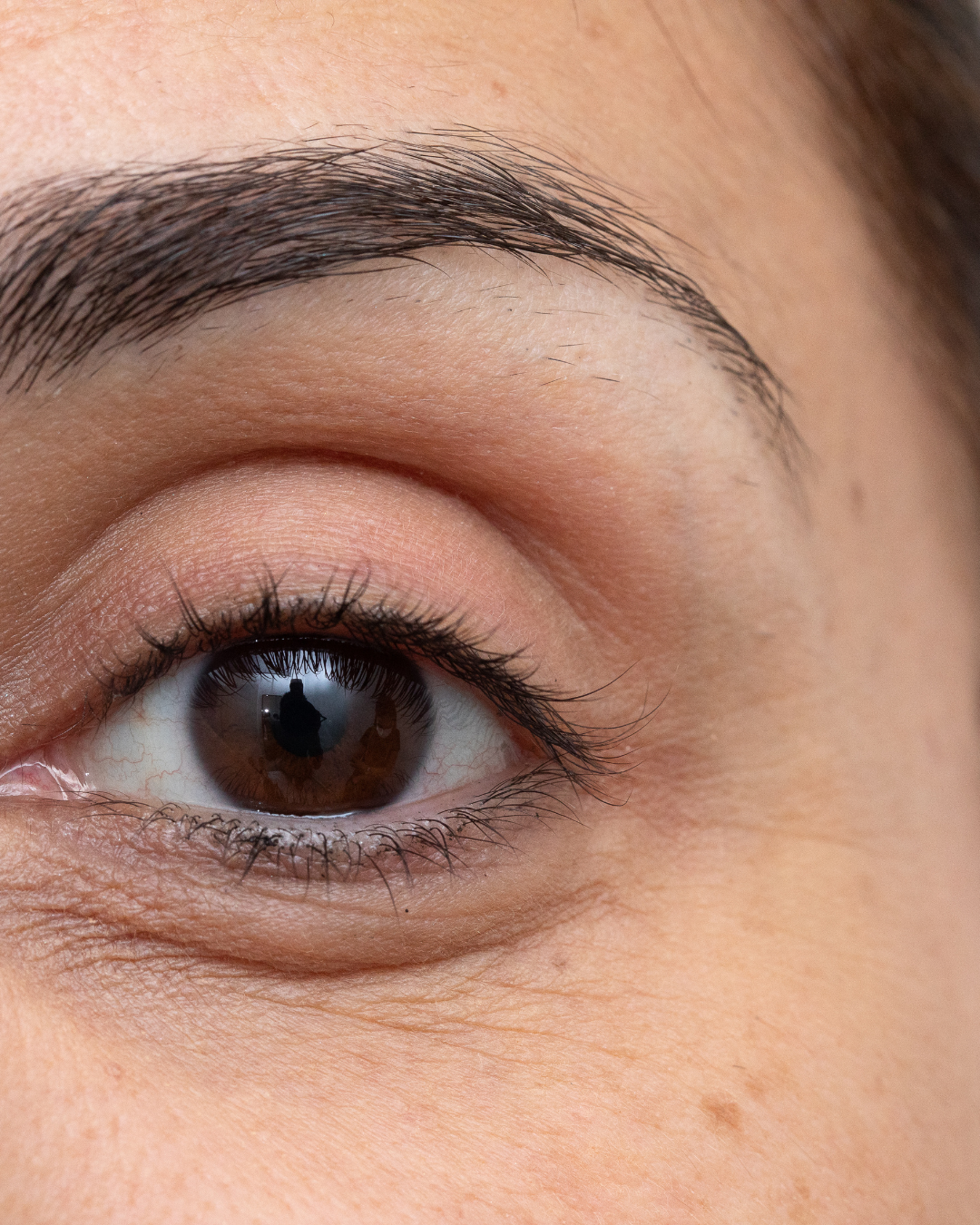
The under-eye area is one of the first places most of us notice change. Patients tell me they feel well and sleep reasonably, yet they still look tired. The skin beneath the eyes has become thinner, darker or more creased. Concealer sits differently. Hollows are more noticeable, or puffiness has appeared where there was none.
"Tired-looking eyes" is not one problem. Dark circles, hollowing, eye bags, pigmentation and crepey skin have different causes and need different approaches, and one of the most common mistakes in aesthetics is treating them all with the same syringe of filler.
At my clinic in Hale, near Altrincham, my approach is conservative and skin-first. I do not automatically fill the tear trough. I work out what is causing the concern and, where appropriate, focus on improving the quality, hydration and resilience of the delicate skin around the eyes. The aim is to look fresher and more rested, not treated.
In this article:
- Why do I look tired when I'm not?
- What causes dark circles under the eyes?
- What causes hollow, crepey or puffy under eyes?
- Which under-eye treatments do I offer in Hale?
- Polynucleotides or NCTF: which is better for under eyes?
- Why I don't routinely offer tear trough filler
- Under-eye hollowing after weight loss or Mounjaro
- A typical patient
- How much does under-eye treatment cost?
- Frequently asked questions
Why do I look tired when I'm not?
I don't start a consultation by asking which treatment you want. I start by asking what is causing this. I look at the skin itself, pigmentation, the shape of the lower eyelid, the support from the cheek and midface, the degree of hollowing and any puffiness, and I ask about sleep, significant weight change, hay fever and allergies, medication, and any previous tear trough filler or other treatments.
This matters because two people who both say "dark circles" can have entirely different problems. One has pigment in the skin. One has very thin skin with visible blood vessels underneath. One has a structural hollow casting a shadow. Another has lower-eyelid fat pads creating both puffiness and a shadow beneath them. The treatment has to match the cause, and sometimes the right advice is to leave the area alone.
Skin, pigment, shadow or fat pad. Work out which one it is before anything goes near the eye, because the wrong treatment here is very hard to undo.
What causes dark circles under the eyes?
Dark circles have several possible causes, often more than one at once. A comprehensive review in the Journal of Clinical and Aesthetic Dermatology described periorbital hyperpigmentation as
"a common disorder resulting from a combination of endogenous and exogenous factors."
Sarkar R et al., Journal of Clinical and Aesthetic Dermatology, 2016
The same review identified genetics, post-inflammatory pigmentation from conditions such as eczema, periorbital swelling, visible blood vessels and age-related tear trough shadowing as the main contributors.

What causes hollow, crepey or puffy under eyes?
Why does under-eye skin become crepey?
Collagen and elastin decline with age, and the skin beneath the eyes is the thinnest on the face. Over time it becomes more finely lined, drier and looser. Concealer starts to settle into lines and the skin loses its smoothness and light. This is the concern that responds best to skin-quality treatments: polynucleotides, NCTF, medical-grade skincare and, in selected cases, careful microneedling.
Do hollow under eyes always need filling?
No. Some people have deep tear troughs from their twenties. For others, hollowing appears with age, hormonal change, weight loss or changes in the cheek. A hollow under the eye often reflects changes elsewhere in the face, so I look at the cheek and midface before deciding whether anything needs treating, and if so, where.
Can eye bags be treated without surgery?
True eye bags are usually lower-eyelid fat pads, sometimes with fluid retention or allergy on top. Skin-quality treatments cannot remove a fat pad. I can improve the skin over it, but where a significant bag is the main concern the most useful advice is often an oculoplastic surgical opinion, and I would rather say so than sell a course of treatment that cannot fix the problem.
Which under-eye treatments do I offer in Hale?
Polynucleotides for under eyes
Polynucleotides are the treatment I most often consider when the problem is skin quality rather than missing volume. They are injectable, highly purified polynucleotide chains that support the skin's own repair environment and improve the look of thin, tired or crepey skin over time. They are typically fish-derived, so allergy history is always checked first.
They are not a filler and will not correct significant structural hollowing. I use them for thin under-eye skin, crepey texture, fine lines, mild dark circles where thinning is the cause, and for patients who want gradual, subtle improvement rather than an overnight change. They are given as a course, usually two to three sessions a few weeks apart, with results developing over the following months. They also suit people who are not candidates for tear trough filler or simply do not want the risks of filler in this area. Read more on my polynucleotides page.
NCTF skin booster for under eyes
NCTF contains non-crosslinked hyaluronic acid alongside vitamins, amino acids, minerals and antioxidants. Its role is hydration and skin freshness, not structure. I consider it when patients describe their under eyes as dehydrated, dull, finely creased or lacking brightness, particularly with early changes rather than deep hollowing. The area swells easily, so quantity and technique have to be conservative. Read more on my skin boosters page.
Polynucleotides or NCTF: which is better for under eyes?
Neither is universally better; they do different jobs. I think of polynucleotides for thin, crepey skin and gradual regeneration, and NCTF for hydration, dullness and very fine lines. Some patients benefit from both in a staged plan, some need only one, and some are suited to neither. That is why I assess before I recommend.
Microneedling and exosomes around the eyes
Medical microneedling can help where texture changes and collagen loss extend beyond the lower lid into the wider eye area. The skin here is exceptionally delicate, so depth and technique are adapted carefully. In selected cases I combine it with topical exosomes. Exosomes are a developing area and I am realistic about the evidence: they are part of a broader skin-quality strategy, not a standalone cure for dark circles or bags. Read more on my microneedling page.
Medical-grade skincare for under-eye ageing
Not every effective treatment involves a needle. Well-chosen skincare improves hydration, fine lines, pigmentation and resilience, though the eye area needs a gentler approach than the rest of the face. Depending on your skin I may discuss barrier support, a carefully introduced retinoid, pigment-supporting ingredients, eye-specific medical-grade products and daily broad-spectrum SPF, which matters for both collagen and pigment. Skincare cannot remove a bag or replace volume, but it underpins every result achieved in clinic. Read more on my medical-grade skincare page.
Why I don't routinely offer tear trough filler
Tear trough filler can give very good results in carefully selected patients. But the under-eye is one of the most technically demanding areas of the face to treat with hyaluronic acid, and poor patient selection produces problems that last.
A 2022 systematic review of delayed complications after tear trough filler analysed 52 documented cases. Ninety-eight per cent were women, average age 48. The most common problems were swelling (42%) and lumps or nodules (25%), and the average time to onset was 16.8 months, sometimes well over a year after treatment. Other recognised issues include persistent puffiness, blue-grey discolouration, asymmetry and an unnatural heaviness beneath the eyes. For these reasons I do not routinely offer tear trough filler at my Hale clinic.
That is not a belief that tear trough filler is always wrong. It is a belief that most of the patients I see are better served by first asking whether we can improve the skin, treat pigmentation, support the wider face, or leave the area alone. Where someone's anatomy is better suited to a treatment I don't offer, I say so and point them to a colleague. I explain my reasoning in more detail in the treatments I won't offer and why.
The under-eye area should look fresher, not filled.
Under-eye hollowing after weight loss or Mounjaro
Significant weight loss, including with GLP-1 medications such as Mounjaro, can make the eyes and wider face look markedly more hollow. Facial fat loss reveals tear troughs that were previously subtle, deepens shadow and changes the relationship between the lower lid and the cheek. Treating the skin under the eye then addresses only part of the picture. I assess the temples, lateral face, cheeks and midface before recommending anything: sometimes skin quality is enough, sometimes broader support with Sculptra is the better answer, and sometimes no injectable treatment is appropriate. See Sculptra for Mounjaro face and Sculptra for hollow temples.
Under-eye treatment in your 30s, 40s and 50s
Age itself does not decide the treatment. Your anatomy and the cause of the concern do. See my guide to the best treatments by decade.
A typical patient
A woman in her forties from Bowdon comes in because her under eyes make her look permanently tired. She sleeps well, exercises and uses good skincare, but the skin has become thinner and more creased over the last few years. She has thought about tear trough filler but is worried about puffiness and looking overdone.
At consultation her main issues are thin skin, early crepiness and mild shadowing, with no prominent fat pads. We agree a skin-quality plan: a course of regenerative under-eye treatment, medical-grade eye skincare and realistic expectations. Over the following months the skin looks smoother, less dull and less fragile. It is not a change in facial structure. It is a softer, fresher version of herself. This is a representative example, not an identifiable patient.
How much does under-eye treatment cost in Hale and Altrincham?
A new-patient consultation is £75, redeemable against treatment. Under-eye treatment is usually a course rather than a single session, so I will give you a full course cost at consultation rather than a per-session figure that understates it. Current prices for polynucleotides, NCTF, microneedling and skincare are on the price list.
Why choose a GP-led clinic for under-eye treatment?
The under-eye area needs restraint, anatomical understanding and honest advice. Every consultation and injectable treatment at my clinic is carried out by me personally, an NHS GP and aesthetic doctor registered with the General Medical Council (GMC 6157708). My approach is deliberately conservative, focused on skin health, natural results and continuity of care. There is no pressure to proceed after consultation. If I don't think a treatment will help, or if what I see needs your own GP, an ophthalmologist or a dermatologist rather than a cosmetic clinic, I will tell you.
The clinic is doctor-led, female-led and family-run, in a quiet, appointment-only setting in Hale, Cheshire, welcoming patients from Altrincham, Bowdon, Hale Barns, Timperley, Sale, Wilmslow, Alderley Edge, Knutsford, Stockport and across south Manchester.
Frequently asked questions
What is the best treatment for dark circles under the eyes?
It depends on the cause. Pigment needs skincare, thin skin needs polynucleotides or NCTF, shadow needs assessment of the cheek, and a fat pad may need a surgeon. Identifying the dominant cause comes first; sometimes the answer is no aesthetic treatment at all.
Can polynucleotides help dark circles?
Yes, when thin or crepey skin is contributing to the darkness. They are much less likely to help circles caused mainly by pigmentation, deep structural hollowing or true eye bags.
Are polynucleotides the same as tear trough filler?
No. Polynucleotides improve skin quality. They do not provide the structural volume of a hyaluronic acid filler, and that is precisely why I prefer them in this area.
What is NCTF under-eye treatment?
A skin booster of non-crosslinked hyaluronic acid with vitamins, amino acids and antioxidants, used to hydrate and freshen the skin rather than to fill or reshape the tear trough.
Do you offer tear trough filler in Hale?
Not routinely. It works well in carefully chosen patients, but the area's tendency to persistent swelling and lumps means I favour a skin-quality-first approach and refer on where filler is the right answer.
Can non-surgical treatment get rid of eye bags?
Not reliably if the bag is a fat pad. Skin treatments improve the skin over it but cannot remove the fat. Where the bag is the main concern I may suggest an oculoplastic opinion.
Is under-eye treatment painful?
Most patients tolerate it well. The area is delicate, so technique is careful and comfort, downtime and suitability are discussed beforehand.
How quickly will I see results?
Skin-quality treatments are gradual. Hydration improves early; collagen and remodelling changes take weeks to months.
How many treatments will I need?
Polynucleotides are usually an initial course of two to three sessions, then maintenance where appropriate. NCTF is similar. I will set this out at consultation.
Will I bruise or swell?
Possibly. The eye area has a rich blood supply, so bruising, temporary swelling, tenderness or small bumps can occur. Allow time before important events.
Can I have under-eye treatment before a wedding or holiday?
Plan ahead. I would not start a new injectable treatment immediately before an important event or significant sun exposure. Bring your date to consultation and we will work backwards from it. See my wedding skin guide.
Can under-eye treatment help after Mounjaro or weight loss?
Potentially. Skin-quality treatments help thin or crepey skin, but significant hollowing usually needs the cheeks and wider face assessed rather than the tear trough alone.
Is under-eye treatment suitable for men?
Yes. The principles are identical: find what is making the eye area look tired or hollow, then treat conservatively.
Who may not be suitable?
Patients who are pregnant or breastfeeding, have active infection or inflammation, significant eye bags, relevant allergies, unrealistic expectations, or a concern that needs a GP, ophthalmology or dermatology assessment first.
Related reading
- What actually works for under-eye ageing
- How to treat under-eye circles without surgery
- Polynucleotides: what they are, how they work and who they suit
- Sculptra for hollow temples
- Wedding skin over 40: what I'd prioritise and what I'd skip
- Lines and wrinkles: which type do you have?
Next steps
Book your under-eye consultation in Hale
Learn more about Dr Caroline Warden Clinic
Learn more about other treatments offered
References
- Sarkar R, Ranjan R, Garg S, Garg VK, Sonthalia S, Bansal S. Periorbital hyperpigmentation: a comprehensive review. J Clin Aesthet Dermatol. 2016;9(1):49-55.
- Fanian F, Deutsch JJ, Bousquet MT, et al. A hyaluronic acid-based micro-filler improves superficial wrinkles and skin quality. J Dermatolog Treat. 2023;34(1):2216323.
- Trinh LN, McGuigan KC, Gupta A. Delayed complications following dermal filler for tear trough augmentation: a systematic review. Facial Plast Surg. 2022;38(3):250-259.
Written by Dr Caroline Warden, NHS GP with over 19 years of clinical experience, independent prescriber and Level 7 qualified aesthetic doctor. GMC 6157708. Dr Caroline Warden Skin & Aesthetic Clinic, 2 Crown Passages, Hale, Altrincham, Cheshire WA15 9GN.

