
Dermal Fillers
Doctor-Led treatments in Hale, Altrincham & Cheshire
Restoring what has changed, without changing who you are
Dermal fillers restore the support and volume a face loses with time, and in the right place and the right amount they are one of the most rewarding treatments I offer at my clinic in Hale, near Altrincham. Used well, they lift a cheek that has flattened, bring back a chin or jawline that has softened, and give lips their definition and hydration, with a result that reads as rested rather than treated.
I am Dr Caroline Warden: an NHS GP with over nineteen years of clinical experience, an independent prescriber, and a Level 7 qualified aesthetic doctor trained at Harley Academy in London, practising aesthetic medicine since 2017. Every filler consultation, treatment and review at the clinic is carried out by me personally. The clinic was named Best Doctor-Led Aesthetic Clinic in Cheshire 2026 by GHP and I was listed among Glowday's top ten aesthetic practitioners in Manchester on verified patient reviews alone.
My approach to filler is restorative and conservative: I use it to put back what has been lost, in the layer it was lost from, and I will tell you when a different treatment, or none, would serve your face better.
Good to know
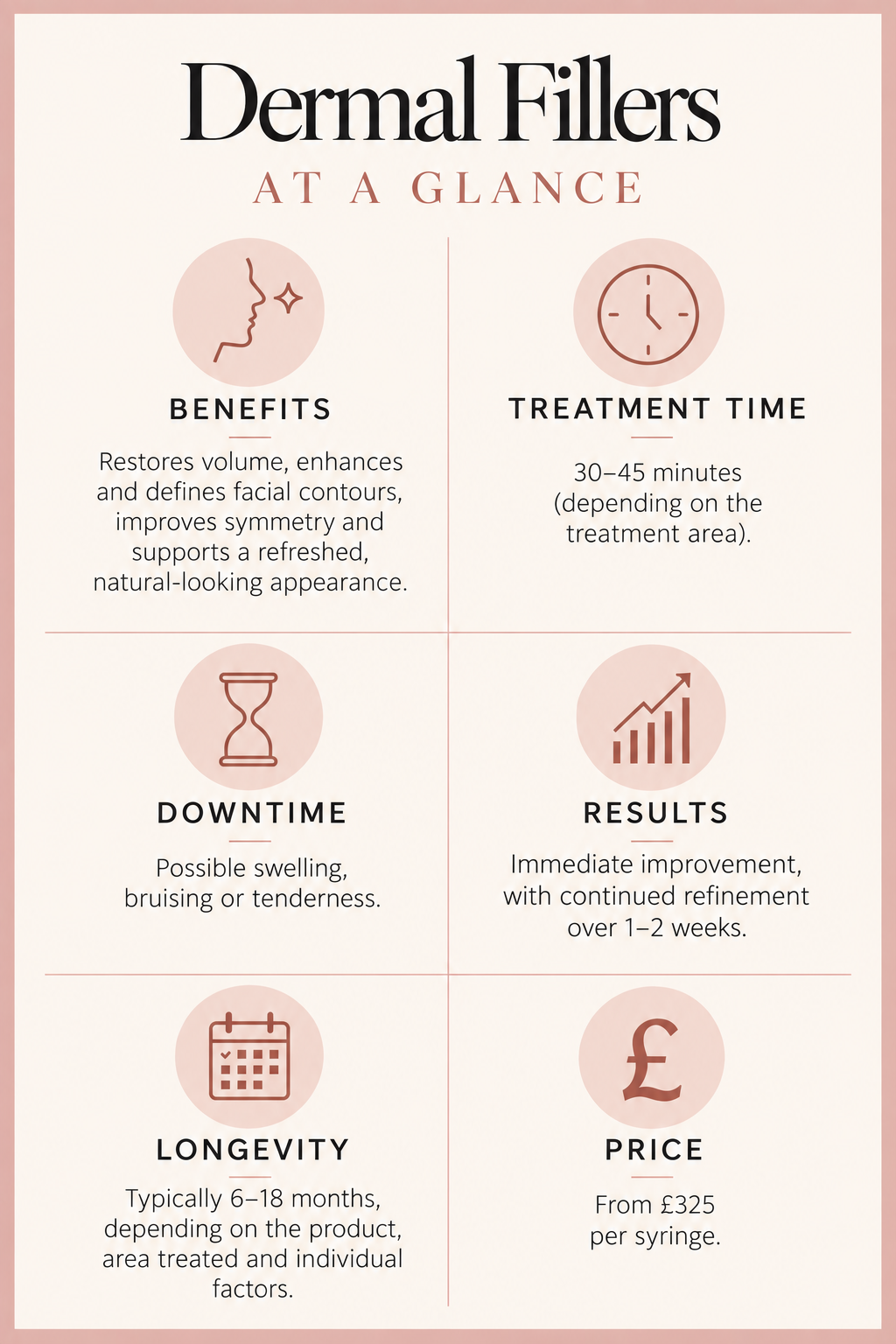
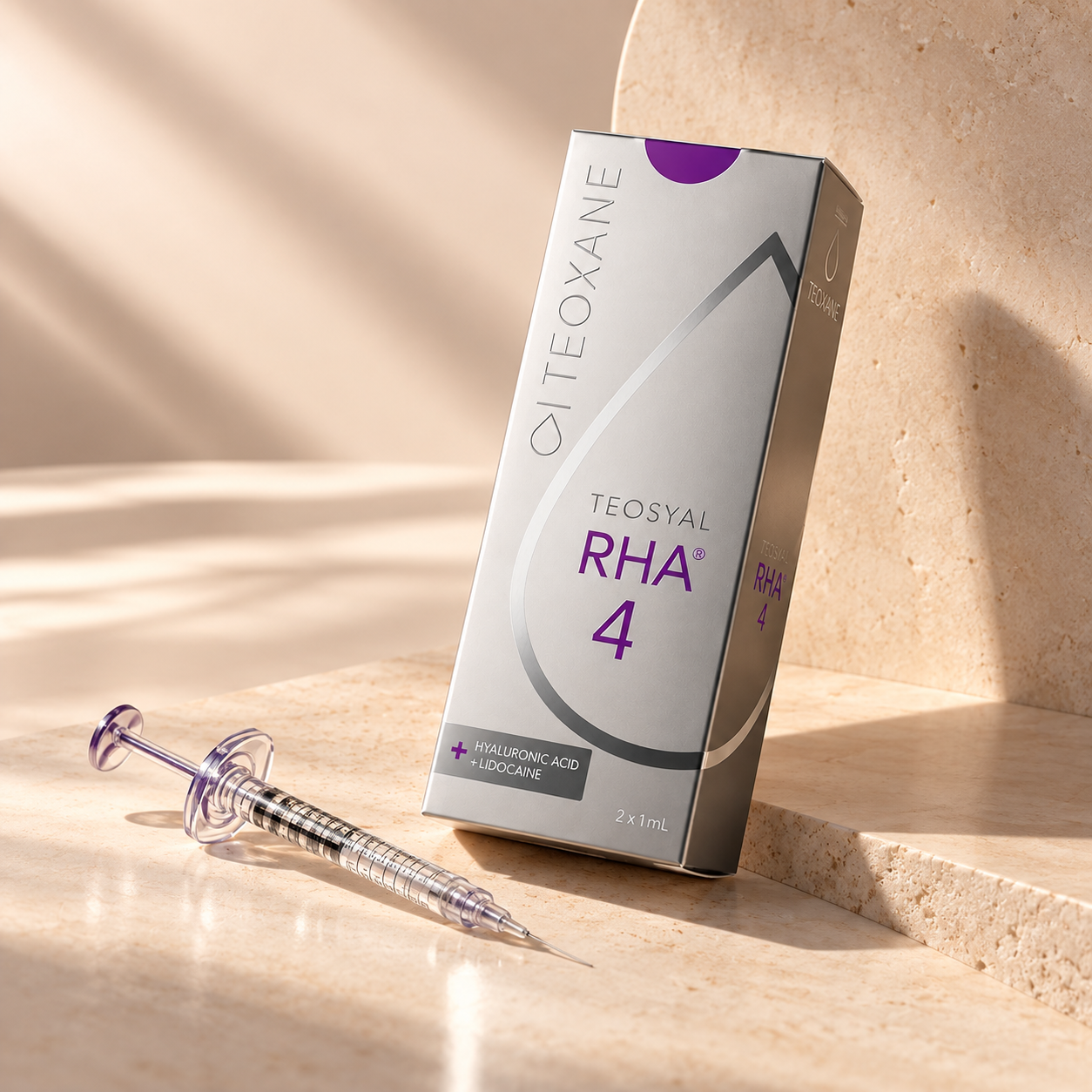
Appointment 45 to 60 minutes including consultation. Results immediate, settling over two weeks. Typically lasts 9 to 18 months depending on area and product. Commonly mild swelling or bruising for a few days. Premium FDA approved Teoxane fillers only. Priced per syringe, reviews always complimentary.
On this page:
- What are dermal fillers and how do they work?
- Which filler I use, and why
- Areas I treat
- Filler, or collagen stimulation? Structure before volume
- What makes filler look natural
- What to expect at your appointment
- Results and how long they last
- Risks and safety
- Prices
- Frequently asked questions

What are dermal fillers and how do they work?
Dermal fillers are injectable gels made of hyaluronic acid, a substance your skin already contains. Placed beneath the skin in a precise layer, the gel integrates with the tissue, draws in water and restores the volume or support that has been lost, and over the following months it also encourages a modest amount of your own collagen around it. The result is visible immediately and refines over two weeks as the product settles and any swelling resolves.
Because hyaluronic acid is naturally broken down by the body, the effect is gradual and reversible: it fades over months to a couple of years depending on the product and the area, and if ever needed it can be dissolved with an enzyme called hyaluronidase, which I hold at the clinic.
Which filler I use, and why
I use Teoxane RHA fillers exclusively. They are made in Switzerland using Resilient Hyaluronic Acid technology, which preserves more of the natural structure of the hyaluronic acid chain than older manufacturing methods. In practice that means a gel that moves with your face rather than sitting stiffly in it, which is what a natural result depends on.
I wrote about the choice in more detail, and about how I minimise migration and the filled look, in why I choose the RHA range.

Areas I treat
Dr Caroline's note
I keep hyaluronic acid filler for the areas where it does its best work. For the temples I use Sculptra, which rebuilds the area more naturally and more safely. For the under-eye I prefer polynucleotides and skin boosters, because the skin there responds better to being improved than to being filled. And where a whole face has deflated, I reach for a collagen stimulator before a filler, for the reasons below.
Filler, or collagen stimulation? Structure before volume
The biggest shift in aesthetic medicine over the last few years is the move from filling individual lines and hollows to rebuilding the structure underneath them. Hyaluronic acid filler is precise, immediate and reversible, and it is the right tool for a specific deficit. Where volume has been lost broadly, across temples, cheeks and the lateral face, a collagen stimulator such as Sculptra rebuilds it more gradually and more naturally. Most of my patients over 45 end up with a plan that uses both: Sculptra for the foundation, and a small amount of filler, placed precisely, for the finishing. I wrote about the thinking in less filler, more structure and in the facial volume loss guide.
Filler replaces what you have lost. Placed in the right layer, in the right amount, it is invisible. That is the whole aim.
What makes filler look natural
Beautiful filler goes unnoticed. These are the principles I work to, and they are the reason patients tell me that friends ask whether they have been on holiday.
What to expect at your appointment
Good to know
For a week before, avoid fish oil, vitamin E, ginkgo and garlic supplements to reduce bruising. Please be available to return to the clinic in the two weeks after treatment incase required. Afterwards: no make-up on the treated area for at least 24 hours, no strenuous exercise, alcohol or heat for 48 hours.

Results and how long they last
You see the change immediately, with the final result at around four weeks once any swelling has settled and the gel has integrated. Most patients achieve what they want in one session; some areas are built gradually over two visits for the most natural result. How long it lasts depends on the product, the area and you: typically 9 to 18 months, with lips at the shorter end and structural areas such as chin and cheeks at the longer end. Recent MRI research suggests hyaluronic acid filler often persists longer than was once assumed, which is one more reason to use less; I explain the evidence in do dermal fillers last longer than we thought?
Dr Caroline's note
Filler is not a treatment that needs regular topping up. If a result is still good at twelve months, we leave it. The best long-term outcomes I see are in patients who have a little, placed well, and then come back when their face tells them to rather than when the calendar does.
Risks and safety
Hyaluronic acid fillers have a long safety record, and the quality of the assessment and placement is what keeps that record. As with any medical treatment there are risks, and we go through every one of them at consultation.
As a doctor I am legally able to hold the emergency dissolving agent and adrenaline at the clinic, and trained to recognise and manage a complication on the spot. If dissolving is ever required for a complication from treatment at this clinic, there is no charge. Treatment is not suitable in pregnancy or breastfeeding, with an active skin infection, with a history of severe allergy to hyaluronic acid or lidocaine, or with certain autoimmune or bleeding conditions; bring a list of medications and we will go through it.
Prices
Filler is priced per syringe and the plan is confirmed at consultation once I have assessed what is needed. Half a millilitre is usually enough for lips; a cheek or chin typically needs one syringe; a jawline usually two. A new-patient consultation is £75, redeemed against treatment, and the two-week review is complimentary. Current prices for each area are on the price list.

Frequently asked questions
What areas can be treated with dermal fillers?
Cheeks and midface, chin, jawline and pre-jowl area, lips, nasolabial folds and marionette lines, and facial asymmetry. For temples I use Sculptra and for the under-eye I use skin-quality treatments instead.
How long do dermal fillers last?
Typically 9 to 18 months depending on the product and area; lips shortest, structural areas longest. Many results persist longer than that.
Are dermal fillers safe?
Hyaluronic acid fillers have a long safety record. The assessment, the placement and the ability to manage a problem immediately are what matter, and all three sit with me as your doctor.
Do dermal filler injections hurt?
The filler contains local anaesthetic and numbing cream is used for sensitive areas such as the lips. Most patients describe pressure rather than pain.
Is there downtime?
A few days of swelling or possible bruising, most noticeable with lips. Most people return to normal activities the same day and plan treatment a fortnight before any event.
Who is suitable for dermal fillers?
Adults who have lost volume or support, or have a natural asymmetry they would like balanced. Not during pregnancy or breastfeeding, with an active infection, or with certain medical conditions. The consultation confirms it.
How much do dermal fillers cost?
Priced per syringe and confirmed at consultation; see the price list for current figures. The review is included.
What is the difference between anti-wrinkle injections and dermal fillers?
Anti-wrinkle injections relax muscles to soften movement lines. Fillers restore volume and support. Different tools, often complementary; see my comparison.
Will I look unnatural or overfilled?
Not here. My approach is restorative: enough to put back what has changed, in the right layer, and no more. If an area will not look natural I will say so.
Can dermal fillers be reversed?
Yes. Hyaluronic acid filler can be dissolved with hyaluronidase, which I hold at the clinic. That reversibility is one of the reasons I use it.
How soon will I see results?
Immediately, with the final result at around two weeks once swelling has settled.
Which dermal fillers do you use and why?
Teoxane RHA fillers only, for their natural movement, purity and the graded range that lets me match product to area. The reasons are set out above.
Should I have filler or Sculptra?
Filler for a specific area that has changed; Sculptra for broad volume loss. Many patients have both, in that order. Read Sculptra vs Radiesse and the volume loss guide.
Related reading
- Dermal fillers: everything you need to know before treatment
- Filler fatigue: why less filler, more structure is the biggest shift in aesthetics
- Has my face fallen? Restoring midface support without overfilling
- Natural-looking lip fillers: why I choose the RHA range
- Do dermal fillers last longer than we originally thought?
- Facial volume loss: why your face looks hollow and what helps
- Sculptra in Hale, Altrincham and Cheshire
Next steps
Learn more about Dr Caroline Warden Clinic
Learn more about other treatments offered
Written and medically reviewed by Dr Caroline Warden, NHS GP with over 19 years of clinical experience, independent prescriber and Level 7 qualified aesthetic doctor (Harley Academy). GMC 6157708. Dr Caroline Warden Skin & Aesthetic Clinic, 2 Crown Passages, Hale, Altrincham, Cheshire WA15 9GN. Results vary between individuals; suitability is determined at a face-to-face consultation. Last reviewed: 2 October 2026.

Your lips, just more hydrated