
Medical Microneedling
Doctor-Led treatments in Hale, Altrincham & Cheshire
Your skin's own repair process, switched on
Medical microneedling is one of the treatments I trust most at my clinic in Hale, near Altrincham, because it asks nothing of your skin except to do what it already knows how to do. Thousands of microscopic channels, made with a precision device, trigger the skin's natural wound-healing response, and the result over the following months is new collagen and elastin: smoother texture, finer pores, softer lines, flatter scars and a healthier, brighter complexion.
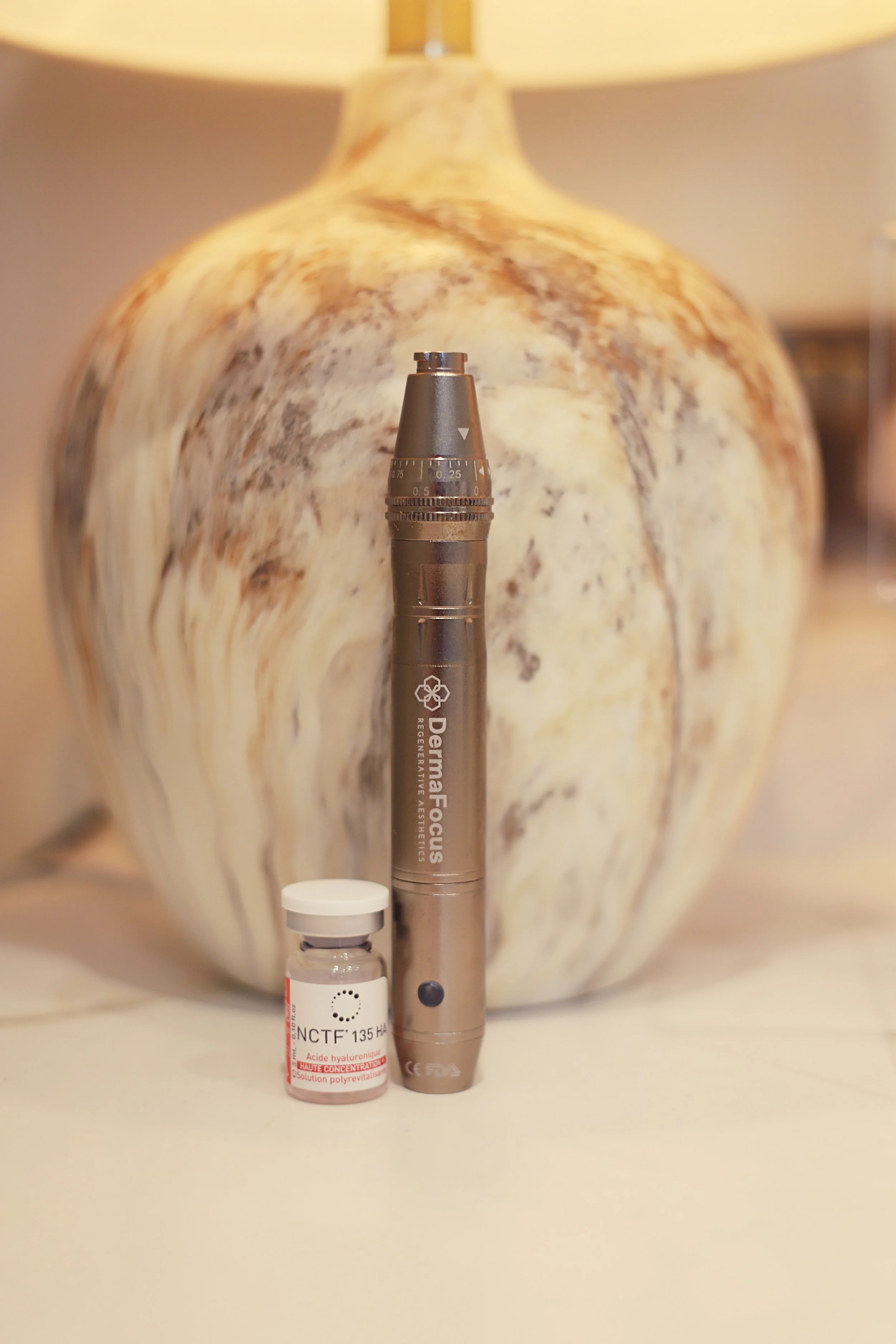
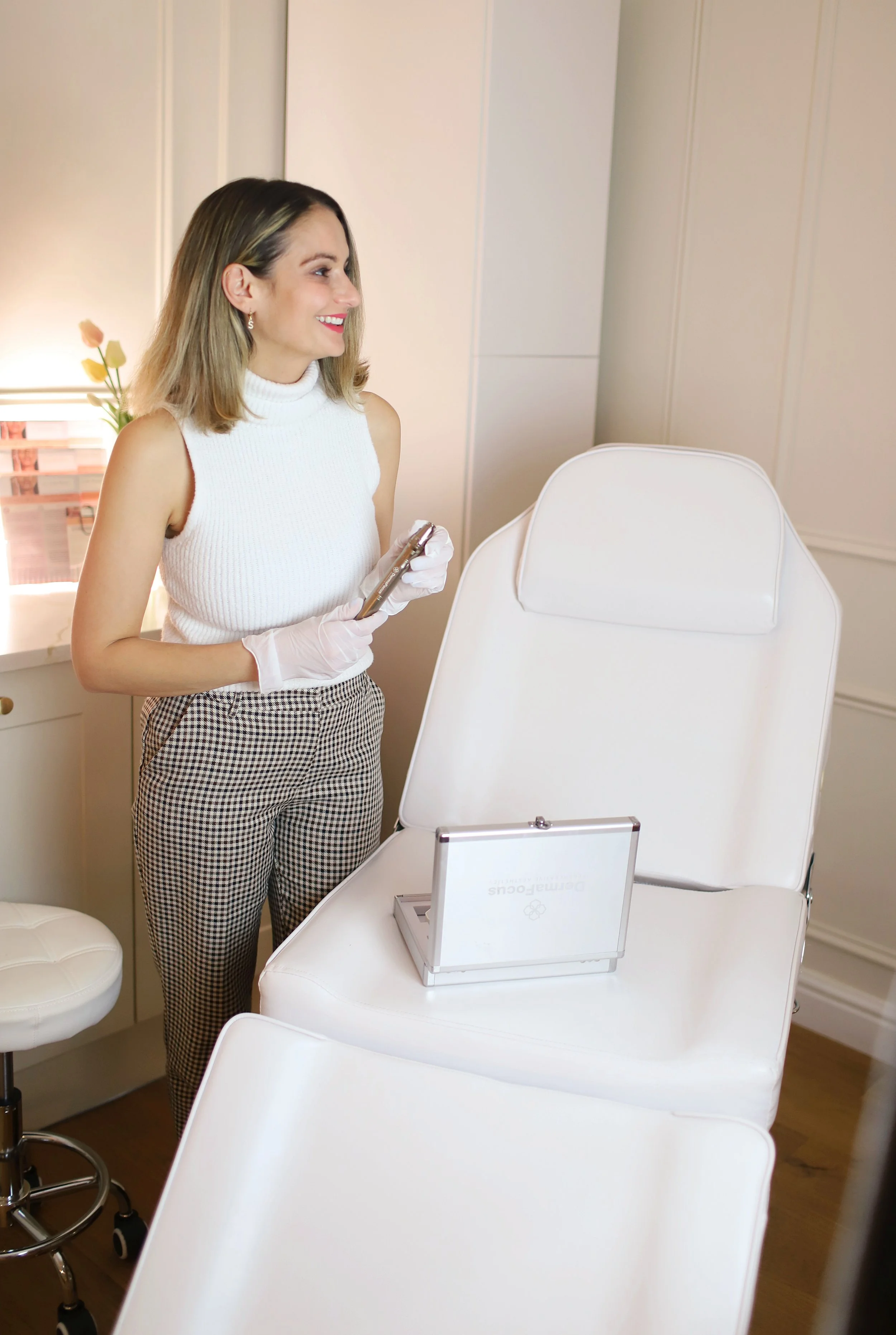
I am Dr Caroline Warden, an NHS GP with over nineteen years of clinical experience, an independent prescriber and a Level 7 qualified aesthetic doctor trained at Harley Academy, practising aesthetic medicine since 2017. Every microneedling consultation and treatment at the clinic is carried out by me personally, using the Dermafocus device, which holds both CE and FDA approval, combined with Purasomes exosomes or NCTF 135 HA to amplify the result. The clinic was named Best Doctor-Led Aesthetic Clinic in Cheshire 2026 by GHP.
Microneedling is where my skin-first approach starts for many patients: it improves the skin's structure without adding anything to the face, it suits almost every skin type, and the results are entirely your own.
Good to know
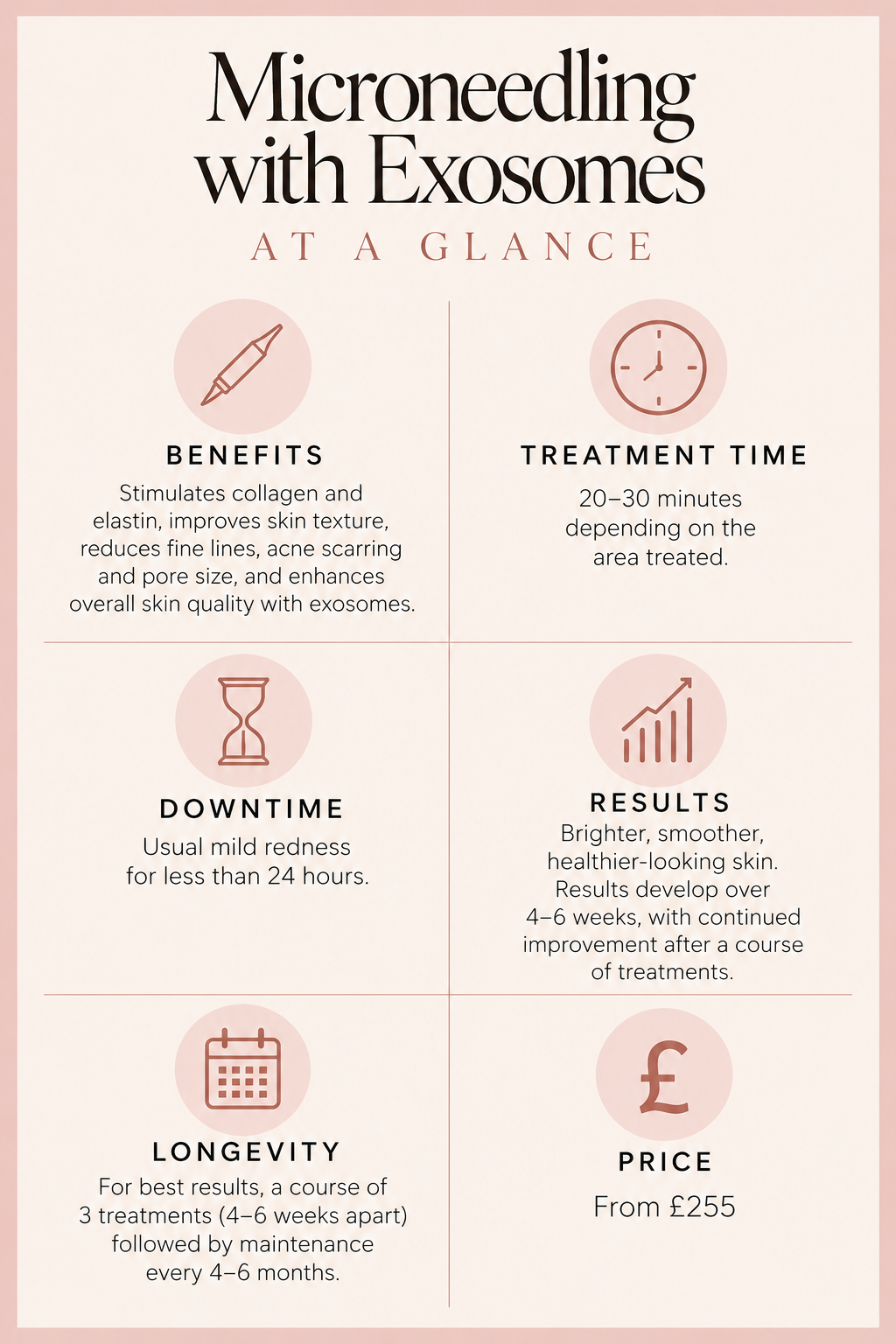
A course of three sessions, four weeks apart, then maintenance every four to six months. About 30 minutes in the chair. Red like mild sunburn for 12 to 24 hours. Results from four to six weeks after the final session, improving for months. £255 per induction session, £295 maintenance, neck added for £40.
On this page:
- What is medical microneedling and how does it work?
- Why microneedling with exosomes?
- What can microneedling treat?
- Exosomes or NCTF: which to choose
- What a doctor-led treatment gives you
- What to expect at your appointment
- Results, course and aftercare
- Safety and suitability
- Prices
- Frequently asked questions
What is medical microneedling and how does it work?
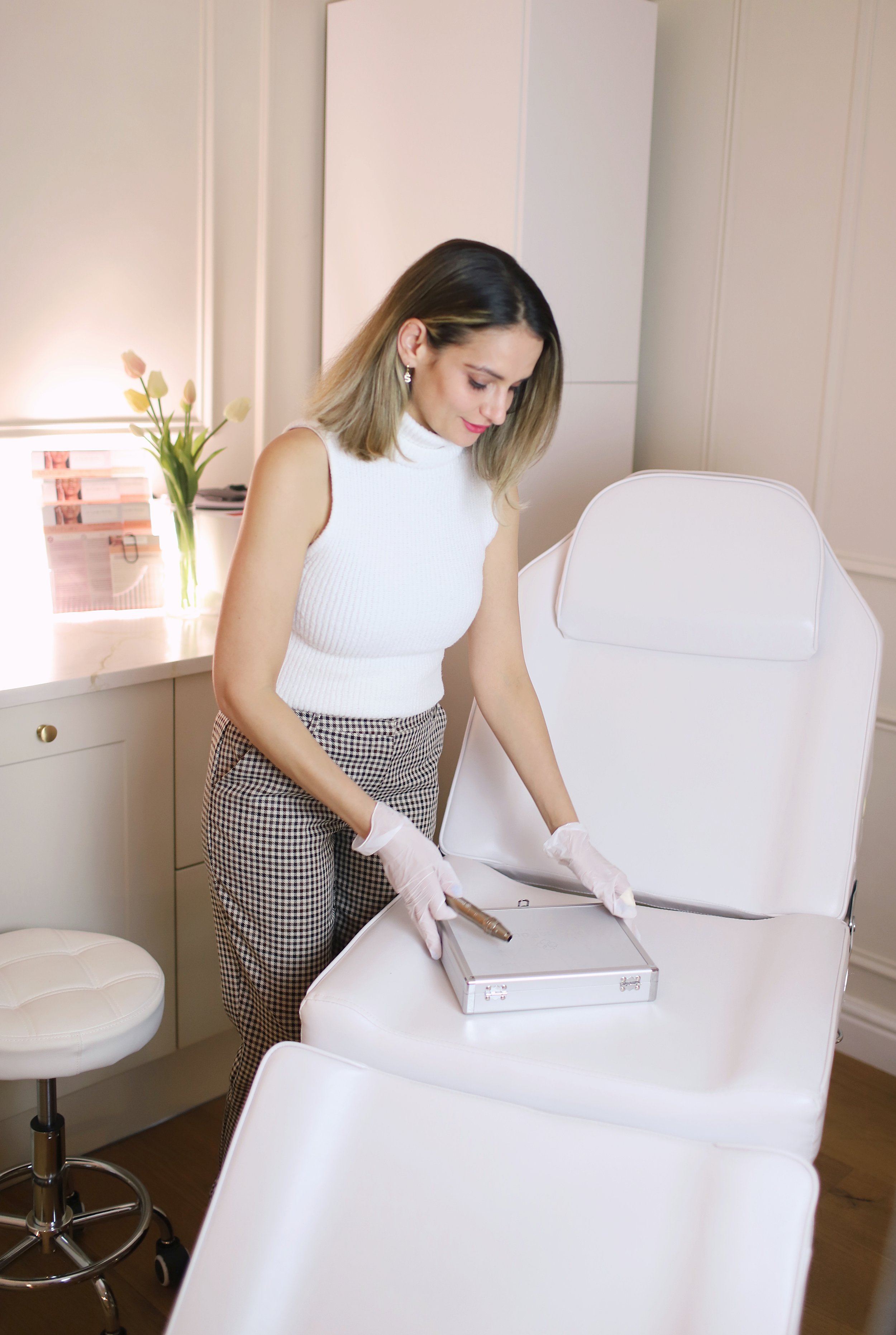
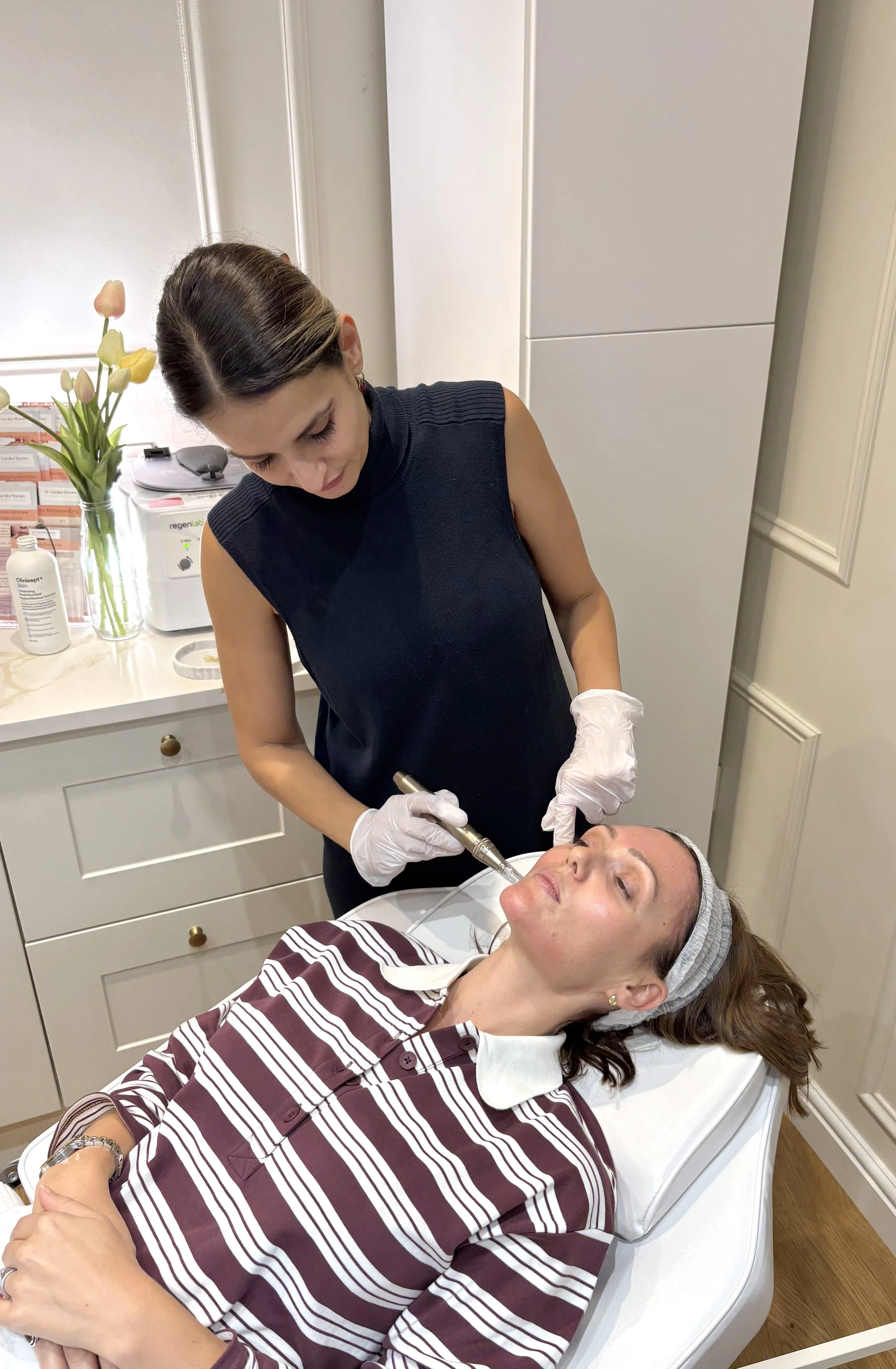
Medical microneedling uses a pen-shaped device with a cartridge of fine, sterile, single-use needles that move rapidly in and out of the skin at a precisely controlled depth. Each pass creates thousands of microscopic channels in the dermis. The skin reads these as a signal to repair, and the repair response is what we are after: fibroblasts are activated, new collagen and elastin are laid down, and over the following weeks the skin remodels itself from within.
The depth is the skill. Shallow passes refine texture and pores; deeper, more targeted passes are what remodel acne scars and etched lines. Because the channels close within hours and the surface is left intact, there is no peeling and very little downtime, and because it works with the skin rather than on it, it is safe in a far wider range of skin tones than light-based treatments.
The research base is well established. In a frequently cited 2008 study, skin treated with four microneedling sessions a month apart showed a substantial increase in collagen and elastin when examined six months after the final treatment, with the dermis measurably thicker. It is one of the few aesthetic treatments where the histology, the microscope view of the skin, matches the result you see.
Why microneedling with exosomes?
The channels created by microneedling do something else useful: for a short window they allow active ingredients applied to the skin to reach the dermis, where they can do real work. This is why I pair every treatment with a regenerative formulation, and why the choice of formulation matters.
Exosomes are tiny vesicles released by cells to carry signals, growth factors and nutrients to other cells; they are, in effect, the skin's messaging system. Applied during microneedling, they travel down the channels into the dermis and amplify the repair response the needling has started: more collagen production, less inflammation, faster healing, and a visibly brighter, smoother result.
I use Purasomes, an Italian, multi-patented formulation of ethically sourced, organic, bovine colostrum-derived exosomes. Each treatment delivers ten billion exosomes with a blend of twenty growth factors, cytokines and signalling proteins, alongside hyaluronic acid, amino acids, vitamins, coenzymes, antioxidants and peptides. It is applied topically, which matters: injected exosomes are not licensed in the UK, and I explain the legal and clinical position in exosomes explained: what they are, what's legal, and why I use Purasomes.
Dr Caroline's note
Exosomes are a developing area and I am careful about the claims I make for them. What I can say is that the published science on their regenerative signalling is sound, that the formulation I use is well characterised, and that in my own patients the combination heals faster and gives a better result than needling alone. I wrote about why I prefer this route to PRP in microneedling with exosomes versus PRP.
What can microneedling treat?
Exosomes or NCTF: which to choose
Both formulations enhance microneedling and both have a place. Purasomes exosomes are my recommendation for anyone wanting the most advanced regenerative and collagen-stimulating result, and for scarring, texture and ageing skin. NCTF 135 HA by FILLMED is a skin revitalisation complex of hyaluronic acid and over fifty vitamins, amino acids, antioxidants and minerals, created in France in 1978 with decades of clinical data behind it; it suits skin whose main need is hydration, radiance and nourishment.
Nothing is added to your face. The collagen is yours, the elastin is yours, and the result looks like you after a very night's sleep.
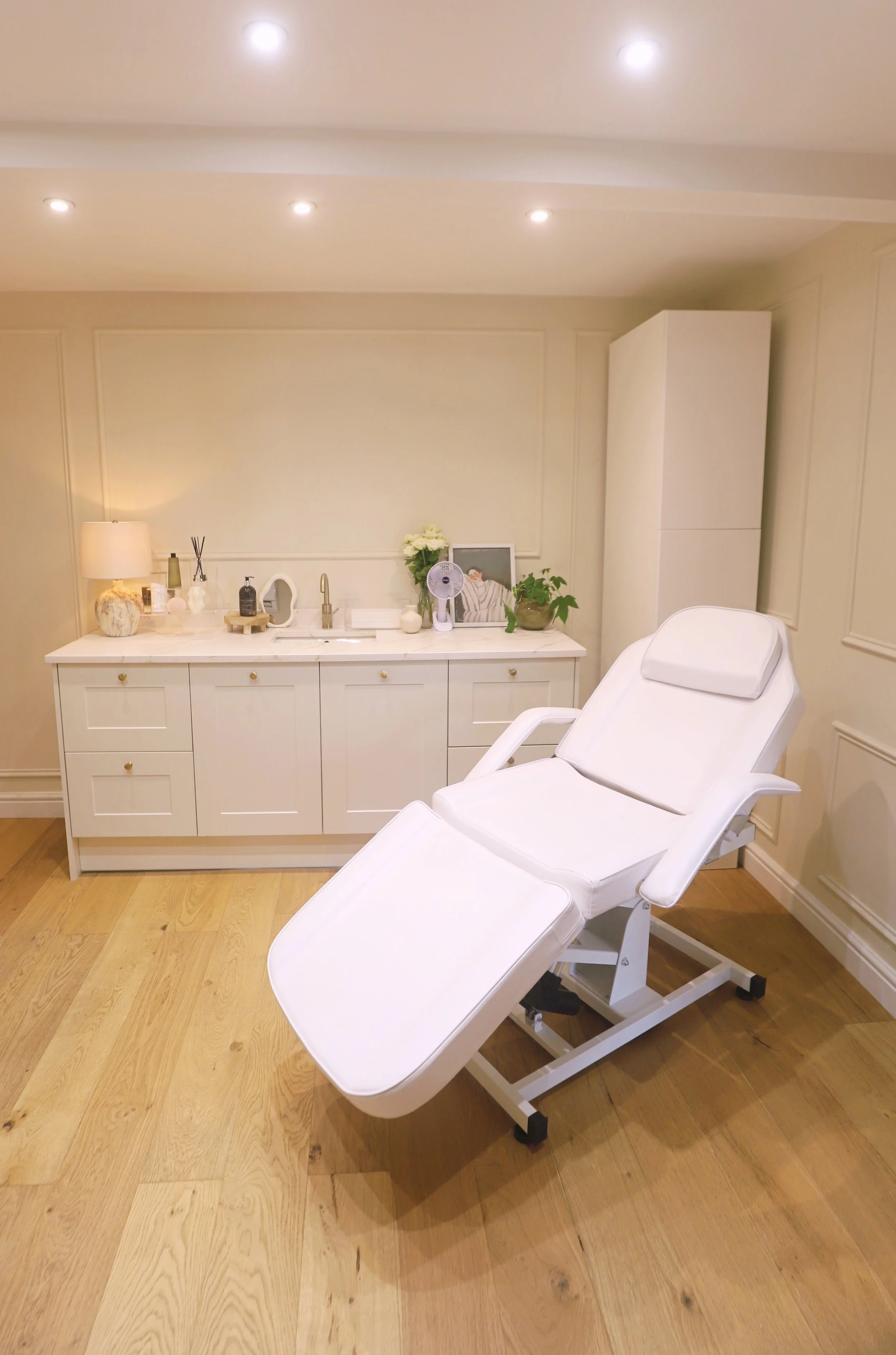
What a doctor-led treatment gives you
What to expect at your appointment
Good to know
Arrive with clean skin and no make-up. Stop retinoids and exfoliating acids three days before. Afterwards your face looks red like mild sunburn for 12 to 24 hours, and most people are back to normal, and to work, the next day. For 24 to 48 hours avoid make-up, vigorous exercise, sun and heat; use only gentle hydrating skincare and SPF; keep retinoids and exfoliants off for five to seven days.
Results, course and aftercare
Collagen takes time to build, which is why microneedling is a course and why the result keeps improving after you have finished it. I recommend three induction sessions four weeks apart. Results typically become visible four to six weeks after the final session and continue to improve for several months as remodelling continues. After that, a single maintenance session every four to six months keeps the skin ahead of the curve.
Dr Caroline's note
Microneedling rewards patience and punishes shortcuts. Patients who finish the course, keep the four-week spacing and use SPF every day get results that compound year on year. Patients who have one session before a holiday get a glow for a fortnight. Both are fine, but it helps to know which you are booking.
Safety and suitability
Medical microneedling has an excellent safety record, carries a lower risk of pigmentation change than lasers or deep peels, and is suitable for most skin types and tones. It is still a medical treatment, and every patient has a consultation first.
Treatment is not suitable with active acne, rosacea flare, eczema or infection in the treatment area; with a history of keloid scarring; within six months of oral isotretinoin; in pregnancy or breastfeeding; or with certain blood-clotting disorders or medicines. Well-controlled rosacea can sometimes be treated gently; I assess this individually. If you have an active cold sore, we postpone.
Prices
Current prices are on the price list.

Frequently asked questions
What is medical microneedling?
A precision device creates thousands of microscopic channels in the skin, triggering the natural repair response that builds new collagen and elastin. The result is smoother, firmer, brighter skin over the following months.
What is microneedling with exosomes?
Microneedling with a regenerative exosome formulation, Purasomes, applied during treatment so that growth factors and signalling proteins reach the dermis through the channels and amplify the repair response.
What skin concerns can it help with?
Fine lines, acne scars, enlarged pores, rough texture, dullness, mild sun damage, early crepiness on the face, neck and décolletage, and stretch marks.
Does it hurt?
Most patients describe pressure, vibration and a prickling sensation rather than pain. Numbing cream is rarely needed but can be used.
What is the downtime?
Redness like mild sunburn for 12 to 24 hours. Most people are back at work the next day. No make-up, exercise or sun for 24 to 48 hours.
How many sessions will I need?
Three, four weeks apart, then maintenance every four to six months. Acne scarring sometimes needs more.
When will I see results?
A glow within days; the real change four to six weeks after the final session, improving for months as collagen builds.
Is it safe for sensitive or rosacea-prone skin?
Not during a flare or with active inflammation. Well-controlled rosacea can sometimes be treated gently at a lighter depth; I assess this individually.
Who is not suitable?
Active acne, infection or eczema in the area, keloid history, isotretinoin in the last six months, pregnancy or breastfeeding, certain clotting disorders, and anyone with an active cold sore until it has healed.
How should I prepare?
Clean skin, no make-up, no retinoids or acids for three days, no fake tan, and tell me about any medications or cold sore history.
What aftercare do I need?
Gentle hydrating skincare and SPF only for the first few days; no actives for five to seven days; avoid heat, sun and heavy exercise for 48 hours.
How is medical microneedling different from an at-home dermaroller?
Depth, sterility and control. A medical pen reaches the dermis at a precise, adjustable depth with sterile single-use needles; a dermaroller cannot, and used repeatedly at home it can damage the barrier. I explain why in why I don't recommend at-home microneedling.
Can it be combined with other treatments?
Yes, and it usually is: prescription skincare underneath, a peel for pigmentation, polynucleotides for the under-eye, Sculptra or Radiesse for structure. I sequence them at consultation.
Should I choose exosomes or NCTF?
Exosomes for collagen, scarring and ageing skin; NCTF for hydration and glow. Most patients having the full course choose exosomes.
Is microneedling good for menopausal skin?
Yes. It directly addresses the thinning and loss of firmness that follow oestrogen decline. Read is microneedling good for menopause skin?
Related reading
- Exosomes explained: what they are, what's legal in the UK, and why I use Purasomes
- The ultimate guide to microneedling with exosomes
- Why I believe microneedling with exosomes is better than PRP
- Should you bleed during microneedling?
- Microneedling before your wedding: when to start
- The best treatments for acne scars
- Pigmentation and uneven skin tone
Next steps
Learn more about Dr Caroline Warden Clinic
Learn more about other treatments offered
References
Written and medically reviewed by Dr Caroline Warden, NHS GP with over 19 years of clinical experience, independent prescriber and Level 7 qualified aesthetic doctor (Harley Academy). GMC 6157708. Dr Caroline Warden Skin & Aesthetic Clinic, 2 Crown Passages, Hale, Altrincham, Cheshire WA15 9GN. Results vary between individuals; suitability is determined at a face-to-face consultation. Last reviewed: 2 October 2026.
Watch our Microneedling Video Testimonials from the Hale Clinic
Kim Dunn’s Microneedling Journey
https://www.instagram.com/kimminchinlifestyle

Video of Kim’s microneedling Journeys in Hale, Altrincham
Leanne White’s Microneedling Journey
https://www.instagram.com/leanne.white_
Video of Leanne’s microneedling Journeys in Hale, Altrincham