Pigmentation, Sun Spots and Uneven Skin Tone: Treatment in Hale, Altrincham and Cheshire
Last updated: 30 September 2026
Brown patches, sun spots, dark marks and a skin tone that no longer looks even
Uneven pigmentation ages a face more than most lines do. Studies of facial attractiveness consistently find that evenness of skin tone is one of the strongest cues to youth, more than wrinkle depth, which is why patients who have "sorted" their lines often still feel they look tired. Brown patches across the cheeks, scattered sun spots, a dark mark that has outlived the spot that caused it, a general muddiness that concealer can only mask: these are among the most common reasons people book at my clinic in Hale, near Altrincham.
Pigmentation is also the concern most often treated badly, because five different problems produce brown marks, and treating the wrong one with the wrong tool makes it worse. My approach as a GP and aesthetic doctor is to work out which type you have, treat the cause rather than the surface, and be honest that this is a long game with maintenance, not a one-off fix.
In this article:
- What are the different types of facial pigmentation?
- Why does pigmentation come back?
- Which treatments actually work for pigmentation?
- What I don't offer for pigmentation, and why
- Pigmentation in olive and darker skin
- Pigmentation and menopause
- When a brown mark needs your GP
- How much does pigmentation treatment cost in Hale and Altrincham?
- Frequently asked questions
What are the different types of facial pigmentation?
Most people over 45 have at least two of these at once, and the treatment plan has to address each on its own terms. For the two most often confused, read melasma vs sun spots: why they are not the same thing.
Brown is not one colour. Sun spots, melasma and post-inflammatory marks look alike and behave completely differently. The first question is always which one you have.

Why does pigmentation come back?
Because the mark you can see is the output, not the problem. Pigment is made by melanocytes in the base of the skin, and once they have been switched into overdrive by UV, hormones or inflammation, they stay primed. Anything that removes the visible pigment without calming the cells that made it, whether a laser, a peel or a strong exfoliant, simply clears the surface for the next batch. Worse, the inflammation from an aggressive treatment can itself trigger new pigment, which is why so many people end up darker after a course of IPL than before it.
This is not just my opinion. A 2024 systematic review of 41 studies and 877 patients in the Journal of the European Academy of Dermatology and Venereology found that while combination treatment produced partial improvement in 85% of patients and topical treatment in 72%, laser and energy devices worsened pigmentation in 2.6% of patients, and the authors concluded that
"the current treatment approaches yielded unsatisfactory rates of complete response."
Kashetsky N et al., Journal of the European Academy of Dermatology and Venereology, 2024
Read that as a warning against anyone promising to "remove" your pigmentation. The realistic goal is substantial fading, an even tone and a plan that stops it returning. That plan always has the same three parts: calm the pigment cells, speed up turnover so the pigment already made is shed, and block the UV that switches the cells back on. The third part is non-negotiable and lifelong.
Which treatments actually work for pigmentation?
Prescription-strength medical skincare: the Obagi Nu-Derm system
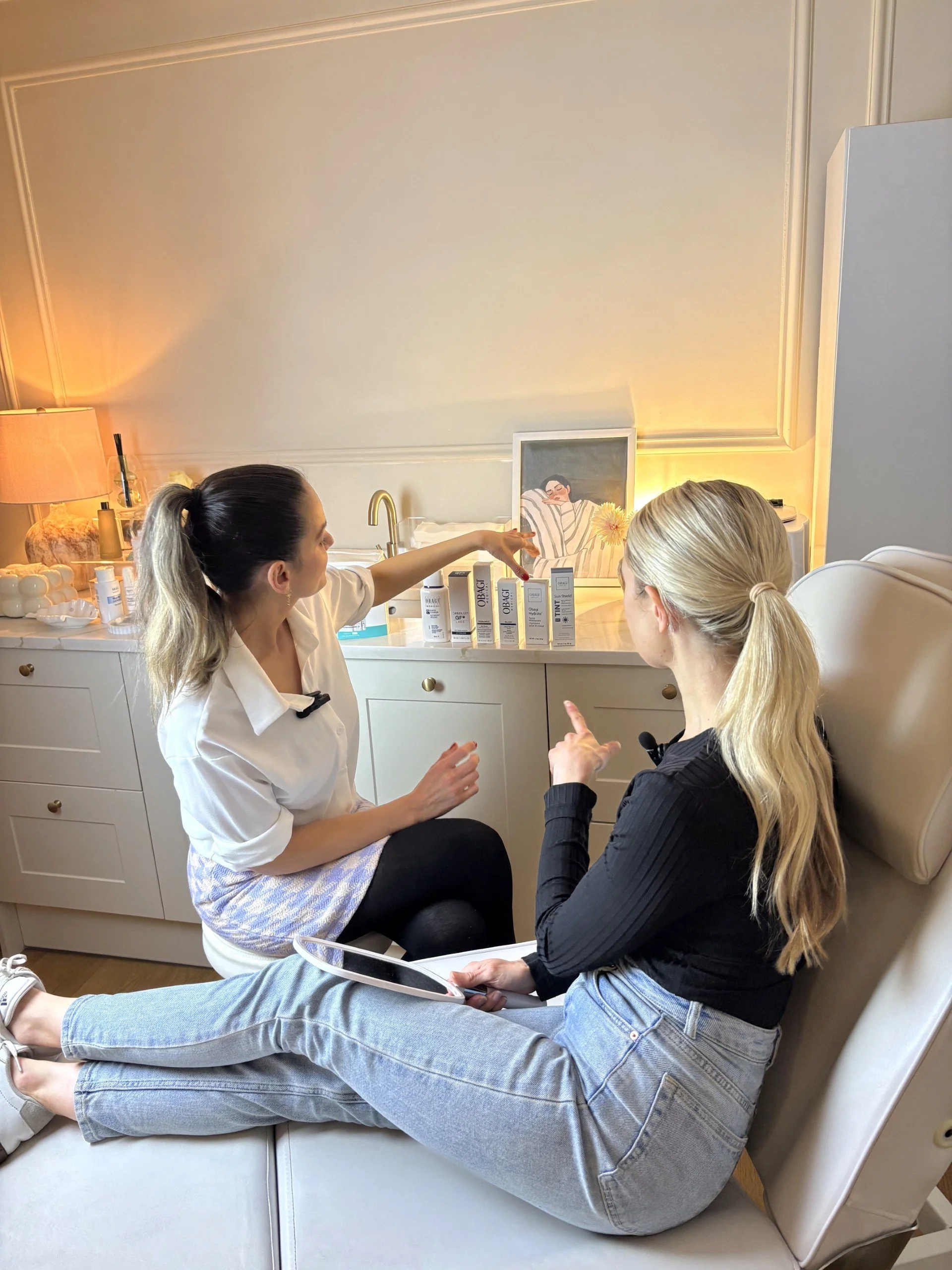
For sun damage, melasma-pattern pigmentation and stubborn post-inflammatory marks, the most effective non-device treatment I know is a structured prescription skincare programme, and the one I use is the Obagi Nu-Derm system. It is not a product, it is a protocol: a sequence of cleanser, exfoliant, pigment-regulating and skin-normalising steps used morning and night, alongside a prescription retinoid I prescribe individually after consultation, run as an 18 to 24 week transformation with a defined maintenance phase afterwards.
It works on all three parts of the problem at once: it calms the melanocytes, accelerates turnover so pigment is shed, and rebuilds a healthier skin barrier, with a broad-spectrum SPF built into the routine. It is demanding for the first six to twelve weeks, with dryness, peeling and redness that I will warn you about and manage with you, and the results in the right patient are the most dramatic of anything on this page. I explain why in why Obagi is one of the best brands for pigmentation and post-inflammatory marks, and the retinoid part in retinol vs prescription retinoids. Read my medical-grade skincare page.
Medical chemical peels
Peels remove the pigment already sitting in the upper skin and speed up turnover, and they make the skincare underneath work faster. I use two. The Obagi Blue Peel Radiance is a gentle salicylic-based peel with a few days of light flaking, ideal for dullness, uneven tone and mild sun damage, and it is included free at the start of a Nu-Derm programme. The Perfect Peel is a deeper medium-depth peel with about a week of visible peeling, better suited to established sun damage and post-inflammatory marks. Neither is right for active melasma-pattern pigmentation without the skincare in place first, because heat and inflammation can make melasma darker. Read my Blue Peel Radiance page and Perfect Peel page.
Medical microneedling
Microneedling is useful where pigmentation sits alongside texture problems or acne scarring, and it improves the penetration of pigment-regulating skincare. On its own it is not a pigmentation treatment, and in darker skin it has to be done gently to avoid causing the very marks it is meant to help. Read my microneedling page.
Daily broad-spectrum SPF
Not a treatment, the treatment. Every study of pigmentation that has looked at sunscreen finds the same thing: without it, everything else fails. For melasma-pattern pigmentation a tinted mineral SPF is better, because visible light as well as UV drives it. Every morning, every season, reapplied if you are outside.

Which treatment for which type?
What I don't offer for pigmentation, and why
IPL and laser. I do not have devices at the clinic. Devices can clear sun spots quickly in fair skin, but they do nothing to stop pigment returning, they are unreliable for melasma, and the review data above shows they can make things worse. In olive, Asian and darker skin the risk of rebound darkening is high enough that I would not recommend them even if I owned one. Where I think a device is the right answer for you, usually isolated sun spots in very fair skin, I will say so.
Electrocautery on brown marks. I remove clearly benign, non-pigmented lesions such as skin tags and cherry angiomas. I do not burn, freeze or scrape anything brown, for two reasons: the inflammation leaves a darker mark than the one you started with, and a pigmented lesion that has been destroyed has not been assessed. Read what a GP checks before removing anything.
Over-the-counter "brightening" routines. Vitamin C, niacinamide and azelaic acid have a place in maintenance, and I use them. As a treatment for established pigmentation they are too weak, and stacking five of them irritates the skin into making more pigment.
Pigmentation in olive and darker skin
Skin of colour makes pigment readily and holds it for longer, so post-inflammatory marks are both more common and slower to fade, and every aggressive treatment carries more risk. A 2024 systematic review of 48 studies in skin of colour found post-inflammatory marks had lasted an average of 21 months before treatment, and that topical retinoids were the most used and most reliable approach. My approach in darker skin tones is deliberately gentle: prescription skincare first, peels only once the skin is prepared, no devices, and patience. Rushing pigmentation in darker skin is how clinics create the problems patients then bring to me.
Pigmentation and menopause
Melasma-pattern pigmentation appears for the first time in many women in their mid-forties, and existing sun damage often seems to arrive all at once in the same years. Falling oestrogen thins the skin and changes how it handles UV, and the perimenopausal hormone swings drive melanocytes directly. HRT can improve it or worsen it depending on the preparation. The management is the same, but the maintenance phase matters more. Read why perimenopause makes melasma more common and menopause and facial ageing explained.
When a brown mark needs your GP
Most brown marks are harmless. A few are not, and a cosmetic clinic is the wrong place to find out. See your own GP first if a mark is new and growing, has an irregular edge or more than one colour, is larger than about 6 millimetres, is raised, itchy or bleeding, or simply does not look like its neighbours. I will always say if something I see should be checked before any cosmetic treatment, and I will not treat a mark I am not confident about.
Fade what is safe. Refer what is not. The order matters.
How much does pigmentation treatment cost in Hale and Altrincham?
A new-patient consultation is £75, redeemable against treatment. The Obagi Nu-Derm system is approximately £555 for the seven products, with the exact products chosen for your skin type, and the prescription retinoid is prescribed separately at approximately £130 depending on strength. A complimentary Blue Peel Radiance, worth £125, is included before you start the system. Peel courses and maintenance products are on the price list. Because prescription-only products are involved, everything is dispensed after a face-to-face consultation with me, and I explain why buying Obagi online is a false economy in why authorised stockists matter.

Frequently asked questions
What is the best treatment for pigmentation on the face?
For most types, a structured prescription skincare programme with a retinoid and pigment regulator, supported by peels and daily SPF. Devices clear the surface faster but do not stop the pigment returning and can make it worse.
Can pigmentation be removed permanently?
Sun spots and post-inflammatory marks can fade to the point of being invisible, and stay that way with SPF. Melasma-pattern pigmentation is controlled, not cured, and needs lifelong maintenance.
How long does it take to fade pigmentation?
Expect the first visible change at 8 to 12 weeks and the best result at around 6 months. Post-inflammatory marks in darker skin can take longer.
What is the difference between melasma and sun spots?
Sun spots are discrete spots caused by UV and respond well to fading and peels. Melasma is blotchy, symmetrical, hormone-driven, worsens with heat, and needs a gentler, longer approach.
Why do I have dark marks after spots?
Inflammation triggers pigment cells at the site of the spot. The mark is not scarring and will fade, but slowly, and faster with a retinoid and pigment regulator.
Does IPL or laser work for pigmentation?
For isolated sun spots in fair skin, sometimes. For melasma or darker skin tones, the risk of rebound darkening is real and the results do not last without skincare. I do not offer devices.
Can you remove sun spots with electrocautery?
No. I do not treat any pigmented mark with electrocautery, because it causes darker marks and destroys something that has not been assessed.
Is Obagi Nu-Derm worth it for pigmentation?
In the right patient it produces the most dramatic improvement of anything non-device. It is demanding for the first weeks and needs commitment, which is why I assess suitability first.
Can I treat pigmentation while pregnant or breastfeeding?
Retinoids and prescription pigment regulators are not used in pregnancy or breastfeeding. SPF, gentle vitamin C and azelaic acid are safe holding measures until afterwards.
Will my pigmentation come back?
Without daily SPF, yes, whatever treatment you have. With SPF and maintenance skincare, sun spots and post-inflammatory marks usually stay away; melasma needs ongoing control.
Does vitamin C help pigmentation?
As part of maintenance and prevention, yes. As the sole treatment for established pigmentation, it is too weak.
Should I have my brown mark checked before treating it?
If it is new, changing, irregular, multicoloured, raised, itchy or bleeding, yes, by your GP, before anyone treats it cosmetically.
Related reading
- Melasma vs sun spots: why they are not the same thing
- Post-inflammatory pigmentation: how to fade the marks left after spots
- Why Obagi is one of the best brands for pigmentation and post-inflammatory marks
- Retinol vs prescription retinoids: what the evidence shows
- Skin tags, moles and marks: what a GP checks before removing anything
- Ageing hands: sun spots and crepey skin on the hands
Next steps
Learn more about Dr Caroline Warden Clinic
Learn more about other treatments offered
References
- Kashetsky N, Feschuk A, Pratt M. Post-inflammatory hyperpigmentation: a systematic review of treatment outcomes. J Eur Acad Dermatol Venereol. 2024;38(3):470-479.
- Mar K, Khalid B, Maazi M, et al. Treatment of post-inflammatory hyperpigmentation in skin of colour: a systematic review. J Cutan Med Surg. 2024.
- Sarkar R, Ranjan R, Garg S, et al. Periorbital hyperpigmentation: a comprehensive review. J Clin Aesthet Dermatol. 2016;9(1):49-55.
Written by Dr Caroline Warden, NHS GP with over 19 years of clinical experience, independent prescriber and Level 7 qualified aesthetic doctor. GMC 6157708. Dr Caroline Warden Skin & Aesthetic Clinic, 2 Crown Passages, Hale, Altrincham, Cheshire WA15 9GN.