Ageing Hands: What Actually Works for Veiny, Crepey Hands in Your 40s, 50s and Beyond?
Last updated: 30 September 2026
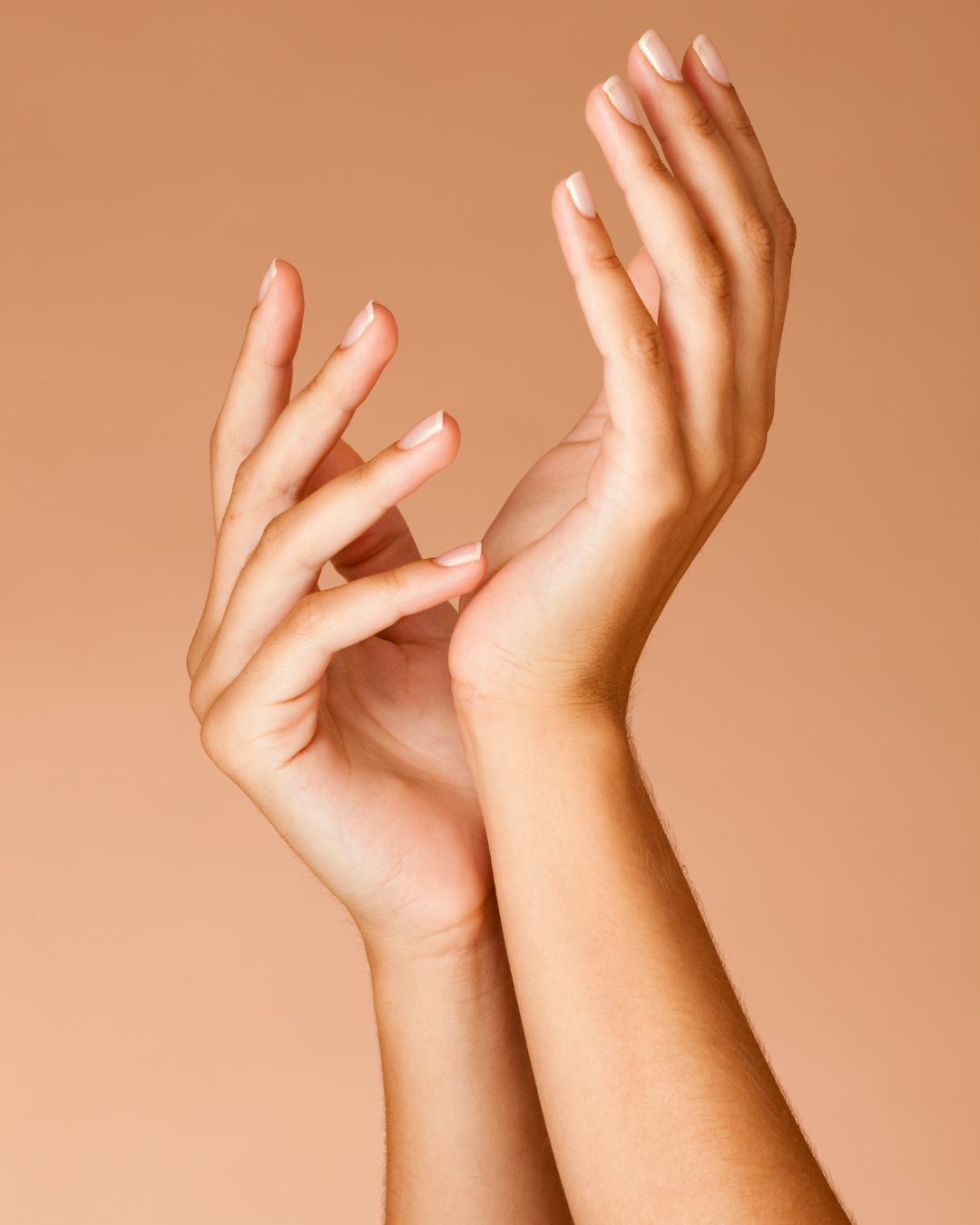
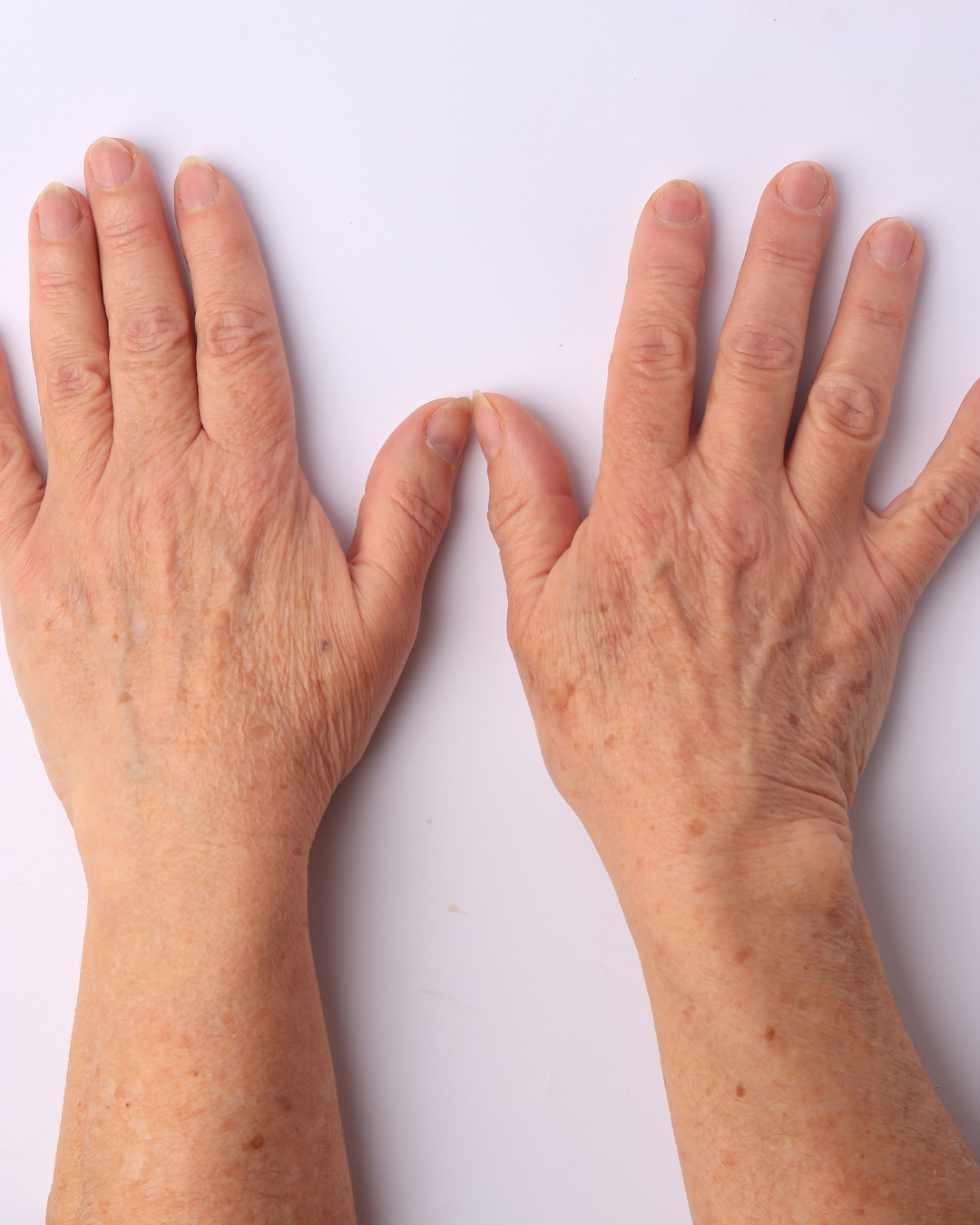
You have looked after your face for years. Then one day you catch sight of your hands on the steering wheel, or in a photograph holding a glass, and they look as though they belong to someone ten years older. Veins stand out. Tendons show. The skin has gone thin and slightly crinkled, like tissue paper, and there are brown spots that were not there a few summers ago.
It is one of the most common things patients mention in passing at my clinic in Hale, usually as an afterthought at the end of a consultation about something else. Almost nobody has been offered anything for it, and most people assume nothing can be done short of surgery. That is not the case. Hands respond well to a small number of treatments with proper trial evidence behind them, and the results tend to be some of the most satisfying in aesthetic medicine because the change is so visible in everyday life.
This guide explains why hands age the way they do, what each treatment can realistically achieve, what I do not offer and why, and what it costs at my clinic in Hale, Altrincham.
In this article:
- Why do hands age faster than the face?
- What are the signs of ageing hands?
- Which treatments actually work for ageing hands?
- What I do not offer for hands, and why
- What results can you realistically expect?
- How much does hand rejuvenation cost in Hale and Altrincham?
- Is hand treatment safe?
- Frequently asked questions
Why do hands age faster than the face?
The back of the hand is one of the most exposed and least protected areas of skin on the body. Three things work against it at once.
First, the skin there is thin, with very little fat underneath it even in youth. Second, it receives more ultraviolet exposure over a lifetime than almost any other site, because hands are out in daylight every day of the year, on the steering wheel, on a dog lead, on a pram handle, and almost nobody puts sunscreen on them. Third, hands are washed, sanitised and exposed to detergents dozens of times a day, which strips the skin barrier and accelerates dryness.
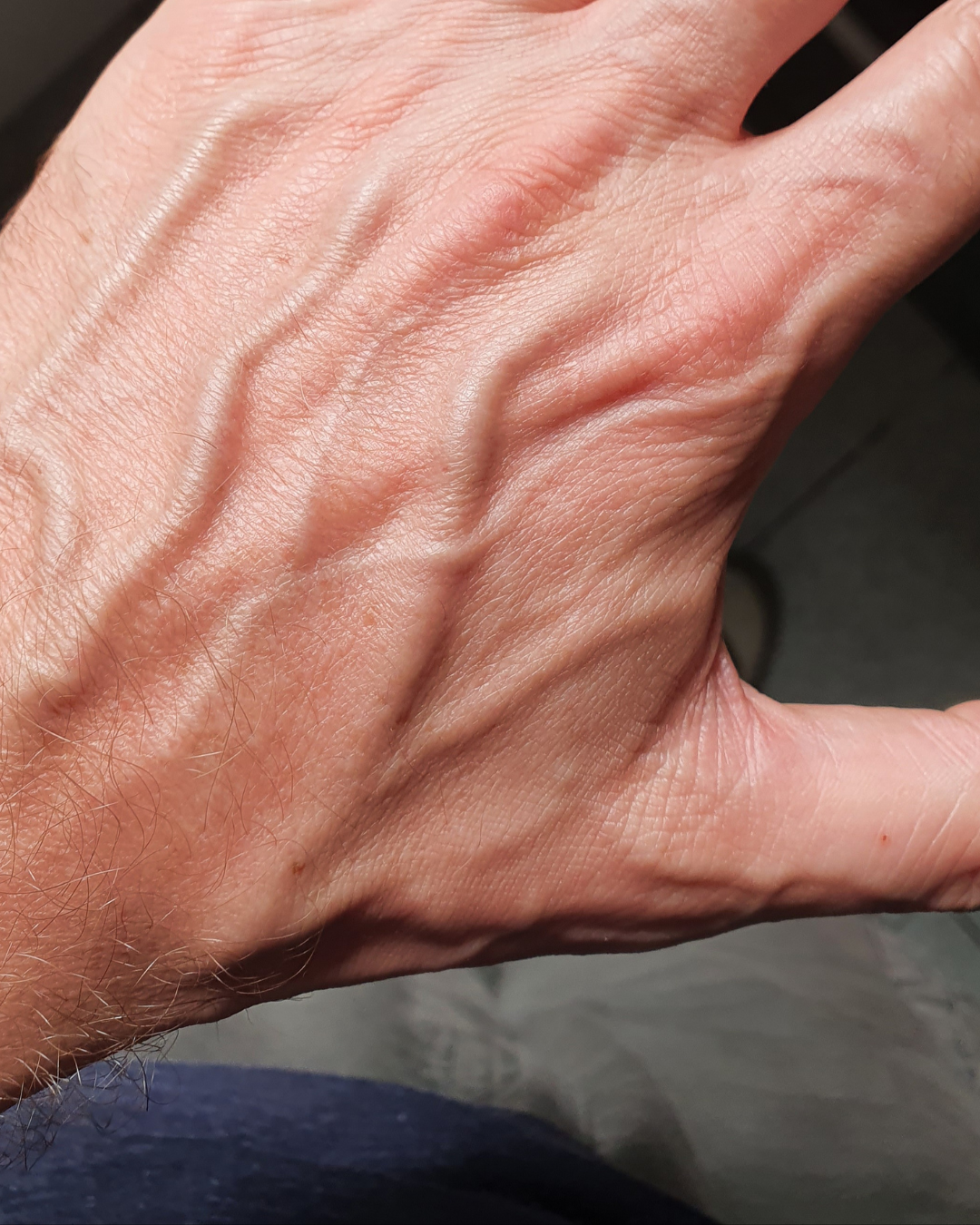
Underneath the skin, the same collagen decline that changes the face after 40 is happening in the hands, and it is steeper after the menopause when oestrogen falls. As the thin cushion of fat under the skin shrinks and the dermis thins, the structures that were always there, the veins and the extensor tendons, become visible. This is why hands often look "bony" or "veiny" rather than simply wrinkled. The veins have not grown. The padding over them has gone.
The hands age through three separate processes at once: loss of fat volume, thinning and crepiness of the skin itself, and accumulated sun damage. Each needs a different approach, which is why one treatment rarely does everything.
What are the signs of ageing hands?
Clinicians grade the back of the hand using the Merz Hand Grading Scale, a validated five-point scale that runs from no visible loss of fat at grade 0 to very severe loss with prominent veins and tendons at grade 4. Most people who ask about their hands sit at grade 2 or 3. In everyday terms, the changes people notice fall into these groups.
Which treatments actually work for ageing hands?
Hands are one of the few body areas where the evidence is unusually good, because the back of the hand is a licensed treatment site for one product rather than an off-label extension of a facial treatment.
Hyperdilute Radiesse for the back of the hands
Radiesse is a calcium hydroxylapatite (CaHA) biostimulator. It is the only injectable with specific regulatory approval for restoring volume to the back of the hands, granted in the United States in 2015, and it is the treatment with the strongest trial evidence for this area.
In a multicentre, randomised, blinded trial of 114 patients published in Dermatologic Surgery in 2018, 75% of those treated achieved at least a one-grade improvement on the Merz Hand Grading Scale at three months, and that improvement was largely maintained at twelve months. Patient-reported improvement ranged from 98% at three months to 86% at one year, and there was no measurable effect on hand function. The authors concluded that CaHA treatment produces
"significant improvement in the appearance of the dorsal hand and is well tolerated."
Goldman MP et al., Dermatologic Surgery, 2018
An earlier randomised trial of 101 patients found the same pattern, with treated hands significantly better than untreated controls and around three quarters of patients satisfied at six months.
At my clinic I use Radiesse in a diluted preparation for hands, placed with a cannula under the skin between the tendons. Diluting the product lets it spread evenly across the whole back of the hand rather than sitting in lumps, and it shifts the effect towards collagen stimulation and skin quality as well as immediate volume. Global consensus guidance published in 2018 by Goldie and colleagues describes how diluted and hyperdiluted CaHA
"stimulates targeted neocollagenesis in the injection area to improve laxity and skin quality."
Goldie K et al., Dermatologic Surgery, 2018
You see a softening of veins and tendons almost immediately from the carrier gel, and then a gradual improvement in skin thickness and texture over the following two to three months as new collagen forms. I treat both hands in one session with a single syringe, and recommend two sessions six to eight weeks apart, then a maintenance session roughly once a year.
Read more about the treatment on my hyperdilute Radiesse page.

Skin boosters for crepey, dry hands
If your main complaint is crepiness and dryness rather than visible veins, an injectable hyaluronic acid skin booster is worth considering, either on its own or alongside Radiesse. These do not add volume or hide tendons. They rehydrate the dermis and improve elasticity, so the skin looks plumper and smoother.
The evidence here is thinner than for Radiesse but growing. A registered clinical trial of Profhilo Body in the back of the hands treated 55 patients with two sessions a month apart and followed them for four months, measuring skin roughness and laxity. Skin boosters suit someone whose hands look dry and finely lined but still have reasonable padding, and they are often the better first step for patients in their early 40s.
Read more on my skin boosters page.
Prescription skincare and SPF for sun spots
Injectables do nothing for brown sun spots, and sun spots are often what makes hands look old from across a room. The most reliable non-device approach is a prescription-strength retinoid and pigment-regulating regime, the same medical-grade approach I use for facial pigmentation, applied to the backs of the hands nightly, with a broad-spectrum SPF 50 every morning for the rest of your life. The sunscreen matters more than any of the injectables on this page. Without it, the spots return and the skin keeps thinning.
Read more on my medical-grade skincare page.
Combining treatments
For most patients over 50 the best result comes from combining: Radiesse for the structure and skin thickness, a skin booster or prescription skincare for the surface, and SPF to protect the investment. This is exactly the combination approach described in the published hand rejuvenation literature. At consultation I will tell you which of these will make a visible difference for your hands and which would be spending money on something you do not need.
What I do not offer for hands, and why
Laser or IPL for sun spots. I do not have devices at the clinic, and on hands in particular the risk of post-inflammatory darkening is real, especially in olive and darker skin tones. Prescription skincare is slower but safer and more sustainable.
Electrocautery for brown spots. I remove clearly benign, non-pigmented lesions such as skin tags, but I do not treat pigmented spots of any kind. Anything brown that is changing, growing, bleeding or simply does not look like its neighbours should be checked by your own GP before anyone treats it cosmetically.
Fat transfer or surgery. These are surgical procedures and outside the scope of a non-surgical clinic. If the loss of padding is very advanced, I will say so and suggest a surgical opinion rather than sell you an injectable that will disappoint.
"Skin tightening" devices. No injectable or device tightens skin in the way a surgeon can. What Radiesse does is thicken and improve the quality of the skin so it looks and behaves younger. If that distinction matters to you, read my post on the skin tightening myth.
What results can you realistically expect?
With Radiesse, expect veins and tendons to be noticeably softer, not invisible. The hand looks fuller and smoother, the skin thicker and less crepey, and most patients say their hands simply stop looking older than the rest of them. In the trial data around three quarters of patients had a clear, blinded-assessed improvement, which also means roughly one in four had a subtler change. I will tell you at consultation which group your hands are likely to fall into.
What treatment will not do is remove sun spots, erase every crease, or make a 60-year-old hand look 30. Patients from Hale, Bowdon, Altrincham, Wilmslow and Alderley Edge who are happiest with their hands are the ones who wanted them to look well cared for and in keeping with their face, not the ones hoping for a different pair of hands.
The goal is hands that match your face. Softer veins, thicker skin, fewer spots, and a result nobody can put their finger on.,
How much does hand rejuvenation cost in Hale and Altrincham?
Hyperdilute Radiesse for both hands is £450 per session, with two sessions recommended for the initial course and a maintenance session roughly once a year. A new-patient consultation is £75 and is redeemed against treatment. Skin booster and skincare prices are on the price list. Hands are often treated at the same appointment as the neck or décolletage, since the same product and the same session logic apply.
Is hand treatment safe?
Radiesse has been used in the hands for well over a decade and is one of the better-studied injectables in aesthetic medicine. The common side effects are swelling, redness, bruising and tenderness for a few days, and occasionally a firm feeling under the skin for two to three weeks while the product settles. Swelling in the hands can be more noticeable than in the face because the tissue is loose, so plan treatment away from a wedding, a holiday or a week of heavy typing. Rings may be tight for a few days.
Rarer risks include lumps or unevenness, infection and, as with any filler, injury to a blood vessel. Using a cannula rather than a needle, and injecting into the correct plane above the tendons, keeps these risks low. As an NHS GP and independent prescriber I assess every patient before treatment and will not treat if you have an active skin infection on the hands, are pregnant or breastfeeding, or have a history of keloid scarring or certain autoimmune conditions.
Anything on your hands that is changing, bleeding, itching or new and unusual is a matter for your own GP first. I am happy to tell you that something looks harmless, but a cosmetic clinic is not the place to have a suspicious mark assessed.
Frequently asked questions
Can you reverse ageing hands?
You can substantially improve them. Volume can be restored, skin quality improved and sun spots faded. You cannot fully reverse decades of sun exposure, but most people are surprised by how much can be done.
What age do hands start to look old?
Fat loss and crepiness usually become noticeable in the mid-40s and accelerate after the menopause. Sun spots depend far more on lifetime UV exposure than on age.
Why do my hands look older than my face?
Because you have protected your face with sunscreen and skincare for years and left your hands exposed. The skin on the hands is also thinner with less fat beneath it, so the changes show sooner.
Does hand filler hurt?
Mild. The product is mixed with local anaesthetic, and using a cannula means only one or two entry points per hand. Most patients describe pressure rather than pain.
How long does hyperdilute Radiesse last in the hands?
The trial evidence shows most patients still improved at twelve months after a single treatment. With the two-session course I recommend, most people book a top-up around a year later.
Can I have my hands treated on the same day as my face or neck?
Yes, and many patients do, particularly those already having hyperdilute Radiesse for the neck or décolletage.
Does Profhilo work on hands?
It improves hydration and crepiness but does not hide veins or tendons. It suits hands with early changes, or as an add-on to Radiesse for skin quality.
Can you remove sun spots from hands?
I do not remove pigmented spots with electrocautery or laser. Prescription skincare fades them gradually and daily SPF prevents new ones.
How soon before a wedding or holiday should I have my hands done?
At least four weeks, and ideally the full two-session course finished six weeks before the day so swelling has settled and the collagen response has begun.
Is there a men's option?
Everything above applies equally to men, and veiny hands are a common concern for men who would never consider facial treatment.
Related reading
- Why collagen declines and the treatments that actually stimulate it
- Crepey neck skin: what actually works in your 40s, 50s and beyond?
- Why I'm introducing hyperdilute Radiesse to my clinic
- Menopause and facial ageing explained
- Hyperdilute Radiesse for neck, décolletage, hands and body
- Skin boosters for hydration and skin quality
Next steps
Book a consultation for your hands
Learn more about Dr Caroline Warden Clinic
Learn more about other treatments offered
References
- Goldman MP, Moradi A, Gold MH, et al. Calcium hydroxylapatite dermal filler for treatment of dorsal hand volume loss: results from a 12-month, multicenter, randomized, blinded trial. Dermatol Surg. 2018;44(1):75-83.
- Goldie K, Peeters W, Alghoul M, et al. Global consensus guidelines for the injection of diluted and hyperdiluted calcium hydroxylapatite for skin tightening. Dermatol Surg. 2018;44 Suppl 1:S32-S41.
- Marmur E, et al. Multicenter, randomized trial assessing the effectiveness and safety of calcium hydroxylapatite for hand rejuvenation. Dermatol Surg. 2009;35 Suppl 2:1978-84.
- Cohen JL, et al. Evaluation of the Merz Hand Grading Scale after calcium hydroxylapatite hand treatment. Dermatol Surg. 2015;41 Suppl 1:S314-20.
- Aesthetic performance and tolerance of an injective intradermal treatment for skin roughness and laxity of the back of the hands (Profhilo Body). ClinicalTrials.gov NCT05590364.
- Lin. Calcium hydroxylapatite-based fillers in dorsal hand rejuvenation: a practical checklist for formulation and protocol specificity. J Cosmet Dermatol. 2026;25(7).
Written by Dr Caroline Warden, NHS GP with over 19 years of clinical experience, independent prescriber and Level 7 qualified aesthetic doctor. GMC 6157708. Dr Caroline Warden Skin & Aesthetic Clinic, 2 Crown Passages, Hale, Altrincham, Cheshire WA15 9GN.