Is Everyone Starting to Look the Same? The Science of Instagram Face and How to Stay Unmistakably You

Last updated: 26 October 2026
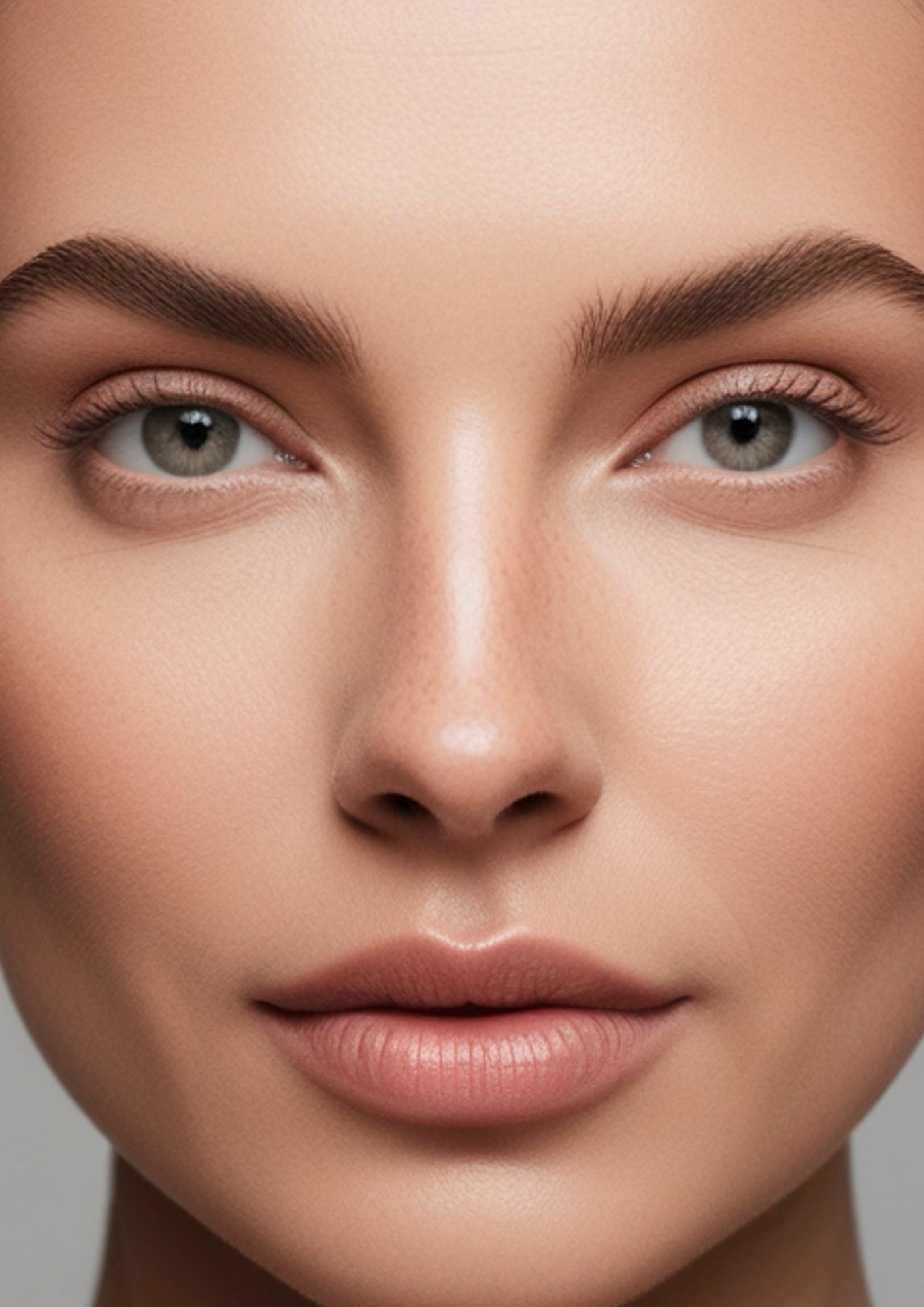
Scroll through any social feed, flick through a reality show, or sit in a café in Hale on a Saturday morning, and you may notice something odd. The faces are starting to converge. The same lifted cheekbones. The same full, flat upper lip. The same smooth, poreless forehead. The same slightly cat-like eye.
So is everyone starting to look the same? And if they are, is it filters, fillers, biology, psychology, or all four at once?
As an NHS GP and aesthetic doctor at my doctor-led clinic in Hale, Altrincham, I have a particular interest in this question, because the answer shapes every treatment plan I write. Your face is your signature. It tells people who you are before you have said a word. The point of good aesthetic medicine is not to swap that signature for a popular one. It is to keep it legible for longer.
This article looks at what the science actually says about facial sameness, why your brain quietly recalibrates what "normal" looks like, and the practical principles I use so that my patients across Hale, Bowdon, Altrincham, Wilmslow and Alderley Edge leave looking rested and recognisable, never templated.
In this article:
- Why does everyone look the same after aesthetic treatments?
- What is Instagram Face?
- Are average faces really more attractive?
- Why does your brain recalibrate what looks normal?
- What do the UK numbers show?
- Why does individuality still matter?
- What happens when a patient says "I don't look like me anymore"?
- How do you keep your face looking like you?
- Frequently asked questions
Why does everyone look the same after aesthetic treatments?
It is tempting to blame injectables alone, but the "same face" effect has three separate causes, and only one of them involves a syringe. Understanding all three is what lets you avoid the trap.
Sameness is not caused by aesthetic medicine. It is caused by aesthetic medicine applied as a template instead of a plan.
What is Instagram Face?
The phrase was coined in 2019 by the New Yorker writer Jia Tolentino, who described the look that filters, editing apps and cosmetic treatment had produced together as:
"a single, cyborgian face"
Jia Tolentino, The Age of Instagram Face, The New Yorker, 2019
Seven years on, the look she described has moved offline. It is a young face, with poreless skin, high plump cheekbones, a small neat nose and full lips, and it is recognisable across celebrities, influencers and reality television alike. In a 2026 interview Tolentino went further, arguing that when every face can be optimised, the face stops being evidence of a life lived and starts to resemble a product.
That is the cultural diagnosis. What interests me as a doctor is the mechanism: why intelligent, self-aware women in Cheshire, who would never say they want "Instagram Face", can still drift towards it one small treatment at a time. The answer lies in how the brain judges beauty, and it is the subject of the next two sections.
Are average faces really more attractive?
You may have heard that "attractive faces are only average". That is the title of a famous 1990 study in Psychological Science by Judith Langlois and Lori Roggman, who digitally blended photographs of faces and found that the composite was rated more attractive than almost every individual face that went into it. The more faces in the blend, the higher it scored.
It is a real finding, and it explains something important: when skin tone, symmetry and texture are made more uniform, faces move towards a mathematical mean that the brain finds easy to process and pleasing to look at. That is the scientific root of why "smoother, fuller, softer" tends to read as "prettier", at least in a photograph.
But it is only half the story, and the newer half is more reassuring for anyone who values their own face.
Average is easy to look at. Individual is what people remember. Good treatment keeps the second while quietly tidying the first.
Why does your brain recalibrate what looks normal?
This is the part most people have never heard explained, and it is the real engine behind the "same face" effect.
Your brain does not hold a fixed picture of what a normal face looks like. It holds a running average of the faces it has seen recently, and it updates that average constantly. The 2024 Communications Biology study mentioned above showed this at the neural level: when participants learned that their peers found a face attractive, the brain's own spontaneous response to that face shifted to match, and the shift was strongest when the opinion came from people they identified with and when they felt social norms were tight.
Now apply that to a feed full of filtered and treated faces. Every scroll nudges your internal reference point. A degree of fullness that would have looked overdone to you five years ago starts to look normal, then starts to look slightly less than enough.
Clinicians have begun to name this. A 2026 paper in the Journal of Cosmetic Dermatology describes Overfilled Face Syndrome and its mirror image, the Fear of Overfilling, and explains the mechanism as a paradox of enhancement: repeated treatment, or repeated exposure to digitally exaggerated faces, gradually resets the viewer's sense of where normal sits. The author's summary is worth quoting:
"the public's perception of what 'natural' looks like has been distorted by digital aesthetics"
Journal of Cosmetic Dermatology, 2026
In the clinic this is sometimes called filler blindness or perception drift: the patient can no longer see that they have had enough, because their own eye has recalibrated. It is not vanity and it is not stupidity. It is how visual perception works. Which is exactly why the decision about how much is enough should never rest with the patient's eye alone, or for that matter with the injector's eye alone, but with objective facial analysis against your own baseline.
What do the UK numbers show?
Most writing on this subject uses American figures. The UK picture is just as striking.
Read those together and the shape of the problem is clear. Treatments are now seen as casual, two thirds of young people would change their face if they could, and a growing number of people are searching for how to undo what they have had done. The counter-movement towards less filler and more structure is real, and I wrote about it in Filler Fatigue: Less Filler, More Structure.

Why does individuality still matter?
If average faces are pleasant to look at, why not just aim for average? Because a face does three jobs at once, and only one of them is being looked at.
There is a longer history here too. What a culture finds beautiful has shifted continuously across centuries, which I explored in Beauty Standards Through the Ages. The only constant is that the face which survives every trend is the one that was never built for a trend.
What happens when a patient says "I don't look like me anymore"?
A good proportion of the new patients who come to my Hale clinic have had treatment before, somewhere else or years ago, and arrive with a version of the same sentence: the results were fine, but the person in the mirror has drifted. This is one of the consultations I find most rewarding, because the solution is almost always restoration rather than reconstruction.
The outcome I am aiming for is that friends say you look well, rested or happy, and cannot say why. If anyone can name the treatment, something has been overdone.
How do you keep your face looking like you?
These are the principles I work to on every patient, and they are worth knowing whether you are treated here or anywhere else in Cheshire.
Notice what is not on that list: anything chosen because it is trending. A treatment that suits the face in front of me is the only kind I offer, and if I do not think something will help you look more like yourself, I will say so and we will not do it.
The goal is timeless, not fashionable. Fashion is what everyone is having this year. Timeless is what still looks like you in ten.

The takeaway: beauty that belongs to you
Yes, faces are converging, and the science explains why: shared genetics, a brain that recalibrates towards whatever it sees most, and a handful of treatments applied as a template. None of those forces is irresistible. The antidote is a plan built on your own face, reviewed against your own baseline, by someone whose aim is to keep you recognisable.
In an age of sameness, the real luxury is authenticity. That is what a doctor-led, bespoke approach is for.
Frequently asked questions
Are aesthetic treatments making everyone look the same?
Partly. Treatments amplify a trend that genetics and social psychology already push towards, and when the same few enhancements are applied to different faces the result converges. The protection is a bespoke, anatomy-led plan rather than a treatment menu.
What is Instagram Face?
A term coined by Jia Tolentino in 2019 for the single look produced by filters, editing apps and cosmetic treatment together: poreless skin, high plump cheeks, a small nose, full lips and a lifted, cat-like eye. It began online and is now visible offline across the UK.
What is pillow face or overfilled face?
The flattened, puffy appearance that develops when filler accumulates beyond what the face's structure can carry, often from repeated top-ups over years. A 2026 paper in the Journal of Cosmetic Dermatology names it Overfilled Face Syndrome. It is usually improvable, sometimes by dissolving and sometimes simply by stopping top-ups and rebuilding structure instead.
What is filler blindness or perception drift?
The gradual resetting of your own sense of "normal" through repeated treatment and repeated exposure to enhanced faces, so you can no longer see that you have had enough. It is a feature of how perception works, not a personal failing, and it is why I review every patient against their own earlier photographs.
Is an average face the same as a beautiful face?
Not quite. Blended "average" faces do score well in studies, but a 2021 University of Glasgow study found the most attractive features were not the average and varied with culture and individual taste. Individuality adds the emotional recognition that averageness lacks.
Which is safer, dermal filler or skin boosters?
Both are safe in appropriately trained medical hands. Skin boosters and polynucleotides improve hydration, glow and elasticity without changing your facial structure, which makes them an excellent starting point for anyone worried about looking different. Filler is for restoring lost support, in conservative amounts.
When should I start aesthetic maintenance?
In your thirties the emphasis is skin health, hydration and prevention. From your forties the emphasis shifts to preserving structure and collagen. Starting with a plan, rather than a treatment, is what leads to graceful, recognisable ageing at any age.
How do I choose an aesthetic clinic in Hale or Altrincham that will keep me looking like me?
Look for a doctor-led clinic, a consultation that assesses your whole face and your own baseline photographs before anything is proposed, products from a named UK supplier, and an ethos that is comfortable recommending nothing. I wrote a fuller guide in How to Choose an Aesthetic Clinic Safely.
Where is the clinic?
2 Crown Passages, Hale, Altrincham, WA15 9GN, with parking immediately outside. Patients travel from Altrincham, Bowdon, Hale Barns, Timperley, Sale, Wilmslow, Alderley Edge, Knutsford, Stockport, South Manchester and across Cheshire.
Further reading
- How to Choose an Aesthetic Clinic Safely
- Why Some Aesthetic Treatments Look Unnatural and How to Avoid It
- Signs You're Overdoing Your Aesthetic Treatments and How to Stay Subtle
- Filler Fatigue: Less Filler, More Structure
- Dermal fillers in Hale, for restoring lost support
- Skin boosters in Hale, for glow without changing structure
Next steps
Learn more about Dr Caroline Warden Clinic
Learn more about other treatments offered
About the author
Dr Caroline Warden is an NHS GP with nearly twenty years in medicine, an independent prescriber, and holds a Level 7 postgraduate diploma in cosmetic injectables. She is the sole treating practitioner at Dr Caroline Warden Skin & Aesthetic Clinic, 2 Crown Passages, Hale, Altrincham, Cheshire. GMC number 6157708. Every consultation and treatment at the clinic is carried out personally by Dr Caroline.
References
- Joshi RS, Rigau M, García-Prieto CA, et al. Look-alike humans identified by facial recognition algorithms show genetic similarities. Cell Reports. 2022;40(8):111257. Read the study.
- Chen D, Yao Z, Liu J, Wu H, Hu X. Social conformity updates the neural representation of facial attractiveness. Communications Biology. 2024;7:1369. Read the study.
- Langlois JH, Roggman LA. Attractive faces are only average. Psychological Science. 1990;1(2), pages 115 to 121. Read the study.
- Zhan J, Liu M, Garrod OGB, et al. Modeling individual preferences reveals that face beauty is not universally perceived across cultures. Current Biology. 2021;31(10). Read the study.
- de Oliveira RRC. The Fear of Overfilling (FOF): A Clinically Significant Response to Digital Aesthetics and the Dermatologist's Imperative to Preserve Facial Identity. Journal of Cosmetic Dermatology. 2026. Read the paper.
- Tolentino J. The Age of Instagram Face. The New Yorker, December 2019. Read the essay.
- Petter O. Are we all going to end up with the same face? The Independent, May 2024, citing British Association of Aesthetic Plastic Surgeons (BAAPS) 2023 audit data. Read the article.
- VICE UK and Save Face. What We Learned from the UK's Biggest Poll About Lip Fillers. Read the findings.
