Why Do We Think Men Look Better With Age? The Psychology of Attraction

Last updated: 20 October 2026
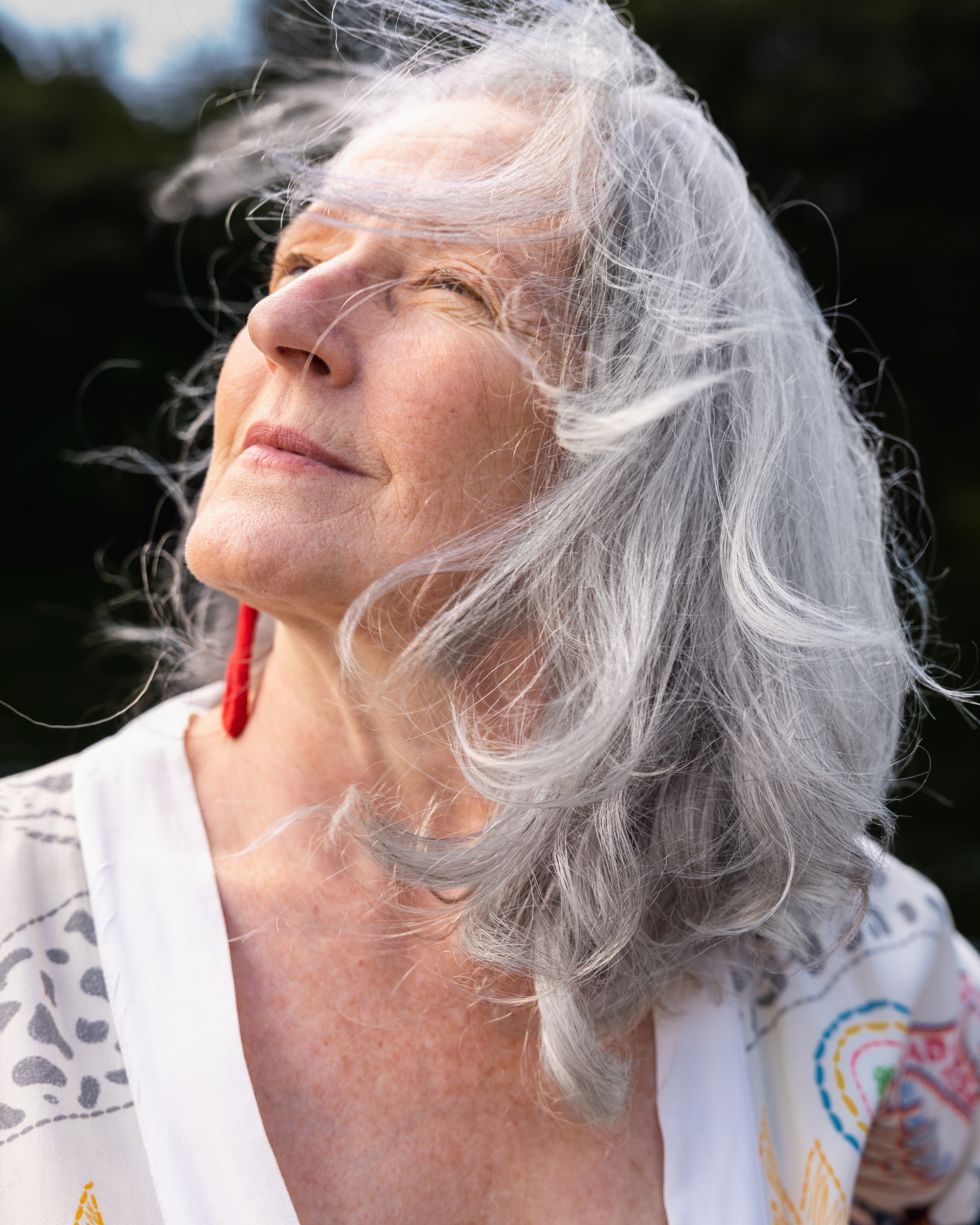
Grey hair, lines around the eyes, a face that has changed shape over twenty years. On a man, we tend to call that distinguished. On a woman, we tend to call it tiredness, or we say nothing at all, which can be worse.
Listen to the compliments. A man in his fifties is a silver fox. A woman of the same age looks incredible for her age. One is praised for how he looks now. The other is praised for how little she appears to have changed.
So is there any scientific basis for the idea that men become more attractive as they age? Or have we been conditioned to read the same physical changes differently depending on whose face they appear on?
As an NHS GP and an aesthetic doctor working in Hale, Altrincham and across Cheshire, I find this one of the most interesting questions in my field. Because men and women do age differently in a biological sense, and I have written about that separately. But the way we interpret those changes is a different matter entirely, and the psychology turns out to be at least as revealing as the biology.
In this article:
- Why does grey hair make a man look distinguished?
- What is the double standard of ageing, and does the research support it?
- Why do we associate male ageing with status?
- What do UK women actually say about ageing and representation?
- Is attraction really about youth?
- Do women age faster than men, or does it just look that way?
- Why do some women feel they have become invisible?
- Are men ageing better, or are we simply more forgiving?
- What this means for aesthetic medicine
- Frequently asked questions
Why does grey hair make a man look distinguished?
Here is the strange thing about the language we use for an attractive older man. Grey hair becomes silver. Lines around the eyes suggest character. A weathered face conveys experience, confidence and a life well lived.
None of these are physical improvements. They are interpretations. We attach meanings to visible signs of ageing, and those meanings are shaped by what society has historically valued in men: competence, authority, emotional maturity and success.
The same sign carries a different message on a woman, and the table below sets out just how differently the identical change can be read.
Neither set of readings is particularly logical. But attraction is not entirely logical. It is built from the meanings we attach to physical features, and those meanings are learned from culture, from personal experience and from decades of the images we are shown.
The same physical sign of ageing can carry two completely different social messages. The sign has not changed. The reading has.
What is the double standard of ageing, and does the research support it?
The idea that men and women are judged differently as they grow older is not new. In 1972, the writer and critic Susan Sontag published an essay in the Saturday Review called The Double Standard of Aging, and the phrase has been used ever since. Her argument was that society permits men to grow older, and even rewards them for it, while women are treated as though their value declines with every passing year. She put the emotional difference starkly:
"Most women experience it even more painfully: with shame."
Susan Sontag, The Double Standard of Aging, Saturday Review, 1972
That was a cultural argument. Researchers have spent fifty years testing whether it holds up, and the honest answer is that it largely does, though with more nuance than the headline suggests.
Put together, the evidence does not establish that men become objectively better looking with age. It suggests that youth is prized in both sexes, that women are penalised more heavily for losing it, and that masculinity has been allowed to stretch across a far wider range of ages than femininity has.
Why do we associate male ageing with status?
Historically, men have been judged on a combination of appearance, achievement, financial stability and social position. Women have faced far greater pressure to be judged on youthful physical attractiveness alone.
These are broad cultural patterns, not universal rules, and they are shifting. But they have not gone.
Think about a successful man in his fifties. His age reinforces the impression that he is established, knowledgeable and secure. Now think about a successful woman of the same age, with the same CV. Her achievements may be equally impressive, yet conversation about her can still drift to whether she looks younger than she is.
Sontag's original observation was that men are valued for their accomplishments, which tend to accumulate with age, while women are valued for their appearance, which does not. Half a century later, the European Social Survey data above shows that men still place the threshold of "old" for women earlier than women place it for themselves. Ageing is not simply a biological process. It is a social identity, and a good part of it is assigned to us by other people.
What do UK women actually say about ageing and representation?
Much of the research above is international, so it is worth looking at what women in this country report. The Centre for Ageing Better, a UK charity, ran a survey with the campaign Ageism Is Never In Style on how women see themselves portrayed.
A 2022 University of Exeter study in the Journal of Women and Aging adds a layer to this. Researchers surveyed 184 older women and found two consistent themes: unfavourable experiences of ageism, and deliberate attention to appearance as a way of avoiding it. Strikingly, the women described managing their appearance not only to dodge other people's judgement but to bring their outside closer to how they felt inside, which was often considerably younger than their face suggested.
Many women who take care of their appearance in midlife are not chasing youth. They are trying to look like the person they still feel they are.

Is attraction really about youth?
One limitation of this whole conversation is that we reduce attractiveness to the face in a photograph. Real attraction is considerably more complex. Confidence, humour, warmth, familiarity, emotional connection and perceived status all shape how attractive we find someone, and none of those qualities necessarily diminish with age. Some become more developed.
Someone who is comfortable in their own skin is attractive at any age, lines or no lines. But we should be careful not to swap one stereotype for another. Not every older man becomes more confident. Not every woman becomes less so. And not everyone is drawn to the same qualities.
Perhaps the question is not whether men become better looking. Perhaps it is whether we are more willing to recognise attractiveness in older men, because we have been shown it so many more times. For decades, leading men have been allowed to keep playing charismatic, desirable characters well into their fifties and sixties, with their changing faces folded into their appeal. Women on screen have more often been expected to stay visibly young, and even when an older actress is celebrated, it is usually with the qualifier "for her age".
We say she looks amazing for sixty. Why not simply say she looks amazing? That small qualification shows how deeply youth is still embedded in our idea of female beauty.
Do women age faster than men, or does it just look that way?
This is where I need to separate the psychology from the medicine, because the two are often muddled together.
There are real biological differences in how male and female faces change. Hormones influence collagen, skin thickness, hydration and the distribution of facial fat. For many women, the menopausal transition brings a comparatively abrupt change in oestrogen that can show in skin quality and facial support within a few years. Men experience hormonal change too, but as a slow decline rather than a cliff edge, and male skin is thicker and more collagen-dense to begin with.
That said, biology does not mean every woman ages faster than every man. Genetics, sun exposure, smoking, sleep, stress and individual facial anatomy all have a substantial effect, and I see plenty of women in their fifties in my Hale clinic whose skin is in better condition than that of men ten years younger.
I have covered the biology in detail in Why Men and Women Age Differently. The point for this article is simpler: biology explains why a line appears. It cannot explain why we find the same line attractive on one person and unwelcome on another. That is culture doing the work.
Why do some women feel they have become invisible?
One of the more troubling things I hear in consultations, from women in Altrincham, Bowdon, Wilmslow and Alderley Edge alike, is a feeling of having become less visible somewhere in their forties. Not less capable, not less busy, and usually not wanting to look twenty-five again. Simply aware that the way other people respond to them has changed.
When a society has rewarded female youthfulness for decades, visible ageing can feel like the loss of something that was quietly currency. The Centre for Ageing Better figures above give that feeling a number: almost two thirds of women stop seeing themselves reflected in the media from the age of 46.
The Åberg study in the Journal of Aging Studies found women were more likely than men to experience ageing as a loss of appearance-related value, but it also found that these experiences varied a great deal with social circumstances, and that appearance pressure affected men in certain groups too. So the story is not simply that women worry and men do not. It is that the expectations placed on us differ, and those expectations shape how we experience getting older.
Are men ageing better, or are we simply more forgiving?
This is the question I keep coming back to.
Imagine two people in their early fifties. Both have forehead lines, some loss of volume in the cheeks and temples, and grey hair. Both are healthy, successful and comfortable in themselves. Why might one be described as distinguished while the other is told she looks tired?
The physical changes are not identical, as the previous section explains. But the judgement is influenced at least as much by expectation as by anatomy. We allow men to look their age. We still praise women for not looking theirs. Those are two different standards, and only one of them is kind.
Maybe men do not age better. Maybe we have simply become better at appreciating the way they age.
What does this mean for aesthetic medicine?
As an aesthetic doctor, I think this conversation matters more than most in my field, because there is an important difference between wanting to look refreshed and feeling you are no longer allowed to look your age.
I do not believe aesthetic medicine should be about making every face look younger. Nor do I believe that choosing treatment means someone has failed to embrace ageing. Both positions are judgemental, and both miss what patients actually tell me they want.
Some people are entirely comfortable with their lines and changing proportions. Others prefer to soften particular changes that bother them. Both are reasonable choices, and the only thing that matters clinically is that the motivation is understood and the expectations are realistic.
In my clinic I talk about the distinction between looking younger and looking well. A face does not need to be smooth to be attractive. Expression, individuality and character are part of how we recognise someone, and preserving those is usually far more important than removing every visible sign of time. The treatments I reach for most, such as Sculptra for structural support and medical-grade skincare for skin quality, work precisely because they restore what the face is losing rather than disguising what it has become.
The honest aim is not to help a woman look like she has not aged. It is to help her look like herself, well rested and well, at whatever stage she happens to be.

Perhaps we need to change the question
Instead of asking why men look better with age, perhaps we should ask why we have been taught that women do not.
The evidence does not support the idea that male ageing is inherently attractive and female ageing inherently unattractive. What it reveals is a complicated relationship between physical appearance, cultural expectation, psychology and personal preference, and how much of what we find attractive has been learned.
Grey hair does not automatically make a man distinguished. Lines do not automatically make a woman less beautiful. And getting older does not have to mean becoming a lesser version of your younger self. It can simply mean looking like yourself at a different stage of life.
We have spent fifty years learning to be generous about the way men age. It is time we extended the same generosity to women, and to ourselves.
Frequently asked questions
Do men really age better than women?
Not objectively. Studies consistently find that younger faces are rated more attractive in both sexes. What differs is the size of the penalty: women's attractiveness ratings fall more steeply with age than men's, and masculinity ratings barely change while femininity ratings decline. That is a difference in judgement, not in biology.
Why is grey hair attractive on men but not on women?
Because of the meanings attached to it. Grey hair on a man is read through qualities society has valued in men, such as experience and authority. On a woman it is more often read as a loss of youth, which has been tied far more tightly to how women are valued. The hair is the same colour. The interpretation is cultural.
What is the double standard of ageing?
A phrase coined by Susan Sontag in 1972 for the way women face greater social penalties for growing older than men do. Research since then has broadly supported it, while showing that it varies by life domain, by social class and by culture.
At what age do women start to feel invisible?
There is no fixed age, but UK survey data from the Centre for Ageing Better found that almost two in three women stop feeling represented in the media from around 46, which matches what many of my patients in Hale and Altrincham describe.
Do women's faces actually age faster than men's?
Female skin is thinner and less collagen-dense than male skin, and the menopausal transition can bring a comparatively rapid change in skin quality and facial support. So there are real biological differences. But lifestyle, genetics and sun exposure have an enormous effect, and plenty of women age more slowly than men of the same age.
Does having aesthetic treatment mean I have given in to the double standard?
No. Choosing to soften a change that bothers you is a personal decision, not a political one. The Exeter research found many women manage their appearance to look like the person they feel they are, which is a very different motivation from chasing youth. What matters is that the decision is yours, made with realistic expectations and without pressure.
Can aesthetic treatment help me look my age well, rather than younger?
That is exactly how I approach it. The aim in my clinic is a face that looks rested, healthy and recognisably you. If you would like to talk it through, a consultation involves no commitment to treatment, and it is not unusual for me to recommend nothing at all.
Further reading
- What Are the Best Aesthetic Treatments for Your 30s, 40s and 50s?
- Why Men and Women Age Differently: The Science Behind Facial Ageing
- Why Men Seem to Age Better Than Women, and How to Close the Gap
- Beauty Standards Through the Ages: Why Our Brains Find Certain Features Attractive
- Is It Vanity or Self-Respect? The Psychology Behind Skin Rejuvenation
- What Happens During an Aesthetic Consultation
Next steps
Learn more about Dr Caroline Warden Clinic
Learn more about other treatments offered
About the author
Dr Caroline Warden is an NHS GP with nearly twenty years in medicine, an independent prescriber, and holds a Level 7 postgraduate diploma in cosmetic injectables. She is the sole treating practitioner at Dr Caroline Warden Skin & Aesthetic Clinic, 2 Crown Passages, Hale, Altrincham, Cheshire. GMC number 6157708. The clinic specialises in natural-looking aesthetic treatments, regenerative medicine and long-term skin health.
References
- Sontag S. The Double Standard of Aging. Saturday Review, 23 September 1972. Reprinted in On Women (2023). Collection details.
- Deutsch FM, Zalenski CM, Clark ME. Is There a Double Standard of Aging? Journal of Applied Social Psychology. 1986;16(9), pages 771 to 785. Read the study.
- Teuscher U, Teuscher C. Reconsidering the Double Standard of Aging: Effects of Gender and Sexual Orientation on Facial Attractiveness Ratings. Personality and Individual Differences. 2007;42(4), pages 631 to 639. Read the study.
- Settersten RA, Day J, Hagestad G. The Double Standard of Aging for Men and Women: Evidence From Across Europe, 2006 to 2018. Innovation in Aging. 2020. Read the abstract.
- Kornadt AE, Voss P, Rothermund K. Multiple Standards of Aging: Gender-Specific Age Stereotypes in Different Life Domains. European Journal of Ageing. 2013. Read the study.
- Åberg E, Kukkonen I, Sarpila O. From Double to Triple Standards of Ageing. Journal of Aging Studies. 2020;55:100876. Read the study.
- Cecil V, Pendry LF, Ashbullby K, Salvatore J. Masquerading Their Way to Authenticity: Does Age Stigma Concealment Benefit Older Women? Journal of Women and Aging. 2022. Read the study.
- Centre for Ageing Better and Ageism Is Never In Style. Survey on representation of older women in the media. Read the findings.