
Skin, Aesthetics & Healthy Ageing Journal
Evidence-based advice from Dr Caroline Warden, NHS GP and aesthetic doctor in Hale, covering facial ageing, menopause skin, regenerative aesthetics, skincare and natural-looking aesthetic treatments.

The Best Skincare Ingredients During Menopause: A GP’s Evidence Ranked Guide
There is no single menopause skincare routine. Dr Caroline Warden, NHS GP and aesthetic doctor in Hale, ranks the ingredients by evidence, explains why most routines are too complicated, and builds a plan for dryness, sensitivity, breakouts, pigmentation and lines.
5 min read
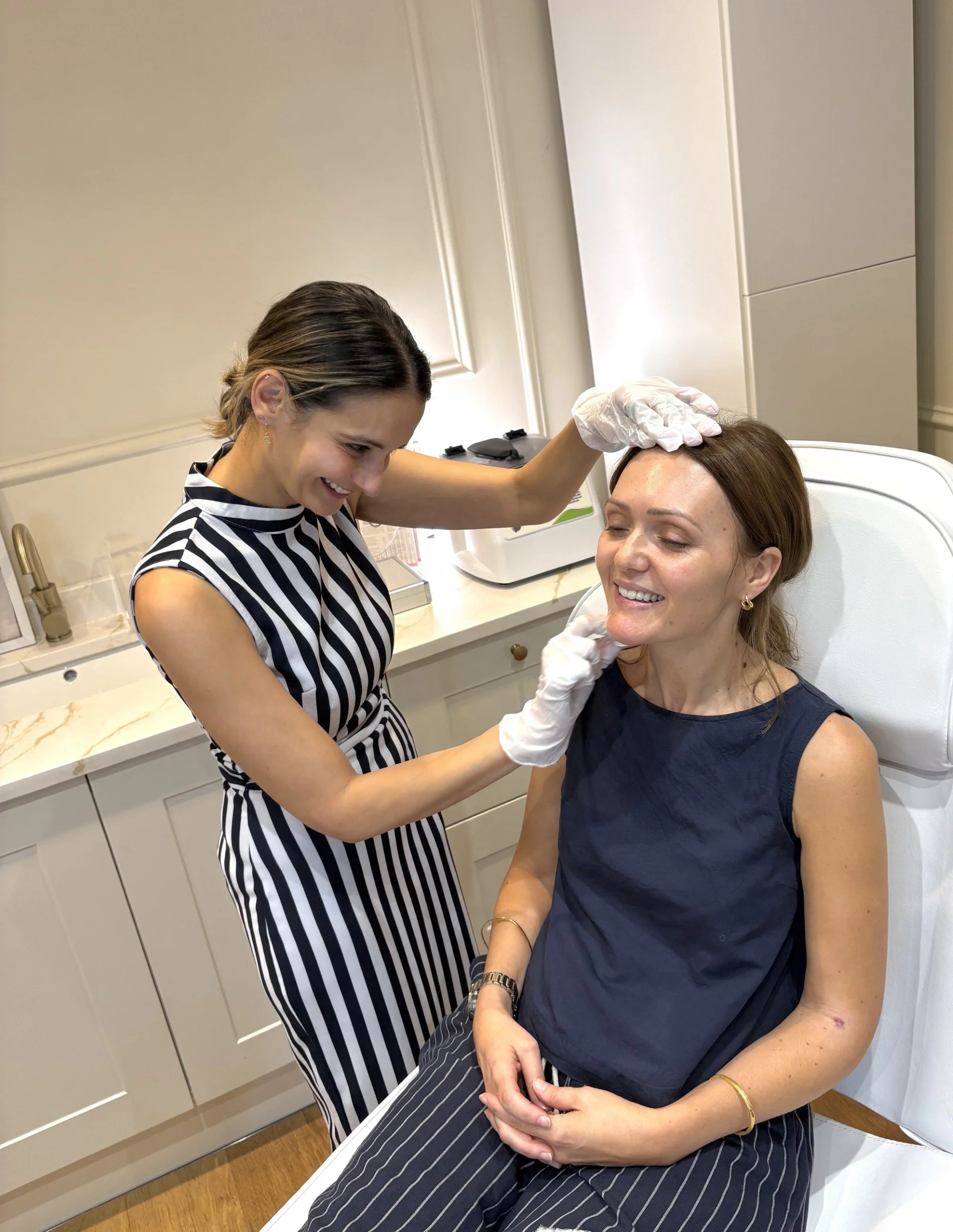
What an Aesthetic Consultation Should Feel Like (And Why Many Women Walk Away From Bad Ones)
Most people who leave an aesthetic consultation without booking have not changed their mind about treatment; they have changed their mind about the room. A Hale GP explains what the GMC requires of a cosmetic consultation, the questions you should be asked and why, the questions to ask back, and a seven point test for when to walk away.
4 min read

How Alcohol Affects Your Skin This Christmas (Without the Lecture): What the Evidence Says About Puffiness, Redness, Ageing and Treatments
Not a lecture, a map. What alcohol does to your skin overnight, which drinks flush you, what a study of 3,267 women found about drinking and facial ageing, how long to leave between a glass and your treatments, and how fast skin recovers when December ends.
4 min read

Why Collagen Declines and the Treatments That Actually Stimulate It: A Doctor’s Evidence Guide
Collagen falls about 1% a year from your mid twenties and 30% in the five years after menopause. What that looks like, why fibroblasts stop working, and the treatments with biopsy evidence that they rebuild it.
4 min read

Is Beauty Sleep Real? What Sleep Actually Does to Your Skin, According to the Studies
Beauty sleep is one of the few beauty claims that has been tested in a laboratory and passed. What the experiments show, what your skin does overnight, which features give away a bad night, and the habits that actually help.
4 min read

Self Care After 40: Why Looking After Your Skin Is Self Respect, Not Vanity
Somewhere after 40 the conversation stops being about trends and starts being about a gap: “I feel fine, but I look tired.” Why closing that gap is self respect rather than vanity, what the evidence says, and what a maintenance approach looks like.
4 min read

Best Solutions for Dry Skin This Winter: How to Rescue Your Skin with Obagi Skincare and Skin Boosters (Updated for Winter 2026/27)
Tight, flaky, sore winter skin is a barrier problem, not a bad luck problem. An NHS GP explains why it happens, the daily routine that fixes most of it, the Obagi moisturisers she recommends in Hale and when injectable skin boosters are worth adding.
4 min read

Glycation: Is Sugar Ageing Your Skin? A Doctor’s Guide to Wrinkles, Collagen and What Actually Helps
Sugar and wrinkles: what glycation really does to collagen, what the large Dutch and American studies found, why sunscreen is the best anti glycation product, and how a Hale doctor rebuilds collagen that has already been damaged.
4 min read

The Elegant Approach to Perimenopausal Skin: Understanding & Treating Midlife Hormonal Changes
Perimenopause changes the skin before most women connect the dots: dryness, dullness, new sensitivity and softening contours. An NHS GP and aesthetic doctor in Hale explains what falling oestrogen does beneath the surface, what UK surveys show, and the three pillar plan that restores skin without changing your face.
4 min read

Is It Safe to Use Hydroquinone Long Term? Obagi Nu-Derm, Ochronosis and What the Evidence Really Shows
Frightened by what you have read about hydroquinone online? An NHS GP and aesthetic doctor in Hale examines the 2022 systematic review, the US figures and 38 years of Obagi Nu-Derm use, and explains how a supervised programme keeps the rare risk of ochronosis in proportion.
5 min read

Dermal Fillers: Everything You Need to Know Before Treatment (A Doctor’s Guide, Updated 2026)
What dermal fillers can and cannot do, how long they really last, the risks the evidence actually supports, where UK regulation stands in 2026 and when I would steer a patient away from filler altogether. Written by NHS GP and aesthetic doctor Dr Caroline Warden, Hale.
4 min read

Why Looking Tired Is Not a Personal Failing: What Really Makes a Face Look Tired, and How a Doctor Can Help
“Looking tired” is not a character flaw. It is biology, expression and stress written across the face. A Hale GP and aesthetic doctor explains what is really going on, when tiredness needs your GP rather than a clinic, and how conservative treatment can help you look like yourself on a good day.
4 min read

Why Men Seem to Age Better Than Women: The Biology, and How Women Can Close the Gap
It is not your imagination: men’s faces do age differently, and the biology gives them a head start. An NHS GP and aesthetic doctor in Hale explains the four differences that matter, skin thickness, oil, bone and hormones, what each one looks like on a woman’s face, and the doctor-led treatments that close the gap without changing who you are.
4 min read

The Gut-Skin Axis: Is Your Diet Causing Breakouts? What the Evidence Actually Says
You are using the right cleanser, the serums, the SPF, and the breakouts keep coming. Could it be what you eat? An NHS GP and aesthetic doctor in Hale explains the gut-skin axis, what the trials actually show about sugar, dairy and probiotics, what NICE says, and a sensible twelve-week experiment to find your own triggers.
4 min read

Do Peptides in Skincare Work? A GP Explains the Evidence
Peptides are on every serum label, but which ones do anything? An NHS GP and aesthetic doctor in Hale explains the four types of skincare peptide, the trials behind them, the penetration problem the adverts skip, and where peptides sit against retinoids and vitamin C in a doctor-led routine.
5 min read

Do Eyelash and Eyebrow Serums Actually Work? The Ingredient That Decides, the Risks, and My Results with Obagi Nu-Cil
Lash and brow serums have exploded in popularity, and the ones that work mostly share one ingredient family that few brands talk about. An NHS GP and aesthetic doctor in Hale explains how prostaglandin-analogue serums work, what the trials show, the side effects you must know before you start, and her own week-by-week results with Obagi Nu-Cil, a serum that belongs to that family.
4 min read

The Mental Load Women Carry: Why Looking After Your Skin Is Self-Preservation, Not Vanity
There is an invisible weight most women carry, and it shows up on the face long before anyone names it. An NHS GP and aesthetic doctor in Hale explains what the mental load is, what the research says it does to women, why “I don’t look like me anymore” is such a common sentence in her clinic, and why caring for your skin is an act of self-preservation rather than vanity.
5 min read

How Hormones Affect Your Skin at Every Age (and When Aesthetic Treatments Can Help)
From monthly breakouts to menopausal collagen loss, an NHS GP and aesthetic doctor in Hale, Cheshire explains how hormones change your skin and what helps at each stage.
3 mins read

Is Everyone Starting to Look the Same? The Science of Instagram Face and How to Stay Unmistakably You
In a world of filters, fillers and flawless selfies, have you noticed how many faces now look alike? A GP and aesthetic doctor in Hale explains the genetics, psychology and clinical mechanism behind the “same face” effect, and how doctor-led treatment keeps your face recognisably yours.
4 min read

Obagi Retinol 0.5 vs 1.0: Which Strength Should You Use? A Doctor's Guide from Hale, Cheshire
Obagi Retinol 0.5 or 1.0? Stronger is not always better. NHS GP and aesthetic doctor Dr Caroline Warden explains who each strength suits, how to introduce retinol without irritation, and when it is worth moving up.
5 min read