Why consistant skincare is so important
Last updated: October 2026
Most people who come to my clinic in Hale for a skin consultation arrive with the same thing: a drawer full of half-used products, each abandoned after a fortnight because "it didn't work". Very few of those products failed. Almost all of them were simply never given long enough, because skin renews itself on a cycle measured in weeks, and that cycle slows with every decade.
I am Dr Caroline Warden, an NHS GP with over 19 years of clinical experience, an independent prescriber and an aesthetic doctor. At my doctor-led clinic in Hale village, near Altrincham, every new patient leaves with a written plan that runs for at least three months, because that is the shortest period in which skin can be assessed honestly. This guide explains the science behind that timeframe, how long each ingredient and treatment really takes to show results, and what a 12-week plan looks like for patients across Hale, Altrincham, Bowdon, Wilmslow, Alderley Edge, Knutsford and South Manchester.
Explore the treatment: Medical-grade skincare consultations in Hale, Altrincham and Cheshire
In this article:
- What is the skin cycle and how long does it really take?
- Why doesn't skincare work in a week?
- How long does each skincare ingredient take to work?
- How long do in-clinic treatments take to show results?
- The 12-week skin plan I use in Hale
- Why consistency beats intensity
- What concerns suit a 3-month plan?
- Skin consultations in Hale: who I see and where they travel from
- What does a 3-month skin plan cost?
- Frequently asked questions
What is the skin cycle and how long does it really take?
The skin cycle is the journey a skin cell makes from being born in the basal layer of the epidermis, maturing as it moves upwards, flattening into a dead protective cell in the outermost layer, and finally shedding from the surface. You will often read that this takes 28 days. That figure is an average for young adult skin, and it is only part of the story.
The classic measurements come from Grove and Kligman, who timed how long cells take to cross the outer layer of the skin at different ages. In adults under 35 the outer layer renewed in about 20 days. In adults over 60 it took around 28 days, and the slowdown continued into the 70s. The number of cell layers did not change, which means older skin is not thicker, it is simply producing new cells more slowly.
And that is only the epidermis. The dermis underneath, where collagen and elastin live, works on a far slower clock. New collagen takes months to be laid down and organised, which is why the treatments that make the biggest difference to firmness and fine lines are always courses, never one-offs.
A product you have used for two weeks has not yet met the skin it was designed to change. Judge it at twelve.
Why doesn't skincare work in a week?
Some things do change fast. A good moisturiser improves comfort within hours, a hydrating serum plumps the surface within days, and a gentle acid gives a visible smoothness after one use. Those are surface effects, and they are real, but they are not the changes most people are paying for. Pigmentation, texture, pores, fine lines and firmness all depend on either several complete renewals of the epidermis or on new collagen in the dermis, and neither can be rushed.
There is also a second trap in the early weeks. Retinoids and acids can bring existing congestion to the surface faster, a phase often called purging, which typically lasts four to six weeks and then settles. People who stop in week three never find that out. The clinical trials that underpin modern skincare were designed around this reality: retinoid studies measure change at 12 and 24 weeks, not at day ten.
How long does each skincare ingredient take to work?
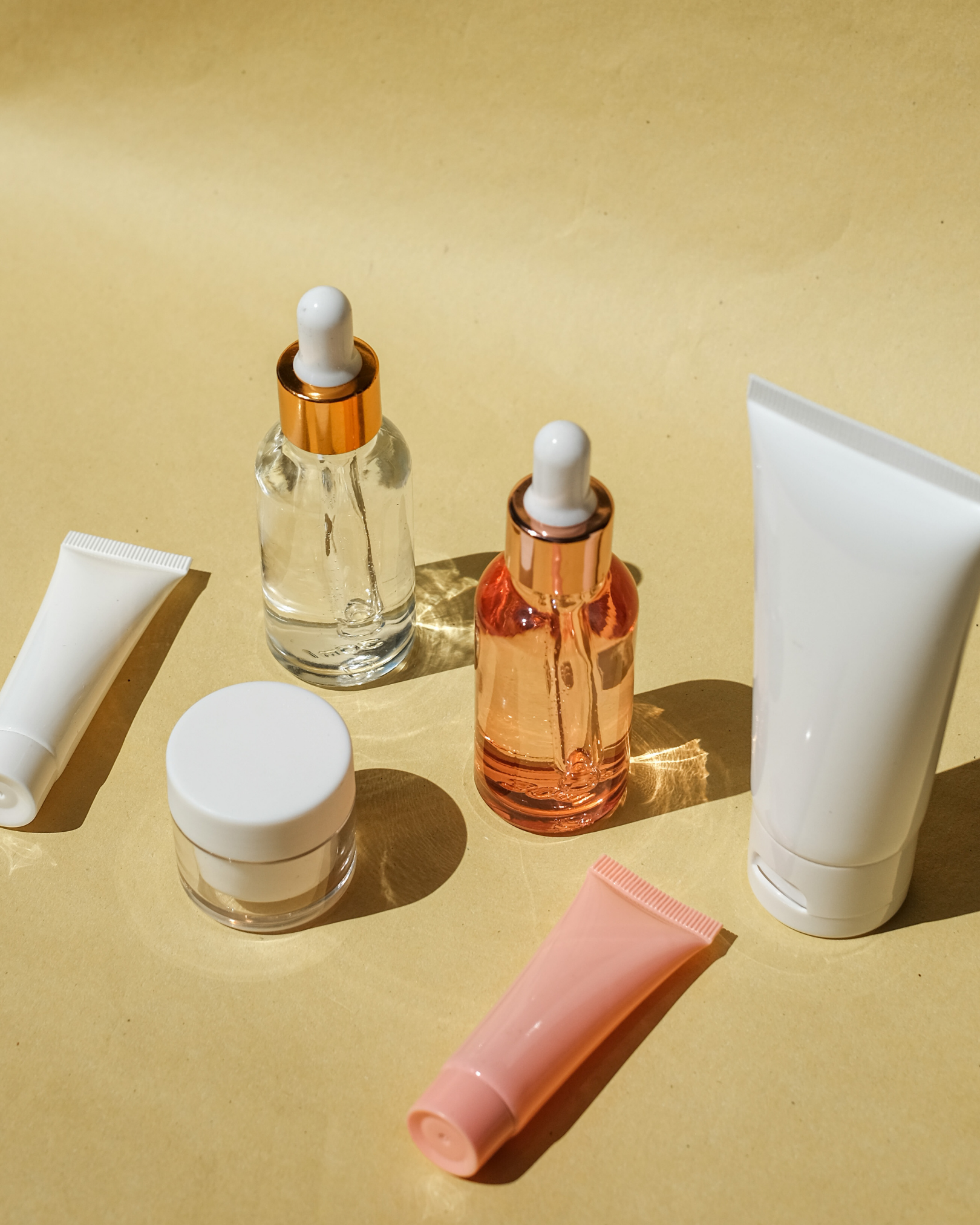
These are the timelines I give patients in consultation, drawn from the published trial data where it exists and from clinic experience where it does not. "First change" is what you might notice yourself in the mirror; "full effect" is when it is fair to decide whether a product has earned its place.
The pattern is obvious once it is laid out: almost everything that matters lands between week 8 and week 24. A 2022 systematic review of tretinoin for photoageing summarised the longest trial by noting that improvement "was significant after 4 months and continued over a 24-month period". That is the honest timescale, and it is why I will not write a plan shorter than three months.
Skin health expert Dija Ayodele puts it simply when advising patients on new products: "Usually trials are done over a period of at least 12 weeks." If the people who made the product needed 12 weeks to prove it works, so do you.
How long do in-clinic treatments take to show results?
In-clinic treatments follow the same biology. Each one triggers a repair response that unfolds over weeks, which is why they are prescribed as courses and why the best results are usually seen after the final session, not at it.
This is why I stage treatments rather than stacking them. Microneedling at week 5 is still producing collagen at week 12. A peel at week 9 is working on skin that the retinoid started changing in week 1. Each step lands on the one before it, and the result is cumulative in a way that no single appointment can be.

Dr Caroline Warden GP and Aesthetic Doctor at her clinic in Hale, Cheshire about to perform medical microneedling with exosomes
The 12-week skin plan I use in Hale
Every plan is individual, but the shape is consistent, because it follows the biology above. Here is the framework most of my patients in Hale, Altrincham and Bowdon work through.
By week 12 most patients see clearer tone, smoother texture, smaller-looking pores and a glow that make-up sits on properly. Firmness and fine lines continue to improve for months afterwards as the collagen laid down in Phase 2 matures. The point of the review at week 12 is not to sell the next phase; it is to decide, with evidence, what to keep.
Why consistency beats intensity
If I could change one habit in the people I see from Wilmslow, Alderley Edge and Knutsford, it would be switching products before they have had a chance. Three products used for a month each will underperform one product used for three months, every time. The same applies to in-clinic treatments: a single peel before a wedding is lovely, but a course of three, timed with the skin cycle, is what changes the skin underneath the glow.
Intensity makes your skin react. Consistency makes it change.
What concerns suit a 3-month plan?
One honest boundary: acne, rosacea, eczema and other skin conditions are medical, and the right first step is your own GP, who can prescribe. My clinic is a cosmetic service. I can build a skin quality plan alongside medical treatment and I will say so if that is the order things should go in.
Skin consultations in Hale: who I see and where they travel from
My clinic is at 2 Crown Passages in Hale village, a few minutes' walk from Hale railway station, around ten minutes from Altrincham Interchange and the Metrolink, and an easy drive from the M56 for patients coming from Wilmslow, Alderley Edge, Knutsford and Warrington. Most of my skincare patients live within twenty minutes: Hale, Hale Barns, Bowdon, Altrincham, Timperley, Sale, Brooklands and Ashton upon Mersey on one side, and Cheadle, Bramhall, Didsbury, Chorlton and Stockport on the other. A growing number travel further, from Macclesfield, Lymm and Northwich, usually because they want a doctor rather than a counter to plan their skin.
The people who get the most from a three-month plan are not one type. They are women in perimenopause and menopause from Bowdon and Hale Barns whose skin has changed faster than their routine; brides across Cheshire who want a six-month runway rather than a last-minute facial; professionals commuting into Manchester who want one simple routine that fits a 6am start; men from Didsbury and Altrincham who have never used anything but a cheap moisturiser; and patients of every age who have spent a great deal in beauty halls and want someone to tell them what to stop. You can read what others say on my reviews page, and see results on the before and after page.
What does a 3-month skin plan cost?
A skin consultation is £75, redeemable against treatment or skincare. The plan itself is priced transparently from the price list: a home routine typically means three to five Obagi products, with prescription items prescribed by me as an independent prescriber; polynucleotides are £255 per session for the introductory course of three; and the full Obagi Nu-Derm system is around £555 with tretinoin from about £130, including a complimentary Blue Peel Radiance before you start. Most patients spend less in the second three months than the first, because maintenance is simpler than correction. I write every cost into the plan before you commit to it.
Frequently asked questions about skin cycles and skin plans
How long does it take to see results from skincare?
Hydration and comfort improve within days. Glow and smoothness take about four weeks. Tone, texture, pores and pigmentation need eight to twelve weeks. Firmness and fine lines need three to six months, because they depend on new collagen.
Does skin cell turnover really take 28 days?
Roughly, in young adult skin. Measured studies show the outer layer renews in about 20 days under 35 and closer to 28 days over 60, with the whole cycle slowing further in the 70s. The older you are, the longer a product needs.
What is skin purging and how long does it last?
Purging is a temporary increase in breakouts when a retinoid or acid speeds up turnover and brings existing congestion to the surface. It usually lasts four to six weeks and settles. New spots in areas you never break out, or stinging and peeling, suggest irritation rather than purging, and the frequency should come down.
Why has my skincare stopped working?
Skin does not "get used to" good products. More often the early, fast surface changes have plateaued and the slower structural changes have not yet shown, or the routine has grown so crowded that the actives are cancelling each other out. A review at week 12 usually finds the answer.
How often should I have a chemical peel or microneedling?
Peels for glow can be monthly. A corrective series is usually three to four peels a month apart. Microneedling is best as three to six sessions four to six weeks apart, then two or three a year for maintenance.
Can I complete a plan before a wedding or event?
Yes, if you start early enough. Allow at least three months, ideally six, with the last in-clinic treatment two to four weeks before the day. Many of my brides from Altrincham and Cheshire start the plan a year out; I cover the timeline on my wedding skin page.
Where can I get a doctor-led skincare consultation near Altrincham?
At my clinic in Hale village, a few minutes from Altrincham town centre. Consultations are with me, an NHS GP and aesthetic doctor, and the £75 fee is redeemable against treatment or products.
Do I need injectables to improve my skin?
No. Many three-month plans are skincare and peels only, and some of the best results I see come from a corrected routine and daily SPF. Injectable skin quality treatments are added when the skin would benefit, not by default.
Will I need to keep buying products forever?
You will need to keep protecting your skin, which means SPF and a sensible routine for life. The number of products usually falls after the first three months, and the prescription-strength corrective items are used in courses, not indefinitely.
What if I have acne, rosacea or eczema?
Those are medical conditions and should be assessed by your own GP, who can prescribe treatment. I can support skin quality alongside medical care, and I will tell you if your GP should be the first appointment rather than me.
Further reading
- How to choose an aesthetic clinic safely
- Your aesthetic treatment journey
- What happens during an aesthetic consultation?
- Can you, and should you, combine aesthetic treatments?
- The real reason your tretinoin is not working
- Treatment page: Medical-grade skincare consultations in Hale
- Treatment page: Medical microneedling with exosomes in Hale
- Treatment page: Polynucleotides in Hale
References
- Grove GL, Kligman AM. Age-associated changes in human epidermal cell renewal. Journal of Gerontology. 1983;38(2):137-142, as summarised in Journal of Cosmetic Science (ageing skin barrier review).
- Grove GL. Non-intrusive assessments of epidermal proliferative activity: stratum corneum transit times in young and older adults. Journal of the Society of Cosmetic Chemists. 1981.
- Systematic review of topical tretinoin for photoaged skin, including the 24-month Kang et al. trial. 2022.
- Cochrane Database of Systematic Reviews. Topical treatments for photoaged skin (CD001782): tretinoin trial outcomes at 24 weeks.
- El-Domyati M, et al. Multiple microneedling sessions for minimally invasive facial rejuvenation: an objective assessment. International Journal of Dermatology. 2015;54(12):1361-1369.
- Efficacy and tolerability of hybrid hyaluronan intradermal injections (Profhilo): two treatments one month apart, evaluated at four months. 2022.
- Get The Gloss. How long does it take to know if your skincare is actually working? Interview with skin health expert Dija Ayodele.
- British Skin Foundation. Look after your skin: consultant dermatologist advice on barrier care and daily SPF.
Next steps
Learn more about Dr Caroline Warden Clinic
Learn more about other treatments offered
Written by Dr Caroline Warden, NHS GP and aesthetic doctor (GMC 6157708). Dr Warden has over 19 years of clinical experience, is an independent prescriber and holds a Level 7 postgraduate diploma in cosmetic injectables. She is the sole practitioner at Dr Caroline Warden Skin & Aesthetic Clinic, an official Obagi Ambassador clinic at 2 Crown Passages, Hale, Altrincham WA15 9GN, awarded Best Doctor Led Aesthetic Clinic in Cheshire 2026 by GHP. Patients visit from Hale, Hale Barns, Bowdon, Altrincham, Timperley, Sale, Wilmslow, Alderley Edge, Knutsford, Bramhall, Cheadle, Didsbury, Stockport and across Cheshire and South Manchester. This article is for general information only and is not a substitute for an individual consultation or advice from your own GP.