Last updated: October 2026
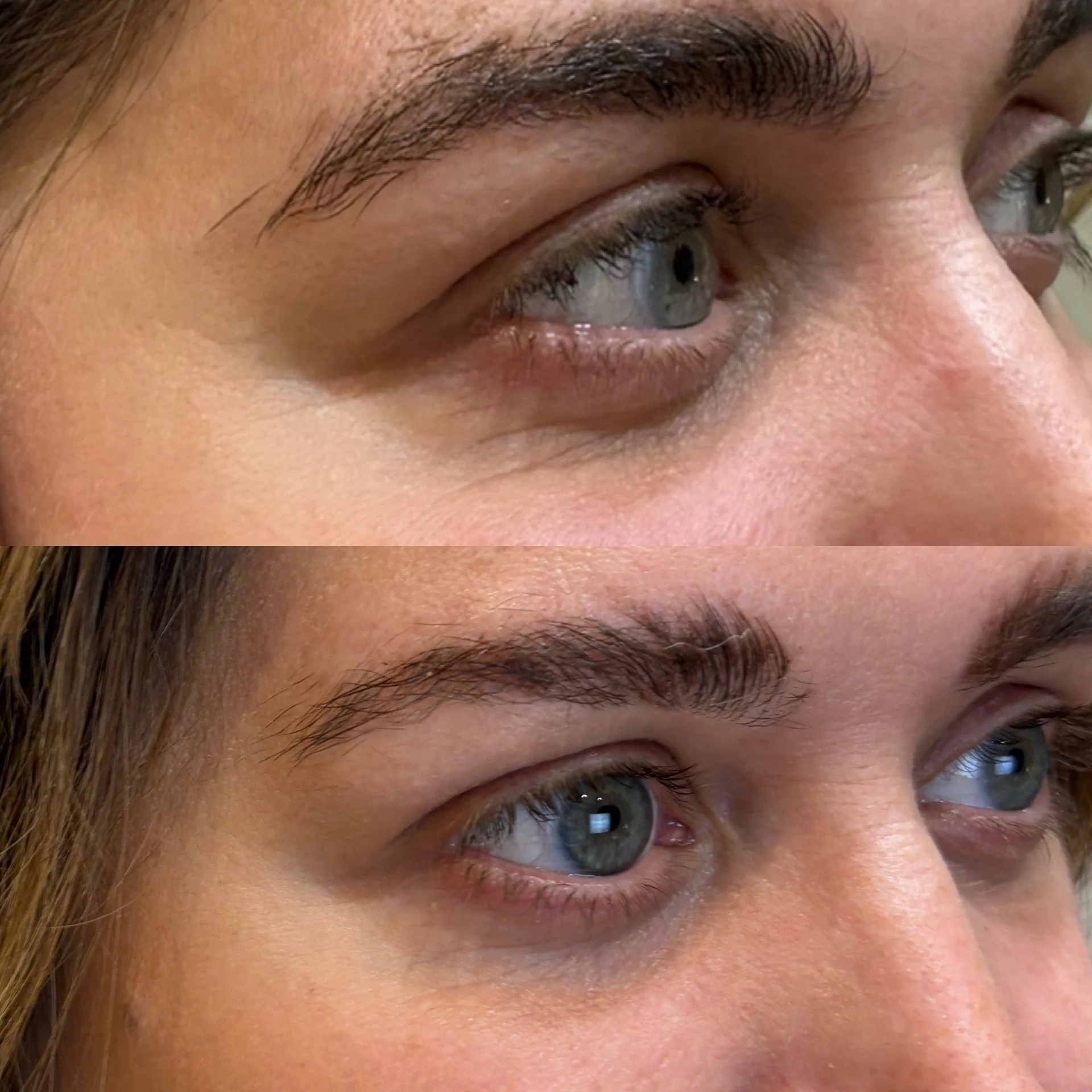
"Why do I still look tired after a good night's sleep?" is one of the questions I hear most at my clinic in Hale, usually from someone who has already tried four eye creams, two concealers and a jade roller. The answer is that looking tired under the eyes is rarely about sleep. It is about colour, shadow and skin quality in the thinnest skin on your face, and each of those has a different cause and a different fix.
I am Dr Caroline Warden, an NHS GP with over 19 years of clinical experience, an independent prescriber and an aesthetic doctor. I run a doctor-led clinic in Hale village, near Altrincham, and I have made a deliberate decision not to offer tear trough filler. This guide explains the four types of dark circles, a two-minute test you can do at home to work out which you have, and what actually helps each one, from skincare to polynucleotides and under-eye skin boosters, for patients across Hale, Altrincham, Bowdon, Wilmslow, Alderley Edge and Cheshire.
Explore the treatment: Under-eye treatment in Hale, Altrincham and Cheshire
In this article:
- Why do my under-eyes look tired even after a full night's sleep?
- What are the four types of dark circles?
- A two-minute home test to find your type
- Can dark circles be treated without filler or surgery?
- Why I don't offer tear trough filler
- Polynucleotides for under-eye skin
- Under-eye skin boosters: NCTF 135HA and Redensity 1
- The skincare that actually helps under the eyes
- What about puffiness and eye bags?
- When should I see my GP about dark circles?
- What results can I expect, and when?
- Under-eye treatment in Hale, Altrincham and Cheshire
- Frequently asked questions
Why do my under-eyes look tired even after a full night's sleep?
The skin of the lower eyelid is around a third of the thickness of the skin on your cheek, with almost no fat beneath it and a dense network of blood vessels just under the surface. It is the first place on the face to show pigment, the first to show the blue tinge of blood vessels, the first to crease, and it sits directly above a bony hollow that casts a shadow in overhead light. Any one of those produces a tired look. Most people have more than one, and that is why a single product aimed at a single cause so often disappoints.
What are the four types of dark circles?
Dermatologists classify dark circles, known clinically as periorbital hyperpigmentation, into pigmented, vascular, structural and mixed types. In the study that defined this classification using a Wood's lamp and ultrasound, 78 per cent of people had a mixed type. Knowing your mix is the whole game.
A two-minute home test to find your type
These are the same bedside tests dermatologists use, and you can do them in a bathroom mirror.
The authors of the classification study concluded that "pigmentation and vascular and structural components may play important roles". Find out which of the three you are dealing with before you spend a penny.

Can dark circles be treated without filler or surgery?
For most people, yes. Pigment, vascular show-through, thin and crepey skin, mild laxity and fluid puffiness all improve without filler or surgery. The two honest exceptions are a deep structural hollow, where only volume or surgery changes the shadow, and a true fat-pad eye bag, where surgery is the only lasting answer. Here is how the options map onto the types.
Why I don't offer tear trough filler
Tear trough filler is heavily promoted, and for the right patient with a pure structural hollow and thick skin it can work. I do not offer it, by deliberate clinical choice, because in my experience the patient satisfaction rate in this delicate, unforgiving area does not justify it, and because most of the "tired" looks I see are driven by pigment, vessels and skin quality rather than a missing pocket of volume. I set out my reasoning in Why I don't offer tear trough filler: the four causes of under-eye shadows. What follows is what I do instead.
Polynucleotides for under-eye skin
Polynucleotides are purified DNA fragments, usually from salmon, injected into the skin to stimulate fibroblasts, calm inflammation, improve hydration and thicken thin skin over a course. They do not add volume, which is precisely why they suit the under-eye: the thin, crepey, slightly blue skin that makes you look tired becomes thicker, smoother and better perfused, and the vessels show less. A 2025 paper on a polynucleotide and hyaluronic acid complex for the periorbital area reported collagen stimulation in human fibroblasts alongside early clinical benefit, and a presentation at the IMCAS World Congress 2024 concluded that polynucleotides "are offering promising results in improving peri-orbital skin quality and managing dark circles". The evidence base is young but consistent, and in my clinic it is the treatment I reach for first.
Under-eye skin boosters: NCTF 135HA and Redensity 1
Skin boosters are soft, non-cross-linked hyaluronic acid products placed superficially to hydrate and improve skin quality without adding contour. For the under-eye I use two. NCTF 135HA is a French formulation combining hyaluronic acid with vitamins, amino acids, minerals and antioxidants; a 2023 study of a hyaluronic acid and amino acid booster injected over three sessions found dark circle and periorbital wrinkle scores improved significantly after each session, with the largest change at the end of the course. Redensity 1 is designed specifically for the delicate periorbital skin. I use these on their own for dehydration and dullness, or alongside polynucleotides when the skin needs both regeneration and an immediate hydration lift, for example before a wedding or an event.
Polynucleotides rebuild the skin. Skin boosters hydrate it. Neither fills it, and in the under-eye that is the point.
The skincare that actually helps under the eyes
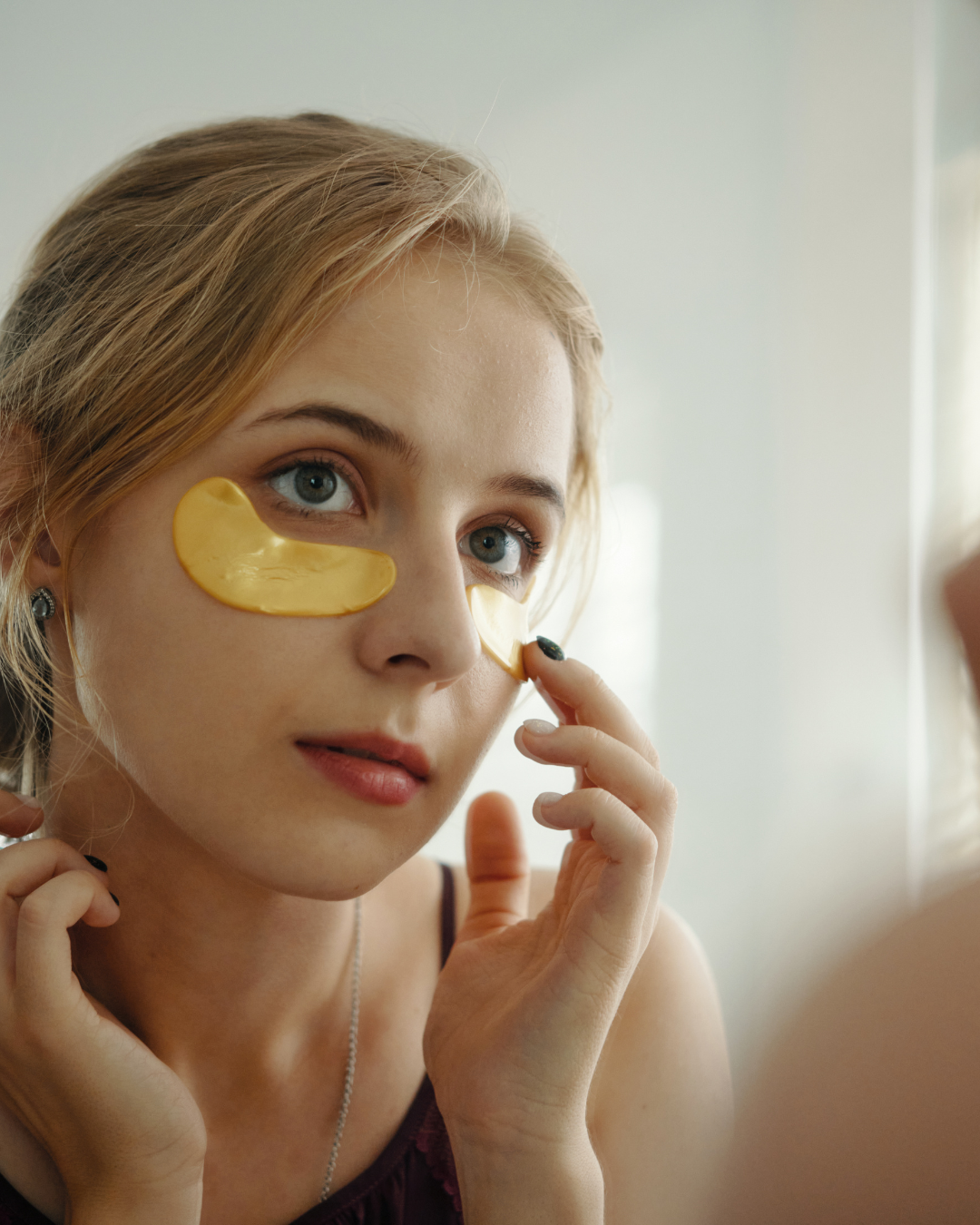
Most eye creams are a moisturiser in a smaller, dearer tube. These are the steps with evidence behind them, and the order I would put them in.
What is not on this list: caffeine creams (a small, temporary tightening at best), jade rollers (pleasant, briefly de-puffing, not a treatment), and anything that promises to "erase" dark circles in a week.
What about puffiness and eye bags?
Puffiness and bags are often lumped in with dark circles, but they behave differently. Fluid puffiness is worse in the morning, varies day to day and responds to sleep position, salt, alcohol and allergy control. Fat-pad bags are there all day, every day, and are caused by the fat that cushions the eye pushing forward as the supporting tissue weakens with age. No cream, booster or polynucleotide moves fat. The lasting treatment is lower eyelid surgery (blepharoplasty), which has become one of the fastest-growing procedures in the UK; BAAPS reported eyelid surgery up 8 per cent in 2025. It is not something I offer, and where it is the right answer I will say so and point you to a suitably qualified oculoplastic or plastic surgeon rather than treat around the problem.
When should I see my GP about dark circles?
Dark circles are almost always cosmetic. Occasionally they are a sign of something that needs a doctor's attention rather than a clinic's. Please see your own GP first if the darkness is new and sudden, affects one eye only, comes with itching, swelling, scaling or weeping of the eyelid skin, or arrives alongside unusual tiredness, breathlessness, weight change or feeling the cold. Allergies, eczema and some general health conditions can all show first around the eyes. My clinic is a cosmetic service; if I see anything at a consultation that looks medical, I will tell you and point you back to your GP before any treatment.
What results can I expect, and when?
Under-eye treatment in Hale, Altrincham and Cheshire
My clinic is at 2 Crown Passages in Hale village, a few minutes' walk from Hale railway station and around ten minutes from Altrincham town centre, with patients travelling from Bowdon, Hale Barns, Timperley, Sale, Wilmslow, Alderley Edge, Knutsford, Bramhall, Cheadle, Didsbury and across South Manchester. Every consultation and every treatment is carried out by me. An under-eye consultation starts with the same tests you have just read about, done properly in clinic light, plus photographs, so that we treat the actual cause rather than the catch-all label of "tired eyes". The £75 consultation fee is redeemable against treatment or skincare, and if the honest answer is "this is a shadow and skincare will not touch it", you will hear that before you spend anything more. Results from real patients are on my before and after page.
Frequently asked questions about dark circles and tired eyes
Can dark circles be permanently removed?
Usually improved substantially rather than removed. Pigment and vascular circles respond well to a combination of skincare and regenerative treatment with ongoing maintenance; structural shadow and fat bags need support or surgery. Genetics set the baseline, so the realistic goal is "noticeably brighter and no longer the first thing you see".
Do eye creams work for dark circles?
A good one helps if it contains a retinoid, vitamin C, peptides or ceramides and you use it for three months. A moisturiser in a small tube does not. Caffeine gives a brief, mild tightening and nothing lasting.
Are polynucleotides safe under the eyes?
Yes, in trained medical hands. They are placed superficially with a cannula, do not add volume and cannot block a vessel in the way filler can. Expect mild swelling and possible bruising for a day or two.
Does under-eye treatment hurt?
I use local anaesthetic and a cannula, so most patients describe pressure rather than pain. The whole treatment takes around 20 minutes.
How long do results last?
After the course of three, most patients maintain with a session every four to six months. Daily SPF and a retinoid extend the gap.
What is the difference between polynucleotides and tear trough filler?
Filler adds volume to fill a hollow. Polynucleotides improve the skin itself: thickness, hydration, elasticity and inflammation. If your problem is skin quality, pigment or vessels, you want polynucleotides. If it is purely a deep hollow with thick skin, filler can work, though I do not offer it.
Does lack of sleep really cause dark circles?
Poor sleep dilates the vessels under the eyes and allows fluid to pool, so it worsens vascular circles and puffiness. It does not cause pigment or structural shadow, which is why a good night's sleep so often changes nothing.
Can men have under-eye treatment?
Yes, and the under-eye is one of the most common requests from my male patients in Altrincham and Didsbury, usually because they feel they look tired at work. The approach is identical.
Can I wear make-up afterwards?
Leave the area bare for 24 hours after polynucleotides or a skin booster, then make-up is fine.
Can I combine under-eye treatment with anti-wrinkle injections for crow's feet?
Yes, and the combination is common: one softens the lines on movement, the other improves the skin they form in. We discuss timing at consultation.
Further reading
- Under-eye treatment in Hale, Altrincham and Cheshire (concern page)
- Why I don't offer tear trough filler: the four causes of under-eye shadows
- What actually works for under-eye ageing
- Beauty sleep: is it really a thing?
- Treatment page: Polynucleotides in Hale
- Treatment page: Skin boosters in Hale
References
- Huang YL, Chang SL, Ma L, Lee MC, Hu S. Clinical analysis and classification of dark eye circle. International Journal of Dermatology. 2014;53(2):164-170.
- Sarkar R, Ranjan R, Garg S, et al. Periorbital hyperpigmentation: a comprehensive review. Journal of Clinical and Aesthetic Dermatology. 2016;9(1):49-55.
- Clinical study of periorbital hyperpigmentation using the Ranu classification, including the eyelid stretch and direct-lighting tests. Indian Journal of Dermatology.
- In vitro evaluation and clinical effects of a regenerative complex with non-cross-linked hyaluronic acid and a high-molecular-weight polynucleotide for periorbital treatment. Polymers. 2025;17(5):638.
- IMCAS World Congress 2024. Polynucleotides for structural volume restoration and periorbital skin rejuvenation (session abstract).
- Rejuvenation of the periorbital area with a hyaluronic acid and amino acid mixture over three sessions: dark circle and wrinkle outcomes. Clinical, Cosmetic and Investigational Dermatology. 2023;16:973-980.
- British Association of Aesthetic Plastic Surgeons. Annual audit 2025: eyelid surgery and facelifts rise. Press release, 2026.
- NHS. Choosing who will do your cosmetic procedure.
Next steps
Learn more about Dr Caroline Warden Clinic
Learn more about other treatments offered
Written by Dr Caroline Warden, NHS GP and aesthetic doctor (GMC 6157708). Dr Warden has over 19 years of clinical experience, is an independent prescriber and holds a Level 7 postgraduate diploma in cosmetic injectables. She is the sole practitioner at Dr Caroline Warden Skin & Aesthetic Clinic, a female-led, family-run clinic at 2 Crown Passages, Hale, Altrincham WA15 9GN, awarded Best Doctor Led Aesthetic Clinic in Cheshire 2026 by GHP. The clinic does not offer tear trough filler, laser or surgery. This article is for general information only and is not a substitute for an individual consultation or advice from your own GP.