
Last updated: 30 October 2026
If you are considering anti-wrinkle injections for the first time, it is completely normal to feel a little unsure. Most people who come to see me in Hale arrive with the same three worries: will it hurt, will I still look like me, and will the whole experience feel intimidating?
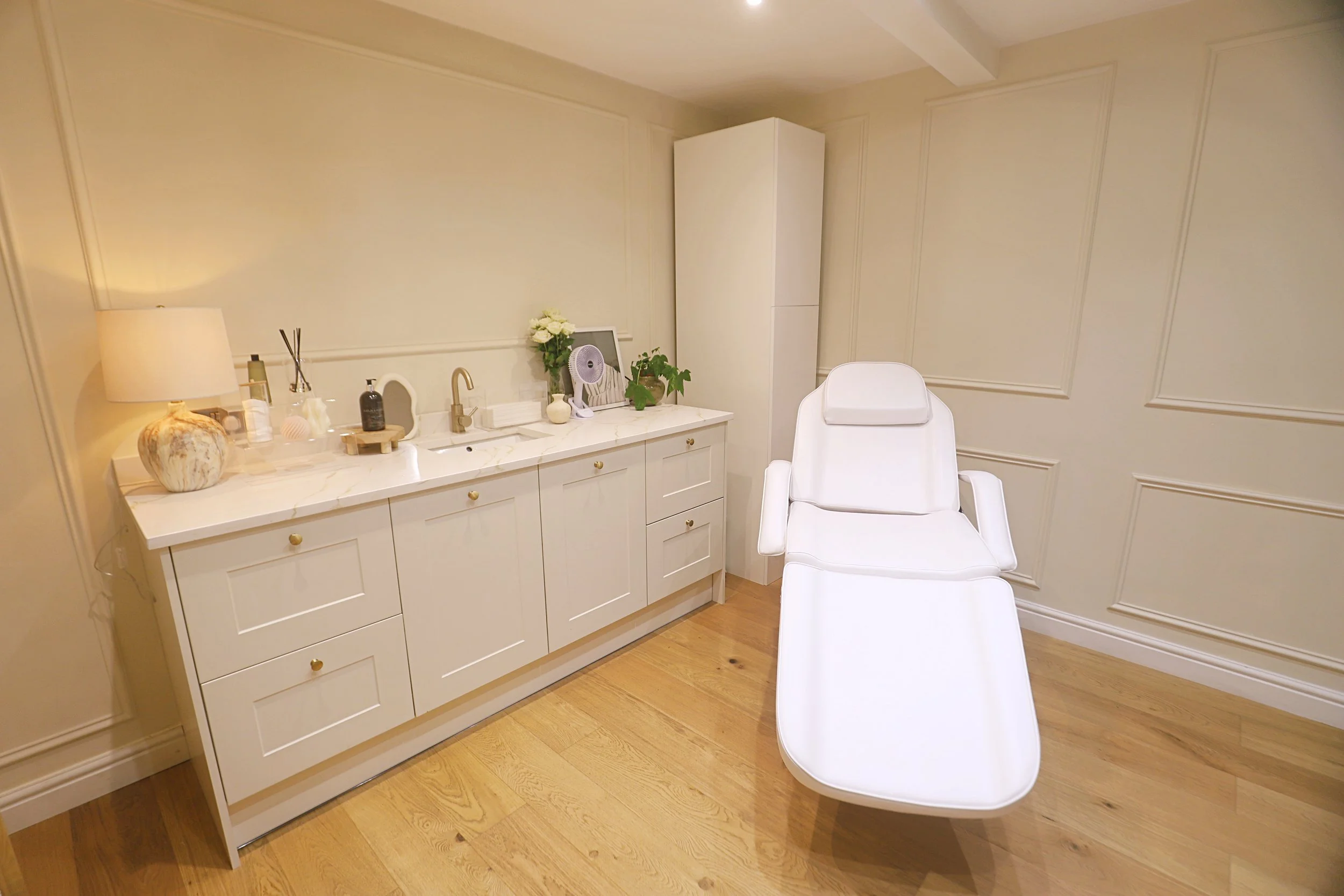
In practice, a first appointment at a doctor led aesthetic clinic is calm, unhurried and far more reassuring than patients expect. This guide walks you through every stage, from the moment you arrive at the clinic in Hale village to the day your results settle, so there are no surprises along the way.
I am Dr Caroline Warden, an NHS GP with over 19 years of clinical experience, an independent prescriber and a Level 7 trained aesthetic doctor. Every consultation and every treatment at my clinic is carried out personally by me, and my sister Louise looks after you from your first enquiry through to your review appointment.
In this article:
- What happens at a first anti-wrinkle injection appointment?
- Why does the consultation have to be face to face with a prescriber?
- What will Dr Caroline ask me at the consultation?
- Who should not have anti-wrinkle injections?
- How does the facial movement assessment work?
- Does the treatment hurt, and how long does it take?
- What aftercare do I need to follow?
- When will I see results, and how long will they last?
- What side effects are possible?
- How much does a first appointment cost in Hale?
- How should I prepare for my first appointment?
- Why choose a doctor led clinic for your first treatment?
- Frequently asked questions
- Further reading
What happens at a first anti-wrinkle injection appointment?
A first appointment is a medical consultation first and a treatment second. Anti-wrinkle injections use botulinum toxin type A, a prescription only medicine. Many people know it by the brand name Botox, but as with any prescription, whether treatment is right for you, and which licensed product is used, is decided at your consultation rather than in advance.
Here is the shape of a typical first visit to the clinic in Hale:
Allow around 45 minutes to an hour for your first visit so that nothing feels rushed. Return visits are much quicker.
Takeaway: the appointment is built around the consultation, not the needle. If you decide you would rather go away and think about it, that is always a good outcome.
Why does the consultation have to be face to face with a prescriber?
Because the law and the medical regulators require it, and for good reason. Botulinum toxin is a prescription only medicine. It can only be prescribed by a qualified prescriber such as a doctor, dentist, pharmacist prescriber or nurse prescriber, and the NHS is explicit that this must happen in a face to face meeting. The General Medical Council's guidance for doctors who offer cosmetic interventions puts it plainly:
"You must carry out a physical examination of patients before prescribing injectable cosmetic medicines."
General Medical Council, Guidance for doctors who offer cosmetic interventions
That examination is not a box ticking exercise. It is how I confirm that treatment is safe and suitable for you, how I understand the way your face moves, and how I make sure the product, the dose and the placement are planned for your anatomy rather than copied from a template.
It also matters more than ever. Save Face, a government approved register of practitioners, reports that complaints relating to toxin treatments rose by more than 350 per cent between 2019 and 2024, and that over 80 per cent of the people complaining had not realised they were being given a prescription only medicine. In the summer of 2025, the UK Health Security Agency confirmed 38 cases of botulism in England linked to unlicensed or counterfeit botulinum toxin given in non clinical settings. At my clinic you will only ever receive a UK licensed product, ordered through the regulated pharmacy supply chain, with the batch number recorded in your notes.
Two further legal points are worth knowing. Since 2021 it has been illegal to give cosmetic botulinum toxin or dermal filler to anyone under 18 in England. And the Health and Care Act 2022 gives the government the power to introduce a licensing scheme for non surgical cosmetic procedures in England. The government confirmed its intended three tier model in August 2025, although no start date has yet been set.
What will Dr Caroline ask me at the consultation?
The consultation is a two way conversation. I want to understand what is bothering you and why now, and you should leave knowing exactly what I recommend and why. Here is what we cover:
I am also a GP, and that training does not switch off at the clinic door. If I notice something during your consultation that is not a cosmetic matter and needs your own GP's attention, I will tell you.
You are never under pressure to go ahead on the day. GMC guidance requires doctors to give patients the time and information they need to reach a voluntary, informed decision. Many first time patients choose to have treatment in the same appointment once they feel confident, and that is absolutely fine when it is appropriate. Others prefer to go home, think it over and come back another day. Both are good decisions.
Who should not have anti-wrinkle injections?
Part of a responsible consultation is knowing when to say no, or not yet. Treatment is not suitable if you are pregnant, trying to conceive or breastfeeding, if you have a known allergy to any ingredient of the product, if there is an active infection or skin problem at the planned injection sites, or if you are under 18.
Treatment needs careful discussion if you have a history of certain neuromuscular conditions, if you take medicines that interact with botulinum toxin, if you have had facial surgery that has altered muscle position, or if you have reacted poorly to treatment in the past.
I will also be honest if I do not think treatment will give you what you are hoping for. Some lines respond better to medical grade skincare, polynucleotides or collagen stimulation, and some are best left alone. Saying so is part of the job.
How does the facial movement assessment work?
Once we have agreed a plan, I ask you to raise your eyebrows, frown and smile while I watch how your muscles move and where your lines form. Faces are rarely symmetrical, and the aim is to soften the muscles responsible for your expression lines while preserving the movement that makes you look like you.
This mapping step is where natural results are made. Dose and placement are adjusted for your brow position, any asymmetry, the strength of your muscles and the look you want. For a first treatment I often err on the side of a lighter dose, because the review appointment two to four weeks later lets us fine tune. It is far easier to add a little than to wait for too much to wear off.
Does the treatment hurt, and how long does it take?
Far less than most people fear. The skin is cleansed and the product is injected using an ultra fine needle. Most patients describe each injection as a brief scratch rather than pain, and many tell me the anticipation was worse than the reality. There is no need for anaesthetic cream.
The treatment itself usually takes around ten minutes. You will see small raised bumps at each injection point, which settle within 20 to 30 minutes, and you can drive home straight afterwards.
If you are nervous about needles, tell us when you book. We can allow extra time and talk you through every step, and there is no judgement whatsoever. I have written separately about how I support nervous patients.

What aftercare do I need to follow?
You will leave with simple written aftercare, and the key points are below. Most people go straight back to work, the school run or their day in Altrincham. The evidence behind some traditional aftercare rules is thinner than you might think, and I unpick which ones matter in my post on the aftercare myth everyone repeats.
When will I see results, and how long will they last?
Anti-wrinkle injections work gradually, which catches many first timers out. Nothing happens in the car on the way home, and checking the mirror on day one tells you nothing.
Results vary with muscle strength, metabolism and how expressive you are, and first treatments sometimes fade a little sooner than later ones. You can see real patient results on my before and after page.
Takeaway: judge your result at two weeks, not two days. That is exactly why I build a review appointment into every first treatment.
What side effects are possible?
Anti-wrinkle injections have an excellent safety record when they are prescribed and administered properly, but no medicine is entirely risk free, and you should expect any good clinic to go through this with you before you consent.
Choosing a medically qualified prescriber who uses only UK licensed product is the single most effective thing you can do to keep these risks as low as possible.
How much does a first appointment cost in Hale?
New patients book a consultation at £75, which is fully redeemable against treatment, so if you go ahead the consultation effectively costs you nothing. Treatment prices by area are on the price list, and I have written a detailed breakdown of what anti-wrinkle injections cost in Hale and Altrincham and why prices vary between clinics.
How should I prepare for my first appointment?
Why choose a doctor led clinic for your first treatment?
Your first treatment sets the tone for everything that follows. It is the appointment where you learn what a good consultation feels like, what dose suits you and what a natural result looks like on your face. Here is what you get at Dr Caroline Warden Skin & Aesthetic Clinic:
Takeaway: the goal is never to change your face. It is to help you look like a well rested, more confident version of yourself, and to make the process feel as calm as a routine medical appointment.

Frequently asked questions
Does the treatment hurt?
Most patients describe a brief scratch at each injection point. The needle is ultra fine, the whole treatment takes around ten minutes and no anaesthetic is needed.
Will I look frozen or fake?
No. When dose and placement are planned around your own muscles, lines soften while natural movement and expression are preserved. I deliberately start first time patients on a lighter dose and fine tune at review. You can read more about how to look refreshed, not frozen.
Can I have treatment at my first appointment?
Often, yes. Consultation and treatment usually take place in the same visit when treatment is appropriate and you feel ready. If you would prefer time to think, you can come back another day with no pressure.
How long does the first appointment take?
Allow 45 minutes to an hour. The treatment itself is only around ten minutes; the rest is the consultation and assessment.
Can I drive home afterwards?
Yes. There is nothing about the treatment that affects your ability to drive.
Can I wear makeup afterwards?
Wait a few hours before applying makeup directly over the injection points, then carry on as normal.
Can I exercise after treatment?
Avoid strenuous exercise, saunas and hot yoga for 24 hours to reduce bruising and swelling. Gentle walking is fine.
When will I see results?
Movement starts to soften after two to five days, and the full effect is usually visible at around two weeks.
How long do anti-wrinkle injections last?
Typically three to four months. Muscle strength, metabolism and how expressive you are all play a part, and first treatments sometimes fade a little sooner than later ones.
How often can I have treatment?
The NHS advises waiting at least three months between treatments. Most of my patients return every three to four months, and I never recommend treating more often than your face needs.
What if I am not happy with the result?
That is what the review appointment two to four weeks after treatment is for. Small asymmetries or areas that need a touch more can be addressed then. If anything concerns you before that, contact the clinic and I will see you.
Is it safe?
Yes, when it is prescribed by a qualified prescriber after a face to face assessment, administered by a trained medical professional and uses UK licensed product. Side effects are usually mild and temporary; the possible risks are set out in the table above and discussed with you before you consent.
Can I have treatment if I am pregnant or breastfeeding?
No. Treatment is not given during pregnancy, while trying to conceive or while breastfeeding. We can plan for when the time is right.
When should I start anti-wrinkle injections?
There is no set age. Patients often start when expression lines begin to linger at rest, or when they want a gentle, preventative approach. I have written a full guide on when to start anti-wrinkle injections.
What is the difference between anti-wrinkle injections and dermal fillers?
Anti-wrinkle injections relax the muscles that cause movement lines. Dermal fillers restore volume and structure. Many people are suited to one, not both, and the consultation is where we work that out. Read my guide to anti-wrinkle injections versus dermal fillers.
Why does it matter that a doctor carries out the treatment?
A doctor can assess your medical history, prescribe the medicine, carry out the treatment and manage anything unexpected, all within one appointment and one set of medical records. I explain the differences in training and accountability in aesthetic doctor versus aesthetic practitioner.
Where is the clinic?
The clinic is at 2 Crown Passages in Hale village, a few minutes from Altrincham and Bowdon and an easy drive from Alderley Edge, Wilmslow and the rest of Cheshire, with evening and Saturday appointments available.
Further reading
- Forehead lines, frown lines and crow's feet: the complete guide
- When should you start anti-wrinkle injections?
- Before and aftercare: the ultimate guide
- Treatment anxiety is real: how I support nervous patients
- Anti-wrinkle injections in Hale, Altrincham and Cheshire
- Lines and wrinkles: treatment options explained
Next steps
If you are considering anti-wrinkle injections for the first time and would like honest advice in a calm, discreet setting, book a consultation for lines and wrinkles and we will take it from there.
Learn more about Dr Caroline Warden Clinic
Learn more about other treatments offered
References
- NHS. Botox injections (cosmetic procedures): what to think about, what it involves, results and recovery
- General Medical Council. Guidance for doctors who offer cosmetic interventions, including paragraphs 24 to 27 (time for reflection) and 54 (physical examination before prescribing)
- Save Face. Five year complaints data on toxin treatments and unlicensed products, 2019 to 2024
- UK Health Security Agency. Warning over botulism linked to cosmetic botulinum toxin procedures, July 2025
- Joint Council for Cosmetic Practitioners. Botulism: the invisible risk behind unregulated botulinum toxin treatments
- Botulinum Toxin and Cosmetic Fillers (Children) Act 2021
- Department of Health and Social Care. The licensing of non-surgical cosmetic procedures in England: consultation response, August 2025
Written by Dr Caroline Warden, NHS GP and independent prescriber with over 19 years of clinical experience, Level 7 Postgraduate Diploma in Cosmetic Injectables, GMC 6157708. Dr Caroline Warden Skin & Aesthetic Clinic, 2 Crown Passages, Hale, Altrincham, WA15 9GN.
