Last updated: 29 October 2026
Over the past decade the aesthetics industry has filled up with promises of "non-surgical skin tightening", "lunchtime facelifts" and "collagen heating technology". Patients in Hale, Altrincham and across Cheshire ask me about a new machine from Instagram most weeks, usually with a before and after photo attached. It sounds wonderful and it sells extremely well. As a doctor I think you deserve the evidence rather than the advert, and the evidence is more nuanced than either the marketing or the sceptics usually admit.
I am Dr Caroline Warden, an NHS GP with over 19 years of clinical experience and an aesthetic doctor with a Level 7 diploma in cosmetic injectables. I do not own a skin tightening device, so I have no commercial reason to recommend one. What follows is a plain reading of the published research on HIFU, radiofrequency, Morpheus8-type microneedling, thread lifts, collagen stimulators and surgery, and an honest account of what each can and cannot do for a jowl, a soft jawline or a loose neck.
Explore the treatment: Sculptra collagen stimulation for facial support in Hale, Altrincham and Cheshire
In this article:
- What does "skin tightening" actually mean?
- Can you tighten skin without surgery? What the evidence shows
- Does HIFU or Ultherapy really lift the face?
- Does radiofrequency or Morpheus8 tighten skin?
- Do thread lifts work as a non-surgical facelift?
- Can Sculptra or Radiesse tighten skin?
- Why don't the results match the marketing?
- What can non-surgical treatments realistically improve?
- When is a facelift the only real answer, and what does it cost in the UK?
- Why do so many people feel disappointed afterwards?
- My approach at my Hale clinic
- Frequently asked questions
What does "skin tightening" actually mean?
Most non-surgical devices claim to restore firmness, lift sagging cheeks or jowls, sharpen the jawline and smooth neck laxity without surgery or real downtime. It is an appealing idea. It is also, in most cases, not quite what the technology delivers.
Skin becomes loose because of collagen loss, elastin breakdown, shrinking fat pads, bone resorption, gravity, genetics, sun damage and weight change. Put simply, loose skin means there is now more skin than the structure underneath it needs. Removing or repositioning that excess is a surgical job. No ultrasound, radiofrequency, laser, thread, microneedling device or injectable can take skin away. Only surgery can.
Everything else on the market works in one of two ways: it heats the deeper skin to make collagen fibres contract and stimulate new collagen, or it adds support from underneath so the same amount of skin drapes better. Both are real effects. Neither is tightening in the surgical sense, and the gap between the two is the whole story of this article.
Can you tighten skin without surgery? What the evidence actually shows
To a small, measurable degree, in some cases, yes. The honest answer depends entirely on which treatment you mean, because the evidence varies enormously.
Even the best evidenced non-surgical option gives a lift measured in millimetres. A facelift works in centimetres. That gap is the whole story.
Does HIFU or Ultherapy really lift the face?
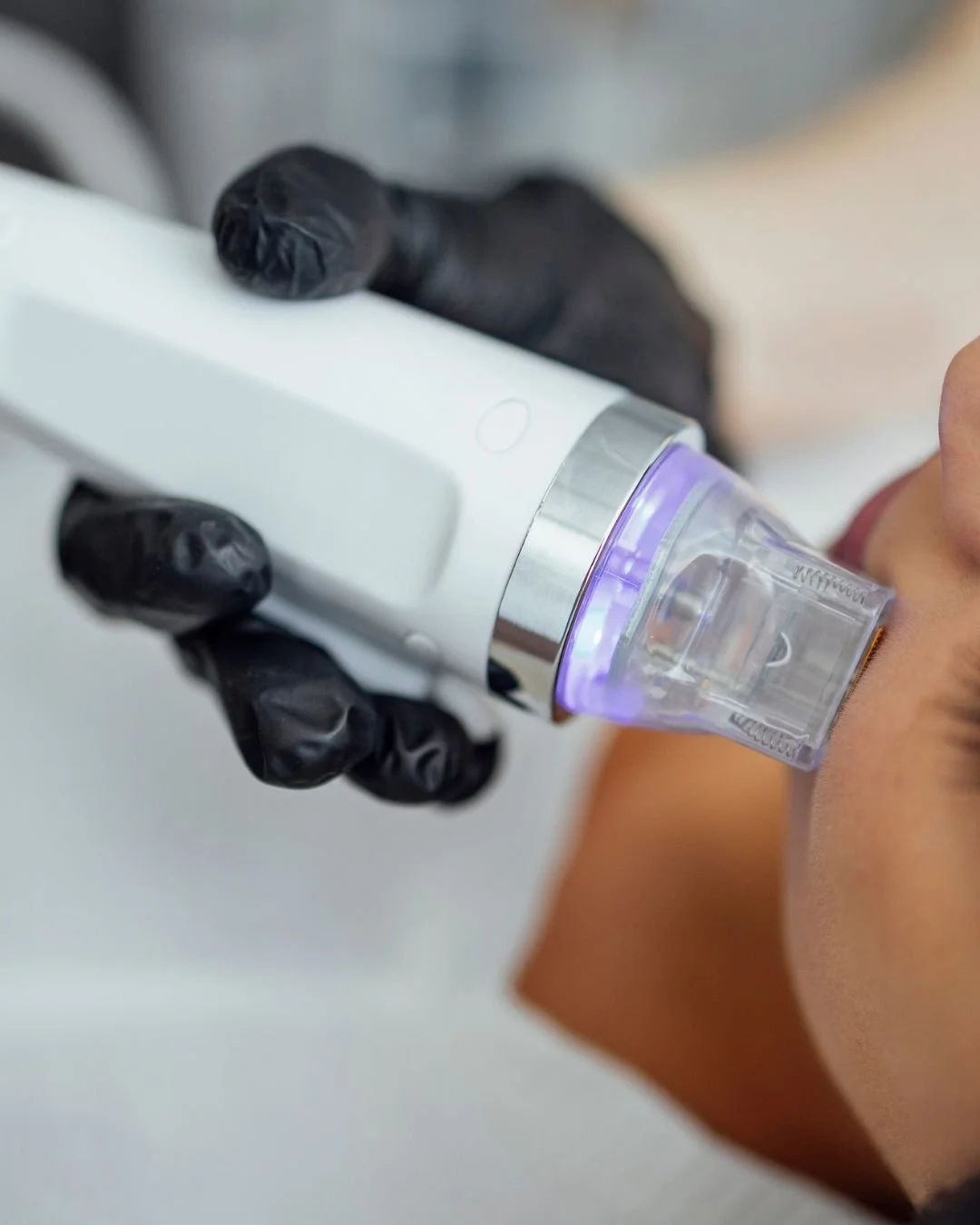
This is where many blogs oversimplify in both directions. Microfocused ultrasound with visualisation, the technology behind Ultherapy and similar devices, delivers heat to the deeper layers of the skin and the SMAS, the fibrous layer surgeons tighten during a facelift. It has the strongest evidence base of any device.
A 2023 systematic review in the International Journal of Environmental Research and Public Health concluded, in its own words, that "MFU treatment is effective in tightening female patients' mildly to moderately lax facial skin". A larger 2025 meta-analysis of 42 studies in Aesthetic Surgery Journal found that 89 per cent of patients showed some degree of improvement when rated by investigators and 84 per cent reported improvement themselves, with a generally favourable safety profile. Patients also reported an average pain score of nearly five out of ten, which is more than most adverts mention.
So it works. The question is how much. The published brow lift from these devices is in the order of a millimetre or two, and the improvement under the chin and along the neck is modest and gradual over three to six months. For the right patient with mild laxity and realistic expectations, that is a real benefit. For someone with established jowls or a draping neck, it is a long way from what they are hoping for.
Does radiofrequency or Morpheus8 tighten skin?
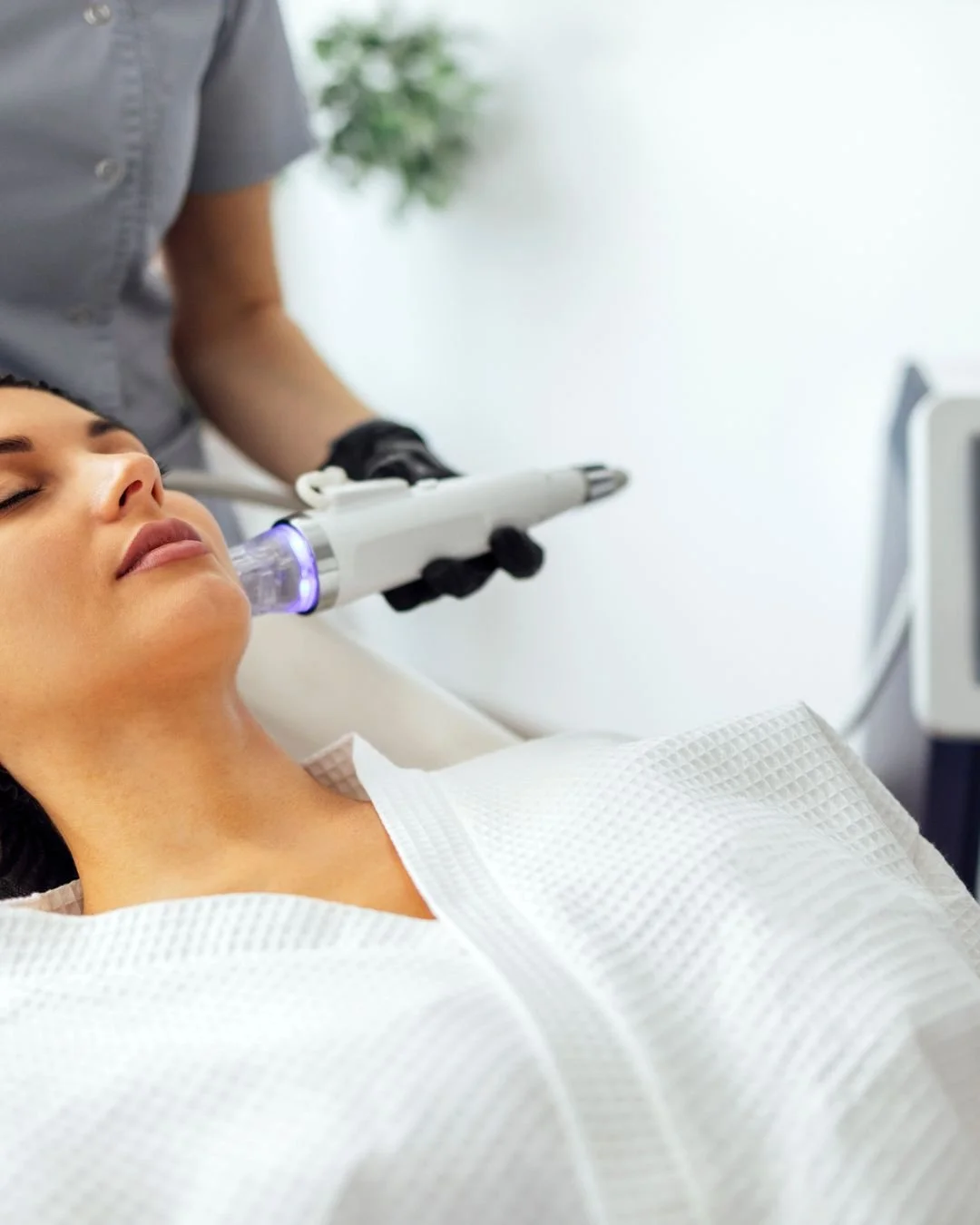
Radiofrequency heats the dermis with electrical energy rather than sound. It comes as surface devices (Thermage-type) and as radiofrequency microneedling, where tiny needles deliver the heat beneath the surface (Morpheus8-type). A 2025 systematic review in Aesthetic Surgery Journal Open Forum found these treatments produce meaningful aesthetic improvements, high patient satisfaction and an excellent safety record, while grading the overall evidence as level four, which is the second lowest tier. Most studies are small, short and without a comparison group.
Where RF has been compared head to head with HIFU, a 2025 meta-analysis in Lasers in Medical Science found no significant difference between the two for neck sagging in the short, medium or long term, and called for better trials. In practice, radiofrequency and RF microneedling improve texture, pore appearance, mild crepiness and firmness. They are skin quality treatments with a small firming bonus, not lifting treatments.
Do thread lifts work as a non-surgical facelift?
Thread lifts place dissolvable barbed sutures under the skin to hitch tissue upwards. The appeal is obvious: an immediate change with local anaesthetic and no scalpel. The evidence is less reassuring. A 2021 meta-analysis of 26 studies found swelling in 35 per cent of patients, skin dimpling in 10 per cent and altered sensation in 6 per cent, and reported that satisfaction fell from 98 per cent immediately after treatment to 88 per cent over the longer term. The authors advised that "the rejuvenation effect of FTL may not maintain in the long-term". A 2024 update in Dermatologic Surgery reached the same conclusion: immediately effective, low risk of serious harm, but long-term efficacy data are lacking. In the UK, Save Face has documented women attending A&E after thread lifts carried out in unregulated settings.
I do not offer thread lifts, and this is why: a result that fades within a year, with a one in ten chance of visible dimpling, is not something I can recommend over the alternatives with a clear conscience.
Can Sculptra or Radiesse tighten skin?
No, and I say that as someone who uses both every week. What Sculptra (poly-L-lactic acid) and Radiesse (calcium hydroxylapatite) do is stimulate your own collagen over several months to rebuild volume and structural support. When the scaffolding under the skin is restored, the same amount of skin drapes better, a jawline looks cleaner and early jowls soften. Patients often describe the result as "tighter", and I understand why, but the mechanism is support from below rather than shortening of the skin. For skin crepiness on the neck, décolletage and hands I use hyperdilute Radiesse, which improves skin quality and firmness without adding contour.
This is also why so many patients are moving away from repeat filler towards regenerative treatments. In a 2025 Save Face survey, 70 per cent of accredited practitioners reported fewer requests for hyaluronic acid filler, with patients citing a wish for treatments that stimulate the body's own repair. I wrote about that shift in Filler fatigue: less filler, more structure, and about the jawline specifically in Radiesse for jawline definition.
Why don't the results match the marketing?
The marketing sells a lift. The evidence supports a modest firming. Both can be true at the same time, which is exactly why so many people end up confused.
What can non-surgical treatments realistically improve?
While they cannot tighten structurally lax skin, non-surgical treatments can meaningfully improve texture, hydration, glow, fine lines, pore appearance, mild crepiness and overall skin health, and collagen stimulators can restore the support that makes a face look lifted even though nothing has been shortened. These are the treatments I use at my Hale clinic for each of those goals.
These are excellent options for the right goal. They are not tightening treatments, and I will always tell you that clearly rather than let a hopeful assumption go unchallenged. You can see what they achieve on my before and after page.
When is a facelift the only real answer?
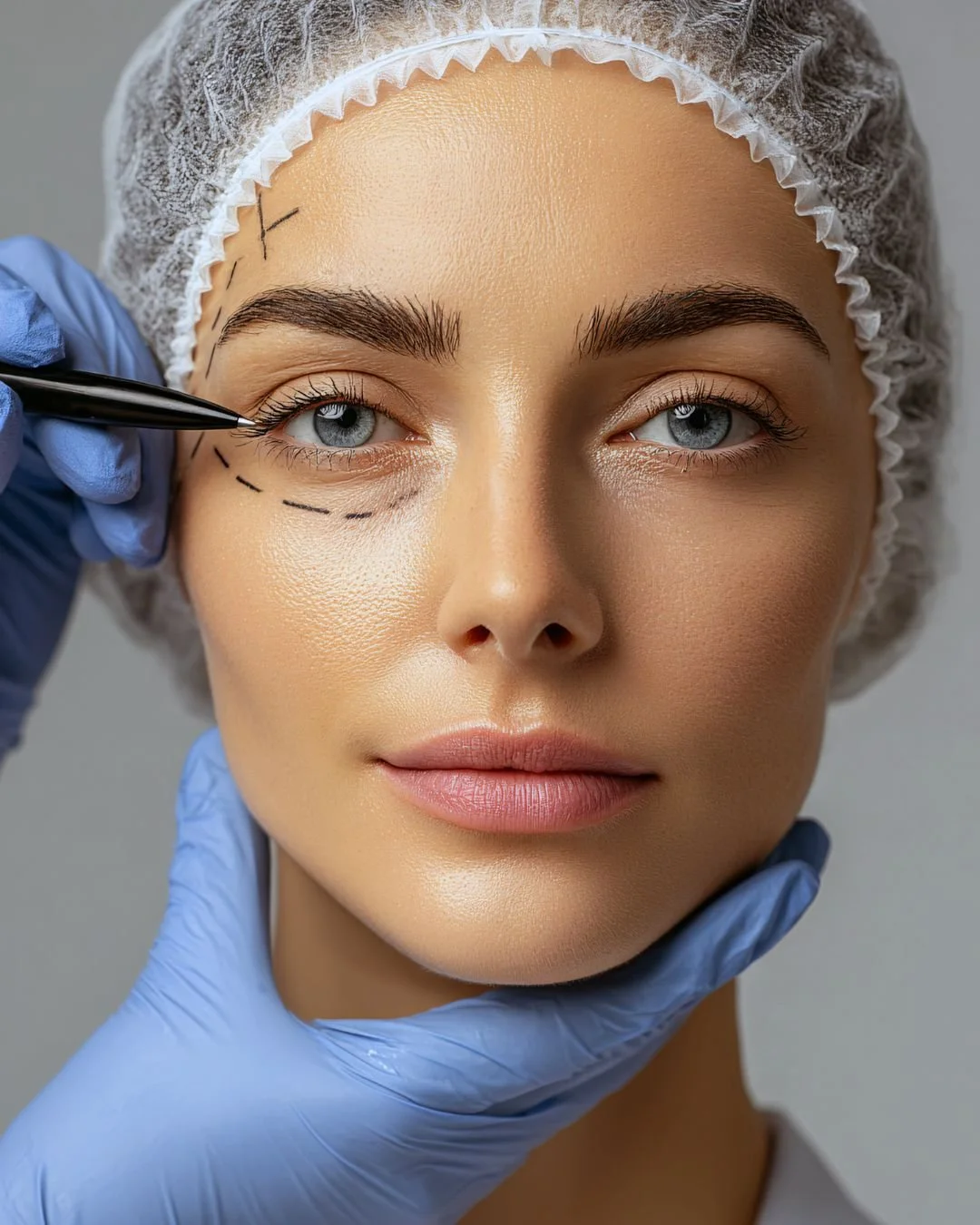
If you have jowls, sagging cheeks, loose neck skin, deepened folds, a soft jawline, skin that folds or drapes, or significant laxity after weight loss, including the so-called Mounjaro or Ozempic face, a facelift or neck lift is the only treatment that can address it. Surgery removes excess skin, redrapes the tissue and repositions the deeper SMAS layer in a way no device or injectable can replicate. Modern techniques, particularly the deep plane facelift, produce results that are far more natural than the pulled look of twenty years ago.
Patients are voting with their feet. The British Association of Aesthetic Plastic Surgeons reported that in 2025 face and neck lifts rose by 11 per cent and brow lifts by 27 per cent, even as cosmetic surgery overall fell by 2 per cent. Former BAAPS president Rajiv Grover, who compiles the audit, attributed part of the rise to social media showing what modern facial surgery looks like, with "subtle, natural and restorative results", and part to awareness of the facial changes that follow rapid weight loss on GLP-1 medication.
Surgery is outside what I do at my clinic. Where it is the right answer I will say so and point you towards a suitably qualified facial or plastic surgeon rather than offer something that will not meet your expectations.
How much does a facelift cost in the UK?
The NHS guidance puts the cost at anything from a few thousand pounds for a mini facelift to around £10,000 for a face and neck lift, and deep plane procedures with experienced surgeons in Manchester, Cheshire or London commonly run higher. Final results take six to nine months to settle. Before you compare that with a device course, remember that device results are typically quoted as lasting a year or two, while a well-performed facelift is generally expected to last a decade or more.
How do I choose a facelift surgeon in Cheshire or Manchester?
Look for a surgeon on the GMC specialist register for plastic surgery (or an ENT or maxillofacial surgeon with a facial aesthetic subspecialty), ideally a full member of BAAPS or BAPRAS, operating in a CQC-registered hospital. Have at least two consultations, ask how many of the specific procedure they perform each year and how complications are handled, and expect a cooling-off period of at least two weeks before surgery. The NHS has a useful guide to choosing who will do your cosmetic procedure.
Why do so many people feel disappointed after skin tightening treatments?
Usually because of a mismatch between what was hoped for and what the treatment can do. Patients come in wanting a lift, a tighter jawline, a snatched lower face. What they typically get is mild firming, temporary smoothness and a modest collagen boost. That is a nice result. It is just not what was implied. If you have spent money on a tightening treatment and felt that nothing really lifted, you are not imagining it: the gap you noticed is the gap between the marketing and the published evidence.
The second reason is candidate selection. Every positive study of HIFU or radiofrequency uses patients with mild to moderate laxity. The person most likely to book a tightening device is often the person with the most laxity, who is precisely the person the evidence does not cover.

My approach at my Hale clinic
Why I don't offer skin tightening devices
Clinics that invest in a tightening machine understandably need to use it, and many use it well for the right patients. I chose a different path. My clinic is entirely medical: injectables, prescription skincare, medical peels, microneedling and electrocautery, all delivered by me. That means when you ask whether a device would help you, the answer comes from the published evidence and from your face, not from a machine that needs to pay for itself. It also means I can tell you when the right answer is a surgeon, and I do.
Say what works, avoid what doesn't, and never sell an unrealistic outcome. Skin quality can be improved dramatically. Loose skin will always require surgery.
Is skin tightening advice available near me in Hale, Altrincham or Cheshire?
Yes. I give this same assessment to every patient at my clinic at 2 Crown Passages, Hale, and it is a conversation I have most weeks with patients travelling from Altrincham, Bowdon, Hale Barns, Timperley, Sale, Wilmslow, Alderley Edge, Knutsford, Bramhall, Cheadle, Didsbury and across Cheshire and South Manchester. If you want to know what a treatment can realistically do for your skin before you spend anything, that is exactly what a consultation is for. The £75 fee is redeemable against treatment or skincare, and if the honest answer is "see a surgeon", you will leave with a name rather than a course of something that will not work.
Frequently asked questions about skin tightening
Can radiofrequency tighten skin?
Modestly. The evidence supports improved texture, firmness and mild crepiness with a good safety record, but not a true lift or the removal of excess skin, and the studies are mostly small and short.
Does HIFU or Ultherapy lift the face?
To a small, measurable degree in people with mild to moderate laxity, yes. The published brow lift is in the order of a millimetre or two, with gradual improvement under the chin over several months. Expect moderate discomfort during treatment.
Does Morpheus8 tighten skin?
Morpheus8-type radiofrequency microneedling improves texture, pores, acne scarring and mild crepiness, with a small firming effect. It does not lift jowls or a loose neck. Head-to-head data against HIFU show no significant difference for neck sagging.
Is there a non-surgical facelift?
Not a true one. Energy devices give a subtle improvement, threads give a temporary one, and collagen stimulators rebuild support. Nothing non-surgical removes and repositions tissue.
Do thread lifts last?
Typically a year or so, with satisfaction falling as the threads dissolve. Around a third of patients get swelling and one in ten get dimpling. Long-term efficacy data are lacking, which is why I do not offer them.
Can Sculptra replace a facelift?
No. Sculptra rebuilds volume and support so that lax skin drapes better, which can look lifted, but it cannot shorten skin. For mild laxity it is often enough. For moderate to severe laxity it is a complement to surgery, not an alternative.
What helps loose skin after Mounjaro or Ozempic weight loss?
It depends on how much skin is left over. Modest deflation responds well to Sculptra to restore support. Significant laxity after large weight loss is usually a surgical problem. I cover this in Why Sculptra may be one of the best treatments for Mounjaro face.
Does microneedling tighten skin?
It improves texture and firmness through collagen stimulation, but it does not tighten skin that is already structurally lax.
Can injectables tighten a jawline?
They can add shape and support to the chin and jawline, which sharpens the outline and softens early jowls. They cannot tighten loose skin. For established jowls, read Jowls: what actually helps.
Are skin tightening devices safe?
In trained hands, generally yes, with mostly temporary redness and swelling. Reported complications with ultrasound and radiofrequency include burns, nerve irritation and, with aggressive settings, loss of facial fat, which can make a face look older. Choose an experienced, regulated practitioner and ask about settings and candidate selection.
How long does a facelift last?
Ageing continues, but a well-performed facelift is generally expected to keep you looking younger than you otherwise would for a decade or more. Final results take six to nine months to settle.
Who is a good candidate for a facelift?
Anyone with moderate to severe skin laxity, jowls, neck sagging or deeper facial descent, best assessed by a plastic or facial surgeon on the GMC specialist register.
Further reading
- What are the best aesthetic treatments for your 30s, 40s and 50s?
- Why your face changes in your 40s, and what actually helps
- Understanding the triangle of youth: restoring balance and beauty
- Why collagen declines and the treatments that actually stimulate it
- Filler fatigue: less filler, more structure
- Treatment page: Sculptra collagen stimulation in Hale
- Treatment page: Radiesse for jawline and facial structure in Hale
- Treatment page: Medical microneedling with exosomes in Hale
References
- Contini M, Hollander MHJ, Vissink A, Schepers RH, Jansma J, Schortinghuis J. A systematic review of the efficacy of microfocused ultrasound for facial skin tightening. International Journal of Environmental Research and Public Health. 2023;20(2):1522.
- Amiri M, Ajasllari G, Llane A, et al. Microfocused ultrasound with visualization (MFU-V) effectiveness and safety: a systematic review and meta-analysis. Aesthetic Surgery Journal. 2025;45(3):NP86-NP94.
- Modena DAO, Ferro AP, Rangon FB, Guirro ECO. Systematic review and meta-analysis: microfocused ultrasound treatment for sagging skin. Lasers in Medical Science. 2025.
- A systematic review of high-intensity focused ultrasound in skin tightening and body contouring. Aesthetic Surgery Journal. 2025.
- Radiofrequency treatments for facial rejuvenation: a systematic review of aesthetic, safety, tolerability and psychological outcomes. Aesthetic Surgery Journal Open Forum. 2025.
- Niu Z, Zhang K, Yao W, et al. A meta-analysis and systematic review of the incidences of complications following facial thread-lifting. Aesthetic Plastic Surgery. 2021;45(5):2148-2158.
- Update on absorbable facial thread lifts: a systematic review. Dermatologic Surgery. 2024.
- British Association of Aesthetic Plastic Surgeons. Annual audit 2025: breast enlargements fall as facelifts and eyelid surgery rise. Press release, 2026.
- British Association of Aesthetic Plastic Surgeons. From Ozempic face to wide awake surgery: what's fuelling the facelift comeback? Press release, October 2025.
- NHS. Facelift (rhytidectomy): what it involves, cost and recovery.
- Save Face / The Times. Unregulated facial thread lifts put women in A&E.
- Save Face. Are hyaluronic acid dermal fillers becoming less popular? Member survey, 2025.
Next steps
Learn more about Dr Caroline Warden Clinic
Learn more about other treatments offered
Written by Dr Caroline Warden, NHS GP and aesthetic doctor (GMC 6157708). Dr Warden has over 19 years of clinical experience, is an independent prescriber and holds a Level 7 postgraduate diploma in cosmetic injectables. She is the sole practitioner at Dr Caroline Warden Skin & Aesthetic Clinic, a female-led, family-run clinic at 2 Crown Passages, Hale, Altrincham WA15 9GN, awarded Best Doctor Led Aesthetic Clinic in Cheshire 2026 by GHP. The clinic does not offer energy-based skin tightening devices, thread lifts or surgery, and has no commercial relationship with any device manufacturer. This article is for general information and does not constitute individual medical advice.