Am I Too Old for Aesthetic Treatments? A Doctor's Guide for Your 50s, 60s, 70s and Beyond
Last updated: August 2026
It is asked more often than any other question in my clinic room in Hale, and almost always apologetically, as though it were a slightly embarrassing thing to want.
"Am I too old for this?"
No. There is no upper age limit for aesthetic treatment, and I would like to take the apology out of the question entirely.
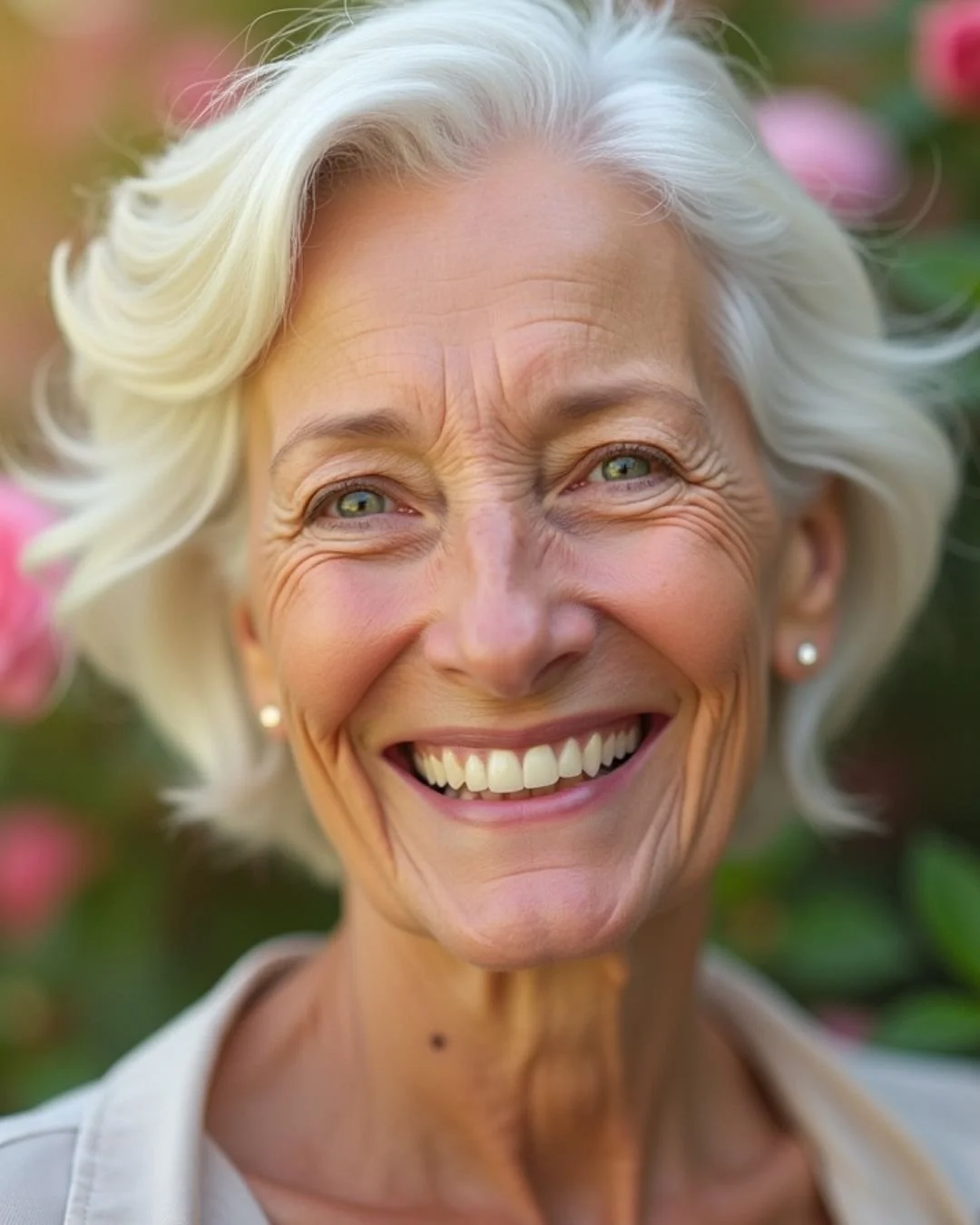
Ageing is a privilege, and wanting to look after your skin while you do it is an entirely reasonable thing to want at 45, 65 or 85. What changes with age is not whether you are allowed, but which approach suits you, what is realistic, and what a good practitioner should be doing differently.
This guide covers what the trial evidence actually shows in older patients, what changes decade by decade, what genuinely suits mature skin, and the things I am more careful about as people get older, because there are some and they deserve saying.
Key Takeaways
| Question | Short answer |
|---|---|
| Is there an upper age limit? | No. Suitability is assessed on health, medication and goals, not on the year you were born |
| Do anti-wrinkle injections still work after 65? | Yes. Pooled trial data found response rates in over-65s within 2.7% of younger adults, a difference that was not statistically significant |
| Are side effects worse with age? | In that analysis, headache was reported by 5.7% of over-65s versus 9.7% of under-65s. Fewer, not more |
| Is it too late to start at 70? | No. Many of my patients start in their 60s and 70s |
| What changes with age? | Skin thickness, collagen, fat volume, bone support and healing. The plan adapts to all five |
| What suits mature skin best? | Usually collagen-stimulating and skin quality treatments, with structural support where it is genuinely needed |
| What am I more careful about? | Thinner skin, medication, bruising, and the honest limits of what is achievable without surgery |
In This Article
- Is there an upper age limit for aesthetic treatments?
- What the evidence shows in patients over 65
- What actually changes as skin ages
- Your 40s: what is usually happening
- Your 50s: the decade of the biggest change
- Your 60s: structure becomes the conversation
- Your 70s: what still works, and what I would rather do
- Your 80s and beyond: is there any point?
- Treatments that suit mature skin
- What I am more careful about with age
- When I would say no
Is There an Upper Age Limit for Aesthetic Treatments?
No. There is no age at which treatment becomes unavailable, and nothing in professional guidance sets one.
What determines suitability is:
- Your general health and any relevant medical conditions
- Your medication, particularly anything affecting bleeding or the neuromuscular system
- The condition of your skin and the structures underneath it
- What you are hoping for, and whether it is achievable
- Whether the thing that is bothering you is something treatment can actually address
None of those is a number. A healthy 74-year-old is frequently a better candidate than an unwell 45-year-old, and I have declined to treat people in their thirties while happily treating people thirty years older.
What the Evidence Shows in Patients Over 65
This is the bit I most wanted to be able to write, because until fairly recently the honest answer was "we think so, but nobody has looked separately".
Now somebody has. A 2023 analysis in the Journal of Cosmetic Dermatology pooled data from three phase III placebo-controlled trials and examined the results for adults aged 65 and over as a separate group.
| What was measured | Adults 65 and over (n=70) | Adults under 65 (n=667) |
|---|---|---|
| Baseline wrinkle severity | More pronounced | Less pronounced |
| Response rate difference across all visits | Absolute mean difference of −2.7%, not statistically significant at any visit | |
| Satisfaction at day 30 | 88.2% | 91.4% |
| Headache, the commonest side effect | 5.7% | 9.7% |
In other words: it worked essentially as well in the older group, in people who started with deeper lines, with fewer reported side effects than the younger group.
Two honest caveats. Seventy people is a modest number, and this was a post hoc analysis rather than a trial designed to answer the question. But it is real trial data, separated out and reported properly, and it is a great deal more than "in my experience".
What it supports is straightforward: age itself is not the reason a treatment will or will not work. How it is done, and whether it is the right choice for your skin, matters far more.

What Actually Changes as Skin Ages
Understanding this is what makes the decade-by-decade sections below make sense, because the same word, "ageing", covers five quite different processes happening at different rates.
| What changes | What it looks like | What it means for treatment |
|---|---|---|
| Collagen and elastin | Loss of firmness, crepiness, lines that stay when the face is still | Collagen-stimulating approaches become more valuable than line-softening alone |
| Skin thickness | Skin becomes measurably thinner and more fragile | Superficial product shows more readily. Placement has to be deeper and more careful |
| Fat volume | Hollowing in some areas, heaviness in others, often at once | Restoring support where it was lost, rather than adding volume where it is visible |
| Bone | The midface, orbital rim and jawline all resorb with age | The scaffolding has changed. Soft tissue treatments can only compensate so far |
| Healing and recovery | Bruising more readily, marks settling more slowly | More time before events, gentler technique, and realism about downtime |
The bone point is the one people find most surprising and it matters enormously. Much of what looks like sagging skin is skin fitting perfectly well over a structure that has shrunk beneath it. I have written about that separately and linked it at the end.
Your 40s: What Is Usually Happening
The decade when most people first notice change rather than simply ageing.
| Commonly noticed | Usually because |
|---|---|
| Lines that used to disappear now stay | Repeated folding on skin with less collagen to spring back |
| Flatter cheeks, more visible folds | Early midface deflation |
| Skin looks tired even when rested | Reduced light reflection from changing skin quality |
| New sensitivity or dryness | Perimenopausal change for many women. Barrier function shifts |
What usually helps most: getting skin quality right first, daily sun protection, and softening lines where they genuinely bother you. This is the decade where less intervention, done well, goes furthest.
Your 50s: The Decade of the Biggest Change
For most women this is the steepest part of the curve, and it is largely hormonal. Collagen loss accelerates sharply around the menopause, and a great many women describe their face changing almost overnight rather than gradually.
| Commonly noticed | Usually because |
|---|---|
| Skin that suddenly feels thinner and drier | Falling oestrogen affects skin thickness, hydration and barrier function |
| Loss of firmness across the face | The sharpest phase of collagen decline |
| Jawline softening | Combination of descent, bone change and laxity beginning |
| Products that worked for years now sting | Barrier change, frequently mistaken for having "become sensitive" |
What usually helps most: collagen-stimulating and regenerative treatments start to earn their place here, alongside proper attention to skin quality. This is also the decade where people most often over-correct out of alarm, and where a measured plan beats an urgent one.
Your 60s: Structure Becomes the Conversation
By this decade the changes are structural as well as superficial, and the honest conversations become more important.
| Commonly noticed | Usually because |
|---|---|
| Hollowing at the temples and under the eyes | Fat compartment deflation plus orbital rim bone loss |
| Jowls becoming established | Descent held by the jawline ligaments, plus prejowl bone resorption |
| Skin quality dominating how you look | Texture and light reflection now affect appearance more than any single line |
| Marks and bruises taking longer to settle | Slower healing and more fragile capillaries |
What usually helps most: regenerative and collagen-stimulating treatments, targeted structural support where volume has genuinely been lost, and serious attention to skin quality. This is also where I am most likely to say that something is a surgical question rather than an injectable one.
Your 70s: What Still Works, and What I Would Rather Do
This is the decade your search brought you here for, so let me be specific.
Anti-wrinkle injections still work. The trial data above is drawn from patients aged 65 and over and found no significant difference in response. What changes is the approach: lighter doses, careful attention to brow position, and an understanding that the goal is softening rather than removing movement, because thinner skin with less collagen does not spring back the way it did and an over-treated forehead shows it more.
What I often find works better at this stage is the regenerative and skin quality side. Improving the condition of the skin itself changes how light behaves on the face, and that affects how well someone looks far more than any individual line does.
| Question | Honest answer |
|---|---|
| Can I still have anti-wrinkle injections at 70? | Yes, assuming you are medically suitable. Expect a lighter approach than a 40-year-old would have |
| Can I still have filler? | Yes, with care. Placement tends to be deeper and volumes smaller, because thinner skin conceals less |
| Will it look obvious? | Not if it is conservative. Obvious results come from too much, not from age |
| Is it worth it at this stage? | That is your judgement, not mine. But nobody has ever told me they regretted looking after their skin |
| What would you suggest first? | Skin quality, almost always. It is lower risk, it suits thinner skin, and it changes more than people expect |
Your 80s and Beyond: Is There Any Point?
Yes, if you want it, and the question deserves a straight answer rather than an awkward one.
What shifts is the emphasis. At this stage skin comfort and skin quality usually matter more than lines. Skin that is dry, fragile, itchy or easily damaged affects daily life in a way a wrinkle does not, and a sensible skincare routine can make a genuine difference to that.
Where injectable treatment is appropriate, it is conservative, and the conversation about what is and is not achievable becomes more important rather than less. I would also want to know about your general health and medication in more detail, because both become more relevant with age.
The thing I would gently push back on is the idea that there is an age at which it stops being reasonable to care how you look. There is not. There is only an age at which some approaches stop being the right tool, and that is a different conversation.
Treatments That Suit Mature Skin
The pattern across every decade above is the same: as skin ages, the balance shifts from softening movement toward improving the skin itself and supporting what has been lost.
| Approach | What it addresses | How it adapts with age |
|---|---|---|
| Collagen-stimulating treatments | Firmness, skin quality, the foundation rather than the surface | Becomes more valuable, not less. Ageing skin has plenty of capacity to respond |
| Polynucleotides and skin boosters | Hydration, elasticity, skin quality, the under-eye area | Often the treatment I reach for first in mature skin. Low risk, well tolerated, and works on the thing that matters most |
| Microneedling | Texture, tone, overall skin quality | Suits mature skin well. Recovery may take slightly longer |
| Anti-wrinkle injections | Softening dynamic lines, brow position, neck bands | Lighter doses, careful brow assessment, softening rather than removing movement |
| Dermal fillers | Restoring support where volume has genuinely been lost | Deeper placement, smaller volumes, structural rather than surface. Thinner skin conceals less |
| Medical grade skincare | Barrier, texture, tone, comfort | The most underrated intervention at every age, and the most important at the oldest ones |
| Daily sun protection | Protecting what you still have | Never stops mattering, and never gets less cost-effective |
What I Am More Careful About With Age
Saying "there is no age limit" would be incomplete without this section, and most articles on this subject stop before it.
| Consideration | Why it matters more | What I do about it |
|---|---|---|
| Thinner skin | Superficial product is more visible, and thin or atrophic skin is unsuitable for superficial placement | Deeper placement, smaller volumes, and declining superficial work in some areas |
| Medication | Anticoagulants and antiplatelets are far commoner with age, and increase bruising | A full medication review at consultation, more time before events, and never asking anyone to stop a prescribed medicine for a cosmetic treatment |
| More fragile capillaries | Bruising is more likely and can be more extensive | Slow injection, low flow rates, small volumes at multiple points, and honest warning about timing |
| Slower healing | Marks and bruises settle more slowly | Longer intervals before events. Three weeks rather than two |
| General health | More likely to be relevant, and more likely to include something that changes the plan | A fuller medical history, and willingness to postpone or decline |
| The limits of non-surgical treatment | Established laxity is a surgical problem, and pretending otherwise wastes people's money | Saying so, clearly, at the consultation rather than after three rounds of treatment |
The honest limits
This deserves spelling out, because it is where expectations most often part company with reality.
- Nothing non-surgical meaningfully tightens skin. Treatments improve skin quality. Removing excess skin is surgery
- Established jowls are a surgical problem. Early softening can be improved. Set jowls cannot be injected away
- Filler does not lift. It restores volume, which can improve how lifted a face looks. Used as a lift, it produces heaviness
- Bone loss cannot be replaced. It can be partially compensated for. That is not the same thing
- Nothing stops the process. It addresses what has happened and slows some of what is coming
The most valuable thing an aesthetic doctor can tell you is which of your concerns they cannot help with. If nobody has ever said that to you, you have not had a thorough consultation.
Why People Ask "Am I Too Old?"
Three fears, in roughly this order, and all three are worth answering directly.
"I'll look overdone"
The fear is of a particular look that everyone recognises: too smooth, too full, faintly startled. That look is the product of too much, not of age. Conservative treatment on mature skin looks like mature skin in good condition, which is the point.
"It won't work on me now"
The trial data says otherwise. Response rates in over-65s were within 2.7% of younger adults and the difference was not statistically significant, in people who started with more pronounced lines.
"It's too late to start"
A great many of my patients start in their fifties, sixties and seventies. There is no window that closes. The best time to start looking after your skin is whenever you decide to.
When I Would Say No
Age is not on this list. These are:
- When the concern is genuinely surgical and injectable treatment would disappoint
- When someone wants to look like a different person, or like a photograph of themselves from thirty years ago
- When treatment is being sought for somebody else's benefit
- When there is an active medical issue that should be addressed first
- When medication or health makes it unwise, which does become more common with age
- When somebody is in the middle of a significant life crisis. It will still be available in three months
- When the honest answer is that skincare and sun protection would do more than anything I could inject

What I Can and Cannot Help With
| What this clinic does | What belongs with your GP |
|---|---|
| Assessing how your face has changed and what would genuinely help | Any sudden or one-sided change in facial appearance or movement |
| Cosmetic treatments adapted to mature skin | Advice about whether your prescribed medication can be paused |
| Medical grade skincare for comfort, barrier and skin quality | Diagnosing any medical skin condition |
| Telling you when the answer is surgical, or nothing at all | Investigating a lump, a changing mole or altered sensation |
I am a practising NHS GP as well as an aesthetic doctor, which means I take a proper medical history and I recognise when something is not cosmetic. But I see you here in a cosmetic capacity, and being clear about that boundary is what makes the advice worth having.
Frequently Asked Questions
Am I too old for aesthetic treatments?
No. There is no upper age limit. Suitability depends on your health, your medication, the condition of your skin and what you are hoping for, none of which is a number.
Can I still have anti-wrinkle injections in my 60s?
Yes. Pooled trial data in adults aged 65 and over found response rates within 2.7% of younger adults, a difference that was not statistically significant, and fewer reported side effects.
Can I still have anti-wrinkle injections in my 70s?
Yes, assuming you are medically suitable. The approach differs: lighter doses, careful attention to brow position, and softening rather than eliminating movement, because thinner skin shows over-treatment more readily.
What about in my 80s?
There is no cut-off. At that stage I would usually suggest skin quality and comfort take priority over lines, and I would want a fuller conversation about your general health and medication. But if you want it and it is appropriate, age alone is not the obstacle.
Is it too late to start at 65 or 70?
No. Plenty of people start in their sixties and seventies, and they do well. There is no window that closes.
Will fillers look obvious on older skin?
Not if they are conservative and placed properly. Thinner skin conceals product less well, which is a reason for deeper placement and smaller volumes rather than a reason to avoid it. Obvious results come from too much.
Am I more likely to bruise as I get older?
Yes. Capillaries become more fragile, and anticoagulant or antiplatelet medication is far commoner. Allow three weeks before any event rather than two, and tell your practitioner about every medication. Never stop a prescribed medicine for a cosmetic appointment.
I take blood thinners. Can I still have treatment?
Usually yes, with a fuller discussion, an expectation of more bruising and more time before events. What you must not do is stop the medication. That risks something far worse than a bruise.
Should I start with regenerative treatments rather than injectables?
For many mature patients, yes. Treatments aimed at collagen and skin quality address the foundation rather than the surface, they suit thinner skin, and they are lower risk. It is usually where I would start.
Can anything non-surgical lift my jowls?
Early softening of the jawline can be improved with targeted support. Established jowls are a surgical problem, and I would tell you so rather than take your money for three rounds of something that will not deliver it.
How long do results last in older patients?
Broadly similar to younger patients. Anti-wrinkle injections typically three to four months. Skin quality treatments need ongoing maintenance. Filler longevity varies considerably by product and placement, and imaging studies suggest some products persist longer than their marketed duration.
Can I treat lip lines without changing my lips?
Yes. Very small amounts placed precisely, along with treatments aimed at skin quality in that area, address the lines without adding volume to the lip itself.
Will people be able to tell?
If the work is good, no. The most common response to a well-judged result is that someone asks whether you have been away, not what you have had done.
What is the single most useful thing at any age?
Daily broad spectrum sun protection and a simple routine you actually follow. It costs less than anything else on this page and it does more than most of it.
Related Reading
- The Triangle of Youth Explained: Why Your Face Changes Shape With Age
- The Best Aesthetic Treatments for Your 30s, 40s and 50s
- Menopause and Facial Ageing Explained
- Why Skin Tightening Is One of the Biggest Myths in Aesthetics
- How to Choose an Aesthetic Clinic Safely
- Polynucleotides at Dr Caroline Warden Clinic
- Medical Grade Skincare at Dr Caroline Warden Clinic
References
- Cox SE, Ascher B, Avelar RL, et al. PrabotulinumtoxinA for the treatment of glabellar lines in adults, 65 years of age and older: the fourth in a series of post hoc analyses of the phase III clinical study data. J Cosmet Dermatol. 2023;22(6):1745-1756.
- De Boulle K, Heydenrych I. Patient factors influencing dermal filler complications: prevention, assessment, and treatment. Clin Cosmet Investig Dermatol. 2015;8:205-214.
- Mendelson B, Wong CH. Changes in the facial skeleton with aging: implications and clinical applications in facial rejuvenation. Aesthetic Plast Surg. 2020;44(4):1151-1158.
- Rohrich RJ, Pessa JE. The fat compartments of the face: anatomy and clinical implications for cosmetic surgery. Plast Reconstr Surg. 2007;119(7):2219-2227.
- NHS. Sunscreen and sun safety.
About the Author
Dr Caroline Warden is a practising NHS GP and aesthetic doctor with nearly twenty years of clinical experience, an independent prescriber, and holder of a Level 7 postgraduate diploma in cosmetic injectables. She is Medical Director and sole practitioner at Dr Caroline Warden Skin & Aesthetic Clinic, 2 Crown Passages, Hale, Altrincham, a family-run clinic she runs with her sister Louise, seeing patients from Hale, Hale Barns, Bowdon, Altrincham, Timperley, Sale, Alderley Edge, Wilmslow, Knutsford, Bramhall, Cheadle, Didsbury and across Cheshire and South Manchester. You will only ever see and be treated by Dr Caroline Warden. GMC number 6157708.


