The Triangle of Youth Explained: Why Your Face Changes Shape With Age

Last updated: September 2026
People rarely arrive at my clinic in Hale saying they have a wrinkle. What they say is that something about their face has changed and they cannot name it.
"I look heavier round the jaw but I haven't put on weight."
"My cheeks have gone flat."
"I look tired even when I've slept."
"I just don't look like me."
What they are describing is not a line. It is a change of shape, and it is real, measurable and quite well understood.
The shorthand for it in aesthetic medicine is the Triangle of Youth. It is a useful way of describing what happens, and I will explain it properly. But I also want to be straight with you about something, because nobody else writing about this seems to be.
"Triangle of Youth" is clinical shorthand, not an anatomical structure. You will not find it in the peer-reviewed literature. You will find it on a great many clinic websites. That does not make it wrong or useless, but it does mean it is a way of describing something rather than an explanation of it. The explanation is underneath, and it is more interesting.
Key Takeaways
| Question | Short answer |
|---|---|
| What is the Triangle of Youth? | A shorthand for the fact that a young face is widest at the cheekbones and narrows to the chin. With age that proportion inverts |
| Is it a real anatomical concept? | No. It is a descriptive term used in clinics, not a published anatomical framework. The anatomy underneath it is real |
| Why does my face change shape? | Four layers change at different rates: bone, fat, supporting structures, and skin |
| Does the bone really change? | Yes. The maxilla, the orbital rim and the jawline all resorb with age in predictable patterns |
| Is it just sagging? | No. Facial fat sits in separate compartments that lose volume and shift independently, so it is not a uniform slide downward |
| Can creams fix it? | Skincare works on the skin layer. It cannot address bone, fat or laxity, and no topical product lifts anything |
| What actually helps? | Matching the treatment to the layer that has changed, and being honest about where non-surgical options stop |
In This Article
- What the Triangle of Youth actually describes
- Why I am careful about the term
- The four layers of facial ageing
- Layer one: the bone, and why this surprises people
- Layer two: fat, and why it is not one sliding mass
- Layer three: ligaments, muscle and the downward pull
- Layer four: skin quality and elasticity
- Why the triangle inverts, put simply
- What genuinely helps at each layer
- Where non-surgical treatment honestly stops
- What this looks like decade by decade
- When a facial change is not cosmetic
What the Triangle of Youth Actually Describes
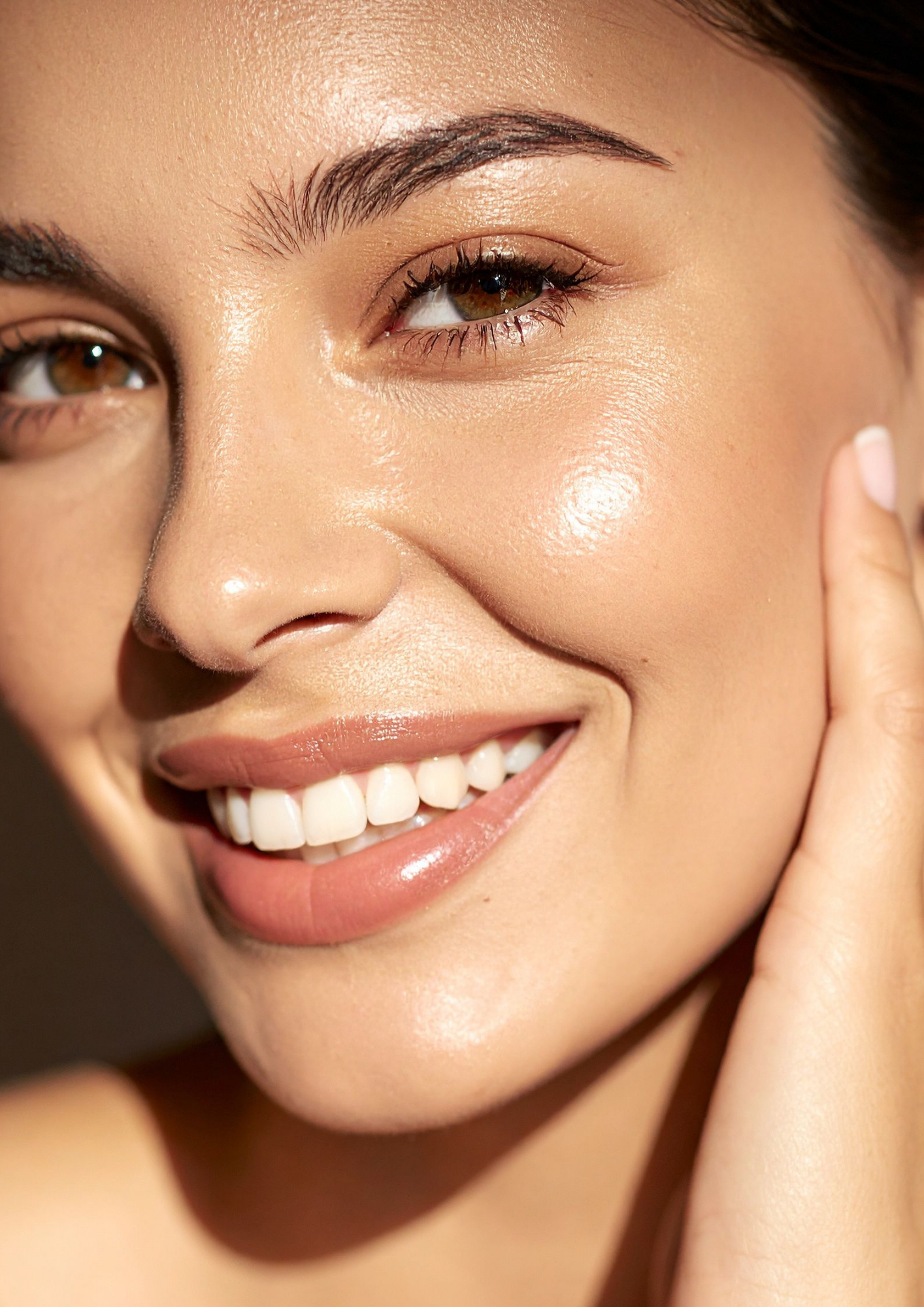
Look at a photograph of almost anyone in their twenties. The widest part of the face sits high, across the cheekbones. From there it tapers down through a clean jawline to a defined chin. Draw around it and you get a triangle with the broad edge at the top and the point at the bottom.
Characteristics of that arrangement:
- Full, high cheeks that catch the light at the top of the face
- A defined jawline with a clear border between face and neck
- A smooth transition from cheek to jaw with no step or shadow
- Volume concentrated in the upper two thirds
Now look at a photograph of the same person forty years later. The widest part has moved down. The cheeks have flattened, the jawline has softened, and weight has gathered around the lower face. The triangle has effectively turned over.
That inversion is what people are describing when they say they look tired, heavy or unlike themselves. It is a change in the distribution of volume, not simply the arrival of lines. Which is why treating the lines alone so often disappoints.
Why I Am Careful About the Term
Two reasons.
First, as above, it is a marketing-friendly description rather than a scientific model. That matters because it is often presented as though it were established anatomy, which shades into implying that any face not conforming to it is a problem to be corrected.
Second, and more importantly: plenty of faces were never triangular in the first place. Face shape is largely inherited. Some people have a naturally broader lower face, a softer jawline or flatter cheekbones at twenty-two and always did. Presenting one shape as the universal template of youth turns ordinary variation into a deficiency.
The useful question is never "does your face match the triangle". It is "has your face changed from how it used to be, and does that change bother you?" Those are entirely different questions, and only the second one is worth acting on.
Used properly, the triangle is a way of explaining to someone why they look different when no single feature has obviously altered. Used badly, it is a way of selling treatment to people who never needed it.

The Four Layers of Facial Ageing
Here is where the real explanation lives. Your face is a stack of layers, and they change at different rates and in different ways.
| Layer | What changes | Visible effect |
|---|---|---|
| Bone | Resorbs in specific, predictable areas | Loss of the scaffolding everything else sits on. Eye sockets widen, midface flattens, jawline loses definition |
| Fat | Compartments lose volume and shift at different rates | Hollowing in some places, heaviness in others, often in the same face |
| Ligaments and muscle | Supporting ligaments lax, muscles change tone and pull | Descent of soft tissue, deepening folds, downturned corners |
| Skin | Collagen and elastin decline, quality and thickness reduce | Lines, crepiness, loss of light reflection, texture change |
Almost every disappointing aesthetic result comes from treating one layer when the problem is in another. Excellent skincare will not lift a descended cheek. Filler will not improve crepey skin. Understanding which layer is doing what is the entire job.
Layer One: The Bone
This is the part that surprises people, and it is the most important thing in this article.
Your facial skeleton is not fixed. It remodels throughout life, and it does so in patterns that are now well described. A 2020 review in Aesthetic Plastic Surgery set out where resorption reliably occurs:
| Where bone is lost | What you see because of it |
|---|---|
| The maxilla, the bone of the upper jaw and midface | Flattening of the cheek. The support beneath the mid-face literally recedes |
| The pyriform aperture, around the nose | Deepening of the nasolabial folds, changes in the nose to lip relationship |
| The superomedial and inferolateral orbital rim | The eye socket widens. Hollowing, shadowing and a more skeletal look around the eyes |
| The prejowl region of the mandible | The notch in front of the jowl that makes the jawline look scalloped rather than straight |
"Correction of the skeletal framework is increasingly viewed as the new frontier in facial rejuvenation."
— Mendelson B, Wong CH, Aesthetic Plast Surg. 2020;44(4):1151-1158
Think of it as a sofa. If the frame narrows, the upholstery looks baggy even though nothing happened to the upholstery. Much of what people interpret as sagging skin is skin that fits perfectly well over a structure that has shrunk beneath it.
This has a blunt practical consequence: no skincare product, facial massage, gua sha routine or at-home device does anything whatsoever to bone. If the change you dislike is skeletal, the entire topical category is the wrong tool.
Layer Two: Fat, and Why It Is Not One Sliding Mass
For decades facial ageing was described as fat "descending", as though the soft tissue of the face were a single sheet slowly sliding downward.
That turned out to be wrong, and the paper that changed it is worth knowing about. Rohrich and Pessa, publishing in Plastic and Reconstructive Surgery in 2007, demonstrated that facial fat is partitioned into discrete anatomical compartments, separated by septal barriers, with distinct blood supplies.
"The subcutaneous fat of the face is partitioned into discrete anatomic compartments."
— Rohrich RJ, Pessa JE, Plast Reconstr Surg. 2007;119(7):2219-2227
They identified multiple separate compartments, including three in the cheek alone, three in the forehead, three around the orbit, a distinct nasolabial compartment and a separate jowl compartment.
Why that matters enormously:
- The compartments age independently. Some deflate, some hold their volume, some shift. That is why a face can look hollow in the temple and heavy at the jaw at the same time, which makes no sense under the "everything slides down" model
- The junctions between compartments become visible. When one deflates and its neighbour does not, the boundary between them shows up as a fold or a shadow. That is what a deepening nasolabial fold or a tear trough actually is
- It explains why "lifting" is the wrong mental model. You are not putting back a sheet that slipped. You are dealing with differential volume change across a mosaic
It also explains something people find baffling: losing weight can make you look older. Facial fat compartments deflate along with everywhere else, and in the face, volume is structure.
Layer Three: Ligaments, Muscle and the Downward Pull
Running through the face are retaining ligaments, fibrous structures that anchor soft tissue to the underlying bone. Rohrich and Pessa noted that these appear to form where the septal barriers between fat compartments meet.
With time these ligaments lax. The tissue they were holding sits lower, and because the anchoring points are fixed, the tissue tends to gather above a ligament and form a fold at it. That is the mechanism behind jowls: soft tissue descending and being caught by a ligament along the jawline, so the jowl sits in front and the notch sits behind.
Muscle contributes too. Some facial muscles actively pull downward, the depressors around the mouth and jaw among them, and their relative influence increases as the lifters weaken and the tissue above becomes more mobile.
| What people notice | What is happening |
|---|---|
| Jowls appearing along the jawline | Descending soft tissue held by the mandibular ligament |
| Deepening nasolabial folds | A visible junction between a deflated and a fuller fat compartment, plus bone loss at the pyriform aperture |
| Marionette lines | Descent combined with the downward pull of the depressor muscles |
| Downturned mouth corners at rest | Depressor muscle activity against reduced support |
| Loss of the jawline border | A combination of prejowl bone loss, fat descent and laxity |
Layer Four: Skin Quality and Elasticity
The layer everyone thinks about first, and the only one visible in a mirror at close range.
Collagen production declines steadily from the mid-twenties, and the fall accelerates sharply around the menopause. Elastin does not meaningfully regenerate in adult skin. Cumulative ultraviolet exposure degrades both. The result is skin that is thinner, less elastic, less able to recoil, and less good at reflecting light.
Skin quality determines a great deal of what people describe as "looking tired", independent of shape. Dull, dehydrated, crepey skin reads as older at any structure.
Why the Triangle Inverts, Put Simply
Put the four layers together and the shape change becomes obvious.
| Upper face | Lower face |
|---|---|
| Bone resorbs at the midface and orbital rim, removing support | Prejowl bone loss creates a notch that interrupts the jaw border |
| Cheek fat compartments deflate | Descended tissue accumulates above the jawline ligaments |
| The widest point loses projection and volume | The lower face gains width it never had |
| Narrower | Wider |
The upper third narrows while the lower third broadens. The widest point migrates downward. Nothing has been added to your face. Support has moved from the top of it to the bottom.
What Genuinely Helps at Each Layer
Once you understand which layer has changed, the options become much easier to judge, including which ones to ignore.
| Layer | What can help | What it honestly achieves |
|---|---|---|
| Bone | Nothing non-surgical replaces bone. Volume placed at deep structural level can partially compensate for lost projection | Restores the appearance of support. Does not restore the bone itself |
| Fat compartments | Dermal fillers to replace lost volume where it has gone. Collagen-stimulating treatments to improve tissue quality over time | Genuinely effective for deflation, when placed where volume was actually lost rather than where the fold appears |
| Ligaments and descent | Very little non-surgically. Targeted volume can improve the appearance. Muscle-relaxing injections can reduce downward pull in specific areas | Improvement at the margins. This is the layer where non-surgical options are weakest |
| Skin quality | Medical grade skincare, prescription skincare where appropriate, microneedling, skin boosters, polynucleotides, and above all daily sun protection | Substantial and reliable improvement in texture, hydration and light reflection |
Volume replacement, and where it should actually go
The most common error in treating a changed face shape is injecting the fold instead of the cause. A deepening nasolabial fold is often the visible junction between a deflated cheek compartment and a fuller one, sometimes compounded by bone loss further up. Filling the crease directly can produce a heavy, unnatural result while leaving the actual deficit untouched. Restoring support higher up frequently softens the fold without anything being placed in it.
There is also a secondary effect worth knowing about. Hyaluronic acid fillers do more than occupy space: a study published in Archives of Dermatology demonstrated de novo collagen production in photodamaged skin following cross-linked hyaluronic acid injection, thought to be driven by mechanical stretch on dermal fibroblasts. So there is a genuine tissue quality effect alongside the volume effect. It is a bonus rather than the main event, and it is not a reason on its own to have filler.
Muscle-relaxing injections in this context
Anti-wrinkle injections work on muscle, so in a discussion about shape they play a supporting rather than a leading role. Where they contribute:
- Upper face, softening the dynamic lines that make expression look heavier than it feels
- Downward pull, where specific depressor muscles are actively dragging the mouth corners or jawline down
- The neck, where prominent platysmal bands are contributing to loss of the jaw border
What they do not do is restore volume or lift descended tissue. Used as though they could, they produce the frozen, still, oddly heavy result everybody is trying to avoid.
Skin quality, which is where most people underinvest
This is the least glamorous section and the one with the best return. Improving skin quality changes how light behaves on the face, and light is most of what we register as "looking well".
- Daily broad spectrum sun protection. The best-evidenced anti-ageing intervention available, protecting the collagen you still have
- A consistent, simple routine you actually follow, rather than twelve products used sporadically
- Prescription skincare where appropriate, discussed at consultation
- Treating the barrier first if your skin is reactive, because nothing else works on compromised skin
Where Non-Surgical Treatment Honestly Stops
This section is here because most clinic pages on this subject do not have one.
| What people hope for | The honest answer |
|---|---|
| "Can you tighten my skin?" | Not meaningfully. Non-surgical treatments improve skin quality. Genuine skin tightening, in the sense of removing excess, is surgical |
| "Can you get rid of my jowls?" | Improved in the early stages by restoring support and definition. Established jowls are a surgical problem |
| "Can you give me a jawline like that photograph?" | Not if the bone underneath is a different shape. Definition can be improved. Structure cannot be invented |
| "Can filler lift my face?" | It restores volume, which can improve how lifted a face looks. It is not a lift, and used in that spirit it produces heaviness |
| "Will this stop me ageing?" | No. It addresses changes that have happened and slows some of what is coming. Bone will continue to remodel |
| "Can I avoid ever needing surgery?" | For some people, yes. For others, a facelift is eventually the only thing that does what they want, and pursuing non-surgical alternatives past that point gets expensive and disappointing |
The most valuable thing an aesthetic doctor can tell you is which of your concerns is not treatable with what they offer. If nobody has ever told you that, you have not had a thorough consultation.
What This Looks Like Decade by Decade
Broad patterns rather than rules. Everyone differs, and genetics, sun exposure, smoking and hormonal history all shift the timing considerably.
| Decade | What is typically happening | Where effort is best spent |
|---|---|---|
| Twenties | Collagen production has begun to decline. Structure intact | Sun protection and not damaging your skin. Genuinely that is all |
| Thirties | Dynamic lines start to persist at rest. Early skin quality changes | Skincare that does something, sun protection, addressing lines only if they bother you |
| Forties | Midface deflation becomes visible. Perimenopausal skin change for many women. The shape question starts | Skin quality first, then targeted volume where it has genuinely been lost |
| Fifties | Bone remodelling more evident. Jawline definition softens. Post-menopausal collagen decline | Structural support, collagen stimulation, and realistic conversations about what is and is not achievable |
| Sixties and beyond | All four layers well established. Skin laxity often the dominant feature | Skin quality remains worthwhile at any age. Honesty about where surgery becomes the better answer |
The useful principle throughout: maintain early, intervene proportionately, and treat the layer that has actually changed.
When a Facial Change Is Not Cosmetic
Most changes in face shape are ordinary ageing. A few are not, and they need assessing properly rather than treating aesthetically.
Please see your GP rather than an aesthetic clinic if you notice:
- A change affecting one side only, particularly new asymmetry of movement, drooping or weakness
- Any sudden change in facial appearance or movement. Sudden one-sided facial weakness needs urgent assessment, today, not next week
- Facial swelling that comes and goes, or that is associated with pain
- A lump or firm area you can feel, anywhere in the face or neck
- Unintentional weight loss accompanying the facial change
- Facial changes alongside other symptoms such as fatigue, hair changes, altered sensation or jaw pain
- Numbness or altered sensation anywhere in the face
None of those belong in a cosmetic clinic, and I would not attempt to treat them in one.
What I Can and Cannot Help With
| What this clinic does | What belongs with your GP |
|---|---|
| Assessing how your face has changed and explaining which layer is responsible | Any sudden or one-sided change in facial appearance or movement |
| Cosmetic treatments aimed at volume, definition and skin quality | Investigating a lump, swelling or altered sensation |
| Medical grade and prescription skincare for skin quality | Diagnosing any medical cause of a facial change |
| Telling you when the answer is surgical, or nothing at all | Anything that is not purely cosmetic |
I am a practising NHS GP as well as an aesthetic doctor, so I recognise the difference quickly and I can tell you where to go. But I see you here in a cosmetic capacity, and being clear about that boundary is what makes the advice worth having.
Frequently Asked Questions
Why does my face look heavier when I have not gained weight?
Because volume has redistributed rather than increased. Cheek fat compartments deflate while descended tissue gathers along the jawline, so the lower face reads as fuller even though nothing has been added.
Does facial bone really shrink?
Yes. The maxilla, the bone around the nose, parts of the orbital rim and the region in front of the jowl all resorb with age in well-described patterns. It is one of the least appreciated drivers of facial change.
Why do I look older after losing weight?
Facial fat compartments deflate alongside everywhere else, and in the face volume provides structure. This is why significant or rapid weight loss frequently ages the face even as it improves health elsewhere.
Can facial exercises restore my face shape?
No. They do not affect bone, they do not restore fat volume, and they do not tighten ligaments. Some facial muscles actively pull downward, so exercising indiscriminately is not obviously helpful.
Do gua sha, face rollers or lymphatic massage help?
They can temporarily reduce puffiness and they are pleasant. They do not affect any of the four layers described here in any lasting way.
Is filler the answer to a changed face shape?
It is one answer, for one layer, when volume has genuinely been lost and it is placed where the loss occurred. It does not address skin quality, laxity or bone. Used as a universal solution it produces the overfilled look everyone recognises.
Why did filler in my nasolabial fold look wrong?
Because the fold is usually a symptom rather than the problem. It marks the junction between a deflated compartment and a fuller one. Filling the crease itself adds volume to an area that already has enough, while the actual deficit sits higher up.
Can anything non-surgical genuinely tighten skin?
Not in the sense most people mean. Treatments can improve skin quality, thickness and texture, which helps considerably. Removing excess skin is surgery.
At what age should I start thinking about this?
Sun protection from as early as possible. Anything structural only when there is an actual change that bothers you, not on a schedule. Treating a face that has not changed yet is how people end up looking different rather than looking well.
My face was never triangular. Is that a problem?
Not remotely. Face shape is largely inherited and varies enormously. The only useful comparison is with how your own face used to look, not with a template.
How long do results last?
It depends entirely on which layer was treated and how. Skin quality improvements require ongoing maintenance. Volume treatments vary by product and placement. Nothing is permanent, and ageing continues underneath whatever is done.
What is the single most useful thing I can do?
Daily broad spectrum sun protection, starting now, whatever your age. It is the best-evidenced intervention available, it protects the collagen you still have, and it costs less than anything else on this page.
Related Reading
- The Best Aesthetic Treatments for Your 30s, 40s and 50s
- Why Skin Tightening Is One of the Biggest Myths in Aesthetics
- Why Collagen Declines and What Actually Stimulates It
- Menopause and Facial Ageing Explained
- Why Some Aesthetic Treatments Look Unnatural
- Dermal Fillers at Dr Caroline Warden Clinic
- Sculptra for Collagen Stimulation
References
- Rohrich RJ, Pessa JE. The fat compartments of the face: anatomy and clinical implications for cosmetic surgery. Plast Reconstr Surg. 2007;119(7):2219-2227.
- Mendelson B, Wong CH. Changes in the facial skeleton with aging: implications and clinical applications in facial rejuvenation. Aesthetic Plast Surg. 2020;44(4):1151-1158.
- Wang F, Garza LA, Kang S, et al. In vivo stimulation of de novo collagen production caused by cross-linked hyaluronic acid dermal filler injections in photodamaged human skin. Arch Dermatol. 2007;143(2):155-163.
- NHS. Sunscreen and sun safety.
About the Author
Dr Caroline Warden is a practising NHS GP and aesthetic doctor with nearly twenty years of clinical experience, an independent prescriber, and holder of a Level 7 postgraduate diploma in cosmetic injectables. She is Medical Director and sole practitioner at Dr Caroline Warden Skin & Aesthetic Clinic, 2 Crown Passages, Hale, Altrincham, a family-run clinic she runs with her sister Louise, seeing patients from Hale, Hale Barns, Bowdon, Altrincham, Timperley, Sale, Alderley Edge, Wilmslow, Knutsford, Mobberley, Bramhall, Cheadle, Didsbury and across Cheshire and South Manchester. You will only ever see and be treated by Dr Caroline Warden. GMC number 6157708.
