
Sculptra
Doctor-Led treatments in Hale, Altrincham & Cheshire
Your own collagen, back where it used to be
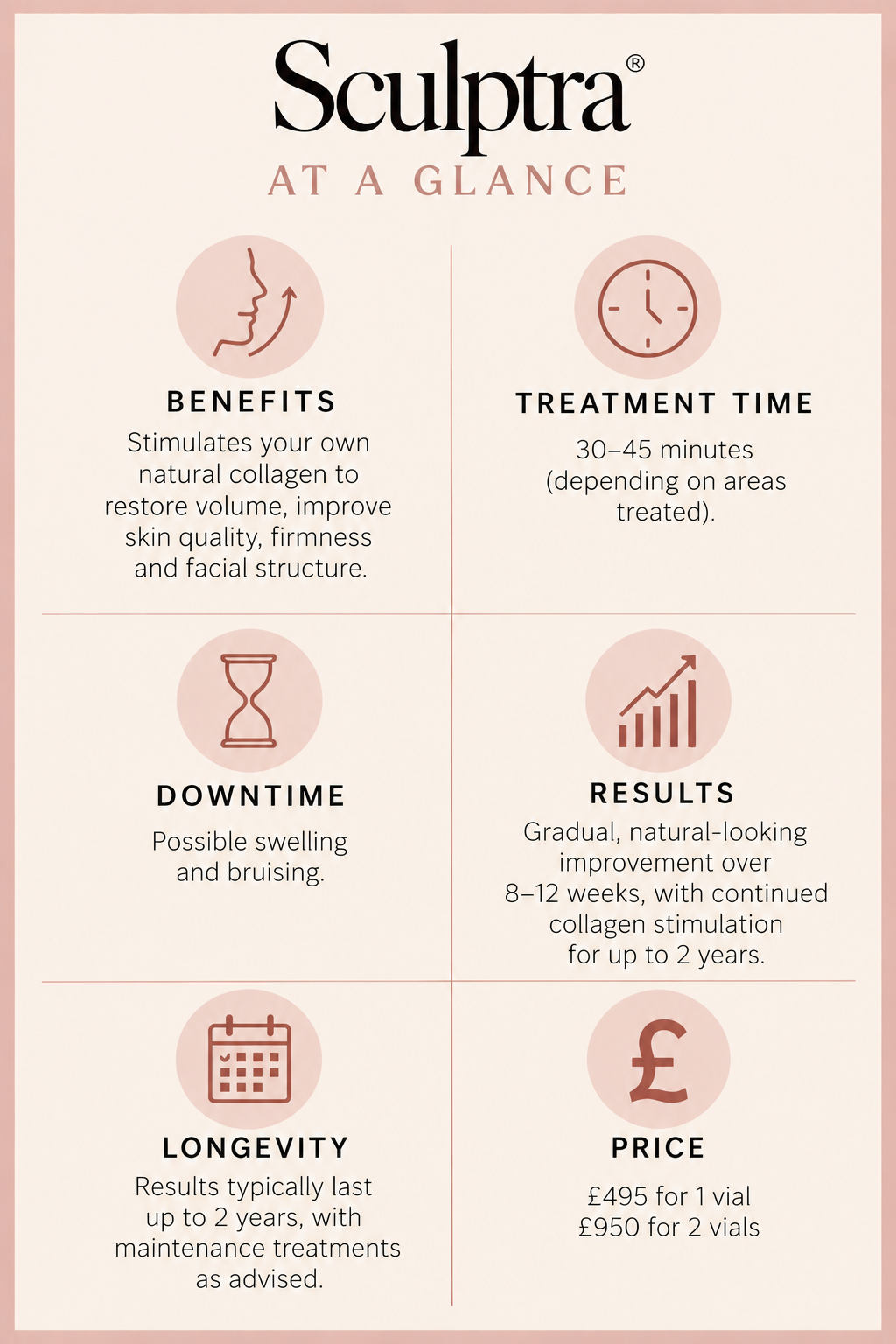
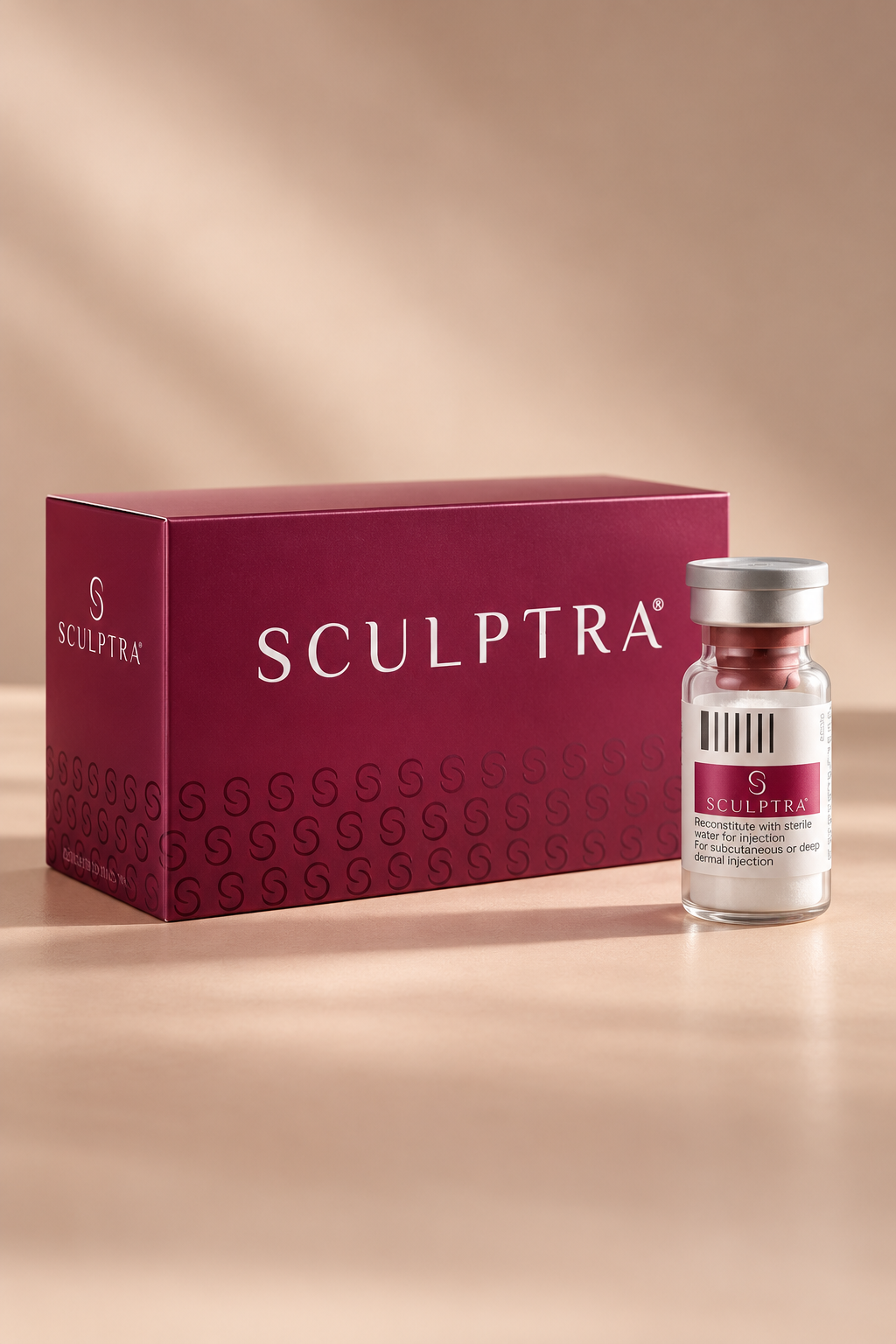
Sculptra is the treatment that has changed my practice most in the last few years, and the one I reach for first when a face has lost the support it used to have. It does not fill. It stimulates your own fibroblasts to make new collagen in the places that have thinned, so that over three to six months the cheeks, temples and lower face regain their structure gradually, the skin above them thickens, and the result reads as healthier and rested rather than treated. At my clinic in Hale, near Altrincham, it has become the foundation of most of the treatment plans I write for patients over 45.
I am Dr Caroline Warden, an NHS GP with over nineteen years of clinical experience, an independent prescriber and a Level 7 qualified aesthetic doctor trained at Harley Academy, practising aesthetic medicine since 2017. Every Sculptra consultation, treatment and review at the clinic is carried out by me personally. The clinic was named Best Doctor-Led Aesthetic Clinic in Cheshire 2026 by GHP and holds over 260 five-star patient reviews.
Sculptra suits the way I think about ageing: work with the biology, put back what has been lost, and let the face look like itself again. The before-and-after photographs on this page, with vial counts and timeframes, are of my own patients, shared with their consent.
Good to know
Usually two or three sessions six to eight weeks apart. Results develop over three to six months and last two years or more. Mild swelling and possible bruising for a few days, plus five minutes of massage, five times a day, for five days. Priced per vial; a typical course is two to four vials.
On this page:
- What is Sculptra and how does it work?
- What can Sculptra treat?
- Sculptra for Mounjaro face and weight loss
- Sculptra, Radiesse or filler?
- Who is Sculptra for, and who is it not for?
- What to expect at your appointment
- Results and how long they last
- Safety and side effects
- Prices and why Sculptra costs what it does
- Frequently asked questions
What is Sculptra and how does it work?
Sculptra is a biostimulatory injectable made of poly-L-lactic acid (PLLA), a biocompatible, biodegradable material that has been used in dissolvable sutures and medical implants for decades. Injected as a suspension of microparticles into the deeper layers of the face, it does something quite different from a hyaluronic acid filler: the particles act as a scaffold that fibroblasts respond to by producing new collagen. Over the following months the PLLA is gradually absorbed and the collagen remains. What you are left with is your own tissue, in the places that had thinned.
Sculptra was first licensed in 2004 to restore facial fat loss in people living with HIV, where the volume loss can be severe, and that origin matters: it was designed from the start to rebuild a face that has lost its structure, not to plump a line. It has since become one of the most widely used regenerative treatments in aesthetic medicine, with twenty years of safety data behind it.
Because it works with your biology rather than on top of it, the result is gradual, cumulative and durable. Nothing is visible on the day except a little swelling from the water it is suspended in. The change comes at six weeks, builds to three months, and keeps improving to six. Two years later, most patients still look better than they did when they started.
Dr Caroline's note
I place Sculptra in the subcutaneous plane, the fat layer just beneath the skin, which is where UK training positions it and where I find it gives the most even, natural collagen response. The patients who are happiest with it are the ones who could not tell you what changed. They say friends keep asking whether they have been away. That is the result I am aiming for every time.
What can Sculptra treat?
Sculptra is not used in the lips, the under-eye hollow or the forehead; those areas have their own treatments, and I will point you to them where they are the better answer.
Sculptra for Mounjaro face and weight loss
The most common new reason patients book Sculptra is a face that has aged after significant weight loss. The words I hear most often are "I feel healthier than ever, but my face looks older." Rapid fat loss, whether through diet, surgery or GLP-1 medication such as Mounjaro, removes facial fat from every compartment at once and reveals the collagen loss and skin thinning that had been hidden underneath. Cheeks flatten, temples sink, and skin that was stretched over fullness now drapes.
Sculptra is unusually well suited to this because it is what it was made for: restoring a face that has lost its fat. It rebuilds broadly rather than spot by spot, the collagen response helps the skin recover its thickness, and nothing looks filled. The only rule is timing. I usually wait until weight has been stable for around three months, so that we are rebuilding a face that has stopped changing. Read why Sculptra may be one of the best treatments for Mounjaro face and what Mounjaro face is and what you can do about it.
Sculptra, Radiesse or filler?
These are the three structural injectables I use, and they do different things. The honest answer to "which is best" is that it depends on what has changed in your face and how quickly you want to see it.
Hyaluronic acid filler sits alongside both: precise, immediate and reversible, and the right tool for one specific area that has changed. For a deflated face I use Sculptra first and filler, if at all, for the finishing. The full comparison is in Sculptra vs Radiesse: which collagen stimulator is right for you? and less filler, more structure.
Filler replaces what you have lost. Sculptra teaches your face to rebuild it. For most faces over 45, rebuilding is the more natural result and the better investment.

Who is Sculptra for, and who is it not for?
Choosing the right treatment matters more than choosing the popular one. For some patients that is Sculptra; for others it is carefully placed filler, a skin booster, polynucleotides, microneedling, or a surgical referral. The consultation is where we work that out.
What to expect at your appointment
Good to know
For a week before, avoid fish oil, vitamin E, ginkgo and garlic supplements to reduce bruising. Afterwards, expect mild swelling for a day or two from the water the product is suspended in (this is not your result), and possibly a bruise. No strenuous exercise, alcohol or heat for 48 hours. Keep up the massage. Plan treatment at least four weeks before an event.
Results and how long they last
Sculptra rewards patience. The swelling on the day settles within 48 hours and the face returns to its starting point; the collagen response then begins, and the first change is usually visible at six weeks, building through three months and continuing to six. Most patients need two or three sessions six to eight weeks apart, and the full result is judged at six months after the last one. It then lasts two years or more; the photographs on this page include patients at six, twelve and twenty-five months.
Dr Caroline's note
What patients notice is rarely one thing. They tell me their skin feels firmer, their cheeks are back, their jawline is clearer, their face looks less heavy and more rested. What nobody tells them is that they have had something done, because the change is their own collagen in the places it used to be. Look at Franca's photographs on this page: twenty-five months after four vials, and still ahead of where she started.
Safety and side effects
Sculptra has twenty years of clinical use and a well-characterised safety profile, and the modern dilution and massage protocol has made the nodules that were occasionally seen in its early years rare. It is still a medical treatment and every patient has a consultation first.
Treatment is not suitable in pregnancy or breastfeeding, with an active infection or inflammation in the area, with a history of keloid or hypertrophic scarring, with certain autoimmune or connective tissue conditions, or with a known allergy to any component. Blood-thinning medicines are discussed, never stopped.
Prices and why Sculptra costs what it does
Sculptra is priced per vial, not per area, and a course typically uses two to four vials across two or three sessions depending on how much support has been lost. A new-patient consultation is £75, redeemed against treatment. Current vial prices are on the price list, and I set out what a realistic course costs, with the maths against filler over two years, in Sculptra cost in Hale and Altrincham: what a full course involves.
The course is a larger initial investment than a single syringe of filler, and it is a different thing: a collagen programme whose result builds for six months and lasts two years or more, improving skin quality and support rather than replacing volume temporarily. Over that time most patients find it the better value. For comparison, surgical rejuvenation costs well into five figures with weeks of recovery.
Before and Afters

Before Sculptra

After Sculptra

Before Sculptra

After Sculptra

Before, Anna aged 43

After, 6 months after 6 vials

Before, Franca aged 42

After: 25 months after 4 vials

Before, Marina aged 47

After, 9 months after 4 vials

Before, Katherine 53 years old

After, 6 months after 3 vials

Before

After
Frequently asked questions
Is Sculptra a filler?
No. Filler adds volume on the day; Sculptra stimulates your own collagen over months. The result is your own tissue, which is why it looks natural and lasts longer.
How does Sculptra work?
Microparticles of poly-L-lactic acid act as a scaffold that fibroblasts respond to by producing new collagen. The particles are absorbed over time; the collagen stays.
How many Sculptra treatments will I need?
Usually two or three, six to eight weeks apart, using two to four vials in total. The number depends on how much support has been lost and is planned at consultation.
When will I see results?
First change at around six weeks, clear improvement at three months, full result at six months after the final session.
How long does Sculptra last?
Two years or more. A single maintenance session every eighteen months to two years keeps the result ahead of ageing.
Does Sculptra look natural?
Yes, because the result is your own collagen, built gradually in the places that had thinned. It is the treatment patients' friends cannot identify.
Is Sculptra good for Mounjaro face?
It is the treatment I use most for it. Sculptra was designed to rebuild faces that have lost fat, and that is exactly what rapid weight loss causes. I wait until weight has been stable for about three months.
What areas can Sculptra treat?
Cheeks and midface, temples, lateral face, jawline and pre-jowl area, and the lower face. Not the lips, the under-eye hollow or the forehead.
Is Sculptra better than filler?
For broad volume loss, yes. For one precise deficit, filler is more immediate and reversible. They are different tools, and many patients have both in that order.
Does Sculptra hurt?
Very little. It is mixed with local anaesthetic and placed with a cannula through a few entry points. Most patients describe pressure.
Is there downtime?
Mild swelling for a day or two and possibly a bruise. Most people carry on as normal, with five minutes of massage five times a day for five days.
Why do I have to massage?
Massage distributes the particles evenly through the tissue so the collagen forms smoothly. It is the most important part of your aftercare.
Am I a good candidate?
If your face looks tired, flatter or less supported, you have hollow temples or cheeks or early jowling, or your face has aged after weight loss, and you want gradual natural change, probably yes. The consultation confirms it.
How much does Sculptra cost?
Priced per vial, with a typical course of two to four vials. See the price list and my full cost breakdown post for current figures and what a course involves.
Can Sculptra be combined with other treatments?
Yes, and it usually is: Radiesse for jawline contour, a little filler for finishing, polynucleotides or Profhilo for the skin over the new structure, skincare underneath. Sculptra goes first.
Related reading
- Why Sculptra may be one of the best treatments for Mounjaro face
- The Sculptra lifting protocol: can Sculptra lift the face without surgery?
- Sculptra vs Radiesse: which collagen stimulator is right for you?
- Sculptra cost in Hale and Altrincham: what a full course involves
- Sculptra for hollow temples
- Why I am bringing biostimulators to my clinic
- Facial volume loss: why your face looks hollow and what helps
- Radiesse in Hale, Altrincham and Cheshire
Next steps
Learn more about Dr Caroline Warden Clinic
Learn more about other treatments offered
Written and medically reviewed by Dr Caroline Warden, NHS GP with over 19 years of clinical experience, independent prescriber and Level 7 qualified aesthetic doctor (Harley Academy). GMC 6157708. Dr Caroline Warden Skin & Aesthetic Clinic, 2 Crown Passages, Hale, Altrincham, Cheshire WA15 9GN. Results vary between individuals; suitability is determined at a face-to-face consultation. Last reviewed: 2 October 2026.

Before

6 months after
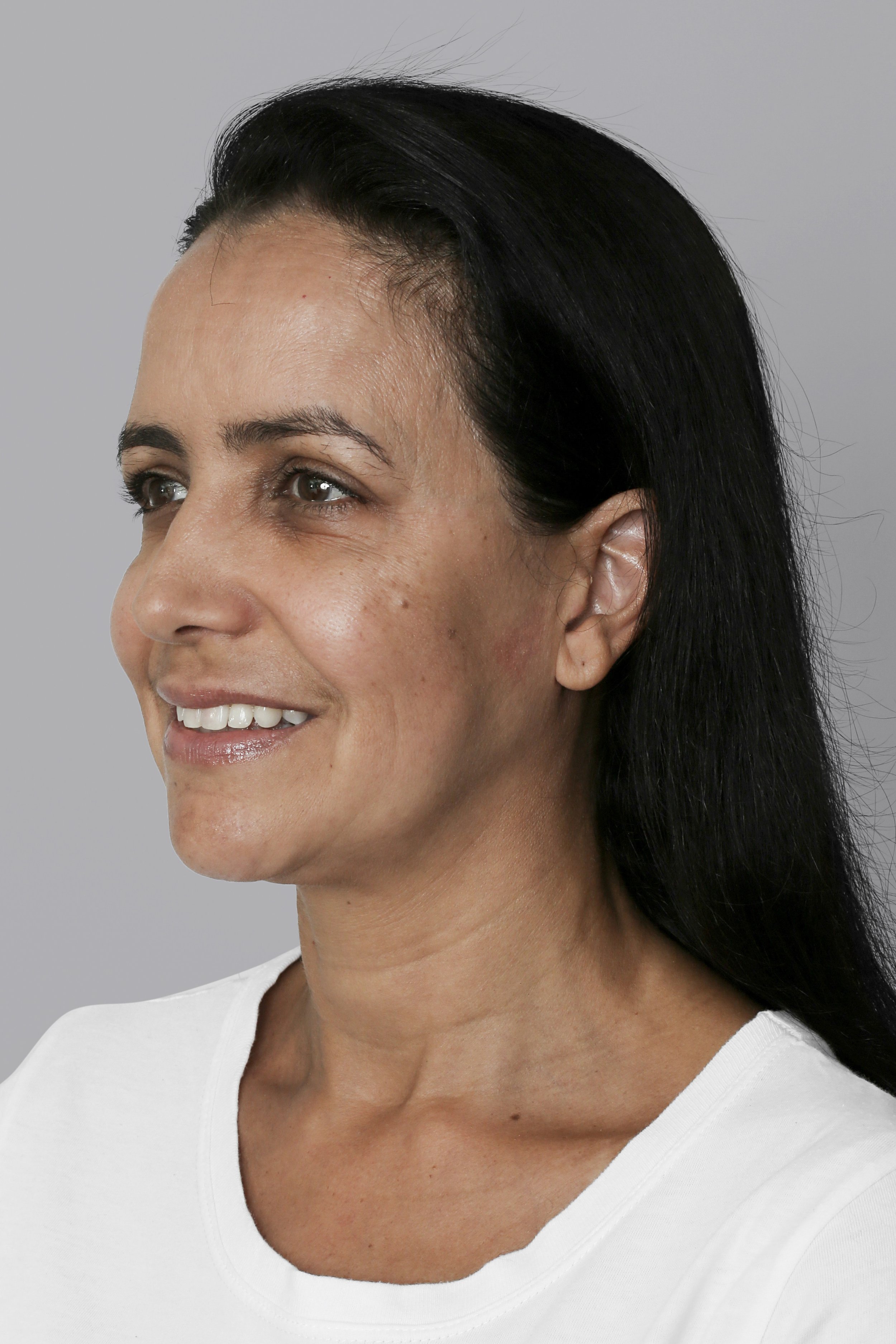
1 year after

Before

6 months after

12 months after

Before

After 6 months
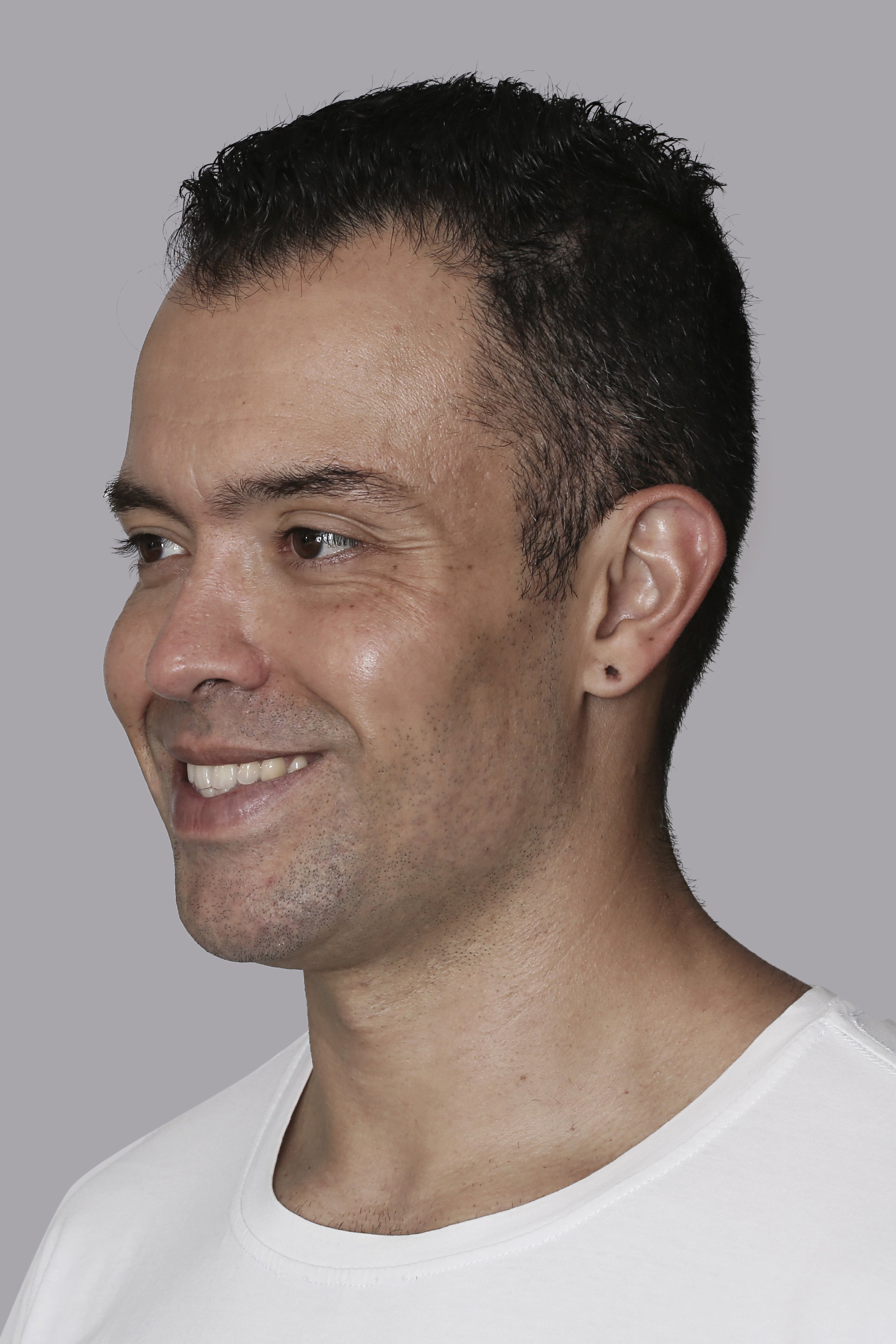
After 1 year

Before Sculptra

After Sculptra

Christian aged 44. Before Sculptra

6 Months After Sculptra (3 vials)