Obagi Retinol 0.5 vs 1.0: Which Strength Should You Use? A Doctor's Guide from Hale, Cheshire
Last updated: 17 October 2026
If there is one skincare ingredient almost everybody has heard of, it is retinol. It is recommended for wrinkles, pigmentation, pores, acne, texture and "glow", and if you spend any time online you could be forgiven for thinking the only rule is that the stronger the retinol, the better the result.
It is not. One of the commonest skincare mistakes I see at my clinic in Hale is somebody buying the strongest vitamin A product they can find, using it every night from day one, becoming red, flaky and sore, and then deciding their skin "cannot tolerate retinol". Usually the problem was never the retinol. It was too much, too quickly.
Obagi Medical makes two straightforward retinol strengths that I use regularly: Obagi Retinol 0.5 and Obagi Retinol 1.0. For most people completely new to retinoids, I start with 0.5. For somebody already well established on retinol and tolerating it comfortably, 1.0 may be the logical next step. But the number on the tube is only part of the story, so let's go through it properly.
In this article:
- Obagi Retinol 0.5 vs 1.0 at a glance
- What retinol actually is and what it does
- Who each strength is for
- How I introduce retinol and how much to use
- Peeling, purging and what is normal
- Combining retinol with vitamin C, acids and clinic treatments
- Retinol for menopause, rosacea, pigmentation, acne and pregnancy
- When to move from 0.5 to 1.0, and when to stay put
- Frequently asked questions
Obagi Retinol 0.5 vs 1.0 at a Glance
The best retinol is not the strongest one. It is the strongest product your skin can use consistently without becoming chronically irritated.
What Actually Is Retinol?
Retinol belongs to a family of vitamin A derivatives known as retinoids. The two words are often used interchangeably, but they do not mean the same thing. A simplified pathway looks like this: retinol, then retinaldehyde, then retinoic acid. Retinoic acid is the form that interacts with receptors in the skin, so retinol has to be converted within the skin before it becomes biologically active.
Prescription tretinoin is different because it already is retinoic acid, which is one reason prescription retinoids have a stronger evidence base and greater potency. Greater potency also tends to mean greater potential for irritation, which is why a well-formulated cosmetic retinol is a very sensible place for many people to start.
What Does Retinol Do to Your Skin?
Retinoids influence the way skin cells behave. With sustained use they can improve several features of photoageing, including fine lines, uneven pigmentation, roughness, texture and aspects of collagen remodelling. They also help normalise the way skin cells shed within the pore, which is why vitamin A has such an important role in acne treatment.
There is a difference, though, between saying "retinoids work" and "every product containing retinol has equally strong evidence". Prescription tretinoin remains the most studied retinoid for photoageing. Cosmetic retinol has encouraging evidence, but formulations vary enormously in concentration, stability, packaging and delivery system, and retinol is an inherently unstable molecule. A 2006 overview in Clinical Interventions in Aging put the central tension neatly:
"Irritant reactions such as burning, scaling or dermatitis ... limit their acceptance by patients." Mukherjee et al., Clinical Interventions in Aging, 2006
In other words, the limiting factor with retinoids is rarely whether they work. It is whether people can keep using them.
What Is Different About Obagi Retinol?
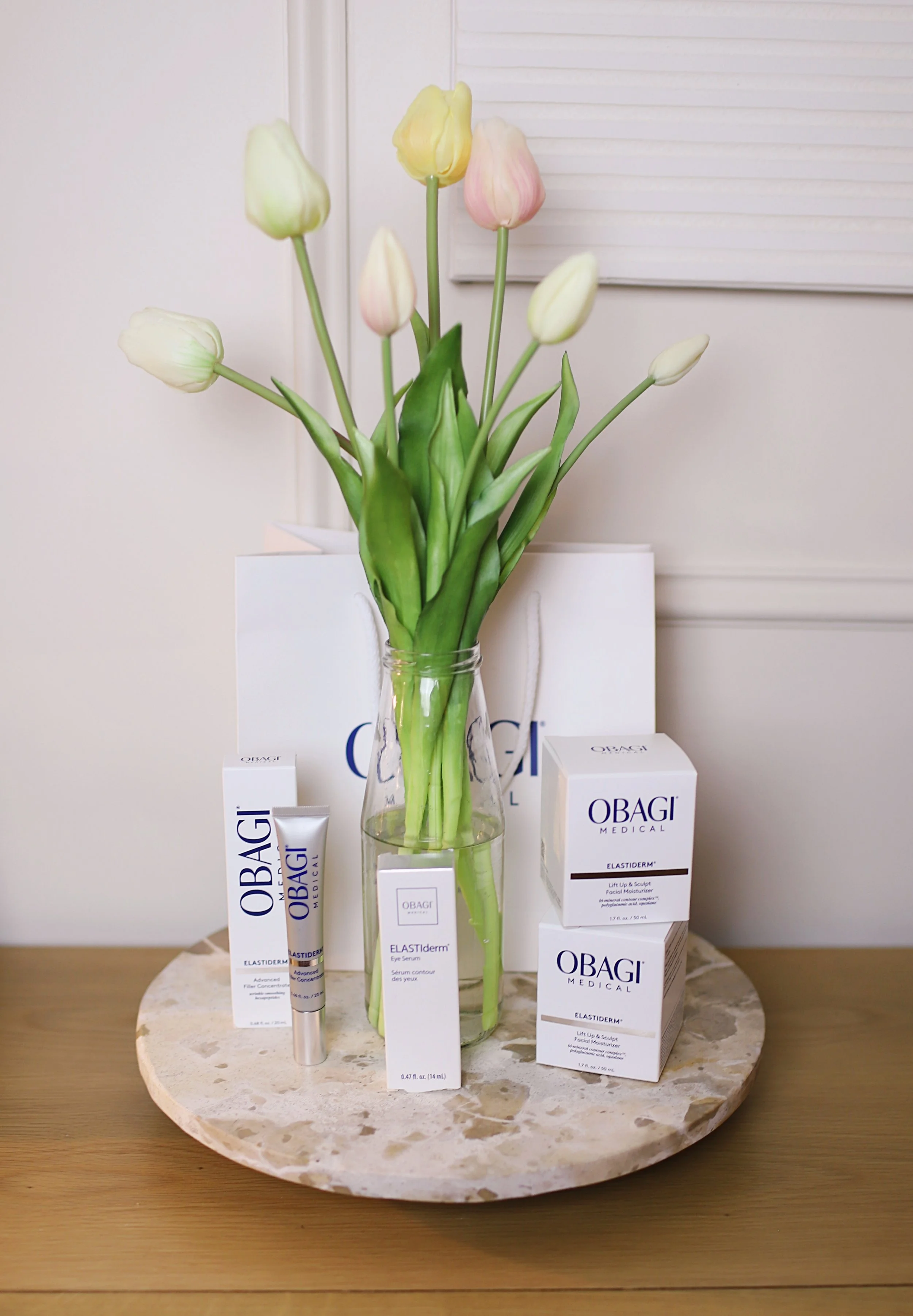
One of the reasons I use Obagi Retinol in clinic is that the formulation is not simply retinol stirred into a moisturiser. Obagi uses entrapped retinol designed to release gradually, alongside jojoba oil and shea butter to support hydration and tolerability. That does not make irritation impossible; any effective retinoid can irritate the skin. But formulation matters enormously when the goal is a product somebody can actually continue using, and consistency matters far more than heroically applying the strongest product for ten days before giving up.
Who Is Obagi Retinol 0.5 For?
Obagi Retinol 0.5 is my usual starting point for anyone who has never used a proper retinol before. I also favour it where somebody has relatively sensitive skin, has struggled with active skincare in the past, is approaching retinol cautiously, has dry or menopausal skin, or is already using other active ingredients.
Do not mistake 0.5 for weak. For retinol-naïve skin it is still a genuinely active product, and you do not need to start at 1.0 to get a worthwhile effect.
Who Is Obagi Retinol 1.0 For?
I tend to consider Obagi Retinol 1.0 when somebody is already comfortable using retinol: they have used 0.5 consistently for several months, their skin is not persistently red or flaky, their barrier is healthy, they are comfortably using it several evenings a week, and we have a reason to increase the strength.
What I would not do is choose 1.0 simply because "I'm 50, so I need the stronger one". Skin age and chronological age are not the same thing. A 55 year old who has never used active skincare may need a gentler introduction than a 32 year old who has used retinoids for five years.
Is Obagi Retinol 1.0 twice as good as 0.5?
No. Doubling the concentration does not double the results. It may increase biological activity, but it can also increase dryness, peeling, redness, stinging and barrier disruption. If irritation means you only manage the product once a fortnight, you will do better on the lower strength you can use consistently. I would much rather somebody use 0.5 well than 1.0 badly.
How I Introduce Patients to Obagi Retinol
There is no schedule that suits everybody, but I generally favour a slow introduction. A typical approach looks like this:
How much Obagi Retinol should I use?
A pea-sized amount for the whole face is usually enough. More product does not create faster results, mostly just more irritation. Apply to clean, dry skin in the evening and be particularly cautious around the corners of the nose and mouth and the eyelids, which tend to react first.
Moisturiser before or after retinol?
Either can be right. For tolerant skin a simple routine is cleanse, retinol, moisturiser. For more sensitive skin the "retinol sandwich", moisturiser, retinol, moisturiser, slightly buffers the product and can make it considerably easier to tolerate. Tolerability is the objective, not proving how much irritation you can withstand.
Is Peeling Normal When You Start Retinol?
A little dryness or fine flaking during the adjustment period, sometimes called retinisation, can happen as cell turnover increases, and it usually settles as the skin adapts. That does not mean you need to stop immediately.
Significant burning, pain, persistent redness, cracking, severe peeling, or skin that stings when you apply water or moisturiser is different. That suggests the barrier is becoming compromised. At that point I would reduce or pause the retinol, switch to a gentle cleanser and a barrier-supporting moisturiser, keep the SPF going, and reintroduce the retinol more slowly once the skin is comfortable. At our clinic, Obagi Rebalance Skin Barrier Recovery Cream is particularly useful where somebody has overdone active skincare.
More irritation does not equal more collagen. You do not need visible peeling to get results.
Does retinol cause purging?
Sometimes, particularly in acne-prone skin, because faster cell turnover can bring existing blocked pores to the surface more quickly and temporarily make breakouts look worse. But not every new rash is a purge. If the skin becomes intensely itchy, uniformly red, sore or swollen, or breaks out in unusual areas, treat it as irritation rather than pushing on.
How Long Does Obagi Retinol Take to Work?
Why Your SPF Matters More Than Your Retinol
This is the part nobody gets excited about. UV exposure is one of the major drivers of collagen breakdown, pigmentation, fine lines and premature ageing. Spending money on retinol while leaving the skin unprotected undoes the work. If I had to choose between retinol without SPF and SPF without retinol, I would choose the SPF every time. I recommend a broad-spectrum facial SPF every morning, all year round, not just when it is sunny.
A skincare routine should work as a system, not a collection of individually powerful products. Your skin does not need to be under constant attack to improve.
Retinol Around Microneedling and Chemical Peels
At our clinic I generally advise stopping retinol five days before and five days after medical microneedling. Microneedling deliberately creates controlled injury, and I do not want skin arriving already irritated or having an active retinoid applied while the barrier is recovering. Once settled, the retinol is reintroduced according to your plan.
The same applies around a peel. If you are having an Obagi Blue Peel Radiance or The Perfect Peel with us, you will get specific pre and post treatment instructions. Give the skin time to recover rather than restarting every active in the cupboard on day two.
Retinol in Specific Situations
What Retinol Can and Cannot Do
When Should I Move From Obagi 0.5 to 1.0?
Not when you finish the tube. Move up when there is a reason to.
Some patients remain on 0.5 indefinitely. That is not failure. There is no medical requirement to graduate.
The Routine I Like With Obagi Retinol
That is enough. Your skin does not need twelve products every evening.
Obagi Retinol 0.5 vs 1.0: My Verdict
If you are completely new to retinol, I would usually choose Obagi Retinol 0.5. If you already tolerate retinol well and want to step up, Obagi Retinol 1.0 may be appropriate. But my real answer is this:
Choose the strength you can use consistently while keeping your skin barrier healthy. That matters more than the largest percentage on your bathroom shelf.
Frequently Asked Questions About Obagi Retinol
Is Obagi Retinol 0.5 strong?
Yes. It is the lower of Obagi's two standard strengths but still an active retinol. For somebody new to retinoids it is usually the more sensible starting point.
Is Obagi Retinol 1.0 too strong for beginners?
For most retinol-naïve skin I prefer to establish tolerance with 0.5 first rather than beginning at 1.0.
Which is better, Obagi Retinol 0.5 or 1.0?
Neither is universally better. 0.5 suits beginners and more sensitive skin; 1.0 is designed for established users. The best product is the one your skin tolerates consistently.
How often should I use Obagi Retinol 0.5?
I commonly start patients at once or twice weekly and increase gradually according to tolerance.
Can you use Obagi Retinol 1.0 every night?
Some established users eventually can, but that does not mean everybody needs to. Three or four well-tolerated applications a week beat nightly use that causes persistent irritation.
How long does Obagi Retinol take to work?
Months rather than days. Texture may improve first; fine lines, pigmentation and photoageing need consistent longer-term use.
Can I use Obagi Vitamin C and retinol together?
Yes. Vitamin C in the morning, retinol at night.
Can I use Obagi Retinol with Exfoderm Forte?
Potentially, but both are active and combining them aggressively can irritate the skin. I usually alternate them or establish one before introducing the other.
Should retinol burn?
No. Mild temporary dryness can occur, but significant burning, pain, cracking or persistent inflammation is irritation and should not be pushed through.
Can I use retinol all year round?
Yes, provided your skin tolerates it and you use daily sun protection. Retinol is not only a winter product.
At what age should I start retinol?
There is no compulsory age. For many people interested in preventing and treating early photoageing, retinol becomes useful in their twenties or thirties, and it is never too late to consider an appropriate retinoid.
Do I need SPF while using retinol?
Yes. Daily broad-spectrum sun protection is fundamental to any plan aimed at preventing or improving photoageing.
Why I Use Obagi at My Clinic in Hale
I am deliberately sceptical about skincare. What I want from a range is useful active ingredients, sensible formulations, different strengths for different skin, products I can combine into an individual plan, and enough flexibility to step things up or down when a patient's skin changes. That is why Obagi is one of the core ranges at our doctor-led clinic in Hale, and why we are an official Obagi Ambassador clinic.
That does not mean every patient needs every Obagi product. Somebody may need four. Another may need me to remove half of what they are already using. Good skincare prescribing is about giving the skin what it actually needs, not selling the biggest routine.
Doctor-Led Obagi Skincare in Hale, Altrincham and Cheshire
If you are unsure whether you should be using Obagi Retinol 0.5, Obagi Retinol 1.0, a prescription retinoid or no retinoid at all, the best place to start is an assessment of your skin. At our clinic in Hale, close to Altrincham, I assess skin type, sensitivity, pigmentation, acne, fine lines, sun damage, menopause-related changes, existing skincare, previous retinoid use and the health of your skin barrier, then build the routine around you.
Because when it comes to retinol, stronger is not always better. Better tolerated, properly used and consistently applied usually is.
Explore the treatment: Medical-Grade Skincare at Dr Caroline Warden Skin & Aesthetic Clinic
Further Reading
- Dull, Tired Skin, Loss of Glow and Uneven Texture
- Pigmentation and Uneven Skin Tone
- Obagi Blue Peel Radiance
- Medical Microneedling and Exosomes
- Your Wedding Skin Timeline
Next steps
Learn more about Dr Caroline Warden Clinic
Learn more about other treatments offered
References
- Mukherjee S, Date A, Patravale V, et al. Retinoids in the treatment of skin aging: an overview of clinical efficacy and safety. Clinical Interventions in Aging. 2006;1(4):327-348.
- British Association of Dermatologists. Skin Health Info: sunscreen fact sheet and public skin health guidance.
- Obagi Medical UK. Obagi Retinol 0.5 and Retinol 1.0 product information.
Written by Dr Caroline Warden, NHS GP and aesthetic doctor, Dr Caroline Warden Skin & Aesthetic Clinic, 2 Crown Passages, Hale. Last reviewed: 17 October 2026.