Last updated: 16 November 2026
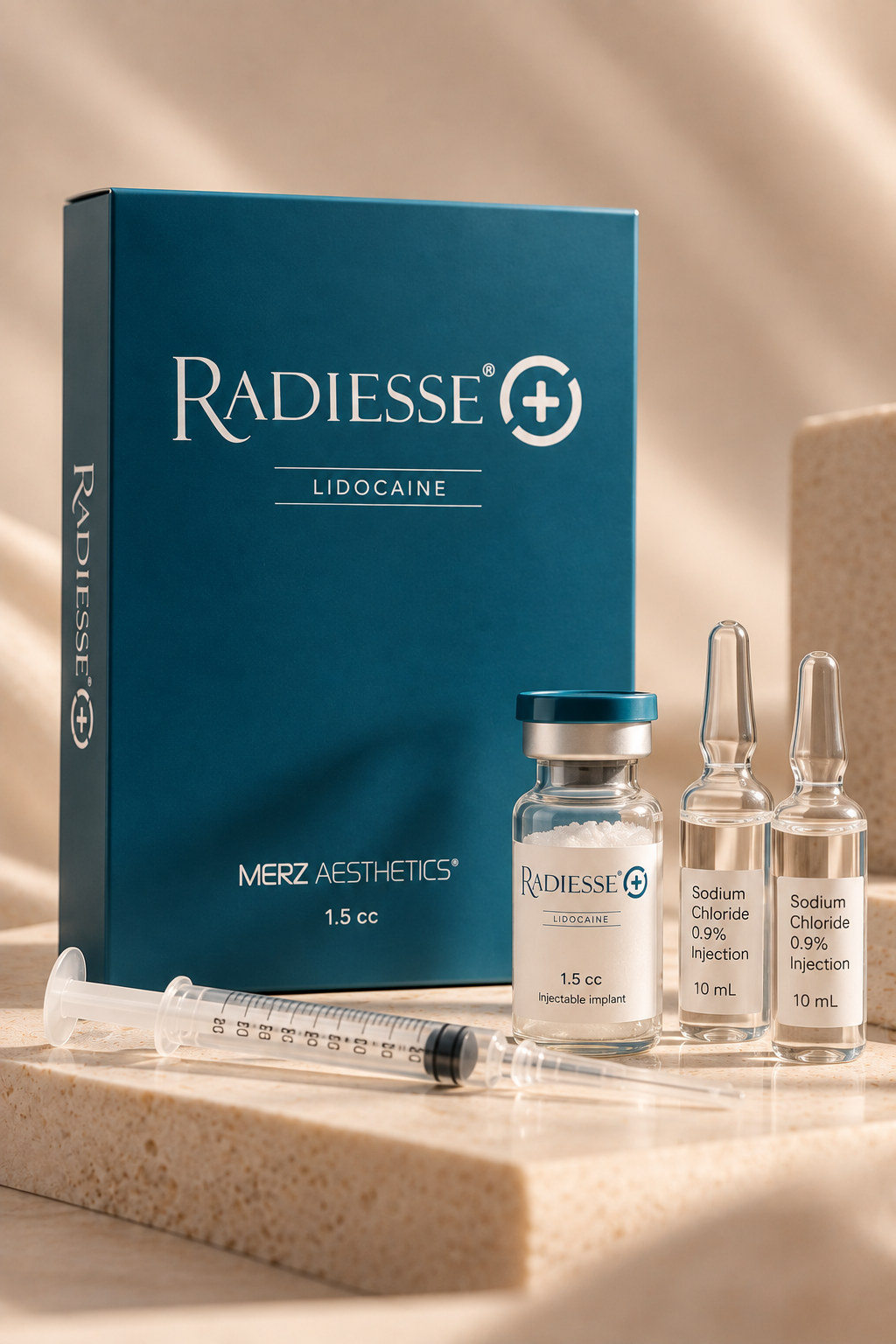
In short: Radiesse is a calcium hydroxylapatite injectable that does two things at once: it gives immediate structural lift where it is placed, and over the following months it stimulates your own collagen and elastin so the result is maintained and the skin above it improves. It is the treatment I reach for when the problem is definition rather than deflation: a jawline that has blurred, early jowls, a weak chin, flattened cheeks or temples that have hollowed. Most of my patients need two to four syringes placed over one or two sessions, then one or two syringes every twelve to eighteen months. At my clinic in Hale every Radiesse consultation, treatment and review is carried out by me, with a cannula and local anaesthetic. One syringe is £395, two are £750, three £1,050 and four £1,300.
Local to Hale, Altrincham or Cheshire? I am an NHS GP and aesthetic doctor and run a GP led skin clinic in Hale village where every consultation, treatment and review is carried out by me personally, with evening appointments until 7pm on Tuesdays and Wednesdays and until 9pm on Fridays. You can book a consultation or see the price list.
If Sculptra is the treatment people in Hale and Altrincham ask me about when their face feels deflated, Radiesse is the one they ask about when they turn sideways in a shop window and cannot find their jawline. The two are often confused, because both are called collagen stimulators, but they are different products for different faces. This guide covers what Radiesse is, what the evidence shows, where it works best, how I use it, how many syringes a real result takes, what it costs locally, and how to choose where to have it.
In this article:
- What is Radiesse and how does it work?
- What does the evidence say about Radiesse?
- Where does Radiesse work best? Jawline, jowls, chin, cheeks and temples
- How many syringes of Radiesse do you actually need?
- Radiesse vs Sculptra vs hyaluronic acid filler
- How I perform Radiesse at my clinic in Hale
- What to expect: the Radiesse timeline
- How much does Radiesse cost in Hale and Altrincham?
- Risks and side effects
- Choosing a Radiesse clinic near you
- Frequently asked questions
What is Radiesse and how does it work?
Radiesse is a gel made of tiny calcium hydroxylapatite microspheres suspended in a carboxymethylcellulose carrier. Calcium hydroxylapatite is the same mineral that makes up bone and teeth, which is why the body recognises it and why it has been used in medicine for decades. The gel provides lift the moment it is placed; as the carrier is absorbed over the following weeks, the microspheres remain and act as a scaffold on which your fibroblasts build new collagen and elastin, so the lift is sustained by your own tissue rather than by the product alone. Over twelve to eighteen months the microspheres themselves are broken down and cleared.
Radiesse was first approved by the FDA in 2006 for facial folds and facial fat loss, in 2015 for the backs of the hands, and in 2021 became the first injectable approved specifically to improve loss of jawline contour. In the UK it is a CE marked medical device, and I use it in two ways: at full strength for structure, which is what this guide is about, and diluted for skin quality on the neck, chest and hands, which I cover separately in hyperdilute Radiesse.
What does the evidence say about Radiesse?
"Three years after Radiesse injection, no delayed-onset or long-term adverse events were reported." Bass LS, Smith S, Busso M, McClaren M, Aesthetic Surgery Journal, 2010.
Two honest limits. The 40 per cent figure at 30 months is for a single treatment of the nasolabial folds, a mobile area where every filler fades fastest; structural placement along the jawline and cheeks, with a second session, lasts better in practice, which is why I quote twelve to eighteen months rather than three years. And the jawline trial measured a one grade improvement on a clinical scale, which is a real and visible change, not a different face.
Where does Radiesse work best? Jawline, jowls, chin, cheeks and temples
Where I do not use Radiesse is the lips, the area under the eyes, the nose and the glabella between the brows, where the product is not designed to go and where the risks of lumps or vascular problems outweigh any benefit. The faces that do best are those with good skin and lost definition: a blurred jawline, early jowls, a chin that has gone backwards, cheeks that have flattened. Where the main problem is loose skin with little volume loss, I will say that a surgical opinion would serve you better than any injectable.
How many syringes of Radiesse do you actually need?
This is the question that decides whether the treatment works, and the honest answer for most people over 45 is more than one. A single syringe is 1.5 ml, split across two sides of the face; on a jawline that has lost definition over ten years it produces a softening of the problem rather than a visible line. Most of my patients need two to four syringes placed over one or two sessions six to eight weeks apart, then one or two syringes every twelve to eighteen months to maintain. I plan this at consultation using a five zone map of each side of the face: temple, cheekbone, lateral cheek, jawline angle and lower cheek, so that you know the total number of syringes and the cost before anything is injected, and so that the second session builds on a record of exactly where the first went.
Radiesse vs Sculptra vs hyaluronic acid filler
The combination I use most in patients in their fifties is Sculptra for the broad restoration of the cheeks and temples, then Radiesse along the jawline and chin once that has built, because the two do different jobs. The full comparison with Sculptra is in Sculptra in Hale and Altrincham: a doctor's complete guide.
How I perform Radiesse at my clinic in Hale
I am the only practitioner at the clinic, so the person who maps your face is the person who injects it, reviews it and places the maintenance syringe eighteen months later. For a structural treatment placed on bone and built over two sessions, that continuity is not a nicety; it is how the second syringe knows where the first one went.
What to expect: the Radiesse timeline
Straight away: the lift is visible as you leave, with some swelling that exaggerates it slightly. Day 1 to 7: swelling settles; bruising, if any, fades; the area can feel firm to the touch, which is normal. Week 2 to 4: the carrier gel is absorbed and the result softens a little into its true shape. Month 1 to 3: collagen and elastin build around the microspheres and the result improves again; skin over the area looks better quality. Month 2: review and second session where planned. Month 12 to 18: gradual fading as the microspheres are cleared, and the point at which most people choose one or two syringes to maintain.
How much does Radiesse cost in Hale and Altrincham?
Prices are correct at the time of writing and confirmed at consultation; the full list is on the price list. Spread over eighteen months, a two syringe jawline costs roughly £40 a month, which is worth knowing when you compare it with a filler that needs repeating sooner.
Risks and side effects
Radiesse has a long safety record, with no delayed or long term adverse events in the three year follow up study, but it is a firm product placed deep in the face and it deserves respect. Common and short lived: swelling, bruising, tenderness and a feeling of firmness for a week or two. Uncommon: small lumps or nodules, usually from product placed too superficially, which generally soften and resolve over months. Rare but serious: injection into or around a blood vessel, which can damage skin or, in the worst case, vision. That last risk is why I place Radiesse deep with a blunt cannula, avoid the high risk areas entirely, and keep emergency medicines in clinic. Radiesse cannot be dissolved with hyaluronidase the way hyaluronic acid filler can, so the choice of injector matters more, not less.
Choosing a Radiesse clinic near you
Radiesse is a medical device and can legally be injected by non medical practitioners, so the questions to ask any clinic in Hale, Altrincham, Wilmslow or Knutsford are the ones that tell you about the person rather than the product: who will inject me and what is their registration; how many Radiesse treatments do they perform; do they place it with a cannula, deep; how many syringes will my face realistically need and what will the total cost be; will the same person do my second session and my review; and what is their plan if a vessel is affected. At my clinic the answers are: me, GMC 6157708; Radiesse and Sculptra are the treatments I perform most; always a cannula, always deep; two to four syringes, costed in writing before we start; yes, always; and I hold the emergency medicines and you call me directly. The wider checklist is in how to choose an aesthetic clinic safely.
Takeaway: Radiesse is the treatment for definition: it lifts the jawline, chin and cheekbones immediately, then builds your own collagen and elastin so the result lasts twelve to eighteen months, with trial evidence behind the jawline use and a three year safety record. A real result for most people over 45 is two to four syringes over one or two sessions, not one. At my clinic in Hale every syringe is placed by me, deep, with a cannula, from a written plan you have seen the price of first, and the person at your review and your maintenance visit is the same person who injected you.
Frequently asked questions about Radiesse in Hale and Altrincham
Is there a doctor who does Radiesse near Hale or Altrincham?
Yes. I perform Radiesse personally at my clinic at 2 Crown Passages in Hale village, one stop from Altrincham, with parking opposite in Cecil Road car park.
How much is Radiesse in Cheshire?
At my clinic one syringe is £395, two are £750, three are £1,050 and four are £1,300. Most first plans are two to four syringes, then one or two every twelve to eighteen months.
How many syringes of Radiesse do I need for my jawline?
Usually two for a full jawline, with a third if the chin and pre jowl area need support. One syringe softens the problem; two draw a line.
Does Radiesse help jowls?
Yes, in two ways: by filling the hollow in front of the jowl so it stops casting a shadow, and by lifting the lateral cheek above it. It does not remove the jowl itself; significant jowling with loose skin is a surgical conversation.
How long does Radiesse last?
Twelve to eighteen months for structural placement, with the collagen it stimulates helping the result fade gradually rather than suddenly. Most patients maintain with one or two syringes a year.
Is Radiesse better than Sculptra?
Different. Radiesse gives immediate, firm definition to the jawline, chin and cheekbones; Sculptra restores soft, diffuse volume across the whole face over months. Many patients in their fifties have both, for different jobs.
Is Radiesse better than filler?
For jawline and chin definition, usually yes: it is firmer, it stimulates collagen and it lasts longer. For lips, under eyes and very precise small corrections, hyaluronic acid filler is the right tool and Radiesse is not used.
Does Radiesse hurt?
Not much. The product contains lidocaine, I inject local anaesthetic at each cannula entry point, and most people describe pressure rather than pain. Tenderness for a few days is normal.
Is there downtime after Radiesse?
Expect swelling for a few days and possible bruising for up to a week. Most people are back at work the next day; I would leave two weeks before a big event.
Can Radiesse be dissolved?
No. Unlike hyaluronic acid filler there is no dissolving enzyme, which is why conservative dosing, deep placement and an experienced injector matter.
Is Radiesse safe?
It has an FDA approval history going back to 2006 and a three year follow up study with no delayed adverse events. The serious risks are rare and relate to technique, which is why I use a cannula, place it deep and avoid high risk areas.
Can men have Radiesse?
Yes, and it is one of the best treatments for a male face, because a firm, defined jawline and chin are exactly what it produces, without softness.
Can I combine Radiesse with other treatments?
Yes. Common combinations are Sculptra for the cheeks and temples, anti wrinkle injections for the upper face or to slim the masseters, and polynucleotides or microneedling for skin quality.
Who will treat me at your clinic?
Me, at every visit. I am the only practitioner, so the person who maps your face and injects it is the person who reviews it and places your maintenance syringe.
Next steps
If your jawline has blurred or your chin and cheeks have lost their definition, book a consultation. I will assess your face zone by zone, in profile as well as from the front, and give you a written plan with the number of syringes and the full cost before anything is injected. You will see me, and only me, at every session. The consultation fee is redeemable against treatment.
Learn more about Dr Caroline Warden Clinic
Learn more about other treatments offered
Further reading
- Radiesse Treatment in Hale, Altrincham and Cheshire
- Radiesse for Jawline Definition
- Jowls: Causes and Treatment Options
- Sculptra in Hale and Altrincham: A Doctor's Complete Guide
- Why I Brought Biostimulators to My Clinic
- Hyperdilute Radiesse for Neck, Chest and Hands
- Before and After Results
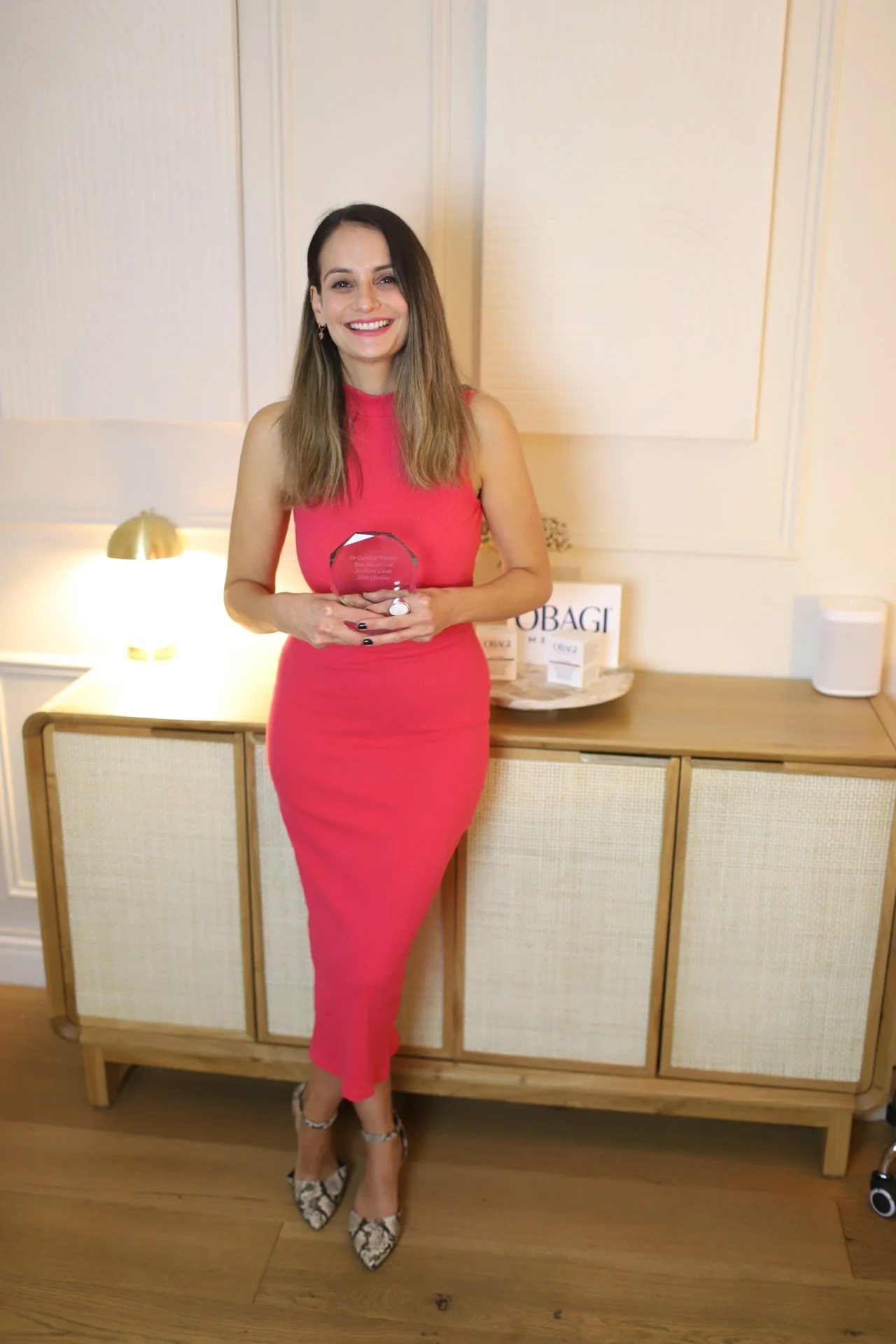
Dr Caroline Warden (GMC 6157708) is an NHS GP with over 19 years of clinical experience, an independent prescriber, and holds a Level 7 postgraduate diploma in cosmetic injectables. She has practised aesthetic medicine since 2017 and is the sole practitioner at Dr Caroline Warden Skin & Aesthetic Clinic, 2 Crown Passages, Hale, Cheshire, WA15 9GN, where every consultation, treatment and review is carried out by her personally. Patients travel from Hale, Altrincham, Bowdon, Hale Barns, Timperley, Sale, Wilmslow, Alderley Edge, Knutsford, Didsbury and across Cheshire. The clinic was named Best Doctor Led Aesthetic Clinic in Cheshire 2026 by GHP. Radiesse is a CE marked medical device; suitability, the number of syringes and the number of sessions are decided at consultation. The clinic does not diagnose or treat medical conditions; if you have a medical concern, please see your GP. Results vary between individuals. This article is for information only and does not constitute individual medical advice.
References
- Merz Aesthetics. Merz Aesthetics receives FDA approval for Radiesse (+) for the improvement of moderate to severe loss of jawline contour. Press release, 2021. Read the release
- ClinicalTrials.gov. Evaluation of effectiveness and safety of Radiesse (+) to improve the contour of the jawline. NCT03583359. View the trial record
- Yutskovskaya Y, Kogan E, Leshunov E. A randomized, split-face, histomorphologic study comparing a volumetric calcium hydroxylapatite and a hyaluronic acid-based dermal filler. J Drugs Dermatol 2014;13(9): pages 1047 to 1052. Read the abstract
- Bass LS, Smith S, Busso M, McClaren M. Calcium hydroxylapatite (Radiesse) for treatment of nasolabial folds: long-term safety and efficacy results. Aesthet Surg J 2010;30(2): pages 235 to 238. Read the abstract
