Last updated: 2 November 2026
Facial massage is having a moment. Gua sha stones, jade rollers, lymphatic drainage facials and elaborate face yoga routines fill social media with promises of a sculpted jawline, lifted cheeks, less puffiness and even new collagen. Some of the before and after photographs are impressive. Patients in Hale and Altrincham ask me about them every week, usually with a stone already in the bathroom cabinet.
As a GP working in aesthetic medicine, what interests me is what is actually happening beneath the skin. Can physically manipulating the face change how it looks? And if it can, are those changes temporary, or can massage reverse any of the structural changes of ageing? The answer, from the small amount of decent research that exists, is more interesting than a simple yes or no, and it tells you exactly what gua sha is worth spending your time on, and what it is not.
In this article:
- What actually happens when you massage your face?
- Does gua sha really sculpt your jawline? What the 2025 trial found
- Can facial massage stimulate collagen?
- Can facial massage lift sagging skin or jowls?
- Does face yoga make you look younger?
- Can facial massage be bad for your skin?
- What massage can and cannot do, compared with treatment
- Frequently asked questions
What actually happens when you massage your face?
Facial tissue is a stack of blood vessels, lymphatic vessels, muscle, fat compartments, connective tissue and skin. Pressure and movement affect several of those layers at once, which is why massage produces real but mostly short lived effects.
Does gua sha really sculpt your jawline? What the 2025 trial found
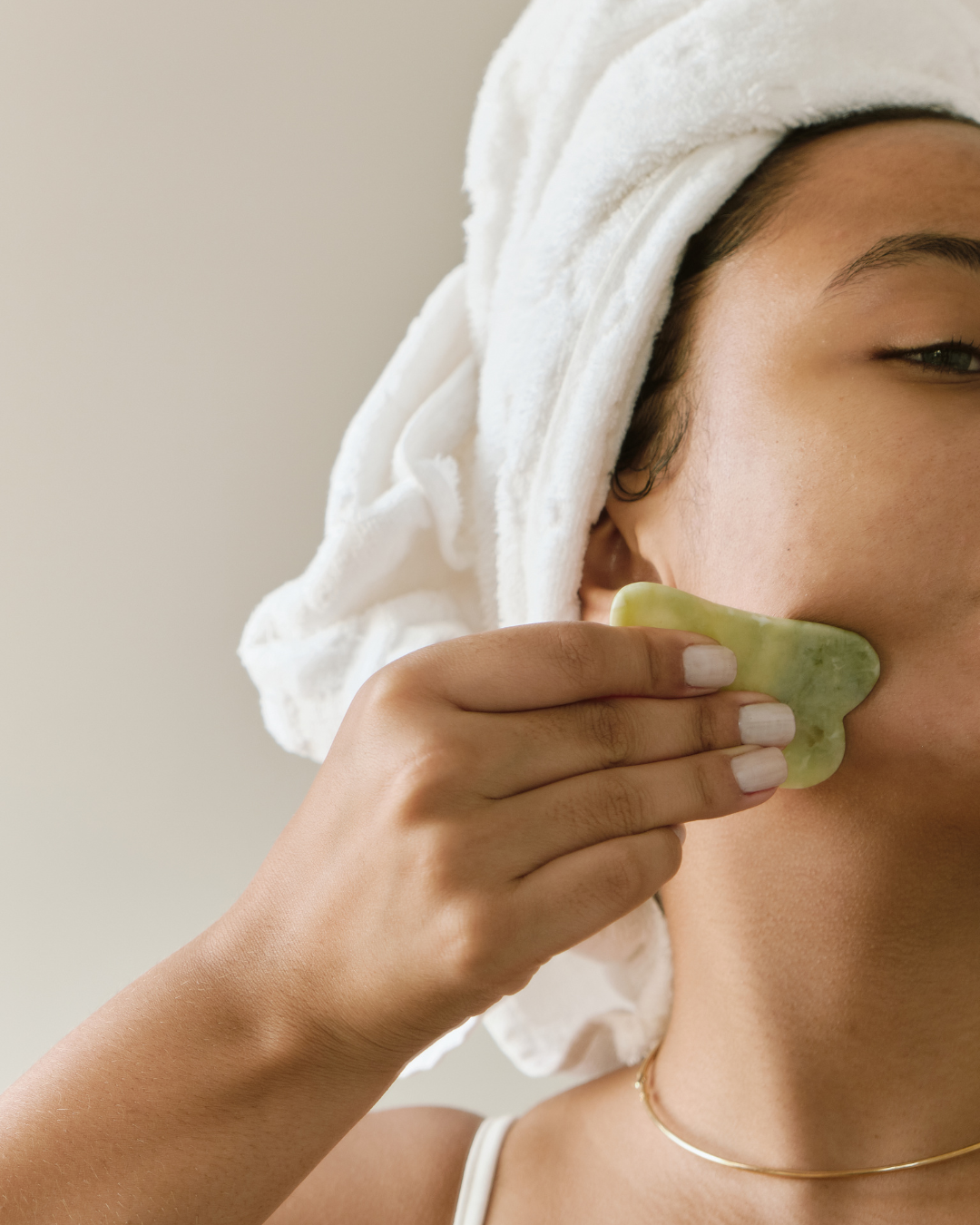
Gua sha is a traditional technique in which a smooth edged tool is drawn across the skin. In modern skincare it is sold as a way to sharpen the jaw, lift the cheeks and define the face, and there is now one reasonable study to judge that against.
This is more than nothing. Eight weeks of disciplined daily massage produced measurable changes in contour, muscle tone and elasticity readings, which suggests massage does more than feel nice. But a two millimetre change on a 3D scan is not a lifted face, a reduction in muscle stiffness is not a tighter jawline, and nothing in the study demonstrates permanent lifting, collagen production or reversal of ageing. A measurable change is not the same as a visible, lasting one.
Can facial massage stimulate collagen?
This is the claim I am most sceptical of. Collagen is made by fibroblasts in the dermis, and fibroblasts do respond to mechanical force, a process called mechanotransduction; it is part of why microneedling works. From that true fact comes the marketing leap that rubbing a stone across the skin will build collagen.
So the honest position is: the biological theory is plausible, and the clinical evidence is absent. The treatments that have been shown to increase dermal collagen all involve a controlled injury or a biological stimulus the skin cannot ignore: a prescription retinoid, microneedling, Sculptra, polynucleotides. A jade roller is not on that list, and no amount of enthusiasm puts it there.
Can facial massage lift sagging skin or jowls?
To answer this you have to know why faces sag, and the answer is not "the skin got loose".
Massage can influence surface fluid, muscle tension and possibly some skin readings. It cannot replace lost volume, reposition fat compartments or re tension ligaments, which is why no massage, device or cream reliably reverses jowls. That is also why I am sceptical of "skin tightening" devices generally; I explain the anatomy in why skin tightening is one of the biggest myths in aesthetics. None of this means massage is worthless. It means the expectation has to match the layer it can reach.
Does face yoga make you look younger?
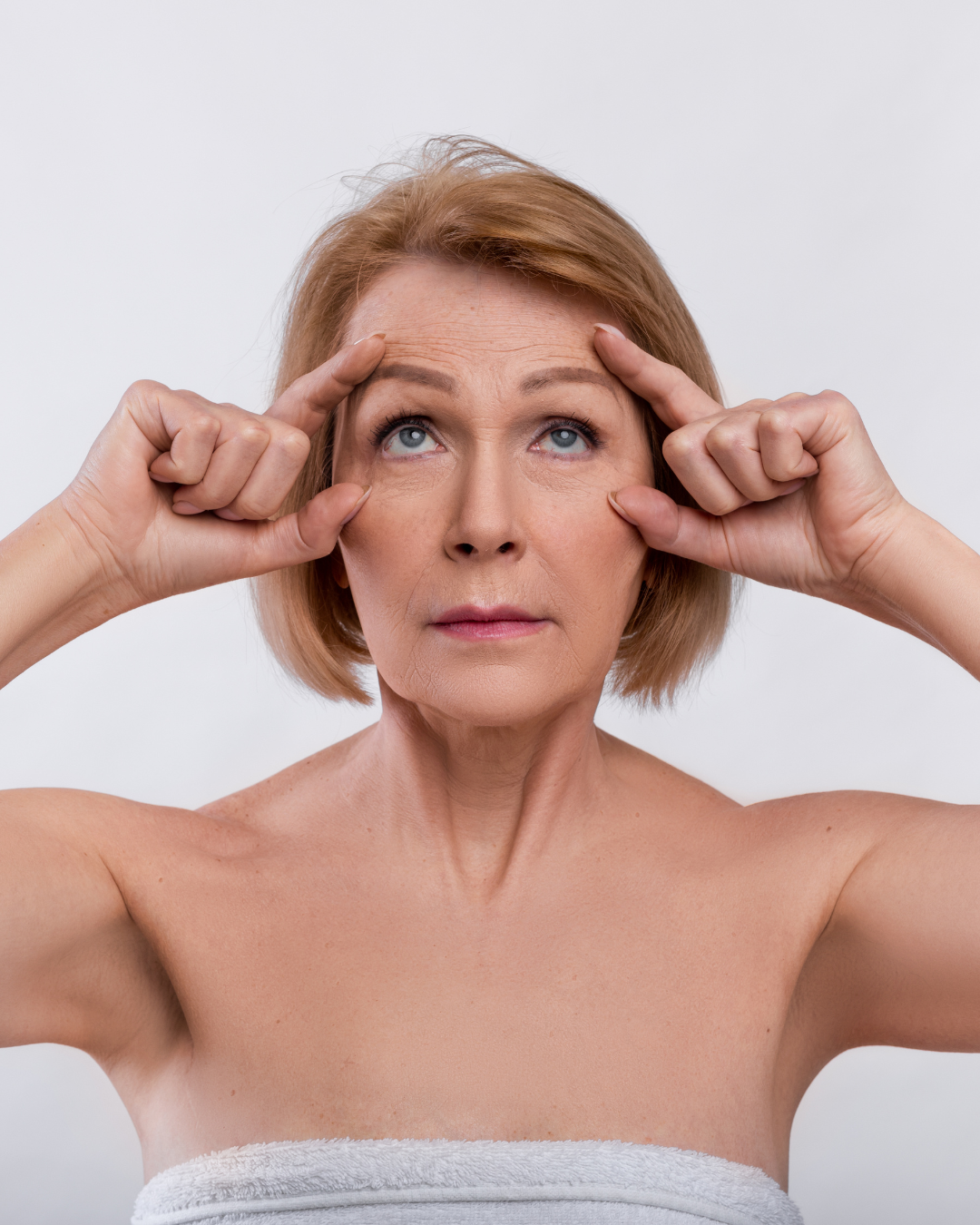
Face yoga is different from massage: instead of external pressure, you deliberately contract and exercise facial muscles, on the theory that building them adds fullness and support. Here there is one study worth knowing, and it is better than most people realise and weaker than the headlines suggested.
"Now there is some evidence that facial exercises may improve facial appearance and reduce some visible signs of aging." Dr Murad Alam, Northwestern University Feinberg School of Medicine, lead author, JAMA Dermatology 2018.
Note the careful wording: "some evidence", "may improve". The result is plausible, because muscle can be built, and cheek muscle bulk sits exactly where ageing hollows the face. There is also a theoretical concern the other way: repeatedly exaggerating expressions could deepen dynamic lines, although nobody has shown that face yoga does. Face yoga may modestly influence muscle bulk with sustained effort; it is not an evidence based replacement for treatments that address volume, skin quality or structure.
Takeaway: massage changes fluid, blood flow and muscle tension for hours; face yoga may change muscle bulk over months of effort; neither has been shown to build collagen, lift fat or reverse structural ageing. Enjoy them for what they are.
Can facial massage be bad for your skin?
For most people, gentle massage is harmless. The problems come from pressure and from timing.
If massage leaves you with persistent redness, soreness, bruising or irritation, stop. The face is telling you something.
What massage can and cannot do, compared with treatment
This is the table I draw for patients who ask whether they can gua sha their way out of a consultation. Sometimes they can, for the concern they actually have.
So, is facial massage worth doing?
Yes, with realistic expectations. If you enjoy it, find it relaxing or notice it eases puffiness and tension, those are real benefits and you do not need a biopsy to justify five minutes with a stone. Not everything in a skincare routine has to produce a measurable anti ageing result to be worthwhile; something that lowers your stress and makes you look at your face kindly is doing good work. What I would resist is the claim that daily gua sha permanently lifts the face, rebuilds collagen, dissolves jowls or reverses ageing. The research so far says: small, measurable, short term changes from a disciplined routine, and nothing yet on lasting rejuvenation.
One of the things I find most interesting about aesthetic medicine is how often a genuine biological mechanism gets inflated into a marketing promise. Yes, massage increases blood flow. Yes, cells respond to mechanical force. Yes, small studies have measured changes in contour and tissue readings. None of that proves a roller can do what a retinoid, a course of microneedling or Sculptra has been shown to do. At my clinic in Hale the first job is always to work out which layer your concern lives in; for some people that is fluid and tension, and massage is a fine answer. For others it is collagen, volume or structure, and it is not. Distinguishing what feels good, what works briefly and what has been shown to change the skin is the whole of evidence based aesthetic medicine.
Takeaway: keep the gua sha for puffiness, tension and pleasure. Spend the collagen budget on SPF, a retinoid and treatments that have been shown to build it.
Frequently asked questions about facial massage, gua sha and face yoga
Does facial massage really reduce wrinkles?
There is no good evidence that it produces lasting reductions in wrinkles. Temporary changes in puffiness and muscle tension can make lines look softer for a few hours, which is different from changing their cause.
Does gua sha work for jowls or a double chin?
It can shift fluid and ease tension so the lower face looks a little sharper for a few hours, and an eight week trial measured small contour changes. There is no evidence it lifts descended fat or reverses jowling, because jowls are a structural change in the deeper layers that a surface tool cannot reach.
Does gua sha stimulate collagen?
Not as far as anyone has shown. Fibroblasts respond to mechanical force in the laboratory, but no clinical study has demonstrated that home massage increases dermal collagen. The treatments shown to do that are retinoids, microneedling, Sculptra and polynucleotides.
Is a jade roller or gua sha better?
In the 2025 trial they did different things: gua sha reduced muscle stiffness, the roller improved skin elasticity readings. Neither was clearly superior and neither was compared with doing nothing. Choose the one you will actually use, gently.
How often should you massage your face?
There is no established ideal. The trials used ten to thirty minutes a day. If you enjoy it, a few minutes daily with light pressure and a slip of oil or serum is reasonable; pressing harder or longer adds irritation, not results.
Does face yoga make you look younger?
One small study found women who did 30 minutes of facial exercises a day for 20 weeks were judged about 2.7 years younger, mainly through fuller cheeks. It was small, had no control group and 11 of 27 dropped out, so it is encouraging rather than conclusive. It is a lot of effort for a modest change.
Can face yoga cause wrinkles?
In theory, repeatedly exaggerating expressions could deepen dynamic lines, since that is how expression lines form in the first place. No study has shown face yoga doing this, but it is a reason to favour exercises that build cheek bulk over ones that scrunch the forehead and eyes.
Does lymphatic drainage massage work?
For temporary puffiness in people with healthy lymphatics, gentle drainage can help for a few hours. Claims of detoxing, sculpting or long term change are not supported. Medical lymphatic drainage for lymphoedema is a different, evidence based therapy delivered by trained specialists.
Can I use gua sha after filler or anti wrinkle injections?
Not over treated areas for two weeks after filler or skin boosters, and not for 24 hours after anti wrinkle injections. Sculptra is the exception, with a specific massage routine I prescribe. Always follow the aftercare for the treatment you have had rather than general advice.
Can facial massage replace aesthetic treatments?
Where the concern is puffiness, tension or simply wanting a moment of self care, it may be all you need. Where the concern is collagen loss, volume loss, expression lines or laxity, it cannot, and a consultation will tell you plainly which you are dealing with.
Next steps
If you would like to know which of your concerns a roller can help with and which it cannot, I would be glad to see you for a consultation at the clinic in Hale. Bring the gua sha; I am not going to confiscate it.
Learn more about Dr Caroline Warden Clinic
Learn more about other treatments offered
Further reading
- Why Collagen Declines and the Treatments That Actually Stimulate It
- Why Skin Tightening Is One of the Biggest Myths in Aesthetics
- Why I Don't Recommend At Home Microneedling with a Derma Roller
- Are LED Face Masks Worth It? A Doctor's Guide to At Home Devices
- Which Treatment Do I Need? Matching Concerns to Treatments
- Sculptra in Hale and Altrincham (collagen stimulation that has been shown to work)
- Medical Grade Skincare in Hale (retinoids, vitamin C and SPF)
Dr Caroline Warden (GMC 6157708) is an NHS GP with over 19 years of clinical experience, an independent prescriber, and holds a Level 7 postgraduate diploma in cosmetic injectables. She has practised aesthetic medicine since 2017 and runs Dr Caroline Warden Skin & Aesthetic Clinic with her sister Louise at 2 Crown Passages, Hale, Cheshire, WA15 9GN, serving patients from Hale, Altrincham, Bowdon, Hale Barns, Timperley, Sale, Alderley Edge, Wilmslow, Knutsford, Didsbury and across Cheshire and South Manchester. You will only ever be seen and treated by Dr Warden. Prescription only medicines are prescribed following a face to face consultation and are not promoted in this article. This article provides general educational information and does not replace an individual assessment. Information correct as of November 2026.
References
- Miyaji A, Sugimori K, Hayashi N. Short and long term effects of using a facial massage roller on facial skin blood flow and vascular reactivity. Complementary Therapies in Medicine 2018;41: pages 271 to 276. Read the abstract
- Ahn SH, et al. Comparative effects of facial roller and gua sha massage on facial contour, muscle tone, and skin elasticity: randomized controlled trial. Journal of Cosmetic Dermatology 2025. Read the abstract
- Alam M, Walter AJ, Geisler A, et al. Association of facial exercise with the appearance of aging. JAMA Dermatology 2018;154(3): pages 365 to 367. Read the study
- Northwestern University. Facial exercises help middle aged women appear more youthful, January 2018 (Dr Murad Alam quote). Read the release
- Okuda I, et al. Objective analysis of the effectiveness of facial massage using breakthrough computed tomographic technology: a preliminary pilot study. Skin Research and Technology 2022. Read the abstract
- Efficacy of conservative techniques for mechanical facial rejuvenation: a systematic review. Aesthetic Surgery Journal Open Forum 2025. Read the abstract