Aesthetic Trends I Get Asked About, and Why I Won't Offer Them
Last updated: 17 September 2026
In this article:
- Why "I don't offer that" is sometimes the most honest answer I can give
- HydraFacial: a lovely facial, but not a medical treatment
- Thread lifts: the "non-surgical facelift" that doesn't quite deliver
- Cosmetic lasers: why they're not part of my toolkit
- Seventy Hyal: why I stick with boosters that have better evidence
- Oral NAD+ supplements: a trend I dropped, even though I once liked the idea
- Tear trough filler: why I don't offer it, even though I'm not against it in principle
- A few other lines I hold
- So what do I actually recommend instead?
- Frequently asked questions
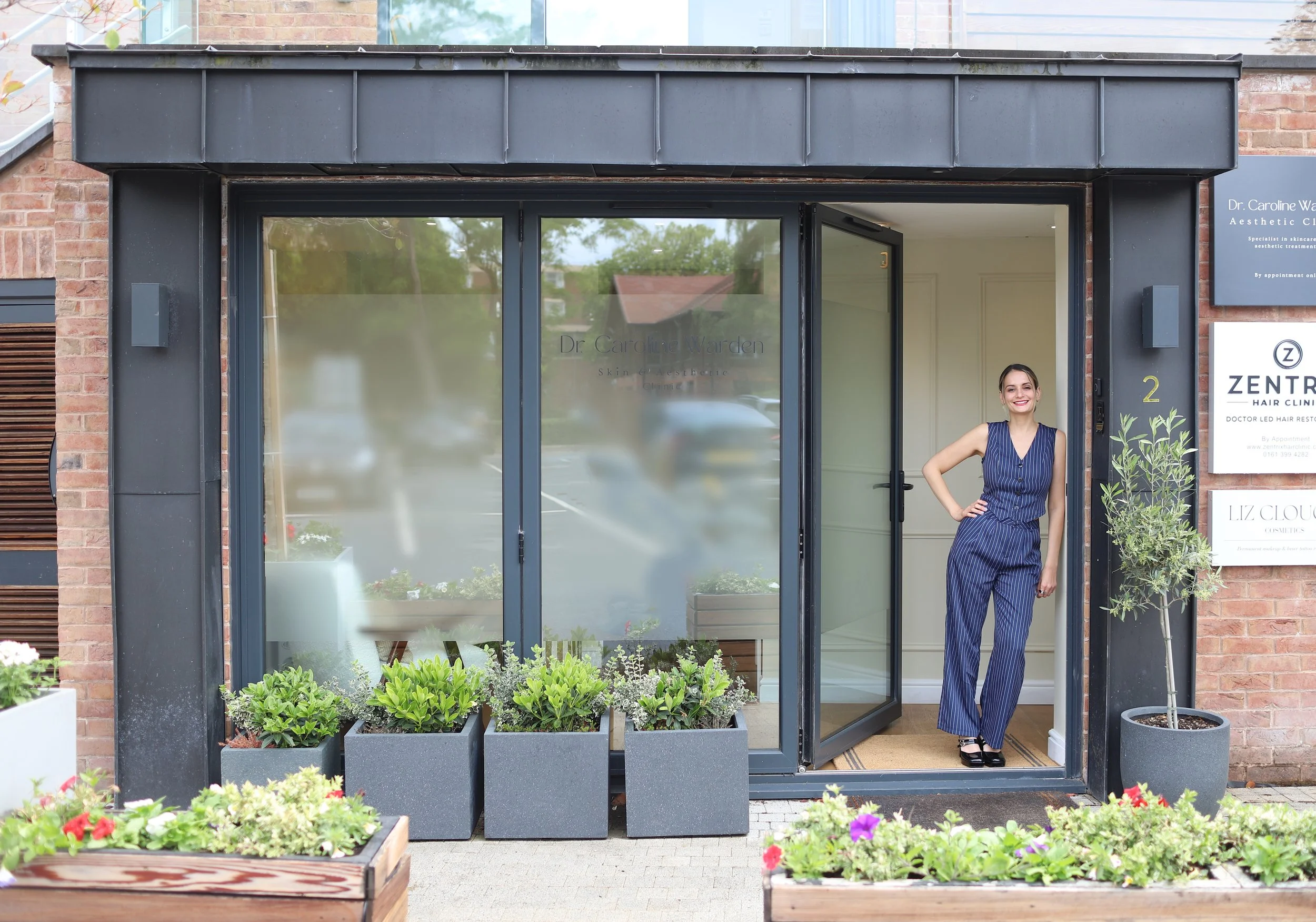
I get asked about a lot of treatments at my Hale clinic that I simply don't offer. Not because I haven't heard of them, and not because I'm precious about doing things my own way, but because when I actually look at the evidence, or my own results, a fair number of well-marketed treatments don't hold up. Here's the honest list, and the reasoning behind each one.
Why "I Don't Offer That" Is Sometimes the Most Honest Answer I Can Give
As both an NHS GP and an aesthetic doctor, I'm used to weighing up evidence before recommending anything. That habit doesn't switch off at the clinic door. Some of the treatments below simply don't have the evidence behind them that their marketing suggests. Others work fine in principle, just not well enough in my own hands to justify offering them. Either way, I'd rather tell you honestly than sell you something I don't believe in.
HydraFacial: A Lovely Facial, But Not a Medical Treatment
HydraFacial is a genuinely pleasant hydradermabrasion treatment, and plenty of good beauty therapists offer it well. It's just not what my clinic is set up to do. My practice is entirely medical, injectables, prescription skincare, medical-grade peels, microneedling and electrocautery, and a spa-style facial, however nice, sits outside that.
Thread Lifts: The "Non-Surgical Facelift" That Doesn't Quite Deliver
Thread lifts are marketed as a way to get facelift-style results without surgery, using dissolvable threads to hitch sagging tissue back into place. I understand the appeal. But when I looked properly at the evidence, it's hard to justify.
A 2019 study following 160 patients treated with barbed PDO threads found that facial tissue improved immediately after the threads were placed, then declined noticeably by six months and was gone entirely by one year. The same study reported an early complication rate of 34%, things like skin dimpling, thread extrusion and visible or palpable threads under the skin. That's a lot of downside for a result that doesn't last.
A treatment that's essentially back to baseline within a year, with a one-in-three chance of an early complication, isn't one I'm willing to offer, however good the marketing looks.
Cosmetic Lasers: Why They're Not Part of My Toolkit
Cosmetic lasers get asked about often, usually off the back of a well-produced Instagram ad. They can do useful things in the right hands for the right concern, but I get comparable results for pigmentation, texture and resurfacing from medical-grade peels, microneedling and prescription skincare, without the downtime and risk profile that comes with more aggressive laser settings. My toolkit is deliberately narrower than the full menu you'll see at some clinics, and that's by design.
Seventy Hyal: Why I Stick With Boosters That Have Better Evidence
Seventy Hyal comes up a lot, usually from patients who've seen it on social media. Compared with Profhilo, Redensity 1 and NCTF 135HA, the products I do use, it has a thinner independent evidence base and, as a single-ingredient hyaluronic acid product, lacks the added vitamins, minerals, amino acids and coenzymes that make the boosters I offer more rounded. I'd rather use products I can properly stand behind.

Oral NAD+ Supplements: A Trend I Dropped, Even Though I Once Liked the Idea
This one's a bit more personal, because I did use to recommend an oral NAD+ supplement. Looking again at the human trial evidence, what it actually shows is a change in blood biomarkers, not a proven improvement in how you look or feel. That's an important gap, and not one I was comfortable glossing over just because the concept is appealing. I've since stopped recommending it.
Worth being precise here, because the two get lumped together online: this is about the oral supplement specifically. Topical NAD+ skincare is a different story, and it's still something I recommend, the evidence and mechanism are different for a serum applied directly to skin than for a capsule you swallow.
Tear Trough Filler: Why I Don't Offer It, Even Though I'm Not Against It in Principle
This is the one I get asked to justify most, because tear trough filler is everywhere. I'm not against it as a concept, but in my hands, with my patient group, the satisfaction rate hasn't been good enough to keep offering it. Rather than persist with a treatment I don't feel confident stands up, I use skin-quality approaches instead for the under-eye area, polynucleotides, targeted skincare, and skin boosters where appropriate. Different route, and for most of my patients, a more reliable one.
A Few Other Lines I Hold
Pigmented lesions: I offer electrocautery for clearly benign, non-pigmented lesions like skin tags and cherry angiomas. Anything pigmented, or anything I'm not completely certain about, gets referred rather than removed. A quick cosmetic fix isn't worth missing something that needs a proper look.
Same-week bookings: My shortest lead time for any in-clinic treatment is around 10 to 14 days. That's not me being unhelpful, it reflects the time a proper consultation and suitability check actually needs. If a clinic offers you a same-day appointment for something like a medical peel, ask yourself what's being skipped to make that possible.
So What Do I Actually Recommend Instead?
Book a Consultation
If you've been considering one of the treatments above, or just want an honest opinion on what would actually help your skin, I'd be glad to talk it through at a consultation in Hale.
Frequently Asked Questions
Does "I won't offer this" mean the treatment doesn't work at all?
Not always. Some, like oral NAD+ supplements, simply lack the evidence to justify a recommendation yet. Others, like tear trough filler, can work well in the right hands, they just haven't given me results I'm confident standing behind in mine.
Why do some clinics offer treatments you don't?
Different practitioners make different judgement calls based on their training, their results and their own reading of the evidence. That's true across all of medicine, not just aesthetics.
Will you ever reconsider any of these?
If the evidence changes, or if I find an approach that gets better results in my hands, yes. This isn't a fixed position, it's where the evidence and my own experience currently sit.
What do you offer instead if I still want a "lift"?
Sculptra and Radiesse can offer genuine, if modest, collagen support and structure, discussed honestly rather than oversold. For real structural tightening, a surgical facelift remains the only option, and that's outside what I do.
Is it normal for a doctor to say no to a specific request?
It should be. A good consultation includes being told when something isn't the right fit for you, not just being sold whatever you asked for.
References
- Bertossi D, Botti G, Gualdi A, et al. Effectiveness, longevity, and complications of facelift by barbed suture insertion. Aesthet Surg J. 2019. doi.org/10.1093/asj/sjy042
- Complications after polydioxanone threads (PDO) for facial lifting, a literature review. J Educ Health Sport. 2024. doi.org/10.12775/JEHS.2024.66.010
Further Reading
- How to Choose an Aesthetic Clinic Safely
- Why "Skin Tightening" Is One of the Biggest Myths in Aesthetics
- Profhilo vs Redensity 1 vs NCTF 135HA
- Why I'm Obsessed With the New Obagi Nu-Gen NAD+ Serum
- Explore Polynucleotide Treatments at the Clinic
- Explore Medical-Grade Skincare at the Clinic
Next Steps
Learn more about Dr Caroline Warden Clinic
Learn more about other treatments offered
Dr Caroline Warden is an NHS GP with over 19 years of clinical experience and a special interest in cosmetic dermatology, an independent prescriber, and holds a Level 7 postgraduate diploma in cosmetic injectables. She is the sole practitioner at Dr Caroline Warden Skin & Aesthetic Clinic, a female-led, family-run clinic at 2 Crown Passages, Hale, Altrincham, awarded Best Doctor Led Aesthetic Clinic in Cheshire 2026 by GHP. GMC number 6157708. This article is for information only and does not constitute individual medical advice.