
Last updated: 2 November 2026
Two questions come up in almost every aesthetic consultation at my clinic in Hale. The first is "will I bruise?" The second, usually a few months later, is "I never normally bruise, so why did I bruise so badly this time?" Both are reasonable. You might have had anti wrinkle injections four times without a mark and then produce an impressive purple bloom after the fifth. Or you might be someone who bruises after every treatment while your friend sails through lip filler without a dot.
As an NHS GP and aesthetic doctor, I find this one of the more interesting questions in the field, because the answer takes in vascular anatomy, skin biology, blood clotting, medicines and a measure of unavoidable chance. It also contains the most important safety message in injectable aesthetics: the difference between an ordinary bruise and something that is not a bruise at all. This article covers what a bruise is, why some people and some areas bruise more, which medicines and supplements matter, whether cannulas help, what works to prevent and treat bruising, and the warning signs that need a phone call rather than an ice pack.
In this article:
- What actually causes a bruise after an injection?
- Why are your facial blood vessels different from everyone else's?
- Which areas of the face bruise most easily?
- Does age make you bruise more?
- Which medicines make bruising more likely?
- Fish oil, vitamin E and herbal supplements: do they matter?
- Why can you bruise after one appointment but not another?
- Do cannulas bruise less than needles? The 1.7 million syringe study
- How can you reduce bruising before and after treatment?
- Do arnica, bromelain and vitamin K actually work?
- When is it more than a bruise? The signs that matter
- Frequently asked questions
What actually causes a bruise after an injection?
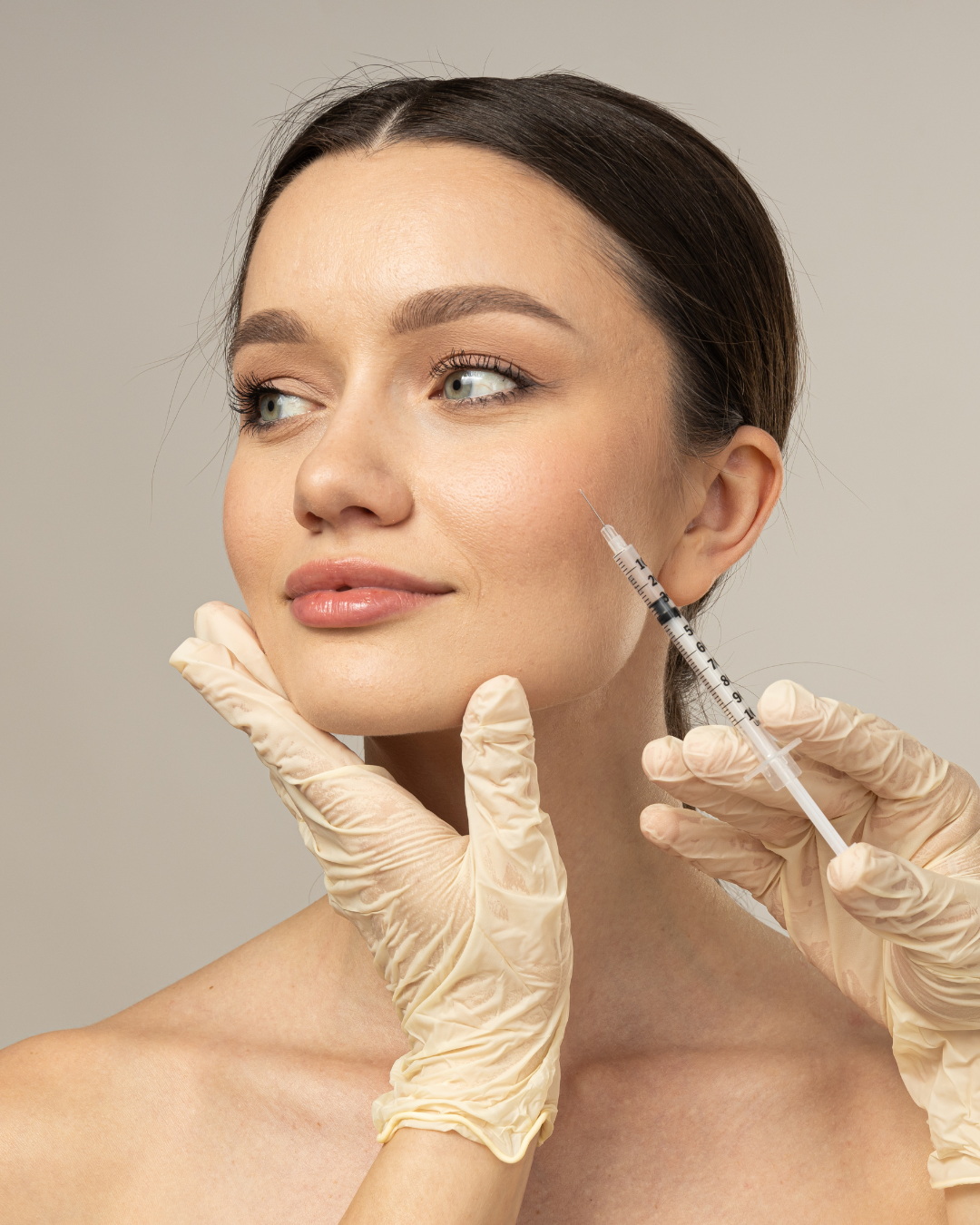
The face has a dense network of arteries, veins and capillaries feeding skin, muscle and fat. When a needle passes through tissue it occasionally nicks one of these small vessels, a little blood escapes into the surrounding tissue (extravasation), and the pooled blood shows through the skin as a bruise (ecchymosis). Over the following days the body breaks the blood down, and the changing pigments produce the familiar colour sequence.
The important point is that an ordinary injection bruise is a mechanical injury to a small vessel, not a reaction to the product. Anti wrinkle injections, dermal filler, polynucleotides and skin boosters all bruise for the same reason: a needle met a vessel. What is injected affects swelling and the tissue response, but rarely the bruise itself.
Why are your facial blood vessels different from everyone else's?
Medical training teaches the usual course of the facial artery, the labial arteries, the angular and supratrochlear vessels and so on. In real faces, vessels vary in depth, diameter, branching and exact position, and the two sides of the same face are not identical. The larger vessels follow recognisable patterns that an injector plans around; the smaller superficial ones form a web that cannot be seen from the surface.
An experienced injector uses anatomy, assessment and technique to keep away from the vessels that matter and to minimise trauma to the ones that do not. What nobody can do is see and avoid every capillary. On one visit the needle slips between vessels; on the next, a millimetre away, it meets one. That does not mean the injection was done badly. It means living anatomy is variable and the tissue we treat is full of blood supply. There is one essential exception to that reassurance, a serious vascular complication of filler, which I cover towards the end.
Which areas of the face bruise most easily?
Does age make you bruise more?
Often, yes. With age the dermis thins, collagen declines and becomes disorganised, and the connective tissue that cushions small vessels weakens; decades of UV exposure make this worse. The extreme version is actinic purpura, the purple patches that appear on older, sun damaged forearms and hands after the lightest knock. Facial injection bruising is not the same thing, but the principle holds: the quality of the tissue around a vessel decides how it responds to trauma. Age is a contributor, not a rule. A 65 year old with well cared for skin may bruise less than a 35 year old who took ibuprofen that morning, and improving skin quality with a retinoid, SPF and treatments such as polynucleotides tends to make skin more resilient over time.
Which medicines make bruising more likely?
This is the part of the consultation where being a GP earns its keep. When a vessel is injured, platelets plug the gap and the clotting cascade seals it. Several common medicines interfere with that process.
The rule is simple: never stop a prescribed medicine to avoid a bruise without speaking to the doctor who prescribed it. A bruise fades in two weeks. The consequences of stopping an anticoagulant or antiplatelet can be permanent. For an elective treatment, the medicine always wins, and sometimes the right decision is to postpone or pick a treatment with less needlework.
Fish oil, vitamin E and herbal supplements: do they matter?
You may have seen lists telling you to stop fish oil, vitamin E, ginkgo, garlic, ginger, turmeric and green tea for a week before injections. The honest position is more nuanced.
Why can you bruise after one appointment but not another?
Picture someone who has anti wrinkle injections every four months with the same doctor in the same areas. Three appointments, no marks. The fourth, a bruise. What changed? Possibly very little. The needle never follows exactly the same microscopic path twice, and a fraction of a millimetre in entry point, angle or depth decides whether a superficial vessel is met. Add the ordinary variables: an ibuprofen for a headache, two glasses of wine the night before, a slightly different pattern because your brow has changed, skin that is a year older. And sometimes none of it applies; the needle simply found a vessel that day. Previous bruise free treatments are reassuring, but they are not a guarantee, which is why I give the same two week warning before every treatment, however many you have had.
Takeaway: bruising is a mechanical event, not a product reaction. Anatomy, area, age, medicines and plain chance all contribute, and only some of those can be controlled.

Do cannulas bruise less than needles? The 1.7 million syringe study
A cannula is a blunt tipped, flexible tube inserted through a single needle made opening; it pushes vessels aside rather than cutting through them and can treat a wide area from one entry point. The best evidence on needles versus cannulas is not about bruising but about the complication that matters most.
"Only the treating physician, after taking into account specific patient factors, can determine whether a needle or a cannula is most appropriate." Alam M, Kakar R, Dover JS et al., JAMA Dermatology, 2021.
In practice I use a cannula for most filler, Sculptra, hyperdilute Radiesse and polynucleotide work, with a small bleb of local anaesthetic at each entry point so the only sharp sensation is the first one. That reduces bruising, reduces entry points and reduces the most serious risk. A needle is still the better tool for anti wrinkle injections, for very precise placement and for some lip work, which is why the safest instrument is the right one for that area, that product and that patient, not the same one every time.
How can you reduce bruising before and after treatment?
Do arnica, bromelain and vitamin K actually work?
This is where marketing runs ahead of evidence. Arnica (a homeopathic or herbal preparation), bromelain (a pineapple enzyme) and topical vitamin K have all been studied for post procedure bruising, mostly after surgery or laser rather than injections.
When is it more than a bruise? The signs that matter
Everything above is about an ordinary bruise: blood that has leaked out of a vessel and is sitting harmlessly in the tissue. A vascular occlusion after dermal filler is a different event: filler inside or pressing on an artery, blocking blood flow to the skin it supplies. It is uncommon, roughly one in several thousand syringes in the study above, and it is the reason injectables should be done by someone trained to recognise and treat it within minutes.
Every patient who has filler with me leaves with my direct number and instructions to call, day or night, if anything on the right hand side of that table happens. Occlusions are treatable, with hyaluronidase to dissolve the filler, and the outcome depends on how quickly treatment starts. That is why a doctor who can diagnose it, holds the medicine to reverse it and will answer the phone is not a luxury. It is also why I would never promise anyone a bruise free treatment: a small bruise is the acceptable price of a needle; a missed occlusion is not.
Bruising is a possibility with every injectable treatment, and I say so before every one. My job is to minimise avoidable trauma through assessment, anatomy and technique, to be honest about what cannot be controlled, and to make sure you know the difference between a bruise and a problem. A mark that fades in a fortnight is not a sign of poor technique, and a treatment with no mark is not proof of a safe one. In aesthetic medicine, good care is about a great deal more than the final photograph.
Takeaway: expect that you might bruise, plan two weeks of margin, keep taking your prescribed medicines, and learn the five warning signs of a vascular occlusion. Everything else is detail.

Frequently asked questions about bruising after aesthetic injections
Why do I bruise after anti wrinkle injections when I never used to?
A fraction of a millimetre in the needle's path decides whether it meets a tiny vessel, so bruise free history does not protect you. Recent ibuprofen, alcohol, a new medicine or simply older, thinner skin can also tip the balance.
Is bruising more common with dermal fillers than anti wrinkle injections?
Usually, yes, because filler involves larger volumes, deeper planes and richer areas such as the lips, whereas anti wrinkle injections are tiny and shallow. The risk depends more on the area and technique than on the product.
Does a bruise mean my injector hit an artery?
No. Most bruises come from small veins and capillaries. A bruise cannot tell you which vessel was involved, and an ordinary bruise is not a vascular occlusion, which has different signs.
Can I take ibuprofen before lip filler?
Better not. Ibuprofen reduces platelet function and increases bruising; use paracetamol for a few days before instead. If you take an anti inflammatory for a medical condition, keep taking it and tell me.
Should I stop my blood thinner before aesthetic treatment?
No, never for a cosmetic procedure. Stopping an anticoagulant or antiplatelet can cause a clot, stroke or heart attack. Tell me what you take and we will decide together whether to go ahead with more bruising expected, choose a gentler treatment or wait.
Does drinking alcohol before injections increase bruising?
Probably a little, through vessel dilation and a mild platelet effect, although direct evidence is limited. Avoiding alcohol for 24 hours either side is a cheap precaution that also reduces swelling.
Do cannulas prevent bruising?
They reduce it, and more importantly they reduce the risk of vascular occlusion by around 77% in the largest study. They do not eliminate either, and for some areas a needle is still the better tool.
Does arnica work for bruising after filler?
The evidence is weak and inconsistent. Topical arnica is harmless if you like it, but nothing has been shown to reliably prevent injection bruises. Time is the only proven remedy.
How long does a bruise after lip filler last?
Most settle within one to two weeks and look worst around day two. Lip bruises can look dramatic because of the swelling alongside them. Make up can cover most of it from the following day.
How soon before a wedding or event should I have injections?
At least two weeks for anti wrinkle injections and ideally four for filler, so that any bruise has gone and the result has settled. For brides I plan the whole timeline months ahead; see the wedding skin guide linked below.
When should I worry about a bruise after filler?
If the skin goes white, dusky, mottled or lace patterned, if pain is severe or increasing, if the area feels cool, or if there is any change in your vision. Those are signs of a possible vascular occlusion and need immediate contact with your injector; vision changes mean 999.
Next steps
If you are considering injectable treatment and want it done by a doctor who will tell you the risks as plainly as the benefits, I would be glad to see you for a consultation at the clinic in Hale. Bring your medicines list; it is the most useful thing you can carry into the room.
Learn more about Dr Caroline Warden Clinic
Learn more about other treatments offered
Further reading
- How to Choose an Aesthetic Clinic Safely
- Treatment Anxiety Is Real: How I Support Nervous Patients
- The Aftercare Myth Everyone Repeats
- Natural Looking Lip Fillers in Hale: Why I Choose Teosyal RHA
- Wedding Skin Treatments and Timelines
- Dermal Fillers in Hale and Altrincham
- Anti Wrinkle Injections in Hale and Altrincham
Dr Caroline Warden (GMC 6157708) is an NHS GP with over 19 years of clinical experience, an independent prescriber, and holds a Level 7 postgraduate diploma in cosmetic injectables. She has practised aesthetic medicine since 2017 and runs Dr Caroline Warden Skin & Aesthetic Clinic with her sister Louise at 2 Crown Passages, Hale, Cheshire, WA15 9GN, serving patients from Hale, Altrincham, Bowdon, Hale Barns, Timperley, Sale, Alderley Edge, Wilmslow, Knutsford, Didsbury and across Cheshire and South Manchester. You will only ever be seen and treated by Dr Warden. Prescription only medicines are prescribed following a face to face consultation and are not promoted in this article. This article provides general educational information and does not replace an individual assessment, and nothing in it should be taken as advice to change prescribed medication. Information correct as of November 2026.
References
- Alam M, Kakar R, Dover JS, et al. Rates of vascular occlusion associated with using needles vs cannulas for filler injection. JAMA Dermatology 2021;157(2): pages 174 to 180. Read the study
- Zargaran D, Zoller F, Zargaran A, et al. Complications of facial cosmetic botulinum toxin A injection: analysis of the UK Medicines and Healthcare products Regulatory Agency registry and literature review. Journal of Plastic, Reconstructive and Aesthetic Surgery 2022. Read the abstract
- King M. The management of bruising following nonsurgical cosmetic treatment. Journal of Clinical and Aesthetic Dermatology 2017;10(2): pages E1 to E4. Read the review
- Signorini M, Liew S, Sundaram H, et al. Global aesthetics consensus: avoidance and management of complications from hyaluronic acid fillers. Plastic and Reconstructive Surgery 2016;137(6): pages 961e to 971e. Read the consensus
- Goodman GJ, Liew S, Callan P, Hart S. Facial aesthetic injections in clinical practice: pretreatment and posttreatment consensus recommendations to minimise adverse outcomes. Australasian Journal of Dermatology 2020;61(3): pages 217 to 225. Read the recommendations
- Murray G, Convery C, Walker L, Davies E. Guideline for the management of hyaluronic acid filler induced vascular occlusion. Journal of Clinical and Aesthetic Dermatology 2021;14(5): pages E61 to E69. Read the guideline
