The Science Behind Natural-Looking Aesthetic Results
One of the nicest things a patient can tell me after treatment is:
“Everyone keeps saying I look really well, but nobody has asked what I’ve had done.”
For me, that is often the hallmark of excellent aesthetic medicine.
The purpose of treatment should not automatically be to create an obvious change. It should be to understand why a face looks tired, less supported or older than it once did, and then make carefully judged improvements without losing the features, expressions and individuality that make that person recognisably themselves.
As both an NHS GP and aesthetic doctor, I have become increasingly convinced that the best aesthetic results are often the ones that are hardest to identify.
There is actually some fascinating science behind why.
Your Brain Reads a Face as a Whole
When we look at another person, we do not consciously analyse their forehead, cheeks, eyes, lips and jawline one by one.
Face perception is a highly specialised neurological process. Research in neuroscience shows that faces provide an enormous amount of information almost instantaneously, including cues about identity, age, expression and where someone is directing their attention.
Our perception of a face is therefore much more integrated than we often realise.
This helps explain something I see repeatedly in clinic.
A patient may be focused intensely on one particular line or feature, while what actually makes them appear tired or older is a combination of much smaller changes:
slightly reduced skin luminosity
mild pigmentation
a little loss of facial support
increased muscle activity
thinning skin
subtle changes around the eyes
early lower-face heaviness
None of those changes necessarily dominates the face.
But together they alter the overall impression.
And that means the reverse is also true.
Improving several of those factors subtly can sometimes create a much greater overall improvement than making one feature dramatically different.
We Form Impressions of Faces Incredibly Quickly
Humans are exceptionally fast at reading faces.
In a well-known series of experiments, participants formed impressions relating to attractiveness, likeability, trustworthiness, competence and aggressiveness after seeing an unfamiliar face for just 100 milliseconds. Longer viewing increased confidence in those judgements more than it fundamentally changed them.
That does not mean those instant judgements are necessarily accurate or fair.
It does mean that the face is processed extremely quickly.
We often know that somebody looks fresher, healthier or more tired before we could possibly explain which individual feature has created that impression.
This is one reason subtle aesthetic treatment can work so beautifully.
Someone does not necessarily consciously think:
Her lateral cheek has slightly more support and her forehead muscle activity has reduced.
They simply think:
She looks really well.
Why Small Improvements Can Create a Big Overall Difference
Imagine someone with:
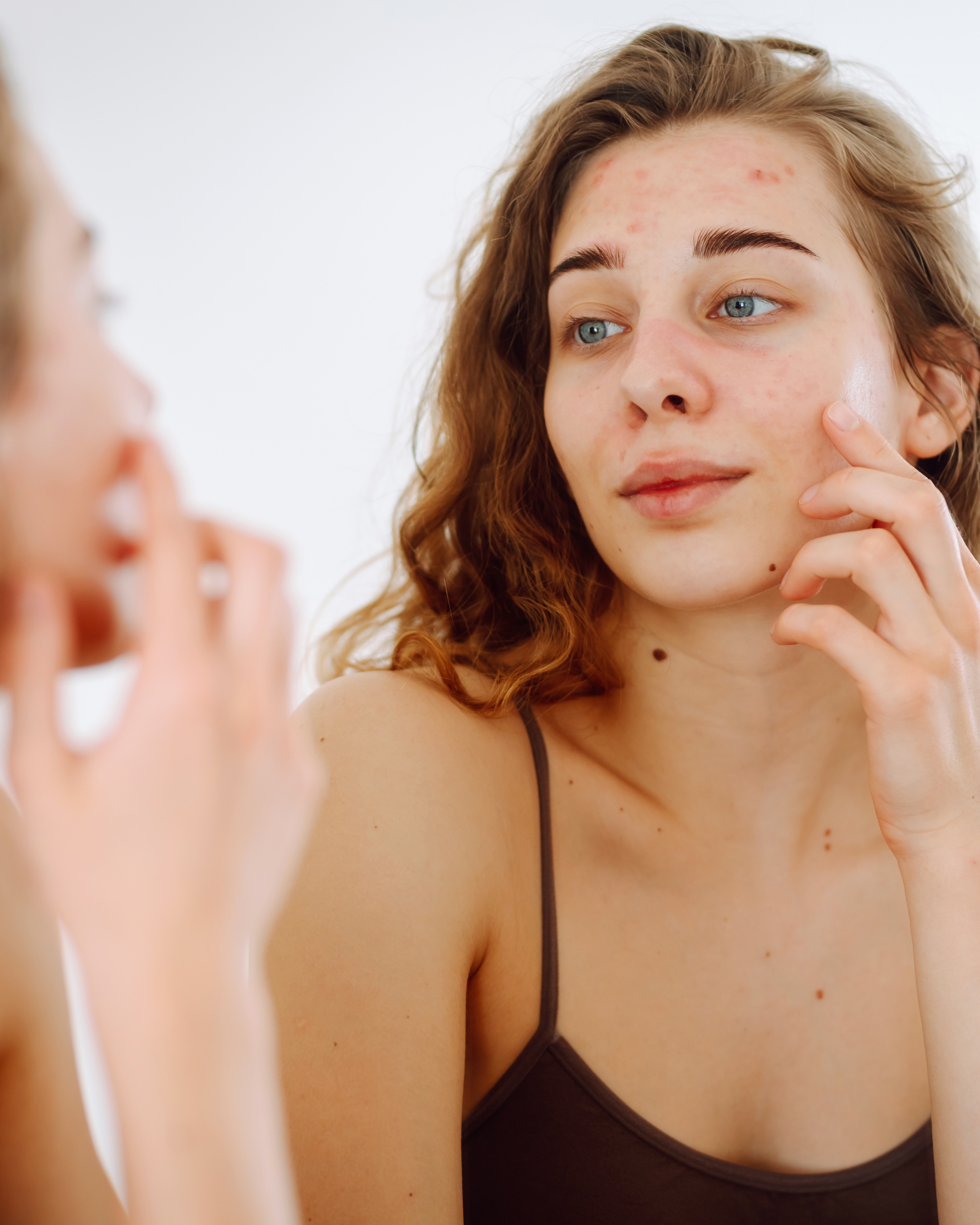
mild forehead lines
slightly uneven pigmentation
early loss of cheek support
some under-eye crepiness
duller skin than they had five years ago
None of those things is particularly dramatic.
Now imagine we improve each element modestly.
The forehead moves a little more softly.
The skin becomes clearer and reflects light more evenly.
Collagen support gradually improves.
The under-eye skin looks healthier.
The face regains a small amount of structural balance.
There is no scientific rule saying every element needs to improve by “10%”; that is simply a useful way of visualising the principle.
Several small improvements can combine to create one noticeably fresher overall impression.
This is very different from concentrating all treatment on one feature until that feature becomes the first thing another person sees.
Skin Quality Matters More Than Most People Realise
When people think about facial ageing, they often think first about wrinkles.
But skin ageing is much broader than that.
We unconsciously notice:
pigmentation
redness
skin texture
surface smoothness
colour uniformity
fine lines
luminosity
the way light reflects across the face
Research examining female facial skin has shown that both skin surface topography and skin colour distribution influence perceptions of age and health. In particular, surface texture contributed strongly to age perception, while more even skin colour appeared to be an important cue to perceived health.
This is one of the reasons I am so passionate about treating skin quality before automatically reaching for more injectable volume.
Improving pigmentation, hydration, texture and collagen can sometimes change the entire appearance of a face without altering its shape at all.
Depending on the individual patient, that may involve:
consistent broad-spectrum sunscreen
prescription retinoids
medical-grade skincare
chemical peels
medical microneedling
polynucleotides
skin boosters
collagen-stimulating treatments such as Sculptra® or Radiesse®
Healthy-looking skin makes the whole face look healthier.
And crucially, nobody looks at clearer, smoother skin and thinks:
“She’s had something done.”
They usually just think you look well.
Facial Harmony Matters More Than Chasing Perfect Symmetry
Another common misconception is that an attractive face must be perfectly symmetrical.
Facial symmetry does contribute to attractiveness judgements in research, but it is only one part of a much more complicated picture. Studies also identify factors such as averageness, proportion, skin quality, sexually dimorphic features and individual variation in preference.
And importantly, real human faces are not perfectly symmetrical.
They are not supposed to be.
When I assess a patient, I am therefore much more interested in facial harmony than mathematical perfection.
Does one feature dominate the face?
Has ageing created a loss of support that is changing the balance between the upper and lower face?
Would adding volume genuinely restore something that has been lost, or would it simply make the face bigger?
Does the proposed treatment belong on this particular face?
Good aesthetic medicine respects proportions.
It does not try to force everybody towards the same template.
The Face Should Still Move
Natural-looking aesthetics is not only about what a face looks like in a photograph.
It is also about what happens when that person:
smiles
laughs
frowns
talks
raises their eyebrows
narrows their eyes
reacts spontaneously during conversation
Faces are dynamic.
Expression is part of how we recognise each other and communicate.
This is particularly relevant with anti-wrinkle treatment.
My goal is not necessarily to remove every millimetre of movement from a forehead.
It is to understand which muscle activity is creating the concern and then use an appropriate dose to soften it while preserving enough expression for the face to remain natural.
Looking refreshed should never come at the expense of looking human.
Subtle Does Not Mean Ineffective
There is sometimes an assumption that natural-looking aesthetic treatment must mean doing very little.
It does not.
Subtle treatment can actually involve quite sophisticated planning.
A patient might ultimately benefit from:
Anti-wrinkle treatment to soften excessive muscle activity.
Medical-grade skincare to improve pigmentation and skin function.
Polynucleotides or skin boosters to improve areas of declining skin quality.
Sculptra® or Radiesse® to support collagen and age-related structural change.
Carefully placed dermal filler where genuine volume replacement or structural support is needed.
The important difference is that each treatment has a specific job.
We are not trying to make one syringe solve every aspect of facial ageing.
Why Overfilled Faces Can Look Unnatural
Our brains are extremely good at recognising familiar facial patterns.
When one feature becomes disproportionately large, projected or immobile, the overall relationship between facial features changes.
That may be:
lips that dominate the lower face
cheeks with excessive projection
a jawline widened beyond the patient's natural anatomy
repeated filler placed where volume was not genuinely deficient
muscle treatment that removes too much normal expression
The individual treatment may have been technically successful in isolation.
But the face as a whole may now look less harmonious.
This is why more treatment does not automatically mean a better result.
In aesthetic medicine, knowing when to stop is every bit as important as knowing how to inject.

Restoration Rather Than Reinvention
The word I increasingly come back to in my own practice is restoration.
Ageing changes multiple layers of the face.
Skin becomes thinner.
Collagen declines.
Fat compartments change.
Bone remodels.
Muscle activity continues.
Pigmentation and vascular change become more noticeable.
It therefore makes little sense to assume every patient needs the same treatment.
Sometimes the most effective intervention is surprisingly simple.
A patient might come in requesting cheek filler and leave with a skincare plan.
Someone convinced they need tear-trough filler may actually have excellent facial volume but poor under-eye skin quality.
Someone asking for more lip filler may benefit much more from stopping.
And sometimes a patient simply does not need treatment yet.
That is part of practising aesthetics as medicine rather than as a menu of procedures.
What About the “Halo Effect”?
Psychologists have long described an attractiveness halo effect, where physical appearance can influence assumptions we make about other characteristics.
Classic experiments found that people rated as physically attractive were also more likely to be attributed other socially desirable characteristics. Later research has continued to demonstrate that appearance can influence social judgements.
It is important to be clear about what this does not mean.
Looking younger or more attractive does not make somebody more trustworthy, competent, successful or worthy.
Those snap judgements are biases, not objective truths.
But recognising that humans make these rapid visual judgements helps explain why a person can sometimes experience a genuine confidence boost when their outward appearance begins to feel more consistent with how they see themselves.
That, for me, is a much healthier reason for aesthetic treatment than trying to conform to an impossible ideal.

My Approach as an NHS GP and Aesthetic Doctor
The question I ask is rarely:
“What treatment can I do?”
It is:
“What is actually creating the concern, and what is the least intervention required to improve it well?”
That may mean improving skin quality before considering injectables.
It may mean replacing a small amount of volume that genuinely has been lost.
It may mean stimulating collagen rather than repeatedly adding filler.
It may mean preserving more movement with anti-wrinkle treatment.
And sometimes it means saying:
“I don't think you need anything.”
My goal is not for somebody to look at one of my patients and recognise my work.
My goal is for the treatment to disappear into the face.
Why Natural Results Often Age Better
Aesthetic treatment is not a one-off photograph.
Whatever we do today becomes part of how that face continues to age.
That makes long-term planning important.
If we continually chase every new line with more product, or repeatedly increase volume because our eyes have become accustomed to the previous result, treatment can gradually move further away from the patient's original anatomy.
A more conservative approach gives us space to reassess.
We can ask:
Has something genuinely changed?
Is the previous treatment still working?
Does this area actually need more?
Would improving skin or collagen achieve more than adding volume?
Would doing nothing be the better decision?
There is no prize for using the most product.
The aim should be to achieve the best outcome with the least unnecessary intervention.
The Bottom Line
Our brains read faces remarkably quickly and as complex, integrated visual information rather than as a collection of isolated features. Research also shows that skin colour distribution, texture, proportion and other facial characteristics can all influence how age, health and attractiveness are perceived.
For me, that supports a very simple philosophy.
Do not treat a face feature by feature. Treat the person in front of you.
Healthy skin.
Balanced proportions.
Natural movement.
Appropriate structural support.
Restraint when restraint is needed.
The most successful treatment should not make people wonder what you have had done.
It should simply leave them thinking:
“You look really well.”

Frequently Asked Questions About Natural-Looking Aesthetic Treatments
How can I have aesthetic treatment without looking “done”?
Start with a comprehensive consultation rather than choosing a treatment from a menu. Natural results depend on understanding your anatomy, skin quality, facial proportions and what is actually causing the concern. Gradual treatment is often preferable to making a large change in one appointment.
Can Botox® still look natural?
Yes. Anti-wrinkle treatment does not have to produce a completely immobile forehead. Dose, injection placement, muscle strength and the patient's desired result all matter. My preference is generally to soften excessive movement while preserving natural expression.
Can dermal filler look completely natural?
Absolutely, when there is an appropriate indication and the amount and placement respect the patient's anatomy. Filler tends to become obvious when volume is added where it is not needed or when one feature becomes disproportionate to the rest of the face.
What are the most natural-looking aesthetic treatments?
There is no single “most natural” treatment. Depending on the concern, natural improvement may come from medical-grade skincare, anti-wrinkle injections, dermal filler, polynucleotides, skin boosters, Sculptra®, Radiesse®, microneedling or chemical peels.
The natural result comes from choosing the correct treatment, not from the name of the product.
Should skin quality be treated before filler?
Often, yes — particularly when the main concern is dullness, pigmentation, crepiness, dehydration or textural change rather than true volume loss. In other patients, structural support may be the priority. This is why individual assessment matters.
Is it better to start aesthetic treatments gradually?
For most patients seeking natural results, I prefer a staged approach. It allows us to assess how the face responds, reduces the risk of unnecessary treatment and makes it easier to preserve natural proportions.
How do I choose a practitioner who specialises in natural results?
Look for someone who performs a detailed consultation, discusses limitations and risks, assesses the whole face rather than individual features, and is comfortable recommending less treatment — or no treatment — when appropriate.
Natural-Looking Aesthetic Treatments in Hale, Altrincham & Cheshire
At Dr Caroline Warden Skin & Aesthetic Clinic in Hale, every consultation and treatment is carried out personally by Dr Caroline Warden, a practising NHS GP and aesthetic doctor.
My approach is centred around skin health, facial harmony, natural movement and long-term treatment planning, rather than dramatic transformation.
Patients visit the clinic from Hale, Altrincham, Bowdon, Hale Barns, Wilmslow, Knutsford, Sale, Stockport, South Manchester and across Cheshire and Greater Manchester.
If you are considering aesthetic treatment but are worried about looking unnatural, you are very welcome to book a consultation first.
There is no obligation to proceed with treatment.
Sometimes the most useful appointment is simply understanding what you do — and do not — need.

Further Reading
- How to Choose an Aesthetic Clinic in Manchester
- Why Some Aesthetic Treatments Look Unnatural, and How to Avoid It
- The Most Common Botox Mistakes Patients Notice
- Beauty Standards Through the Ages: Why Our Brains Find Certain Features Attractive
- Is It Vanity or Self-Respect? The Psychology Behind Skin Rejuvenation Treatments
- Medical-Grade Skincare, if skin quality is your starting point
- Sculptra, if it is support and structure you have lost
- Anti-Wrinkle Injections, if softened expression lines are the goal
- Explore Our Doctor-Led Aesthetic Treatments
Next Steps
References
Tsao DY, Livingstone MS. Mechanisms of Face Perception. Annual Review of Neuroscience. 2008;31:411–437.
Tanaka JW, Simonyi D. The "Parts and Wholes" of Face Recognition: A Review of the Literature. Quarterly Journal of Experimental Psychology. 2016.
Willis J, Todorov A. First Impressions: Making Up Your Mind After a 100-ms Exposure to a Face. Psychological Science. 2006;17(7):592–598.
Matts PJ, Fink B, Grammer K, Burquest M. Color Homogeneity and Visual Perception of Age, Health and Attractiveness of Female Facial Skin. Journal of the American Academy of Dermatology. 2007.
Fink B, Matts PJ. The Effects of Skin Colour Distribution and Topography Cues on the Perception of Female Facial Age and Health. Journal of the European Academy of Dermatology and Venereology. 2008;22(4):493–498.
Voegeli R, et al. Predictors of Female Age, Health and Attractiveness Perception from Skin Feature Analysis of Digital Portraits in Five Ethnic Groups. International Journal of Cosmetic Science. 2023.
Fink B, et al. Effects of Under-Eye Skin and Crow's Feet on Perceived Facial Appearance in Women of Five Ethnic Groups. International Journal of Cosmetic Science. 2025.
Fink B, et al. Age-Dependent Changes in Skin Features and Perceived Facial Appearance in Women of Five Ethnic Groups. International Journal of Cosmetic Science. 2024.
Rhodes G. The Evolutionary Psychology of Facial Beauty. Annual Review of Psychology. 2006;57:199–226.
Langlois JH, Roggman LA. Attractive Faces Are Only Average. Psychological Science. 1990;1(2):115–121.
Little AC, Jones BC, DeBruine LM. Facial Attractiveness: Evolutionary Based Research. Philosophical Transactions of the Royal Society B. 2011;366:1638–1659.
Choo J, O'Daniel G. Uncanny Valley: Implications for Facial Plastic Surgery. Aesthetic Surgery Journal. 2016;36(1):NP28–NP29.
Dion K, Berscheid E, Walster E. What Is Beautiful Is Good. Journal of Personality and Social Psychology. 1972;24(3):285–290.
Atiyeh B, Emsieh S, Chrabieh E, et al. Character and Personality Perception and Social Trait Judgment After Facial Surgical and Medical Aesthetic Interventions. Plastic and Reconstructive Surgery Global Open. 2025;13(6):e6831.
