Post-Inflammatory Pigmentation: How to Fade the Marks Left After Spots
Last updated: September 2026
The spot itself healed months ago. The mark it left has not.
This is one of the most common things people bring to my clinic room in Hale, and one of the most frustrating, because it feels as though the problem should be over. The inflammation has gone. The skin is smooth. And yet there is a brown or grey patch sitting exactly where the spot was, refusing to shift.
It is also one of the most misunderstood, because not all of these marks behave the same way. Some fade reliably over months. Some barely move at all, and the difference between them is decided by something that happened at the moment the skin was inflamed, months before you started trying to treat it.
This article explains what post-inflammatory pigmentation actually is, why some marks fade and others do not, what a review of 48 studies found genuinely works, the honest timescale, and where the line sits between what belongs in a cosmetic clinic and what belongs with your GP.
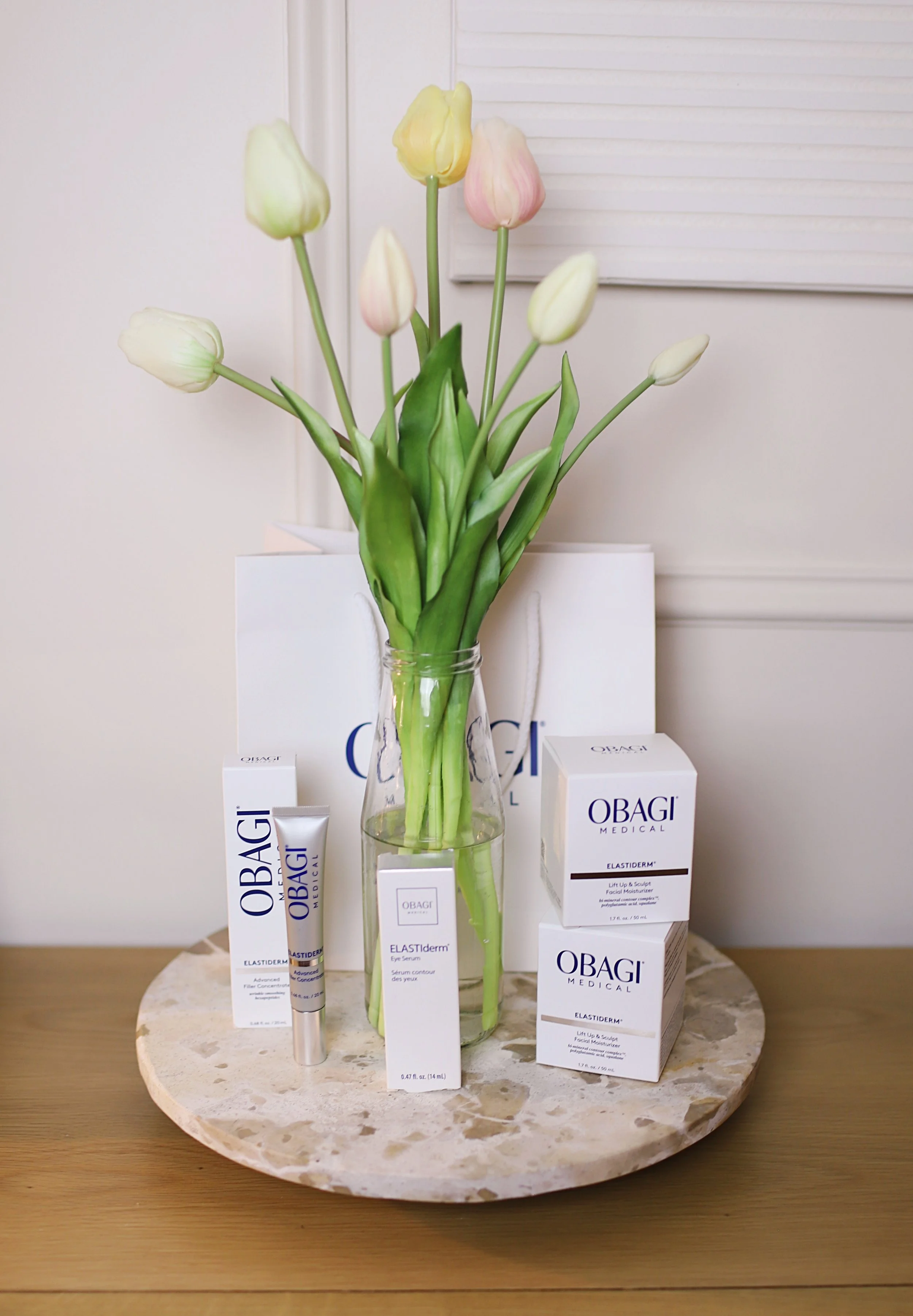
I am an authorised Obagi stockist and Obagi ambassador, and I will explain where that range genuinely fits into this and, just as importantly, where no skincare of any brand is going to be the answer.
Key Takeaways
| Question | Short answer |
|---|---|
| What is PIH? | Excess pigment left behind after inflammation. Not a scar, and not the same as an acne scar |
| Why do some marks never fade? | Because pigment can sit at two different depths. Surface pigment clears. Deeper pigment may not |
| How can I tell which I have? | Brown suggests surface. Blue, grey or slate suggests deeper |
| How long does it take? | Surface pigment typically 6 to 12 months. Deeper pigment improves slowly and can be permanent |
| What works best? | Sun protection, treating whatever is still causing inflammation, and patience. A 48-study review found no treatment with strong efficacy |
| Is picking really that bad? | Yes. It is the single most reliable way to turn a spot that would have vanished into a mark that lasts a year |
| Where does skincare fit? | It supports turnover, calms inflammation and protects from light. It does not reach deep pigment |
| Where does this belong? | The mark is cosmetic. Active acne causing new marks is medical and belongs with your GP |
In This Article
- What post-inflammatory pigmentation actually is
- The difference that decides whether your mark fades
- PIH is not an acne scar, and why that matters
- Why some people get it far more than others
- What makes it worse, usually without you noticing
- What the evidence actually shows
- What genuinely helps, in order of importance
- Where Obagi fits, and where it does not
- The honest timescale
- Why buying skincare from unauthorised sellers is a real risk
- When this belongs with your GP instead
What Post-Inflammatory Pigmentation Actually Is
When skin is inflamed, whether by a spot, a cut, an ingrown hair, eczema, a reaction or an over-enthusiastic peel, the inflammatory process stimulates the pigment-producing cells in that area.
Those cells, melanocytes, respond by producing more melanin than usual. Once the inflammation resolves, the pigment stays behind. It is not damage in the sense of a scar. There is no loss of tissue and no change to the surface of the skin. Run your finger over it and you feel nothing. It is purely a colour change, sitting in skin that is otherwise intact.
That is why post-inflammatory pigmentation is, in principle, reversible in a way that a scar is not. Whether it actually reverses depends entirely on the next section.
The Difference That Decides Whether Your Mark Fades
This is the most useful thing in this article, and almost nobody explains it.
The pigment can end up at two different depths, and the two behave completely differently.
| Epidermal PIH | Dermal PIH | |
|---|---|---|
| Where the pigment sits | In the upper layers of the skin, where cells are constantly turning over | Deeper down, taken up by immune cells called macrophages and held in the dermis |
| What it looks like | Brown, tan, light to dark | Blue, grey or slate coloured |
| Typical timescale | Usually resolves within 6 to 12 months | Improves slowly, and may be permanent |
| Response to skincare | Reasonable. Turnover carries the pigment out | Poor. No topical product reaches it meaningfully, whatever the brand |
| Realistic goal | Clearance | Improvement, and preventing more |
What determines which you get is mostly how severe and how prolonged the inflammation was. A brief, superficial spot tends to leave surface pigment. Deep, prolonged or repeatedly disturbed inflammation can damage the boundary between the layers, letting pigment fall through into the dermis where the immune system collects it and holds onto it.
This is the real reason picking matters. Squeezing a spot deepens and prolongs the inflammation, which increases the chance that the pigment ends up at the depth from which it may never fully clear. You are not just delaying healing. You are changing which kind of mark you get.
A rough guide you can apply at home: look at the colour in natural light, without make-up. Brown is encouraging. Blue-grey is not. It is not a perfect test, and mixed pictures are common, but it will tell you roughly what to expect.
PIH Is Not an Acne Scar
These get confused constantly, and the distinction changes what can be done.
| Feature | Post-inflammatory pigmentation | Acne scarring |
|---|---|---|
| What it is | A colour change in intact skin | A change in the structure of the skin |
| Texture | Completely flat. You cannot feel it | Indented, raised or pitted. You can feel it |
| Visible in raking light? | No. It disappears when you angle a light across the skin | Yes. Shadows appear |
| Will it fade on its own? | Often, if superficial | No. Scars do not resolve spontaneously |
| What helps | Time, sun protection, turnover | Treatments that remodel tissue |
The test is simple. Stand at a mirror and angle a lamp across your face from the side rather than facing you. Anything that casts a shadow is textural, so it is scarring. Anything that vanishes in that light is purely colour, so it is pigment. Most people have some of each, and knowing the proportion prevents a great deal of wasted money.
Why Some People Get It Far More Than Others
Post-inflammatory pigmentation is not distributed evenly, and the differences are worth understanding rather than taking personally.
| Factor | Why it matters |
|---|---|
| Skin tone | Richly pigmented skin has greater baseline melanin production and more reactive pigment cells. PIH is more common, more pronounced and more persistent in Fitzpatrick types III to VI |
| Depth and duration of inflammation | Deep, prolonged or recurrent inflammation is more likely to produce the deeper, more stubborn kind |
| Picking and squeezing | Extends inflammation and disrupts the layer boundary. The single most modifiable factor |
| Sun exposure | Ultraviolet light drives further pigment production in an area already producing too much |
| Over-treating the mark | Aggressive acids, scrubs and peels create fresh inflammation, which creates fresh pigment |
| Untreated underlying inflammation | If spots keep appearing, new marks form faster than old ones fade |
The skin tone point deserves emphasis, because it changes the strategy rather than just the odds. In richly pigmented skin, the margin for error is much smaller. An aggressive approach intended to clear pigment faster frequently produces more of it, by creating exactly the inflammation that caused the problem originally. Gradual, well-tolerated treatment is not a compromise here. It is the correct approach, and it is why I pace medical grade skincare carefully rather than handing someone a full regimen on day one.
What Makes It Worse, Usually Without You Noticing
- Picking, squeezing, or "just having a little go at it". Every extra day of inflammation increases your risk of the permanent kind
- Daylight, not just sunshine. Pigment-driving light passes through cloud, car windscreens and office glass. The school run counts
- Scrubbing the mark. Physically attacking a pigmented patch creates inflammation, which is what made it
- Stacking actives. Four brightening products from four brands is not four times the effect. It is usually a compromised barrier and more pigment
- Spot-treating with something harsh. Dabbing a strong acid on the mark itself is a reliable way to darken it
- Starting and stopping. Six weeks of effort, abandoned because "nothing is happening", restarted in spring. Pigment does not reward this
- Treating the mark and ignoring the cause. If new spots keep appearing, you are bailing out a boat with the plug still out
What the Evidence Actually Shows
I am going to be straight with you here, because this is the part that clinic websites tend to skip.
A systematic review published in the Journal of Cutaneous Medicine and Surgery in 2024 examined 48 studies of treatments for post-inflammatory hyperpigmentation in skin of colour. It found that topical retinoids produced partial improvement in 64% of patients, and that laser treatment achieved complete resolution in 26%, though with a risk of recurrence.
Those are the best performers. And the reviewers' own summary of the field was this:
"Our results show a lack of robust efficacy across all treatment modalities."
— Mar K et al., J Cutan Med Surg. 2024;28(5)
That is not a reason to give up. It is a reason to be realistic, and to be sceptical of anyone, including any clinic, promising to clear your marks in six weeks. The honest position is that treatments help, none of them help reliably, and the biggest factor is usually time combined with not making it worse.
The same review made a point that is easy to skim past and matters enormously:
"In the absence of treatment, strict photoprotection as prophylaxis is important."
In other words, even if you do nothing else, sun protection is doing work. It is the intervention with the clearest role, and it is the cheapest thing on the list.
What Genuinely Helps, in Order of Importance
Ordered by how much difference each actually makes, not by how much any of them cost.
| Priority | What | Why it sits here |
|---|---|---|
| 1 | Stop the inflammation causing new marks | Nothing else works while fresh marks keep forming. If that means seeing your GP about your skin, that is the first appointment to make, not the last |
| 2 | Daily broad spectrum sun protection, all year | The intervention with the clearest evidence. A tinted mineral formula adds protection against visible light, which also drives pigment. Obagi Sun Shield is the one I most often put people on, because the texture is one they will actually wear daily |
| 3 | Stop picking | Free, difficult, and changes which kind of mark you end up with |
| 4 | Support turnover | Helping the skin shed pigmented surface cells. Prescription options have the best evidence here and are discussed at consultation where appropriate |
| 5 | Reduce inflammation and pigment transfer | Niacinamide and azelaic acid are well tolerated, work quietly rather than dramatically, and suit reactive skin |
| 6 | Antioxidant support | A well formulated vitamin C reduces pigment formation and improves overall clarity. Obagi Professional-C is stable, properly concentrated and packaged to stay active, which is more than can be said for a lot of the category |
| 7 | Barrier support | Reactive, compromised skin pigments more readily. Obagi Hydrate is a straightforward, fragrance-free option that suits most people while other things are being introduced |
| 8 | A structured regimen rather than random products | Sequencing beats ingredient-hunting. A staged system such as Obagi Nu-Derm Fx removes the guesswork, provided it is paced to your tolerance rather than started all at once |
| 9 | Measured exfoliation | Helpful in small amounts, actively harmful if overdone. A controlled in-clinic option such as Obagi Blue Peel Radiance is more predictable than escalating at home |
| 10 | Patience | Unwelcome, unavoidable, and the thing most likely to actually deliver your result |
Where Obagi Fits, and Where It Does Not
I stock Obagi and I am an Obagi ambassador, so you should weigh what follows knowing that. Here is what I actually think.
What Obagi does well is the thing most skincare does badly: it is built as systems rather than isolated hero products, the actives are present at concentrations that do something, and the packaging is designed to keep unstable ingredients stable. Vitamin C in a clear jar with a screw lid is losing potency every time you open it. That sounds like a minor detail and it is the difference between an active product and an expensive one.
For post-inflammatory pigmentation specifically, the parts of the range that earn their place are:
| What it addresses | Why it matters for PIH |
|---|---|
| Daily photoprotection | The single best-evidenced intervention. Everything else is wasted without it |
| Antioxidant support | Reduces pigment formation and supports overall clarity over months |
| Barrier and hydration support | Calm skin pigments less. Reactive skin pigments more |
| A structured, staged regimen | Sequencing matters more than any single product. The Obagi Nu-Derm Fx system is designed as a stepped programme rather than a shelf of separate items |
| Controlled in-clinic exfoliation | Accelerates clearance of surface pigment, at a pace someone is supervising |
A note on Obagi Nu-Derm Fx
This is the part of the range people ask about most, so it is worth explaining properly.
Obagi Nu-Derm Fx is a non-prescription cosmetic system built around arbutin, alongside cleansing, toning, exfoliation and daily sun protection. It is a staged programme rather than a single product, which is the point: pigment does not have one cause, so treating one point in the pathway rarely does much.
What I like about it is the structure. Most people arrive having bought four unrelated products and used them inconsistently. A system takes that decision away and gives you a sequence, which is usually worth more than any individual ingredient in it.
What I would be honest about:
- It is not a fast fix. Nothing in this category is. Expect months
- It suits some skins and not others. Reactive or compromised skin usually needs barrier repair first, and starting a full regimen on an irritated face makes pigment worse rather than better
- It will not reach dermal pigment. If your mark is blue-grey, no topical system of any brand is going to clear it
- Stronger prescription options exist for some people and some kinds of pigmentation. That is an individual assessment and a conversation to have at consultation, not something to decide from a website
What no brand can do, Obagi included:
- Reach dermal pigment. Anyone selling you a cream for a blue-grey mark is selling you disappointment
- Treat acne. Acne is a medical condition with its own pathways, and it belongs with your GP
- Work without sun protection. It is the foundation, not the finishing touch
- Work faster than skin turns over. Nothing does
- Substitute for an assessment. The right regimen depends on what your pigment actually is and what your barrier will tolerate
The value is not the box. It is the right products, introduced in the right order, at a pace your skin tolerates, with someone watching what happens. Handed over without that, good skincare produces irritation, and irritation produces more pigment.
The Honest Timescale
Expectation is where most attempts fail. Nobody abandons something that is visibly working. They abandon something they assumed would work faster.
| Timeframe | What is realistic |
|---|---|
| Weeks 1 to 4 | Skin looks brighter and feels smoother overall. The marks themselves are essentially unchanged. Some mild dryness while adjusting is normal |
| Weeks 4 to 8 | Edges begin to soften. Tone starts to look more even in photographs before it does in the mirror |
| Months 3 to 4 | The point at which most people notice genuine change in surface pigment. Also the point at which most people would have given up |
| Months 6 to 12 | Where superficial marks generally clear, with or without treatment, provided nothing is re-inflaming them |
| Beyond 12 months | Anything still clearly visible is likely to be deeper pigment. Expectations shift from clearance to improvement |
| Ongoing | Sun protection and avoiding new inflammation. Stop either and new marks form |
Take a photograph at the start, in the same light, at the same time of day, without make-up. In four months it will be the only reliable evidence you have, because your eye adjusts to gradual change and will confidently tell you nothing has happened.
Why Buying Skincare From Unauthorised Sellers Is a Real Risk
Worth its own section, because it causes genuine harm and it is easy to get wrong.
Medical grade skincare bought from marketplaces, auction sites and social media sellers is frequently counterfeit, expired, decanted or heat-damaged. Obagi is among the most widely counterfeited skincare brands, precisely because it is effective and people want it. Active ingredients degrade in transit and storage, so even a genuine product bought through the wrong channel may be doing nothing at all.
Buying through an authorised stockist means the product is genuine, correctly stored, in date, and, importantly, that somebody has assessed whether it is right for you before you start.
A word about skin lightening creams bought online
This is a different and more serious problem.
Hydroquinone is banned in cosmetic products in the UK. Creams containing it sold in shops or through social media sellers are being sold unlawfully, and products found to contain it have triggered UK safety recalls. Many imported skin lightening products also contain undeclared potent steroids or mercury.
There is a specific risk worth knowing: prolonged unsupervised use of skin lightening agents can cause exogenous ochronosis, a paradoxical blue-black darkening of the skin that is the opposite of the intended effect and very difficult to reverse.
If you have been using an imported cream, stop, and speak to a clinician. This is not a category to self-prescribe from a website.
Why "Just Copy a Routine Online" Rarely Works
The routine that clears one person's marks can worsen another's, and the reasons are specific rather than mystical.
- The pigment may be at a different depth. A routine aimed at surface pigment does very little for dermal pigment, and the person who got a great result may simply have had the more treatable kind
- It may not be pigment at all. If what is bothering you is textural, no amount of brightening will touch it
- Skin tone changes the risk calculation. An aggressive protocol that suits fair, resilient skin can cause fresh pigment in richly pigmented skin
- The barrier may not tolerate it. Someone who has spent years on acids and scrubs needs repair before anything active
- The underlying cause may still be active. No routine outruns new spots appearing every week
If you would like someone to look at what you already own and tell you honestly which parts to keep, that is a reasonable use of a consultation. Bring the actual bottles. I can tell far more from the ingredient lists and the packaging than from a description, and I will happily tell you when something you already own is doing the job perfectly well.
When This Belongs With Your GP Instead
This is the boundary that matters, and I want to be clear about which side of it I sit on.
The mark left behind is a cosmetic concern. Faded pigment in otherwise healthy skin is something I can help with.
Acne is a medical condition. It is diagnosed and managed by your GP, with referral to dermatology where appropriate, and there are effective treatments available on the NHS. It is not something I assess or treat, and I would not attempt to.
That distinction is not a technicality. It is practical, because the first and most effective thing you can do about post-inflammatory pigmentation is stop new inflammation happening, and if spots are still appearing, that is a medical problem with a medical pathway.
Please see your GP if you have
- Acne that is persistent, painful, deep or scarring
- Spots that keep appearing despite a sensible skincare routine
- Acne that is affecting your mood, sleep, confidence or social life. That is a legitimate reason to seek treatment and it should be taken seriously
- Any diagnosed inflammatory skin condition such as eczema, psoriasis or rosacea that keeps flaring
- Pigmentation that appeared without any preceding spot, rash or injury
- Symmetrical, soft-edged patches across the cheeks, forehead and upper lip, which behaves quite differently and is easily worsened by an aggressive approach
- Any mole or pigmented lesion that is changing in size, shape, colour or outline, or that itches, bleeds or will not heal
What to say when you get there
Appointments are short. It helps to arrive with:
- How long it has been going on and whether it has ever fully cleared
- Where on the body, and whether it is getting worse
- Everything you have tried, including how long for and whether anything helped
- Whether it is affecting your sleep, mood or what you do
- Photographs from when it was at its worst, since skin rarely obliges on the day of the appointment

What I Can and Cannot Help With
| What this clinic does | What belongs with your GP |
|---|---|
| Assessing pigmentation left behind after inflammation has settled | Diagnosing and treating acne |
| Telling you whether a mark is pigment or texture, and what that means | Managing eczema, psoriasis or rosacea |
| Barrier repair and medical grade skincare, including Obagi | Prescribing treatment for a diagnosed skin condition |
| Prescription skincare for skin quality, where appropriate and after assessment | Referral to dermatology |
| Reviewing what you already own and simplifying it | Checking a mole or changing lesion |
| Telling you plainly when the answer is time, not a product | Anything that is not purely cosmetic |
I am a practising NHS GP as well as an aesthetic doctor, so I recognise the difference quickly and I can tell you exactly what to ask for. But I see you here in a cosmetic capacity, and being clear about that boundary is what makes the advice worth having.
Frequently Asked Questions
How long do dark marks after spots take to fade?
Surface pigment usually clears within 6 to 12 months, with or without treatment, provided nothing keeps re-inflaming the area. Deeper pigment improves slowly and can be permanent. The colour gives you a rough clue: brown suggests surface, blue-grey suggests deeper.
Is post-inflammatory pigmentation a scar?
No. A scar is a change in the structure of the skin and you can feel it. PIH is purely a colour change in skin that is otherwise intact and completely flat. Angle a light across your face: anything casting a shadow is textural, anything that disappears is pigment.
Do you stock Obagi?
Yes. I am an authorised Obagi stockist and an Obagi ambassador, so everything is genuine, correctly stored and in date. I will also tell you honestly if what you already own is doing the job, or if the answer is not a product at all.
Which Obagi products help with marks after spots?
The parts of the range that earn their place here are daily photoprotection, a properly stabilised vitamin C, and barrier support while anything more active is introduced. For a structured approach, Obagi Nu-Derm Fx is a non-prescription system built around arbutin that works as a staged programme rather than a single product. Which of those suits you depends on your skin, your tolerance and what the pigment actually is.
Is Obagi Nu-Derm Fx available without a prescription?
Yes. Nu-Derm Fx is a cosmetic system and does not require a prescription. I would still want to assess your skin before you start one, because a full regimen introduced too quickly on reactive skin causes irritation, and irritation causes more pigment. Stronger prescription options exist for some people and some kinds of pigmentation, and that is a conversation for a consultation.
How long does a Nu-Derm Fx system take to work?
Think in months rather than weeks. Texture and clarity usually improve first, often within four to six weeks. Pigment itself takes considerably longer, and the people who get the best results are the ones who stayed consistent past the point where they assumed nothing was happening.
Can I just buy Obagi online and copy a routine?
I would rather you did not. Counterfeit and heat-damaged stock is widespread on marketplaces and social media, and even genuine product bought through the wrong channel may have degraded. More importantly, the right regimen depends on what your pigment is and what your barrier will tolerate, and getting that wrong creates more pigment rather than less.
Why do my marks last longer than my friend's?
Richly pigmented skin has more reactive pigment cells, so PIH is more common, more pronounced and more persistent in Fitzpatrick types III to VI. It is not anything you are doing wrong, and it does mean a gentler approach suits you better.
Does picking really make it worse?
Yes, and more than people realise. It prolongs inflammation, which increases the chance that pigment ends up at the deeper level from which it may never fully clear. You are not just delaying healing, you are changing which kind of mark you get.
Will a strong peel clear my marks faster?
Sometimes, and it can also make things considerably worse, particularly in richly pigmented skin, because a peel that causes inflammation causes pigment. This is a decision that should follow an assessment rather than a purchase.
Can I use hydroquinone?
It is banned in cosmetic products in the UK, and creams containing it sold over the counter or online are being sold unlawfully. Prolonged unsupervised use also risks a paradoxical blue-black darkening that is very hard to reverse. Please do not source it from a website.
Do I need sunscreen even in a Manchester winter?
Yes. Pigment-driving light passes through cloud, windscreens and office glass. It is the intervention with the clearest evidence in this whole article, and the one most people skip between October and March.
My skin is sensitive. Can I still treat this?
Yes, but the order matters. Repair the barrier first, then introduce one thing at a time, slowly. Sensitive skin is a reason to be patient, not a reason to do nothing.
Which single product should I buy?
If you buy only one thing, buy a broad spectrum sunscreen you will actually wear daily. It outperforms every brightening serum on the market for this particular problem, and it costs a fraction of one.
Why did my expensive brightening serum do nothing?
Usually one of four reasons: the pigment is deeper than a topical product can reach, it was not used for long enough, it was used without daily sun protection, or new marks were forming faster than old ones faded. Bring it in and we can work out which.
Should I treat my acne first or my marks first?
Your acne, without question, and that means your GP. Treating marks while new ones keep appearing is bailing out a boat with the plug still out.
Related Reading
- Hyperpigmentation and Uneven Skin Tone: What Actually Works
- The Best Treatments for Acne Scars
- Why You Should Not Buy Obagi Online, and Why Authorised Stockists Matter
- Medical Grade Skincare: What It Is and Why It Matters
- Damaged Skin Barrier: Signs, Causes and How to Repair It
- Medical Grade Skincare at Dr Caroline Warden Clinic
- Obagi Blue Peel Radiance at Dr Caroline Warden Clinic
References
- Mar K, Khalid B, Maazi M, Ahmed R, Wang OJ, Khosravi-Hafshejani T. Treatment of post-inflammatory hyperpigmentation in skin of colour: a systematic review. J Cutan Med Surg. 2024;28(5).
- Postinflammatory hyperpigmentation. StatPearls, NCBI Bookshelf.
- NHS. Acne: overview and treatment.
- DermNet. Post-inflammatory hyperpigmentation.
- NHS. Sunscreen and sun safety.
About the Author
Dr Caroline Warden is a practising NHS GP and aesthetic doctor with nearly twenty years of clinical experience, an independent prescriber, and holder of a Level 7 postgraduate diploma in cosmetic injectables. She is an authorised Obagi stockist and Obagi ambassador, and Medical Director and sole practitioner at Dr Caroline Warden Skin & Aesthetic Clinic, 2 Crown Passages, Hale, Altrincham, a family-run clinic she runs with her sister Louise, seeing patients from Hale, Hale Barns, Bowdon, Altrincham, Timperley, Sale, Alderley Edge, Wilmslow, Knutsford, Bramhall, Cheadle, Didsbury and across Cheshire and South Manchester. GMC number 6157708.