Skin Tags, Moles and Marks: What a GP Checks Before Removing Anything
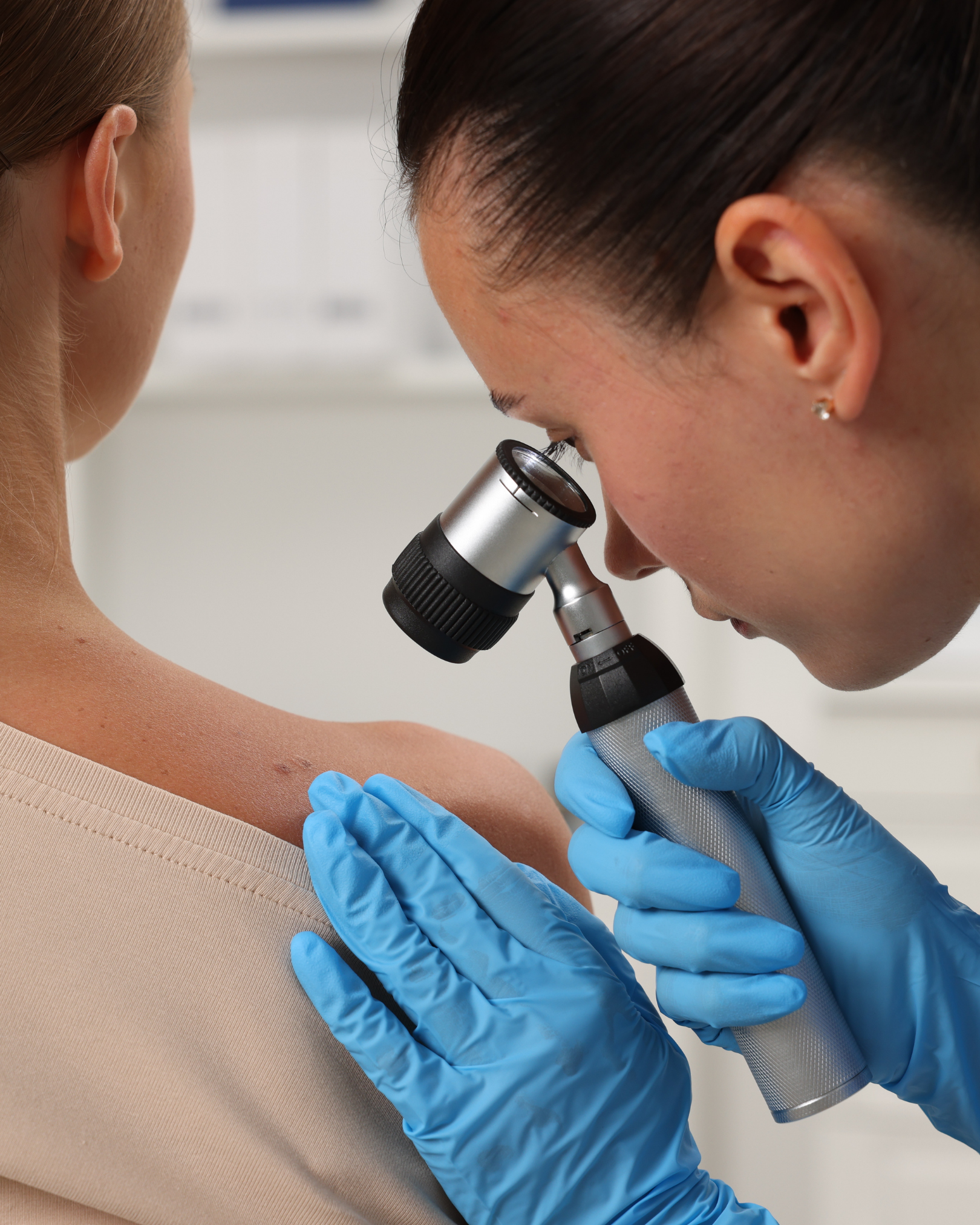
There is one thing in aesthetic medicine that genuinely worries me, and it is not injectables.
It is how easy it has become to have something removed from your skin by somebody who never worked out what it was.
Skin tag removal is now offered almost everywhere. It is quick, it is inexpensive, and the great majority of the time the thing being removed is exactly what everyone assumed it was. The problem is the exception, and the reason the exception matters so much is this:
A lesion that is burned, frozen or zapped off has not been diagnosed. It has been destroyed. There is nothing left to examine, and no way to go back and check.
Most of the time that costs nothing. Occasionally it costs a great deal, because the thing that was removed was not a skin tag at all.
I want to be fair here, because this is not an attack on beauty therapists, many of whom are excellent at what they do. It is a point about scope of practice. Removing a lesion is a technical skill. Deciding whether it should be removed at all is a diagnostic one, and those are different jobs requiring different training.
In this article
- What I remove, and what I will not touch
- The common lumps and bumps, and how they differ
- What needs a doctor rather than a beautician
- ABCDE, and the better rule most people have never heard of
- The checklist your GP actually uses
- The uncomfortable part: not all skin cancer is brown
- Why I do not remove anything pigmented
- Six questions to ask before anyone removes anything
- Frequently asked questions
- References
What I Remove, and What I Will Not Touch
Let me be straightforward about my own practice before I say anything about anyone else's.
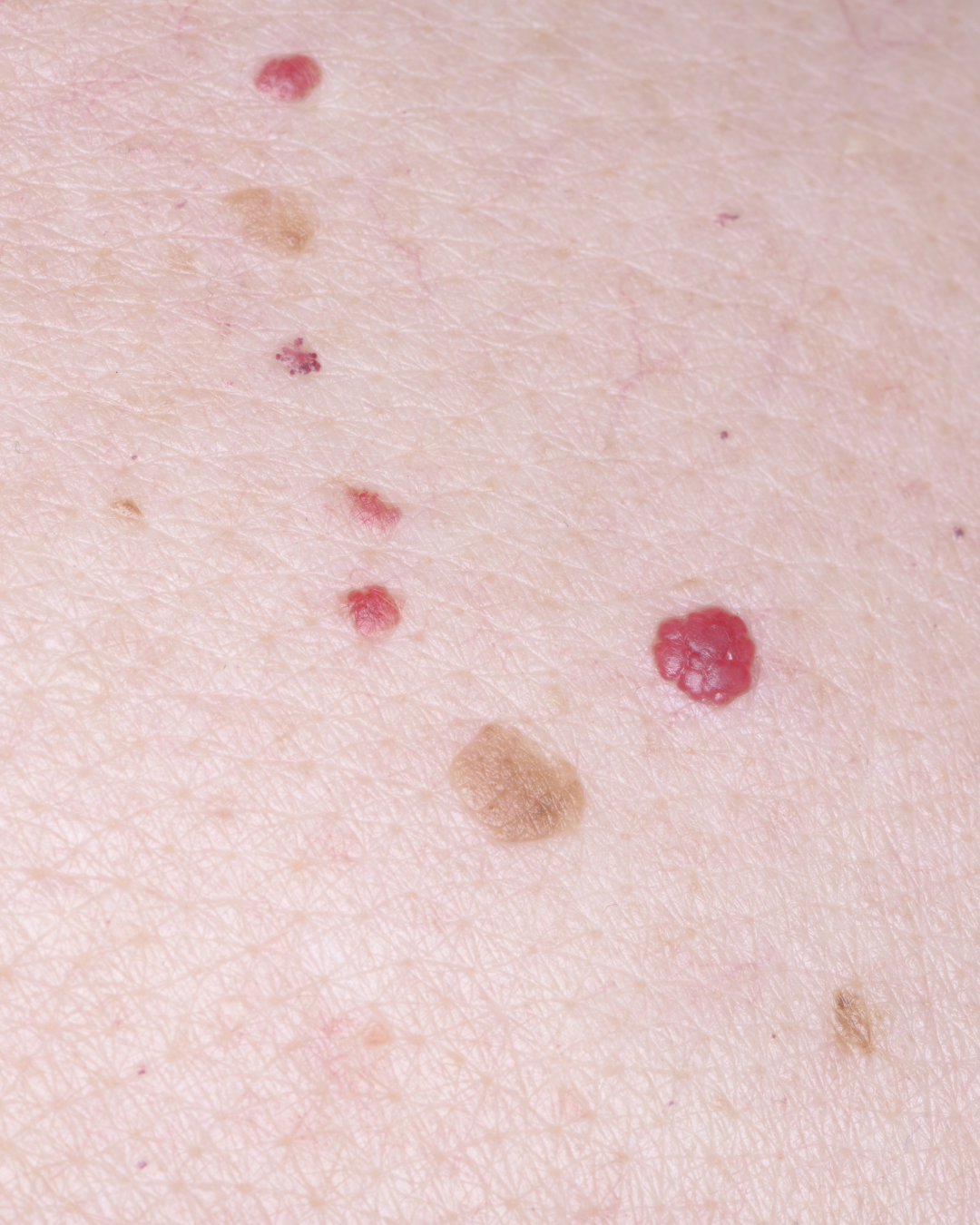
I use electrocautery to remove clearly benign, non-pigmented lesions. Skin tags. Cherry angiomas, the small red spots that arrive in your forties and multiply quietly. Milia. A short list of similar things where the diagnosis is not in doubt.
I do not remove pigmented lesions. Any of them. Ever.
Not moles that have been there for thirty years and are obviously fine. Not seborrhoeic keratoses, the warty brown stuck-on-looking patches that are almost always harmless. Not anything brown, black, blue or grey, however confident I might feel about it.
That is a firm line and it costs me work, because people ask regularly. Here is the reasoning.
Removing something pigmented by destroying it means accepting a small chance of destroying the evidence of something that mattered, with no specimen and no second chance. The right pathway for a pigmented lesion that needs to come off is excision with the tissue sent for histology, which is a different procedure in a different setting. If your mole needs removing, it needs removing properly, and that is not a service I offer.
Anything I cannot name with confidence, or anything with pigment in it, gets referred rather than treated. That is the whole policy, and it does not bend for a patient who would rather have it done today.
This aligns with national guidance. The NHS position on benign lesion removal in England is explicit that it applies only where there is diagnostic certainty, and that anything uncertain, premalignant or suspicious should be referred under the cancer guidelines rather than removed.
The Common Lumps and Bumps, and How They Differ
Almost everything people call a skin tag is one of six or seven things. They behave differently and they are not interchangeable.
Two things worth noticing in that table.
The seborrhoeic keratosis row is where most confusion lives. They are extremely common after forty, they are almost always completely harmless, and they are also the lesion most often confused with melanoma in both directions. People panic about harmless ones, and occasionally something is dismissed as "just one of those" when it is not. Because they are pigmented, they sit firmly outside what I will treat.
And "it looks like a skin tag" is a description, not a diagnosis. Several things hang off the skin. Only one of them is a skin tag.

ABCDE, and the Better Rule Most People Have Never Heard Of
Most people know some version of the ABCDE rule for moles, and it is worth having.
Now the rule that is more useful and almost nobody has heard of.
The ugly duckling sign
Your moles are like siblings. They tend to resemble one another, because they are made by the same skin in the same person. The one that looks nothing like the others is the one worth showing someone.
That is the whole idea, and it works because it does not require you to memorise anything or measure anything. You are not assessing a mole against a list of criteria. You are noticing an outlier.
It also holds up. A study published in JAMA Dermatology in 2017 assessed over 2,000 lesions across 80 patients using nine dermatologists, and found the ugly duckling approach identified melanomas with accuracy comparable to conventional criteria while leading to fewer unnecessary biopsies.
If you take one thing from this article: stand in front of a mirror, look at your moles as a group rather than one at a time, and notice whether one of them is the odd one out. Then show that one to a doctor.
The Checklist Your GP Actually Uses
For transparency, this is the tool behind the scenes in a UK general practice. It is the weighted seven-point checklist in the NICE guidance on suspected cancer, and it is what determines whether someone is referred on an urgent two-week pathway.
A total of three or more triggers an urgent referral. So a single major feature plus one minor one is enough. Notice how low that bar deliberately is.
I am including this not so you can score yourself and decide you are fine, but for the opposite reason. Look at how little it takes. One mole that has changed size and is a bit itchy scores three. If you are sitting there mentally arguing yourself down to two, that is exactly the moment to book an appointment instead.
The Uncomfortable Part: Not All Skin Cancer Is Brown
This is the section that complicates my own position, and I would rather include it than leave it out.
It would be convenient if the rule were simply "brown things are risky and everything else is fine". It is not.
Amelanotic melanoma is melanoma without the pigment. It presents as a pink or red nodule, a persistent scaly patch, a lump that bleeds, or something that looks for all the world like an ordinary blemish. It is uncommon, accounting for under 2% of melanoma diagnoses in most series, though one international study found around 8% were amelanotic on histopathology.
The important figure is not how rare it is. It is how often it is called something else. In one published case series, the clinical misdiagnosis rate was 87.5%, most commonly mistaken for basal cell carcinoma or squamous cell carcinoma. And because it is caught later, survival is poorer than for pigmented melanoma.
Basal cell carcinoma, the most common skin cancer of all, is likewise usually not brown. It typically appears as a pearly or waxy nodule, sometimes with small visible vessels across it, sometimes as a sore that scabs, heals a little and comes back. It grows slowly and rarely spreads, which is reassuring, but it does not resolve on its own and it is easily mistaken for a benign lump.
Which is precisely why "it isn't pigmented, so it must be fine" is not safe reasoning, and why avoiding pigmented lesions is a sensible boundary rather than a complete safety system.
It is the reason I look properly at things that are almost certainly skin tags. Not because I expect to find something. Because the cost of looking is thirty seconds, and the cost of not looking is occasionally very high.
Some Context, Without the Scaremongering
Melanoma is the fifth most common cancer in the UK, with around 19,400 new cases a year, and incidence has risen by over 160% since the early 1990s, including a further increase of around a quarter in the last decade alone.
Two more numbers, deliberately, because the picture is not all bad. Around 93% of people diagnosed with melanoma survive it for ten years or more, an enormous improvement on the 46% of the 1970s. And an estimated 86% of cases are preventable.
That combination is exactly why early assessment matters so much. This is a cancer where outcomes are strongly tied to catching it early, and where the single biggest risk factor is one you can do something about.
It is also why sunscreen keeps appearing in everything I write, and why I would rather you were mildly irritated by that than not wearing it.
Six Questions to Ask Before Anyone Removes Anything From Your Skin
If you take nothing else from this article, take these. They work anywhere, they cost nothing, and the answers will tell you a great deal in about a minute.
Question five is the one I would not skip. It takes four seconds and it separates people working within a boundary from people who have not thought about where the boundary is.
What Happens at an Assessment With Me
Not a great deal, and that is rather the point.
I look at it, and at the rest of you. Not just the lesion you are worried about. The one you are pointing at is frequently not the one that interests me most, which is exactly the ugly duckling problem in reverse.
I ask how long it has been there and what it has done. A lump that appeared six weeks ago and has grown is a completely different conversation from one you have had since your twenties. History is often more informative than appearance.
I tell you what I think it is, and how confident I am. In plain language, including when the honest answer is that I am not certain.
Then one of three things happens. If it is clearly benign and non-pigmented, I can treat it, often the same day. If it is pigmented, or if I am not confident, I refer you, to your GP or onwards, and I tell you how urgently. And sometimes I tell you it is harmless and does not need anything doing at all, which is a perfectly good outcome that nobody ever seems to expect.
A note on cost and the NHS
Worth understanding, because it explains why so much of this has moved into the beauty industry.
The NHS does not generally fund removal of benign skin lesions for appearance alone. It funds removal where a lesion is repeatedly traumatised and bleeding, repeatedly infected, painful, obstructing vision, or restricting function. National guidance also specifies that this applies only where there is diagnostic certainty, and that anything uncertain or suspicious goes down the cancer referral route instead.
So if your skin tags simply bother you, the NHS will not remove them, and that is a reasonable use of finite resources rather than an oversight. It does mean the private market has filled the gap, and that the quality of assessment in that market varies enormously. Which is the whole reason for this article.
And if a lesion is worrying you, that is an NHS matter, not a private one. Please see your own GP. Do not let a cosmetic price list be the reason you delay.
Frequently Asked Questions
Can a beauty therapist remove a skin tag?
In the UK, yes, and many do it competently. The issue is not the removal, which is a technical skill. It is the assessment beforehand, which is a diagnostic one. Ask the six questions above, and pay particular attention to what they say about pigmented lesions.
Do you remove moles?
No. I do not remove pigmented lesions of any kind, including moles that look entirely benign. A pigmented lesion that needs removing should be excised with the tissue sent for laboratory analysis, which is a different procedure in a different setting. If yours needs removing, I will tell you where to go.
Why does it matter that cautery destroys the tissue?
Because there is nothing left to examine. With excision, the removed tissue can be sent to a laboratory and looked at under a microscope, which is how a diagnosis is confirmed. With cautery, the diagnosis has to be right beforehand, because there is no way to check afterwards.
What is the difference between a skin tag and a mole?
A skin tag is soft, usually skin-coloured, and hangs off on a narrow stalk in an area where skin rubs together. A mole is a pigmented lesion within the skin. They are different things, and the difference determines who should be treating them.
Are cherry angiomas dangerous?
No. They are benign collections of small blood vessels, they become more common with age, and they need no treatment unless you dislike them or one catches and bleeds. They are one of the things I am happy to remove.
Should I be worried about seborrhoeic keratoses?
They are almost always harmless, and extremely common after forty. They are also the lesion most frequently confused with melanoma, in both directions, which is why they are worth having looked at properly rather than assumed, and why I do not remove them.
What are the warning signs of skin cancer?
For pigmented lesions, the ABCDE features and the ugly duckling sign are a good starting point, and the NICE checklist scores change in size, irregular shape and irregular colour most heavily. For non-pigmented lesions, be alert to any lump or sore that grows, bleeds, scabs and returns, or simply does not heal within a few weeks. If in doubt, see your GP rather than a clinic.
How quickly should I get a changing mole looked at?
Promptly, through your own GP. If they are concerned, the NHS urgent pathway aims to see you within two weeks. This is not something to book alongside a facial in a few months' time.
Will removal leave a scar?
Any removal leaves some mark, though for small benign lesions treated with cautery it is usually minimal and fades considerably. Anyone promising no mark at all is overpromising.
Skin Blemish Assessment in Hale, Altrincham and Cheshire
If you have something on your skin that bothers you, whether cosmetically or because you are not sure about it, the most useful thing I can do is look at it properly before anyone does anything to it.
Every assessment and treatment at the clinic is carried out personally by me, Dr Caroline Warden, NHS GP and aesthetic doctor. I remove clearly benign, non-pigmented lesions. I refer anything pigmented or uncertain, and I will tell you plainly which of those you are.
The clinic is in Hale Village, minutes from Altrincham, and we see patients from Bowdon, Hale Barns, Wilmslow, Knutsford, Sale, Timperley, Stockport, Didsbury, Manchester and across Cheshire.
You are welcome to read more about skin blemish removal or to book an assessment.
If you are worried about a specific lesion, please contact your own GP rather than waiting for a cosmetic appointment. That is the fastest route to the right answer, and it costs you nothing.
References
- National Institute for Health and Care Excellence. Suspected cancer: recognition and referral (NG12), skin cancers.
- Academy of Medical Royal Colleges, Evidence-Based Interventions. Removal of benign skin lesions.
- Gaudy-Marqueste C, et al. Ugly Duckling Sign as a Major Factor of Efficiency in Melanoma Detection. JAMA Dermatology. 2017.
- Sohail A, Kavaklieva S. Identifying the clinical and histopathological characteristics of amelanotic melanoma: a case series. Oxford Medical Case Reports. 2024;2024(4):omae029.
- Cancer Research UK. Melanoma skin cancer statistics.
Next steps
Learn more about Dr Caroline Warden Clinic
Learn more about other treatments offered
Written and medically reviewed by Dr Caroline Warden, MBChB, NHS GP and aesthetic doctor at Dr Caroline Warden Skin & Aesthetic Clinic, Hale, Altrincham. GMC number 6157708. Last reviewed: September 2026.
This article is general information and is not a substitute for individual assessment. If you are concerned about a mole or any changing lesion, please see your own GP.
