Last updated: 19 November 2026
In short: I am introducing Juvelook to the clinic, and the area I am most excited about is the one patients ask me about most and I have had the least to offer for: tired, crepey, shadowed under eyes. Juvelook is a Korean injectable that combines poly D,L lactic acid (PDLLA), a collagen stimulator, with a small amount of uncrosslinked hyaluronic acid. It is not a filler and it does not fill the hollow. It is injected as a fine, diluted liquid into and just beneath the thin skin below the eye, where over two to three months it stimulates your own collagen, thickening and smoothing skin that has become thin enough to show the dark muscle and vessels beneath. I have never offered tear trough filler, and this is the first injectable treatment I have been happy to use around the eyes. A course is two to three sessions six weeks apart at £325 per session, with a maintenance session of about £375 roughly once a year. As with everything at the clinic, I carry out every consultation, treatment and review personally.
Local to Hale, Altrincham or Cheshire? I am an NHS GP and aesthetic doctor and run a GP led skin clinic in Hale village where every consultation, treatment and review is carried out by me personally, with evening appointments until 7pm on Tuesdays and Wednesdays and until 9pm on Fridays. You can book a consultation or see the price list.
I do not add treatments to the clinic often, and when I do it is because something has changed my mind. For years my honest answer to "what can you do about my under eyes?" was a careful one: I explained why I do not offer tear trough filler, I looked at whether the cheek needed support, I talked about skincare and sleep and iron levels, and for the commonest problem of all, skin that had simply become thin and crepey, I had very little. Juvelook changes that. This article explains what it is, what the evidence actually shows, who it suits and who it does not, what a course involves at my clinic in Hale, and what it costs.
In this article:
- What is Juvelook, and how is it different from filler?
- Why are under eyes so hard to treat, and what does Juvelook do there?
- What does the evidence show?
- Who is Juvelook right for, and who should look at something else?
- What does a Juvelook course involve at my clinic in Hale?
- What does Juvelook cost in Hale and Altrincham?
- What are the risks and side effects?
- Juvelook compared with polynucleotides, Sculptra and filler
- Frequently asked questions
What is Juvelook, and how is it different from filler?
Juvelook is made by VAIM in South Korea and arrived in the UK in 2025 through Fillmed UK. Each vial contains 42.5 mg of poly D,L lactic acid (PDLLA) and 7.5 mg of uncrosslinked hyaluronic acid, supplied as a powder that is reconstituted into a liquid before injection. PDLLA is a close relative of the poly L lactic acid in Sculptra, which I have used for years. Both are biodegradable polymers of lactic acid that the body recognises as a gentle foreign body and responds to by laying down new collagen around each microscopic particle. PDLLA differs in being amorphous rather than semi crystalline, with small, spherical, porous particles of 30 to 70 microns, and it breaks down faster than PLLA, which is one reason it can be used in thinner, more delicate skin where a longer lasting, firmer particle would be unwise.
The hyaluronic acid in Juvelook is not the crosslinked gel used in fillers. It is the uncrosslinked, free form, there to carry the particles, hydrate the skin and help the product spread evenly. So Juvelook does not add volume and does not fill a hollow. It improves the skin itself: thickness, elasticity, fine lines and the translucency that lets the dark tissue beneath show through. That distinction matters enormously under the eye, and it is the whole reason I am prepared to use it there.
Why are under eyes so hard to treat, and what does Juvelook do there?
The skin below the eye is the thinnest on the body, under half a millimetre in places, with almost no fat beneath it and a dense network of vessels and the orbicularis muscle directly underneath. Four different things produce "dark circles": pigment in the skin, visible vessels and muscle through thin skin, a true hollow where the cheek has dropped away, and shadow cast by a puffy fat pad above. As I explained in my tear trough article, filler only addresses one of those, and in thin skin it sits visibly, draws in water and produces the puffy, bluish ridge that so many people now come to me to have dissolved.
Juvelook targets the second cause, the thin, crepey, translucent skin, which in my experience is the commonest one in women from their late thirties onwards. Injected as a fine diluted liquid in a fan pattern through a single cannula entry point on each side, it stimulates new collagen and elastin in the dermis over the following weeks. Thicker, better hydrated skin shows less of what lies beneath, creases less when you smile, and reflects light more evenly. It also softens the fine lines at the outer corners of the eyes, which is why I usually treat under eyes and crow's feet together. It will not lift a fat pad, and it will not fill a deep hollow, and I will tell you at consultation if yours is one of those.

What does the evidence show?
I want to be measured here, because Juvelook is new to the UK and the published evidence is early. The main clinical study of Juvelook itself treated 16 patients aged 33 to 62 with two or three sessions four weeks apart, assessed by two blinded dermatologists. Fine wrinkle scores improved from a mean of 6.25 to 3.88 on a ten point scale, skin texture from 6.75 to 4.00 and irregular pigmentation from 7.38 to 4.38, and skin biopsies in 11 patients showed increased collagen and thicker elastic fibres in the dermis. Half the patients rated their overall improvement at more than 50 per cent. Temporary redness was the main side effect, and there were no serious adverse events. The study was funded by the manufacturer, which I always say plainly (Seo et al, 2024).
"Injectable dermal PDLLA could significantly rejuvenate skin without causing serious adverse events." Seo SB, Park H, Jo JY, Ryu HJ, Skin rejuvenation effect of the combined PDLLA and non cross linked hyaluronic acid: a preliminary study, Journal of Cosmetic Dermatology, 2024.
For the under eye area specifically, the evidence comes from PDLLA more broadly. A 2025 case series in the Journal of Cosmetic Dermatology treated the lower eyelids of women aged 36 to 54 with diluted PDLLA through a cannula, a maximum of 1 ml per side, and followed them for six months: hollowness and crepiness improved in all grades, with only mild swelling and bruising that settled within 48 hours (Wan et al, 2025). An earlier Taiwanese series described more than 100 patients treated for under eye concerns with diluted PDLLA placed just below the dermis in a fanning pattern, with only mild, transient swelling, redness and bruising (Lin and Lin, 2022). A 2024 literature review in Polymers summarised the mechanism: PDLLA activates fibroblasts and shifts the local immune response towards repair, with new collagen peaking around twelve weeks after treatment (Lee et al, 2024).
What the evidence does not yet include is a large randomised trial, long term follow up beyond a year, or much data in fair, European skin. There are also published case reports of nodules under the eye after PDLLA that was placed too superficially or too concentrated, which is exactly why dilution, depth and the hands doing the injecting matter in this area more than anywhere else on the face.
Who is Juvelook right for, and who should look at something else?
Juvelook is not only for the eye area. The same properties make it useful for crepey neck skin, fine lines around the mouth, the backs of the hands and overall skin quality across the face, and I expect to use it in those areas too. But the under eye is where it fills a gap nothing else in my clinic filled, and that is why I am writing about it first.
What does a Juvelook course involve at my clinic in Hale?
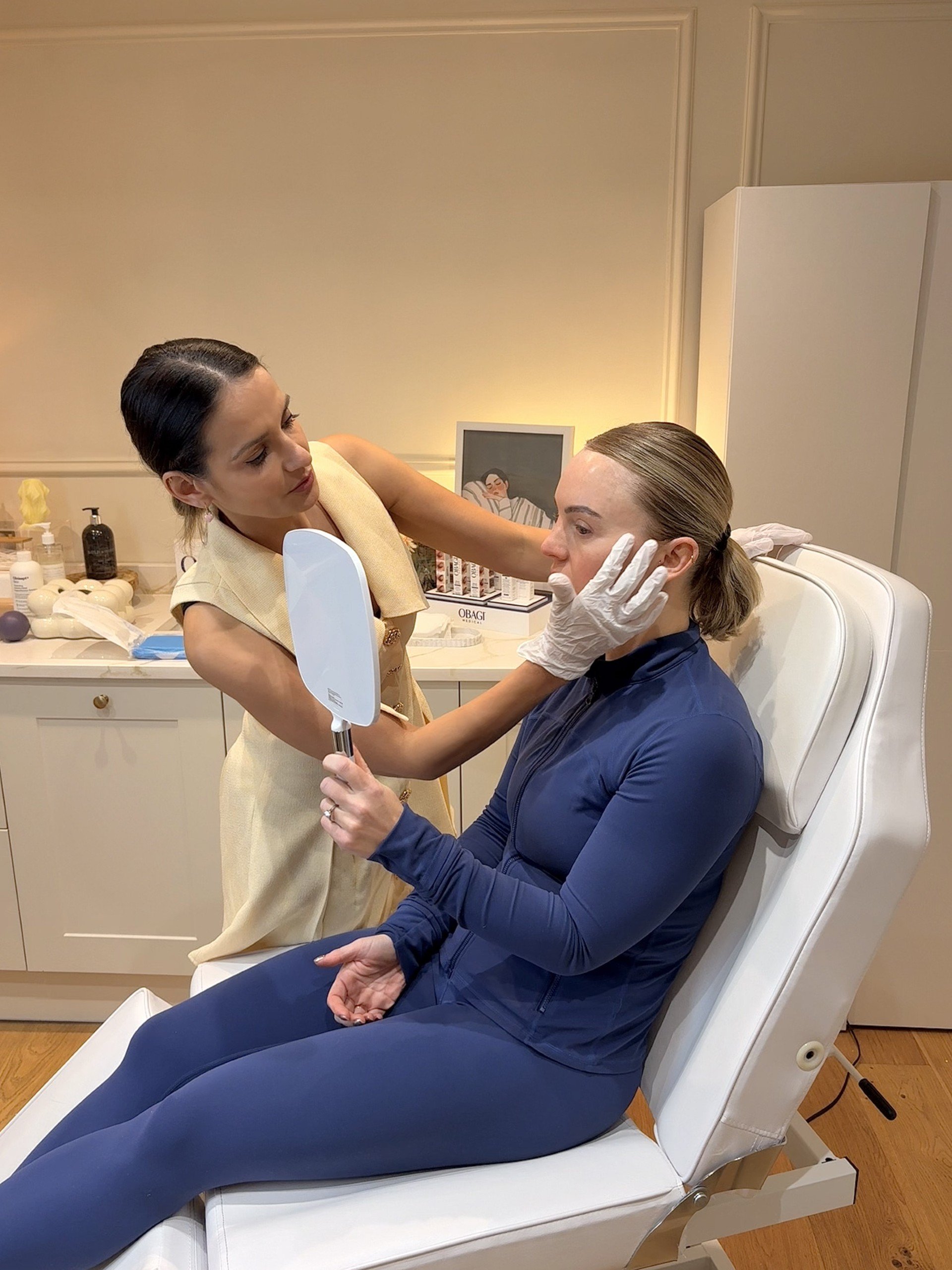
The results come in two phases. In the first week or two the uncrosslinked hyaluronic acid hydrates the skin and you may notice a brightness that then fades; that is normal and not the real result. From around six weeks the collagen response begins, and it continues to build for about three months after your last session. The improvement is gradual enough that nobody will ask what you have had done, which for most of my patients is the point.
What does Juvelook cost in Hale and Altrincham?
So a realistic first year is £650 to £975, and after that around £375 a year to maintain. Every session is carried out by me, as a doctor, with the dilution, depth and placement chosen for your skin rather than from a standard protocol. Prices are correct at the date above and the price list is always current.
What are the risks and side effects?
The common effects are the ones you would expect from any injection under the eye: swelling for 24 to 48 hours, which can be noticeable on the first morning, and a risk of bruising, which is higher here than anywhere else on the face because of the vessels close to the surface. A cannula reduces but does not remove that risk, and I would not book your first session in the week before an event. Redness for a day or two is common. Small, temporary bumps along the line of treatment can occur and settle within days.
The uncommon risks are specific to collagen stimulators and to this area. Nodules, small firm lumps that appear weeks later, have been reported after PDLLA under the eye, generally where the product was too concentrated or placed too superficially; the published cases responded to treatment but took time. I minimise that risk by diluting generously, placing the product in a thin even layer beneath the dermis rather than within it, limiting the volume per side, and asking you not to massage the area afterwards. As with any injectable near the eye there is a very small risk of injecting into a blood vessel, which is why I use a blunt cannula rather than a needle, inject slowly, and keep the emergency medicines to manage it in clinic. And because I am the only person who treats you, the person assessing any concern afterwards is the person who knows exactly what was placed where. You leave with my direct number.
Juvelook compared with polynucleotides, Sculptra and filler
Takeaway: Juvelook is a collagen stimulator, not a filler, and that is why I am prepared to use it under the eyes. It thickens and smooths thin, crepey, translucent skin over two to three months, softens fine lines, and is combined with cheek support when there is a true hollow. The evidence is early but consistent, with no serious adverse events in the published studies and the main caution being nodules where the product is placed too superficially or too concentrated. A course is two to three sessions six weeks apart at £325 each, with a maintenance session of about £375 roughly once a year, and every session is carried out by me.
Frequently asked questions about Juvelook
Is Juvelook a filler?
No. It contains no crosslinked gel and adds no volume. It is a collagen stimulator with a small amount of free hyaluronic acid that improves the skin itself. That is the reason it can be used in the thin skin under the eye where I would not place filler.
How is Juvelook different from Sculptra?
Both are lactic acid polymers that stimulate collagen. Sculptra uses poly L lactic acid, placed deep to rebuild volume in the cheeks and temples, and lasts around two years. Juvelook uses poly D,L lactic acid in smaller, softer particles with hyaluronic acid, placed superficially to improve skin quality, and breaks down faster. They do different jobs and are often used together.
Does Juvelook get rid of dark circles?
It helps the kind caused by thin skin showing the vessels and muscle beneath, which is the commonest kind. It does not remove brown pigment, lift a fat pad or fill a deep hollow. At consultation I work out which kind you have before suggesting anything.
How many sessions of Juvelook do I need?
Two to three, six weeks apart. Most people under 45 need two; thinner or more crepey skin usually needs three. After that, a single maintenance session roughly once a year.

When will I see results from Juvelook?
A brief brightness from the hyaluronic acid in the first week or two, which fades. The real collagen response starts at around six weeks and keeps building for about three months after your final session.
How long does Juvelook last?
The collagen you build is your own and persists after the product has broken down. In practice the improvement is maintained with one session a year. Long term data beyond a year are limited, and I will say so.
Does Juvelook hurt?
Numbing cream and local anaesthetic at the cannula entry point make it very tolerable. Most people describe pressure and a mild sting rather than pain. The product is also mixed with a little local anaesthetic.
How much swelling will I have after Juvelook under the eyes?
Expect puffiness for 24 to 48 hours, most noticeable the first morning, and possible bruising. I would not book a first session in the week before an event. Sleep propped up and avoid heat, alcohol and hard exercise for two days.
Can Juvelook cause lumps?
Small temporary bumps along the treated line can occur and settle within days. Firmer nodules weeks later have been reported after PDLLA under the eye, usually with product placed too superficially or too concentrated. Generous dilution, correct depth, limited volume and no massage afterwards are how I minimise that risk.
Can Juvelook be dissolved if I do not like it?
The hyaluronic acid component can be dissolved with hyaluronidase; the PDLLA particles cannot be dissolved but break down on their own over months. This is one reason I treat conservatively over two or three sessions rather than all at once.
Can I have Juvelook with anti wrinkle injections or cheek filler?
Yes, and I often plan them together: anti wrinkle treatment for crow's feet driven by movement, cheek support where the hollow is really a cheek problem, and Juvelook for the skin. I would normally space the sessions by two weeks.
Is Juvelook safe?
In the published studies the side effects were temporary redness, swelling and bruising, with no serious adverse events, but the studies are small and the UK experience is new. The area carries the same rare vascular risk as any injection near the eye, which is why I use a cannula, inject slowly and keep emergency medicines in clinic.
Who should not have Juvelook?
Anyone pregnant or breastfeeding, with an active skin infection, a history of keloid scarring, an uncontrolled autoimmune condition or an allergy to any of the components. If you have had tear trough filler previously, we assess what is still there before deciding anything.
Where can I have Juvelook near Altrincham?
At my clinic at 2 Crown Passages in Hale village, a few minutes from Altrincham, Bowdon, Hale Barns and Timperley, with evening appointments. Every consultation and treatment is carried out by me.
Next steps
If your under eyes look tired however much sleep you get and you have been told filler is the only option, book a consultation. I will work out exactly what is causing the shadow, tell you whether Juvelook will help, and plan it around anything you have coming up. You will see me, and only me, at every visit. The consultation fee is redeemable against treatment.
Learn more about Dr Caroline Warden Clinic
Learn more about other treatments offered
Further reading
- Why I Do Not Offer Tear Trough Filler: The Four Causes of Under Eye Shadows
- Sculptra in Hale and Altrincham: A Doctor's Guide
- Cheek Filler in Hale and Altrincham: How Many ml, What It Costs
- Why Do Some People Swell More Than Others After Aesthetic Treatments?
- How to Choose an Aesthetic Clinic Safely
- Polynucleotides at the Clinic
Dr Caroline Warden (GMC 6157708) is an NHS GP with over 19 years of clinical experience, an independent prescriber, and holds a Level 7 postgraduate diploma in cosmetic injectables. She has practised aesthetic medicine since 2017 and is the sole practitioner at Dr Caroline Warden Skin & Aesthetic Clinic, 2 Crown Passages, Hale, Cheshire, WA15 9GN, where every consultation, treatment and review is carried out by her personally. Patients travel from Hale, Altrincham, Bowdon, Hale Barns, Timperley, Sale, Wilmslow, Alderley Edge, Knutsford, Didsbury and across Cheshire. The clinic was named Best Doctor Led Aesthetic Clinic in Cheshire 2026 by GHP. Juvelook is a CE marked medical device. Anti wrinkle injections use a prescription only medicine that can only be prescribed after a face to face consultation. The clinic does not diagnose or treat medical conditions; if you have a medical concern, please see your GP. Results vary between individuals. This article is for information only and does not constitute individual medical advice.
References
- Seo SB, Park H, Jo JY, Ryu HJ. Skin rejuvenation effect of the combined PDLLA and non cross-linked hyaluronic acid: a preliminary study. J Cosmet Dermatol 2024. Read the paper
- Wan J, et al. Evaluating poly-D,L-lactic acid for lower eyelid rejuvenation: efficacy and safety. J Cosmet Dermatol 2025;24(3):e70058. Read the paper
- Lin JY, Lin CY. Nonsurgical lower eyelid rejuvenation using injectable poly-D,L-lactic acid in Asian patients. J Cosmet Dermatol 2022;21(10): pages 4328 to 4331. Read the abstract
- Lee KWA, Chan LKW, Lee AWK, Lee CH, Wong STH, Yi KH. Poly-D,L-lactic acid (PDLLA) application in dermatology: a literature review. Polymers 2024;16(18):2583. Read the full paper
- Energy-based device management of nodular reaction following poly-D,L-lactic acid injection for tear trough rejuvenation. J Cosmet Dermatol 2025. Read the abstract
- Consulting Room. Juvelook now available to order from Fillmed UK via Church Pharmacy, 2025. Read the article
