Are All Anti-Wrinkle Injections the Same? Why Units, Brands and "Which Is Best" Matter Less Than You Think
Last updated: 7 October 2026
"Which one do you use?"
It is one of the questions I am asked surprisingly often, and usually what the patient actually wants to know is: which one is best? Which works fastest, which lasts longest, is one safer, is one less likely to stop working, and if they had a brilliant result with one product before, should they always stick with it?
The answer is a little more complicated than social media makes it sound.
There are several licensed botulinum toxin type A products used for anti-wrinkle treatment in the UK. Most people know the category by a single brand name, Botox, in the way people say Hoover for a vacuum cleaner. They all work through the same fundamental mechanism, temporarily reducing the signal between a nerve and the muscle being treated. But they are not identical medicines. They are manufactured differently, formulated differently and, very importantly, their units cannot be compared with each other.
I am not going to name the products or tell you which one I prescribe, because botulinum toxin is a prescription-only medicine and the choice of product is a clinical decision made at consultation, not a menu. What I can do is explain what the differences are, what the UK data actually shows, and why the answer to "which is best" is not the one people expect.
In this article:
- Are all anti-wrinkle injections the same?
- Why you cannot compare units between products
- Which is strongest?
- Which works fastest?
- Which lasts longest?
- What actually determines how long your result lasts
- Does one spread more than another?
- What about complexing proteins and antibodies?
- Which is safest?
- Should you stick with the same product?
- Frequently asked questions
Are All Anti-Wrinkle Injections the Same?
Broadly, they work the same way. All contain botulinum neurotoxin type A. The toxin acts at the nerve ending and inhibits the release of acetylcholine, the chemical signal that tells a muscle to contract. The muscle contracts less strongly for a period of time, and as nerve communication recovers, movement returns. That is why the treatment is temporary.
Where the products differ is in formulation, manufacturing, the way potency is measured and the way their units are defined.
Why You Cannot Compare the Number of Units
Imagine one patient says, "I had 50 units," and her friend replies, "That's loads, I only had 20."
Those numbers may mean virtually nothing without knowing which medicine was used. The UK prescribing information for every licensed product makes the point in almost identical words:
Unit doses are "not interchangeable with those for other preparations of botulinum toxin."
Summary of Product Characteristics, botulinum toxin type A, electronic Medicines Compendium, 2026
So you cannot look at the number on a treatment record and conclude that somebody had more or less toxin simply because the number was larger. This is particularly important with the product whose numerical doses look much higher than the others. A patient who had "50 units" of that product has not received two or three times as much treatment as a patient who had "20 units" of another. The measuring systems are different.
This is also why, when a patient moves to me from another clinic, I never simply copy the number from their old notes. I assess the face in front of me and plan the dose for the product I am using.
Which Anti-Wrinkle Injection Is Strongest?
There isn't a scientifically useful answer of "product X is strongest", because strength depends on dose, and dose is set per product.
Comparative studies have generally found similar aesthetic efficacy between the established botulinum toxin type A preparations when they are used at appropriate doses. The UK product information for one product describes two randomised comparative studies involving over 600 patients in which it and the best-known product produced similar efficacy and safety for frown lines when used at a 1:1 dose. Even so, the regulatory guidance still says that units are product-specific and should not be considered interchangeable. So practitioners cannot swap products casually with a universal conversion chart, and patients cannot rank them by the number on the vial.
Which Works Fastest?
This is probably the second most common question, and the published product information does show some differences.
These are not three identical trials performed on the same patients under the same conditions. In real life, some patients tell me they notice their treatment beginning to work remarkably quickly. Others barely notice anything until day seven or beyond. This is why I assess the result after it has had time to develop, at a review between 14 and 28 days.
Which Lasts Longest?
This is the question everybody wants a definitive answer to, and the most accurate answer is: there isn't convincing evidence that one product will consistently last longest in every patient.
The UK clinical data gives some context. All of the licensed products describe effects lasting up to around four months for the upper face. One describes some patients still responding at five months for frown lines. Another reports a median of around four months for crow's feet, with some study endpoints extending further in a minority of patients.
That does not allow anyone to conclude that product A lasts six months, product B lasts five and product C lasts four. That would be an inappropriate comparison between different clinical trials. For the individual in front of me, there are usually much more important determinants of longevity.
What Actually Determines How Long Your Result Lasts?
The prescriber and the treatment plan matter at least as much as the name printed on the vial.
Does One Product Spread More Than Another?
You may have read this online. One product is sometimes described as having greater "spread" or "diffusion" than the others.
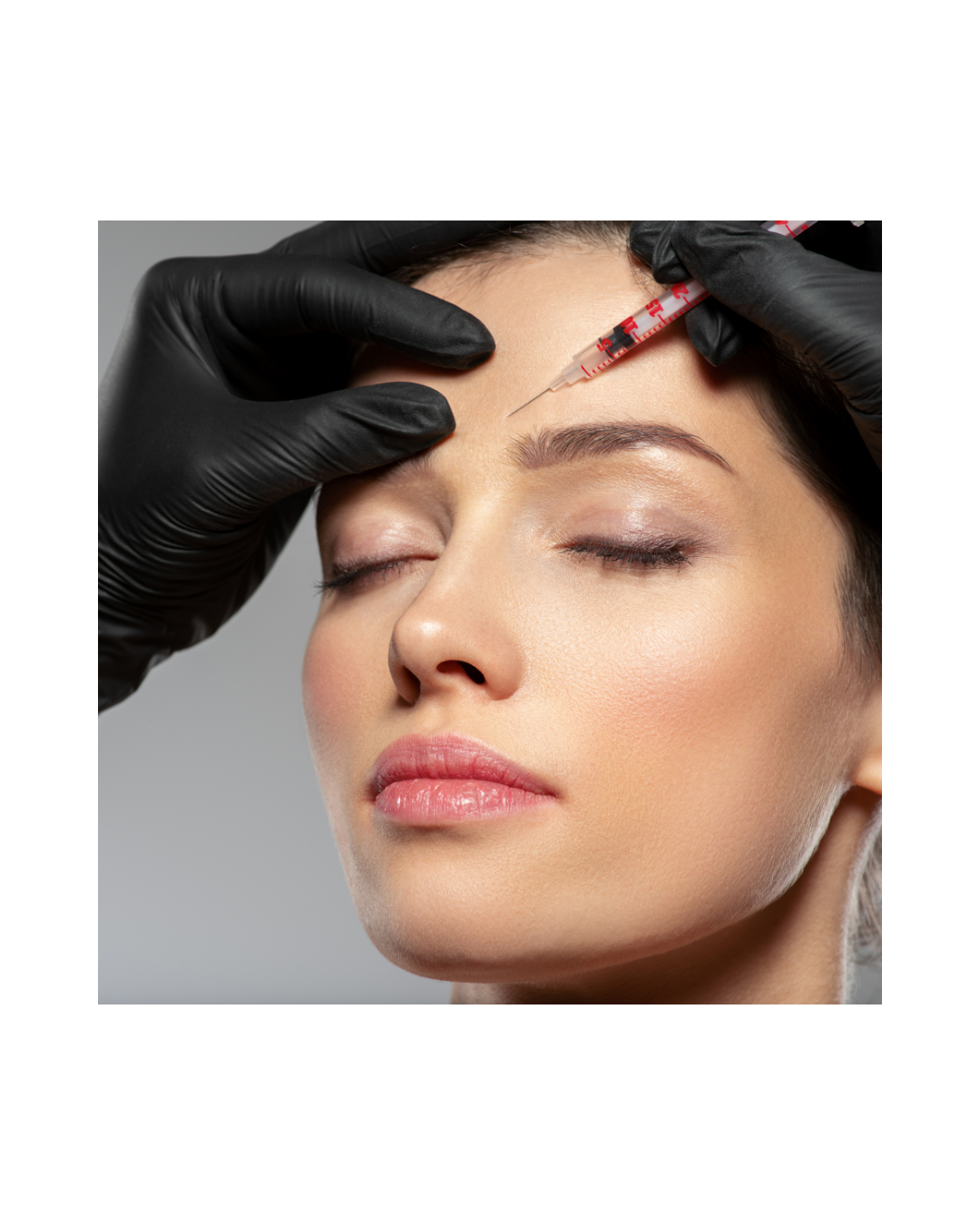
This gets oversimplified very quickly. How far a toxin's effect extends is influenced not only by the formulation but by dose, concentration, injection volume, injection technique and anatomy. So I would be cautious about any claim that "this one spreads more" or "this one stays exactly where you put it". That is far too simplistic for human facial anatomy. The skill is in selecting an appropriate product and then using it appropriately.
What About Complexing Proteins and Antibodies?
One product has a formulation difference that gets discussed a great deal. It contains the purified 150 kDa neurotoxin without the accessory complexing proteins found in the others, and its UK product information describes it as having a relatively low foreign-protein content.
That has led to interest in whether highly purified preparations might have advantages in immunogenicity, the potential for the immune system to develop antibodies against the treatment. This needs careful wording. Theoretical biological differences do not automatically translate into a meaningful clinical difference for every aesthetic patient. Systematic reviews have found that neutralising antibody formation across modern botulinum toxin type A formulations is very low in aesthetic use, and better comparative studies are still needed before anyone can claim that one toxin cannot cause resistance while another will.
So I would never tell a patient that a particular product "can't cause resistance". That would be an overstatement. What does seem to matter more, across all products, is the pattern of exposure: higher cumulative doses, frequent treatment and short intervals. That is one reason I keep a minimum of twelve weeks between treatment cycles and do not top up every time a flicker of movement returns. I have written about this separately in Why Has My Anti-Wrinkle Treatment Stopped Working?
Which Is Safest?
All of the licensed products are prescription-only medicines with established safety data when used appropriately. None is completely risk free.
Potential adverse effects across all of them include bruising, headache, temporary asymmetry and unwanted weakness of a nearby muscle, for example eyelid or eyebrow drooping, depending on the area treated. There are also important contraindications and precautions, including pregnancy, breastfeeding, certain neuromuscular conditions and some medications, which need to be considered before treatment.
This is why I think "which product is safest?" can distract from the more important question: "who is assessing and treating me?"
A vial cannot analyse your facial movement. It cannot identify an unsuitable patient. It cannot decide that you don't need treatment, and it cannot alter the injection pattern because your eyebrows, eyelids or forehead behave differently from somebody else's. That is the clinician's job.
Is One Product More Natural Looking?
No product has a setting marked "natural".
A natural-looking result comes primarily from the treatment plan. If too much muscle activity is reduced in the wrong places, a result can appear unnatural regardless of which product was used. Equally, carefully planned treatment can preserve expression with any appropriate preparation.
For me, a natural result means that somebody looks fresher and less tired or tense without everybody immediately knowing that they have had treatment. That is about anatomy, dosing and judgement, not branding. And there is no recognisable "product X face". You cannot look at a frozen forehead and blame the brand, and you cannot look at a beautifully natural one and name the product. The treatment plan is what you are seeing.
Should I Stick With the Same Product If It Works for Me?
Not necessarily, although there is also nothing wrong with doing so.
If you have had an excellent result from a particular product and plan, that is useful information, and I always want to know which product you previously had, which areas were treated, whether you liked the result, how quickly it worked, roughly how long it lasted and whether you had any unwanted effects.
What I don't do is assume that the product alone produced the result. Often the difference between an excellent treatment and a disappointing one is not the logo on the vial. It is what was done with it.
If your previous practitioner used a different product from the one I prescribe, that is absolutely fine. You do not have to stay on one product for life. But because the units are not interchangeable, I will never take the number from your old notes and duplicate it with a different medicine. Your history informs the plan; it does not replace it.

So Which Is Best?
If you were hoping I would crown a winner, I am going to disappoint you.
There is no single botulinum toxin product that is objectively best for every patient. All are established medicines with extensive clinical use. There are differences in formulation and dosing and in the clinical trial data, and individual patients sometimes feel they prefer the way one product behaves for them. But I would be very wary of absolutes: "this one always works faster", "that one always lasts longer", "this one can never cause antibodies", or "this is the strongest". Human biology isn't that tidy, and the evidence doesn't justify those claims.
The most important questions aren't "which product is best?" They are: where should we treat, how much is appropriate, how much movement should we preserve, and do you actually need treatment at all?
Frequently Asked Questions
Are all anti-wrinkle injections the same medicine?
No. They are different botulinum toxin type A medicines from different manufacturers. They work through the same basic mechanism but have different formulations and different unit systems.
Is 50 units of one product more than 20 units of another?
You cannot make that comparison. Units are preparation-specific and are not interchangeable between products. One product's numbers typically run two to three times higher than the others for a comparable effect.
Which anti-wrinkle injection works fastest?
Product information for two of the licensed products describes early improvement in frown lines at around two to three days, and for another within one week. These come from different trials, so they do not prove that one will consistently work faster in every patient.
Which anti-wrinkle injection lasts longest?
There is no good evidence that one universally lasts longer. All have clinical evidence of effects lasting around four months in the upper face, with some patients responding for longer. Dose, muscle strength, anatomy and the treatment plan influence duration far more than the product.
Does the product without complexing proteins cause fewer antibodies?
Its low foreign-protein content is scientifically interesting, but neutralising antibodies are already uncommon with aesthetic treatment and current evidence does not justify claiming that any product cannot cause resistance.
Which product looks most natural?
Natural results depend on assessment, dose and placement rather than the product itself.
Can I choose which product I have?
Botulinum toxin is a prescription-only medicine, so the product is a clinical decision made after consultation. If you have had a product before that you particularly liked, tell me; your treatment history is a useful part of the assessment, alongside your anatomy, medical history and goals.
Does one product hurt more than another?
For most patients any difference is minimal. Comfort depends on needle size, technique, the number of injection points, the area treated and individual sensitivity, rather than the product.
Why does the unit number on my old notes not match my new treatment?
Because the two clinics may have used different products with different unit systems, or planned a different dose for a different result. The number alone tells you very little.
The Bottom Line
The licensed anti-wrinkle products all contain botulinum toxin type A, but they are not identical and their units cannot be compared directly. There are differences in formulation, licensed dosing and the studies behind each one. What the evidence does not show is that one is universally the fastest, safest, strongest or longest-lasting option for everybody.
That is why I don't choose anti-wrinkle treatment from a league table. I choose it by assessing the person sitting in front of me.
Considering Anti-Wrinkle Treatment in Hale or Altrincham?
I provide doctor-led consultations and treatment for lines and wrinkles from the clinic in Hale, Cheshire, and see patients from Altrincham, Bowdon, Hale Barns, Wilmslow, Alderley Edge, Knutsford and across South Manchester. Every new patient is assessed individually, taking into account facial anatomy, muscle movement, previous treatment history and the result you would like to achieve. The aim is not to make every forehead look the same. It is a treatment plan that still looks like you.
Book a consultation for lines and wrinkles in Hale
Further reading
- Forehead lines, frown lines and crow's feet: a doctor-led guide
- Why has my anti-wrinkle treatment stopped working?
- How much do anti-wrinkle injections cost in Hale and Altrincham?
- Refreshed, not frozen: how natural anti-wrinkle results are planned
- Lines and wrinkles: treatment in Hale, Altrincham and Cheshire
- Anti-wrinkle injections at the clinic
Next steps
Learn more about Dr Caroline Warden Clinic
Learn more about other treatments offered
References
- Summary of Product Characteristics, incobotulinumtoxinA 50 units. electronic Medicines Compendium. Updated January 2026.
- Summaries of Product Characteristics for the other licensed botulinum toxin type A products used in aesthetic medicine. electronic Medicines Compendium.
- Bellows S, Jankovic J. Immunogenicity Associated with Botulinum Toxin Treatment. Toxins. 2019;11(9):491.
- Naumann M, Carruthers A, Carruthers J, et al. Meta-analysis of neutralizing antibody conversion with onabotulinumtoxinA across multiple indications. Mov Disord. 2010;25(13):2211 to 2218.
Written and medically reviewed by Dr Caroline Warden, MBChB, NHS GP with over 19 years of clinical experience, independent prescriber and Level 7 qualified aesthetic doctor (Harley Academy). GMC 6157708. Dr Caroline Warden Skin & Aesthetic Clinic, 2 Crown Passages, Hale, Altrincham, Cheshire WA15 9GN. Botulinum toxin is a prescription-only medicine and is only prescribed following a face-to-face consultation. This article is general information and not a substitute for individual assessment. Last reviewed: 7 October 2026.
