
Expert skin science insights an award-winning holistic aesthetic clinic in Altrincham. Written by Dr Caroline Warden, NHS GP, cosmetic dermatology specialist
I debated writing this blog as it’s an uncomfortable question but after hearing lots of young women coming to me with horror stories the feminist in me felt compelled to.
And to be clear from the outset:
This is not an accusation.
Nor is it a criticism of male doctors, many of whom practise with integrity, skill, and care.
But it is a question worth asking, particularly in aesthetic medicine, a field that sits at the intersection of power, beauty, ageing, gender, and approval.
Why, historically and culturally, have women been conditioned to trust male authority over their own bodies?
And could that conditioning still be influencing our choices today even in something as personal as who we allow to inject our faces?
Let’s define terms carefully
Misogyny is not just overt hatred of women.
It also includes internalised beliefs that:
male authority is more legitimate
male approval is more valuable
male expertise is more credible
women’s voices are emotional rather than rational
Internalised misogyny occurs when women unconsciously adopt these beliefs, often without realising it.
This isn’t a moral failing.
It’s a survival adaptation in patriarchal systems.
Medicine has historically been male, women adapted to survive within it
For centuries:
doctors were men
medical textbooks were written by men
“normal” bodies were male bodies
women’s pain was dismissed, minimised, or psychologised
Women learned — consciously or not — that:
“To be taken seriously, I must defer to male authority.”
That legacy doesn’t disappear just because women are now entering medicine in greater numbers.
It lingers in:
who we instinctively trust
whose confidence we interpret as competence
whose reassurance feels “safe”
whose opinion feels final
Aesthetic medicine makes this dynamic more intense, not less
Aesthetic medicine is not neutral healthcare.
It involves:
women’s faces
ageing (which women are punished for more harshly)
attractiveness (historically defined through the male gaze)
approval, visibility, desirability
So when a woman chooses who gets to:
analyse her face
tell her what’s “wrong”
recommend changes
inject her appearance
…this decision is psychologically loaded, whether we acknowledge it or not.
The uncomfortable question: are some women outsourcing authority over their appearance to men?
Again, not always.
Not universally.
Not intentionally.
But it’s worth asking:
Are some women more likely to trust male doctors because they have been conditioned to equate masculinity with authority?
Do some women feel safer being “told” what they need, rather than negotiating or co-creating a plan?
Does male confidence sometimes get mistaken for objectivity?
Does female empathy sometimes get dismissed as softness rather than clinical strength?
These are not accusations.
They are patterns worth examining.
Research gives us clues but not answers
Studies across healthcare show that female doctors, on average:
spend more time with patients
use more patient-centred language
engage more in shared decision-making
are perceived as more empathic
Meanwhile, male physicians are often perceived as:
more authoritative
more decisive
more confident
Neither is inherently better.
But ask yourself:
Which of those traits has society taught women to trust more?
Aesthetic medicine isn’t about authority, it’s about alignment
Here’s the crucial point.
Aesthetic medicine should not be hierarchical.
It should not be:
“doctor knows best”
“this is what you need”
“trust me”
It should be:
collaborative
consent-driven
psychologically safe
centred on identity, not correction
And this is where many women report a difference when treated by female doctors, not because women are superior, but because shared lived experience changes the dynamic.
What many women say (quietly)
In clinic conversations and, in private, women often say things like:
“I felt talked over.”
“I didn’t feel listened to.”
“I felt like my concerns were minimised.”
“I felt pressured to do more than I wanted.”
“I didn’t feel emotionally safe.”
Again, this does not apply to all male doctors.
But when patterns repeat, they deserve examination.
Power dynamics matter more than intent
This conversation is not about intent.
Most practitioners act in good faith.
It’s about power.
Who holds it?
Who feels able to question it?
Who feels able to say no?
If a woman feels:
intimidated
deferential
unsure she can disagree
…that is not empowerment, even if the outcome looks good.
Choosing a female doctor can be a reclaiming of authority, it’s not a rejection of men
For many women, choosing a female aesthetic doctor is not about:
distrust of men
ideology
exclusion
It’s about:
feeling understood without explanation
not having to justify emotional nuance
being believed
being allowed subtlety
being allowed restraint
It’s about relational safety.
The real question isn’t “male vs female”
The real question is:
Who holds power over women’s bodies — and how consciously are we choosing that?
If a woman chooses a male doctor because:
she feels genuinely safe
she feels heard
she feels respected
she feels autonomous
That is not misogyny.
But if she chooses male authority because:
it feels more legitimate
she doubts women’s expertise
she fears being seen as “difficult”
she feels more comfortable deferring
…then yes — that deserves reflection.
Feminism is about choice, informed, conscious choice
True empowerment isn’t about who you choose.
It’s about why.
A feminist aesthetic practice doesn’t tell women:
who to trust
who not to trust
It invites them to ask:
Do I feel safe?
Do I feel heard?
Do I feel pressure?
Do I feel agency?
Do I feel like myself?
Final thought: discomfort is often the start of autonomy
If this question makes you uncomfortable, that doesn’t mean it’s wrong.
Discomfort often signals:
unexamined conditioning
inherited narratives
power dynamics we’ve learned to accept
Aesthetic medicine has the potential to either reinforce old hierarchies, or quietly dismantle them.
The difference lies not in gender alone, but in awareness, ethics, and choice.
And asking difficult questions is part of that work.
References and Further Reading

Roter, Hall & Aoki (2002) Physician gender effects in medical communication: a meta-analytic review (JAMA)
https://pubmed.ncbi.nlm.nih.gov/12169083/
Tsugawa et al. (2017) Comparison of Hospital Mortality and Readmission Rates for Patients Treated by Male vs Female Physicians (JAMA Internal Medicine; open access)
https://pmc.ncbi.nlm.nih.gov/articles/PMC5558155/Wallis et al. (2017) Comparison of postoperative outcomes among patients treated by male and female surgeons (The BMJ)
https://www.bmj.com/content/359/bmj.j4366Elwyn et al. (2012) Shared Decision Making: A Model for Clinical Practice (open access)
https://pmc.ncbi.nlm.nih.gov/articles/PMC3445676/Joosten et al. (2008) Systematic review of the effects of shared decision-making on patient satisfaction, treatment adherence and health status
https://pubmed.ncbi.nlm.nih.gov/18418028/Merone et al. (2022) Sex Inequalities in Medical Research: A Systematic Scoping Review (open access)
https://pmc.ncbi.nlm.nih.gov/articles/PMC8812498/Chen et al. (2021) Gender Differences in Patient Perceptions of Physicians’ Communal Traits (patient perceptions of female vs male physicians)
https://pubmed.ncbi.nlm.nih.gov/32857642/
Book in for a Consultation at your local, doctor-led, sister-run skin & aesthetics sanctuary for natural, bespoke results
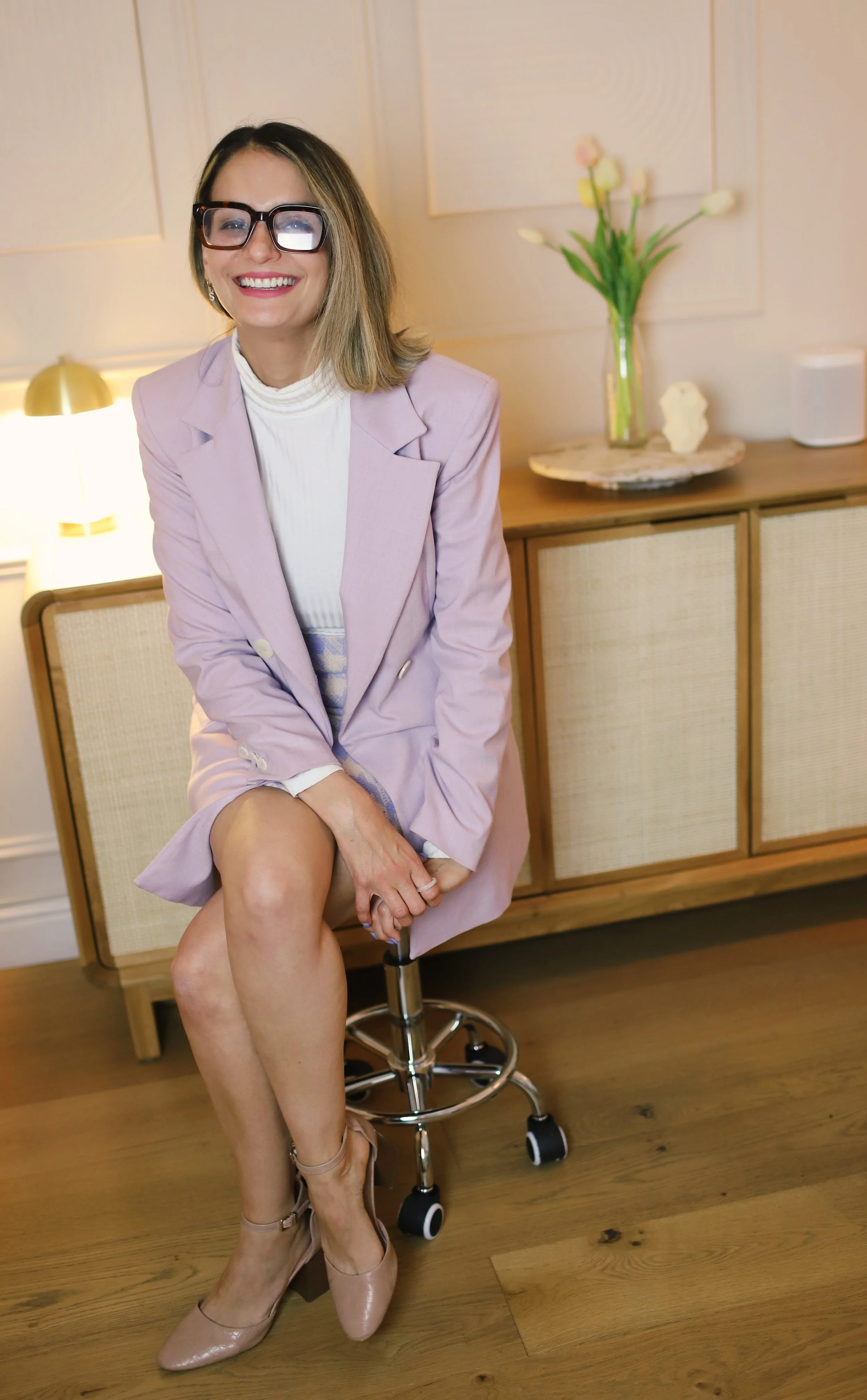
Dr Caroline Warden is an experienced NHS GP and aesthetic doctor. She has been a medical doctor for over 18 years. She runs the female-led family business with her sister Louise Devereux (creative director & patient co-ordinator)
Their main Skin and Aesthetic Clinic is located in Hale, Cheshire but they also run a pop-up clinic in Disley, Stockport one evening a week.
You will only ever see and have treatments with Dr Caroline Warden.
Whether you're new to aesthetic treatments or ready to refine your routine, her bespoke skin assessments are the best place to start. Dr Caroline Warden will design a tailored plan based on your skin goals, lifestyle, and timeline.
Book your consultation at the clinic in Hale, Cheshire and experience aesthetic medicine.
You’ll be guided through your medical history, goals, and expectations so you can make an informed choice.
Where our clinics are local to:
Our flagship main Hale clinic is conveniently located for patients travelling from:
Alderley Edge, Altrincham, Bowdon, Bramhall, Hale Barns, Knutsford, Manchester, Mobberley, Sale, Timperley, Urmston, Wilmslow, Handforth, Poynton, Cheadle, Didsbury and Warrington.
Our satellite Disley clinic (Thursday evenings at Scott, Skin & Co) is ideal if you’re based in:
New Mills, High Lane, Marple, Mellor, Whaley Bridge, Strines, Chapel, Hayfield or Stockport.
