Why Your Face Changes in Your 40s (And What Actually Helps)

Many patients start thinking about aesthetic treatments for the first time in their forties.
They often say something similar:
“I still feel like myself, but my face just looks more tired than it used to.”
This is a very common experience. For many women, the forties are the decade when subtle but noticeable changes begin to appear in the face. These changes are not simply about wrinkles. They reflect deeper shifts in skin biology, facial structure, and hormones.
At our female doctor led aesthetic clinic in Hale, near Altrincham and across Cheshire, many consultations involve talking through these changes and choosing treatments that are subtle, natural, and effective.
Why your face can look more tired in your forties
In your forties, it is common to notice a change in how light sits on the face. The skin can look a little less bright, features can look slightly less lifted, and lines may appear more quickly after expression.
This is usually due to a combination of collagen decline, structural change, and changes in skin quality. Understanding which of these is affecting you most is the key to choosing the right treatment plan.
The three main ways the face ages
Most people assume facial ageing is mainly caused by wrinkles.
In reality, ageing usually occurs through three main processes.
• collagen loss
• structural changes in the face
• changes in skin quality
Each plays a role in how the face evolves over time.
Collagen decline in your forties
Collagen is the protein that gives skin its strength, elasticity, and support.
From our mid twenties onward, collagen production gradually declines. By the time we reach our forties, many people have lost a significant proportion of the collagen that once supported their skin.
This can lead to:
• skin becoming thinner
• fine lines appearing more easily
• reduced firmness
• slower skin repair and recovery
This is one reason why collagen supporting treatments, such as microneedling, collagen stimulating injectables, and medical grade skin programmes, can be helpful during this stage of life.
Changes in facial structure
Another important, often overlooked factor is structural change.
As we age, subtle changes occur in the underlying facial skeleton and fat compartments. The face is not static. Bone slowly remodels over time, and fat pads can shift slightly downward due to gravity and ligament laxity.
These changes can contribute to:
• deeper nasolabial folds
• mild jowling
• hollowing under the eyes
• flattening of the cheeks
Importantly, these shifts are usually gradual. Small, carefully placed treatments can sometimes restore balance without looking obvious.

Skin quality changes in your forties
Skin quality often changes during the forties.
Many patients notice:
• dullness
• uneven pigmentation
• dryness
• increased sensitivity
Hormonal change, particularly during perimenopause, can contribute. Oestrogen plays a role in maintaining hydration, collagen production, and elasticity. As levels fluctuate, skin can sometimes feel thinner, drier, and less resilient.
This is where a medical grade skincare plan and barrier first approach can be just as important as injectables.
Dynamic lines and expression lines
Lines caused by repeated facial expressions often become more visible in the forties.
Common areas include:
• frown lines between the brows
• horizontal forehead lines
• crow’s feet around the eyes
These are dynamic lines, meaning they form through muscle movement.
Botox, also called anti wrinkle injections, can soften these lines by temporarily reducing the strength of specific muscles. When performed carefully, the goal is not to remove all movement, it is to reduce excessive tension while keeping expression natural.

A balanced approach usually works best
Because facial ageing happens through several different processes, the most effective plans are usually balanced.
For many patients, this might involve a combination of:
• subtle Botox to soften dynamic lines
• skin treatments to support collagen and texture
• skincare to improve hydration, pigment, and resilience
Occasionally, small amounts of dermal filler may be used to restore structural support in specific areas. However, restraint is essential. The aim is always to maintain natural proportions, softness, and expression.

Preventative aesthetics in your forties
Preventative treatment does not mean chasing perfection. It means reducing the drivers of deeper change.
For example:
• gentle Botox can reduce repetitive muscle movement that contributes to deeper expression lines
• collagen supporting treatments can help maintain skin thickness and bounce
• skincare and SPF protect results and support long term skin health
This approach often suits patients who want subtle results and want to age well, rather than look dramatically different.
The goal is to look like yourself, just less tired
Perhaps the most important aim of aesthetic medicine is preserving natural identity.
Most patients are not seeking dramatic change. They simply want their face to reflect how they feel.
When treatments are planned well, friends may comment that you look well or refreshed, but they should not immediately notice that you have had anything done.
This philosophy of subtle, natural results underpins everything we do at our aesthetic clinic in Hale, Cheshire.
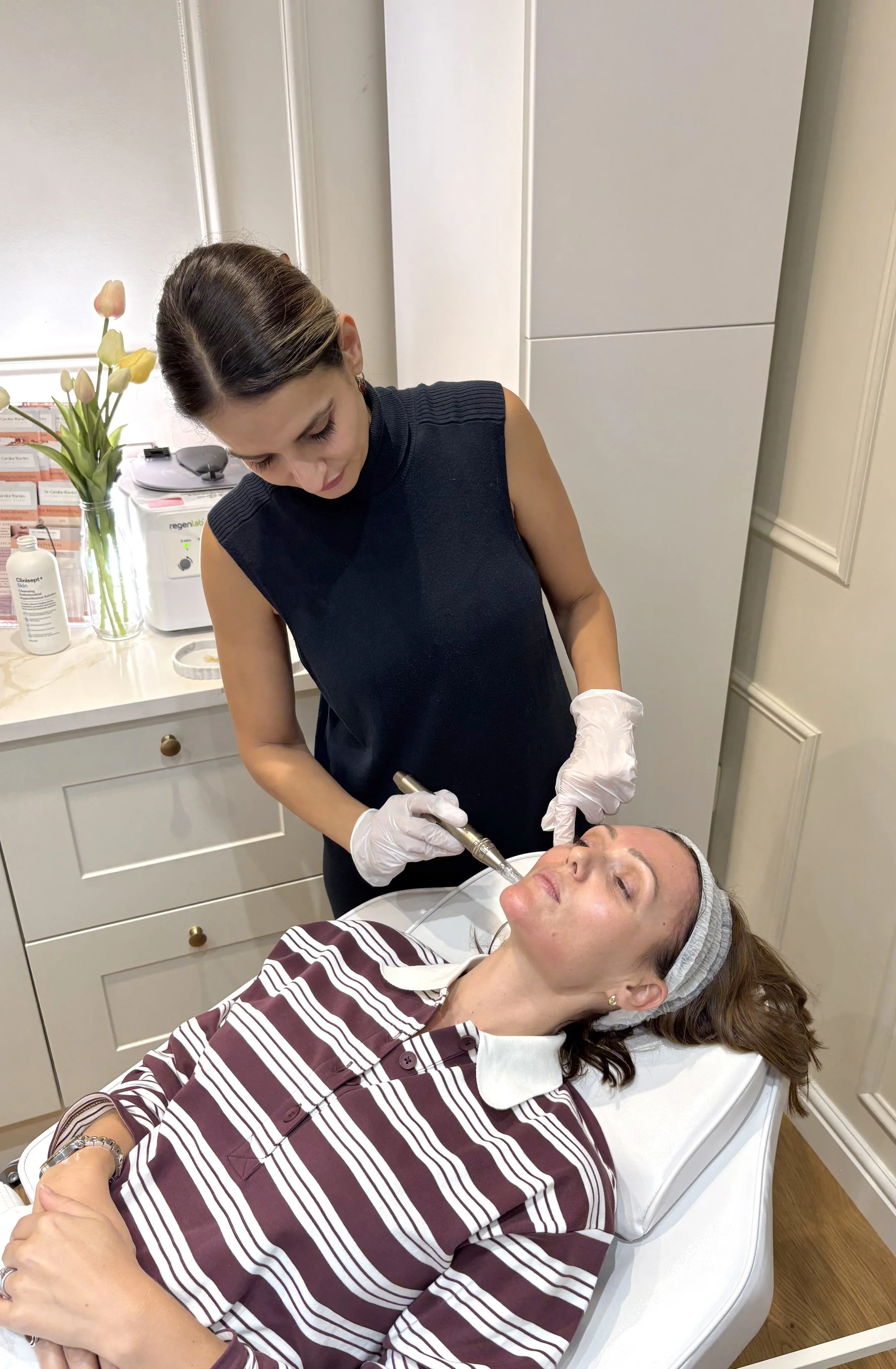
Case study, a typical first time aesthetics consultation in your forties
This is a composite example based on common consultations, details are anonymised.
A 44 year old woman booked a consultation because she felt her face looked tired, especially on video calls and in photos. Her main concerns were a heavy looking frown, early forehead lines, and a general loss of freshness around the eyes. She was worried about looking frozen.
Assessment findings included strong frown muscle activity, mild forehead compensation, and early crow’s feet. Skin quality showed mild dehydration and dullness, with early pigment changes. Structurally, there was the beginning of cheek flattening, but no significant volume loss requiring filler.
Treatment plan agreed:
• subtle anti wrinkle injections focused on the frown, with conservative dosing to keep expression natural
• a skin programme aimed at hydration, barrier support, and pigment control
• a collagen supporting treatment course, such as microneedling, to improve texture and glow over time
• a two week review plan, with tweaks only if needed
Outcome:
At review she still had natural movement, but less frowning tension. The forehead looked softer because she was not overusing it to compensate. Friends commented she looked rested. Skin looked brighter over the following weeks as hydration improved and her treatment course began.
Key takeaway:
For many patients in their forties, the best results come from a mix of subtle muscle relaxation and skin quality work, rather than trying to fix everything with one treatment.

Frequently asked questions
What are the best aesthetic treatments to start in your forties
For many patients, a good starting point is a consultation, then a plan that may include subtle anti wrinkle injections for expression lines, collagen supporting treatments like microneedling, and medical grade skincare to improve hydration, brightness, and resilience.
Why do I suddenly look more tired in my forties
It is usually a combination of collagen decline, early structural changes, and skin quality changes, including dehydration and pigment. Hormonal fluctuation in perimenopause can contribute to dryness, sensitivity, and loss of bounce.
Is Botox a good option in your forties
Botox can be an excellent option for dynamic lines such as frown lines, forehead lines, and crow’s feet. When done well, it should look natural and refreshed, not frozen.
What is Baby Botox and is it better for first timers
Baby Botox usually refers to a lighter dosing approach designed for subtle softening. It can be ideal for first time patients who want movement preserved and prefer a gradual approach.
How long does Botox last in your forties
Most people find results last around 3 to 4 months, but this varies depending on dose, muscle strength, and metabolism. A review is usually advised around two weeks after treatment.
Do I need filler in my forties
Not always. Many patients in their early to mid forties benefit more from skin quality work and subtle Botox first. If there is true structural volume loss, small amounts of filler may be considered, but only when appropriate and always with restraint.
What helps collagen loss in your forties
Collagen supporting options include microneedling, certain injectable treatments that focus on skin quality, consistent SPF use, and a medical grade skincare plan. Results are gradual and build over time.
How do I avoid looking overdone
Choose a clinician who prioritises conservative dosing, facial balance, and long term planning. The aim should be to look like you, just fresher and less tired.
Is it safe to start aesthetic treatments in your forties
For most healthy patients, treatments are safe when performed by an appropriately trained medical professional following a proper consultation, with regulated products and clear aftercare and review.
What should happen in a proper aesthetic consultation
A consultation should cover your goals, medical history, medications, facial assessment, risks, expected outcomes, and aftercare. You should never feel rushed, pressured, or sold to.
Book a consultation

Dr Caroline Warden is an experienced NHS GP and aesthetic doctor. She has been a medical doctor for over 18 years. She runs the female led family business with her sister, Louise Devereux, creative director and patient co ordinator.
You will only ever see, and have treatments with, Dr Caroline Warden.
Whether you are new to aesthetic treatments or ready to refine your routine, her bespoke skin assessments are the best place to start. Dr Caroline Warden will design a tailored plan based on your skin goals, lifestyle, and timeline.
Book your consultation at the clinic in Hale, Cheshire and experience aesthetic medicine.
You will be guided through your medical history, goals, and expectations, so you can make an informed choice.