Why Is My Face Suddenly Dry at 45? What Actually Changed in Your Skin Barrier
One of the most common things women in their forties say to me is this:
"My skin has never been dry before. Why has it suddenly changed?"
Nothing else has changed. Same cleanser. Same moisturiser. Same amount of water, same sleep, same everything.
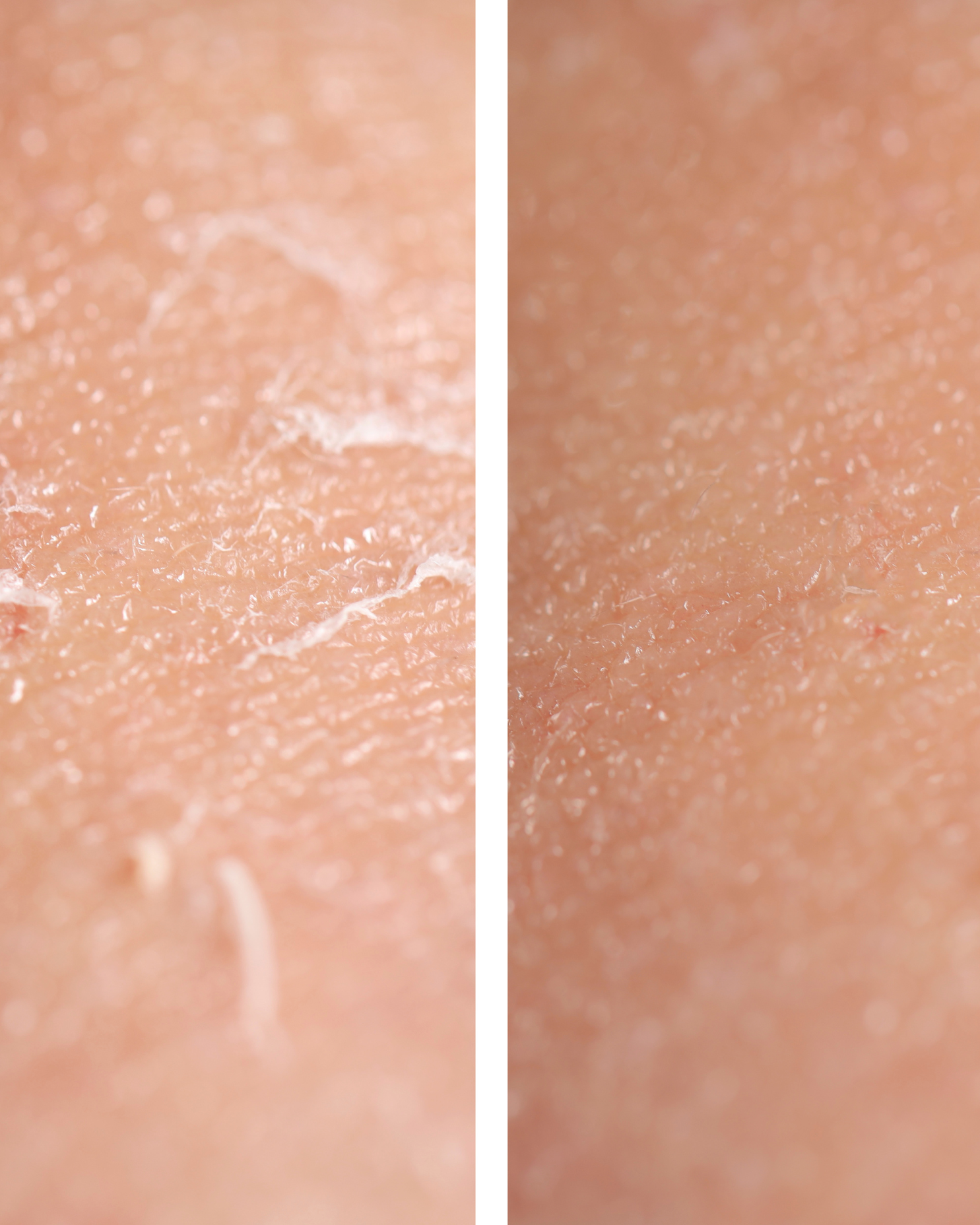
And yet the face feels tight within minutes of washing. Moisturiser vanishes almost immediately. Foundation catches on dry patches around the nose and mouth. Products that were perfectly comfortable for a decade have started to sting. The skin has lost the soft, forgiving quality it used to have.
Most women arrive having tried to solve this by buying things. A richer cream, a hydrating serum, an exfoliating toner to get rid of the flakiness, a facial oil, an overnight mask. When it does not work, the assumption is that they have not yet found the right product.
In my experience the answer is almost always the opposite one. Not more products. Fewer, and a proper understanding of what has actually changed.
Because something specific has changed, and it is more interesting than "you are getting older".
In this article
- What actually changed: your ceramides
- Why your moisturiser stopped working
- Dry skin or dehydrated skin, and why it matters
- Is your skincare causing it?
- Dryness and spots at the same time
- Is it rosacea rather than dryness?
- When dry skin is a medical matter
- The repair sequence, in order
- Tretinoin is not a test of endurance
- A patient story
- Frequently asked questions
- References
What Actually Changed: Your Ceramides
The outer layer of your skin, the stratum corneum, is often described as a brick wall. The skin cells are the bricks. The mortar between them is a mixture of lipids, and the most important of those are ceramides.
That mortar does two jobs. It keeps water in, and it keeps irritants out. When it is intact, skin feels comfortable and tolerates things. When it is not, water escapes, irritants get in, and skin feels tight, itchy and reactive.
Oestrogen supports ceramide production. So the interesting question is what actually happens to that mortar at menopause, and there is a study that looked directly.
Researchers compared the stratum corneum lipids of pre-menopausal women, post-menopausal women, and post-menopausal women taking HRT. Two things had changed after menopause:
It is a small study, with fewer than thirty women across the three groups, so I would not build a religion on it. But it is a rare thing in this field: a direct, measurable, molecular answer to a question women ask constantly.
Your skin has not become lazy or ungrateful. The mortar holding it together has changed composition, and it is no longer doing the job it did at thirty-five.
This also explains something that otherwise makes no sense. Dryness at forty-five is not just a matter of degree. It genuinely behaves differently, because the barrier is not simply depleted, it is built slightly differently. Which is why the product that worked for a decade can stop working rather abruptly.
Dry, itchy skin is also far more common in these years than most women realise. In a 2025 survey of fifty women attending a menopause clinic, 76% reported dry skin and 78% reported itch. Not lines. Not wrinkles. Dryness and itching were the two most common complaints of all.
Why Your Moisturiser Stopped Working
Three reasons, usually in combination.
It was never designed for this barrier. A light lotion that suited comfortable thirty-five-year-old skin is not going to hold water in a barrier that has fewer and shorter ceramides. This is the one situation where the ingredient list genuinely matters: ceramides, glycerin, squalane and appropriate emollients are doing specific work here, not marketing work.
Something else is undoing it. If your cleanser leaves your face squeaky, if your showers are very hot, or if your routine contains acids and a retinoid several nights a week, you are removing barrier faster than the moisturiser can support it. No cream wins that fight.
You are treating the symptom at the wrong depth. Moisturiser sits on the surface and reduces water loss, which is genuinely useful. It does not rebuild what is missing. That takes time, consistency and, crucially, removing whatever is causing the damage.
Dry Skin or Dehydrated Skin?
These get used interchangeably and they are not the same thing. The distinction matters because the fix is different.
The reason this matters at forty-five is that a great many women are dehydrated rather than dry, and are being sold heavy oils for a problem that is actually barrier damage. The face still gets shiny in the T-zone by the afternoon, which makes them doubt the diagnosis, and so the confusion continues.
You can absolutely have a face that feels tight and papery around the cheeks and still breaks out along the jawline. That is not contradictory and it is not your imagination.
Is Your Skincare Causing It?
Very often, yes, and this is the least welcome thing I say in a consultation.
Women arrive with routines that would challenge resilient twenty-five-year-old skin. An exfoliating cleanser. Vitamin C in the morning. Glycolic acid two nights a week. Salicylic acid for the jawline breakouts. Prescription tretinoin on the other nights. A home peel at the weekend.
Every single one of those is a reasonable product. Each was probably recommended by someone knowledgeable, for a real reason. The problem is the sum, not the parts.
Your skin does not know that each product was expensive and well reviewed. It only knows it is being disrupted six days a week.
Here is how to tell whether your routine has become part of the problem.
Healthy skin should not feel as though it is constantly being polished. If your face is uncomfortable, adding strength is almost never the answer.
Dryness and Spots at the Same Time
This combination is common in perimenopause and it feels particularly unfair.
As oestrogen falls, testosterone declines much more gradually, so the ratio between them shifts. That relative androgen effect can drive breakouts, typically along the jawline and chin. Meanwhile the barrier is becoming drier and more reactive for the reasons above.
So you get spots and dryness together, and the instinct is to treat the spots with the products you used at nineteen. Foaming cleansers, benzoyl peroxide, salicylic acid, alcohol-based toners. In barrier-compromised skin, these make both problems worse. The dryness deepens, and inflamed dry skin is not less spotty, it is more.
The answer is not to ignore the acne. It is to treat it in a way that accounts for the barrier, which usually means gentler cleansing, targeted rather than blanket application, and sometimes prescription treatment that does the job without stripping the whole face.
Is It Rosacea Rather Than Dryness?
This is the misdiagnosis I see most often, and it matters because the standard response to dryness makes rosacea considerably worse.
Rosacea causes burning, stinging, tightness and sensitivity. It can feel exactly like dryness even when there is very little visible flaking. And perimenopause is a common time for it to appear for the first time or to become noticeably harder to manage.
Plenty of women have both at once, which is exactly how the cycle starts: rosacea causes discomfort that reads as dryness, the response is more exfoliation, and the rosacea worsens.
At the clinic in Hale I regularly see women who have spent months and a great deal of money treating "dry skin" that was actually rosacea plus a damaged barrier. Neither of those is fixed by a richer cream.
When Dry Skin Is a Medical Matter
Hormones are the most likely explanation at this age, but they are not the only one, and I would rather stay curious than attribute every new symptom to perimenopause.
Worth thinking about the ordinary explanations first: cold weather, central heating, low humidity, hot showers, over-washing, and simply the wrong products.
Eczema and contact dermatitis both cause dryness, redness and itching, and both are easily mistaken for hormonal dryness. Eyelids and the area around the mouth are the classic sites.
Some medicines cause dryness as a side effect, including retinoids taken by mouth, diuretics and statins.
And there are medical causes that need excluding when the picture is bigger than the face. An underactive thyroid, diabetes, iron deficiency, and liver or kidney disease can all cause dry, itchy skin. As a GP I would want to know about the following before assuming hormones:
That last one is not about dryness at all, and it is the reason I include it. A persistent non-healing area is worth having looked at rather than moisturised.
The Repair Sequence, In Order
This is what I actually do, and the order is the whole point. Most women attempt steps three and four while step one is still broken.
Stage one is the one people resist, because it feels like going backwards and because expensive products are sitting in the bathroom cabinet. It is also the stage that fixes most of the discomfort, usually within a fortnight.
The moisturiser question
The aim is not the thickest product you can find. A very rich, heavily fragranced cream can irritate reactive or rosacea-prone skin badly.
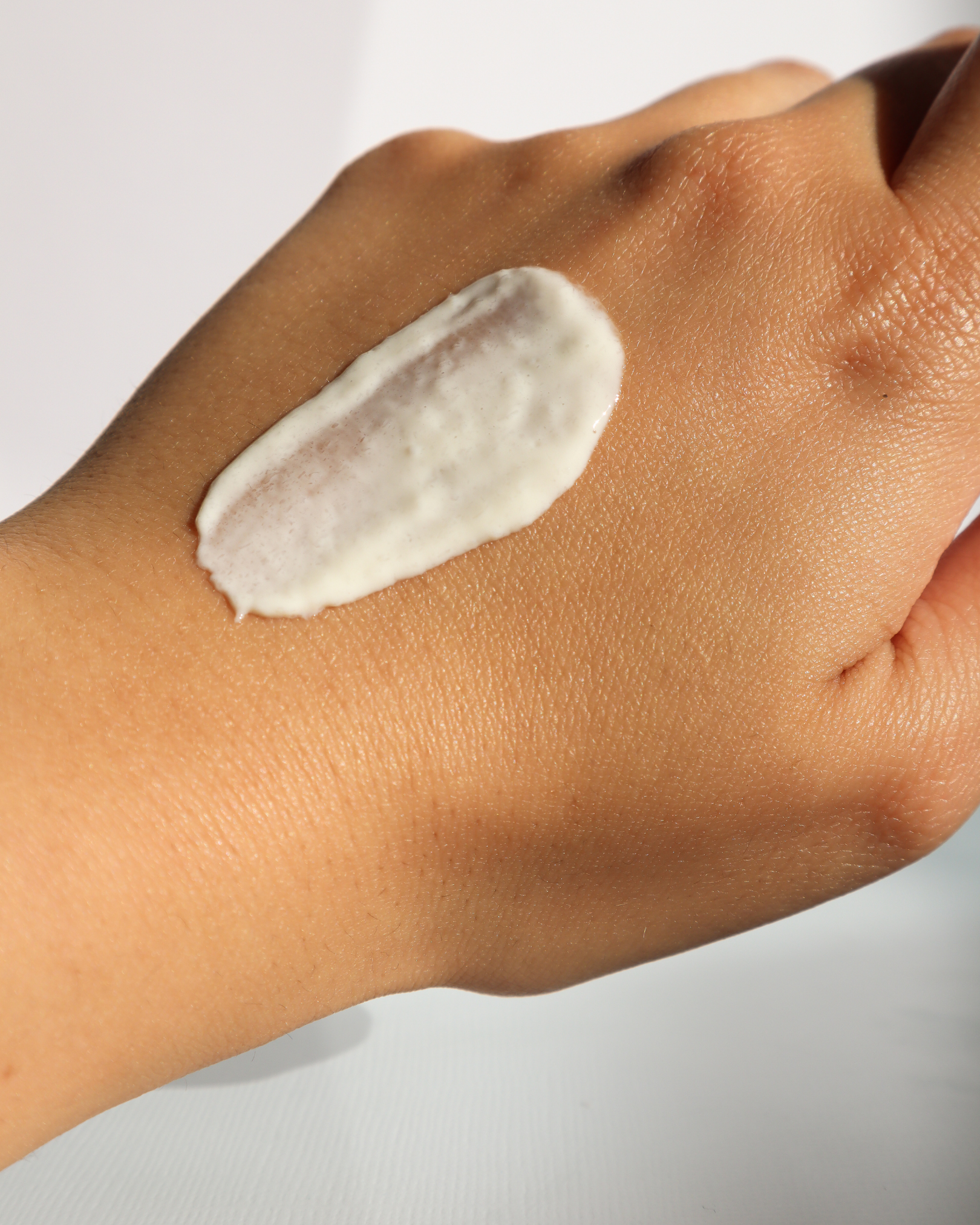
What you want is something that reduces water loss and restores comfort without causing congestion. Ceramides, glycerin, hyaluronic acid, squalane and appropriate emollients all earn their place. Given what happens to ceramides in these years, choosing a moisturiser that contains them is one of the few times the ingredient list is genuinely doing work rather than marketing.
Apply it while your skin is still slightly damp. It makes a surprising difference.
Tretinoin Is Not a Test of Endurance
I am a strong advocate for prescription tretinoin. It remains one of the best evidenced topical treatments we have for collagen, texture, pigmentation and long-term skin health, and I prescribe it often.
But I see a great many women who are enduring it rather than benefiting from it.
If your skin is burning, visibly inflamed or peeling continuously, pushing through is not a strategy. You are not building tolerance, you are sustaining damage, and you will almost certainly stop within a few months and conclude that it did not suit you.
The right move is usually to pause, repair the barrier properly, and reintroduce more gradually. A smaller amount. Twice a week rather than nightly. Moisturiser before it as well as after. A lower strength than your ego would like.
A woman who comfortably uses tretinoin three nights a week for five years will get far more from it than one who forces it nightly, becomes miserable, and abandons it in March. Consistency over years is what produces the result, not intensity over weeks.
A Patient Story
Helen, 46, Wilmslow. Shared with permission, with details changed.
Helen came to the clinic because her face had been dry and uncomfortable for the best part of a year. She had always thought of her skin as normal and had used the same well-known brand for years without a thought.
At forty-five it changed. Tightness within minutes of cleansing. Foundation clinging around her mouth and cheeks. Intermittent redness. And eventually, her moisturiser had started to sting.
She did what most people do. She assumed she needed stronger anti-ageing skincare, added a glycolic toner, increased her retinol and started an exfoliating mask twice a week.
By the time I saw her she owned a great many expensive products and was frightened to put any of them on her face.
We talked about the rest of it, not just her skin. Her periods had become unpredictable. Her sleep was disturbed. She had begun having occasional hot flushes. On examination, this looked like perimenopausal dryness, a significantly damaged barrier, and early rosacea, all at once.
We did not start with a treatment. We stopped the exfoliation entirely, simplified to gentle cleansing, barrier support and daily SPF, and waited.
Once the burning and redness had settled, we reintroduced evidence-based skincare slowly, at a frequency her skin could actually tolerate. Months later she completed a course of microneedling with exosomes for texture and collagen, but only once the skin was calm enough to justify it.
Her face became comfortable again. Makeup sat properly. She stopped reapplying moisturiser throughout the day.
The change that mattered most was not on her face. It was that she stopped believing her skin had become impossible, and understood that it had simply changed and needed a different approach. She had not failed at skincare. Her old routine had stopped being appropriate, and nobody had told her why.
What About Treatments, and HRT?
Two questions I am always asked, and both have short answers here because both deserve more space than this article can give them.
In-clinic treatments do not fix a damaged barrier. Polynucleotides, microneedling, Sculptra and hyperdilute Radiesse all work at deeper levels on collagen, structure and skin quality. They are genuinely useful, and they are the wrong answer for a face that stings when water touches it. Barrier first. Always.
HRT is a decision for your own GP. The evidence that oestrogen supports skin hydration, thickness and collagen is reasonably good, and the ceramide study above found that women taking HRT had lipid profiles close to pre-menopausal levels. But HRT is not prescribed as a skincare treatment. It is a decision about your overall health and symptoms, and better skin may be a welcome side effect rather than the reason to take it.
I have written separately and at more length about what perimenopause does to your skin more broadly, including collagen loss, pigmentation and the wider evidence on HRT.
Frequently Asked Questions
Why has my face suddenly become dry at 45?
Most commonly because falling oestrogen has changed your skin barrier. Research has found that after menopause the ceramides in the outer skin layer are both fewer and shorter, and shorter ceramides correlate with greater water loss through the skin. Skincare, rosacea, eczema, weather and medical conditions can all contribute as well.
Is dry skin a symptom of perimenopause?
Yes, and a very common one. In a 2025 survey of women attending a menopause clinic, 76% reported dry skin and 78% reported itch, making these the two most commonly reported skin symptoms of all.
Why does my skin feel tight after washing?
Usually the cleanser, the water temperature, or a compromised barrier. Skin should feel comfortable after cleansing, not squeaky. If it feels tight for more than a minute or two before you moisturise, change the cleanser first.
Why does my moisturiser sting?
Because it is reaching places it should not. That means barrier disruption, or rosacea, or sensitivity to a specific ingredient. Trying a different cream is the common response and rarely the right one. Simplify the whole routine instead.
Should I stop exfoliating if my face is dry?
Yes, at least for a few weeks. Acids, scrubs and peels all remove barrier, and a barrier that is already struggling cannot afford it. You can reintroduce exfoliation later, less often, once the skin is comfortable.
Why is my skin dry but I am still getting spots?
Because they have different causes. Falling oestrogen relative to testosterone can drive jawline breakouts at the same time as the barrier is becoming drier. Treating the spots with products designed for teenage skin usually worsens both problems.
Can I still use tretinoin if my skin has become dry?
Usually yes, but perhaps not this week. If the skin is inflamed or peeling continuously, pause, repair the barrier, then reintroduce at a lower strength and frequency. Long-term consistency produces results. Endurance does not.
Does drinking more water help dry menopausal skin?
Not really, and women are too often made to feel this is their fault. If you are genuinely dehydrated then fluids matter, but drinking extra water does not rebuild a barrier or replace missing ceramides. It is one of the least useful pieces of advice in this area.
Does HRT help dry skin?
Some women notice their skin becomes more comfortable, and the ceramide research supports a plausible mechanism. It is still a decision about your overall health made with your own GP, not a treatment for facial dryness.
Why is the skin around my mouth or on my eyelids suddenly dry?
These are the thinnest and most easily irritated areas, and they are usually the first to complain. Common causes include eczema, contact allergy, active ingredients migrating from elsewhere on the face, and lip licking. Persistent redness or small bumps around the mouth should be assessed rather than treated with more product.
When should I see a doctor about dry skin?
If it affects your whole body, if the itch is severe or occurs without a rash, if the skin is cracking or looks infected, or if there is unexplained fatigue, weight change or hair loss alongside it. Also if there is any patch or sore that has not healed within a few weeks.
How long does it take to repair a damaged skin barrier?
Most of the discomfort settles within two to four weeks of stopping whatever is causing it. Building back to a full routine safely takes another six to twelve weeks. It is slower than people want and faster than they fear.
Dry and Sensitive Skin Consultations in Hale, Altrincham and Cheshire
If your face has become dry, tight or unpredictable in your forties, you do not have to work it out by trial and error in Boots.
Every consultation is carried out personally by me, Dr Caroline Warden, NHS GP and aesthetic doctor. We will go through your skin, your current routine, your general health and your wider symptoms, and work out what is actually driving it. Frequently the plan involves removing products rather than adding them, which is not what most clinics will tell you.
Sometimes it is prescription skincare. Sometimes it is treating rosacea. Sometimes it is a conversation you need to have with your own GP instead. Regenerative treatments come later, and only when they will genuinely add something.
The clinic is in Hale Village, minutes from Altrincham, and we see patients from Bowdon, Hale Barns, Wilmslow, Knutsford, Sale, Timperley, Stockport, Didsbury, Manchester and across Cheshire.
You are welcome to book a consultation, or to read more about medical grade skincare first.
References
- Kendall AC, Pilkington SM, Wray JR, et al. Menopause induces changes to the stratum corneum ceramide profile, which are prevented by hormone replacement therapy. Scientific Reports. 2022;12:21715.
- Salih H, Schaedel Z, Hum O, DeGiovanni C. Results of a patient survey exploring skin symptoms in a menopause clinic. Post Reproductive Health. 2025;31(3):159 to 161.
- DeGiovanni C. Managing Menopausal Skin: A Clinician's Review. EMJ Dermatology. 2025;13(1):90 to 94.
- Nikoletić K, et al. Menopause, Menstrual Cycle, and Skin Barrier Function. Skin Research and Technology. 2025.
- NHS. Menopause and perimenopause.
- NHS. Itchy skin.
Next steps
Learn more about Dr Caroline Warden Clinic
Learn more about other treatments offered
Written and medically reviewed by Dr Caroline Warden, MBChB, NHS GP and aesthetic doctor at Dr Caroline Warden Skin & Aesthetic Clinic, Hale, Altrincham. GMC number 6157708. Last reviewed: September 2026.
This article is general information and is not a substitute for individual assessment. Decisions about HRT should be made with your own GP.