Why Is My Face Always Red?
Written by Dr Caroline Warden, NHS GP and Level 7 trained Aesthetic Doctor, Dr Caroline Warden Skin & Aesthetic Clinic, Hale, Cheshire. Last reviewed: September 2026.
One of the most common questions I am asked is exactly this one.
Why is my face always red?
For some people it arrives after a glass of wine, a hot coffee or a brisk walk. For others it never really leaves.
Most people have already spent months, sometimes years, trying to work it out. Some assume they have sensitive skin. Some blame stress, hormones or ageing. A few have been told it is just one of those things.
In my experience the frustrating part is rarely the redness itself. It is the uncertainty. Not knowing whether you are dealing with rosacea, menopause, a damaged barrier, or the skincare you bought to fix it.
In this article:
- Why redness is a symptom rather than a diagnosis
- The five most common causes, side by side
- Rosacea, the most common of them
- Whether your skin barrier is the real problem
- Why modern skincare culture is making this worse
- The menopause connection
- Thread veins, and what actually removes them
- Tretinoin, and why timing matters
- What I can and cannot help with
- What to take to your GP
- Frequently asked questions
Redness Is a Symptom, Not a Diagnosis
This is the single most useful thing to understand, and it explains why nothing you have tried has worked reliably.
Facial redness is not a condition. It is a sign. Much like a headache, it has several possible causes, and they are managed very differently.
Someone with rosacea needs a completely different approach from someone with barrier damage. Someone flushing through perimenopause needs different advice again from someone whose redness is being driven by an aggressive routine.
Which is why there is no cream that works for everyone, and why the people selling you one have not asked you a single question.
The Five Most Common Causes, Side by Side
This is the part worth screenshotting before your next appointment.
| Cause | What it typically looks like | What actually helps |
|---|---|---|
| Rosacea | Persistent central redness, flushing episodes, sometimes bumps and pustules, often visible vessels over time | Medical treatment from your GP, alongside barrier support |
| Damaged skin barrier | Stinging, burning, tightness, redness that flares after products and settles between | Stripping the routine back and repairing the barrier |
| Menopausal flushing | Episodes of heat and redness, often new, often alongside other symptoms | A conversation about menopause care as well as skin |
| Thread veins | Fine visible vessels, usually around the nose and cheeks, present all the time | Nothing topical. These need physically treating |
| Over active skincare | Redness that started or worsened after adding actives | Stopping, and giving it eight to twelve weeks |
This is a guide, not a diagnosis. Several of these overlap, plenty of people have two at once, and only a proper assessment by your GP or a dermatologist can establish what is actually going on.
Rosacea, the Most Common of Them
Of everybody who asks me this question, rosacea is the most frequent underlying answer, and a great many are surprised because they had always assumed their skin was simply sensitive.
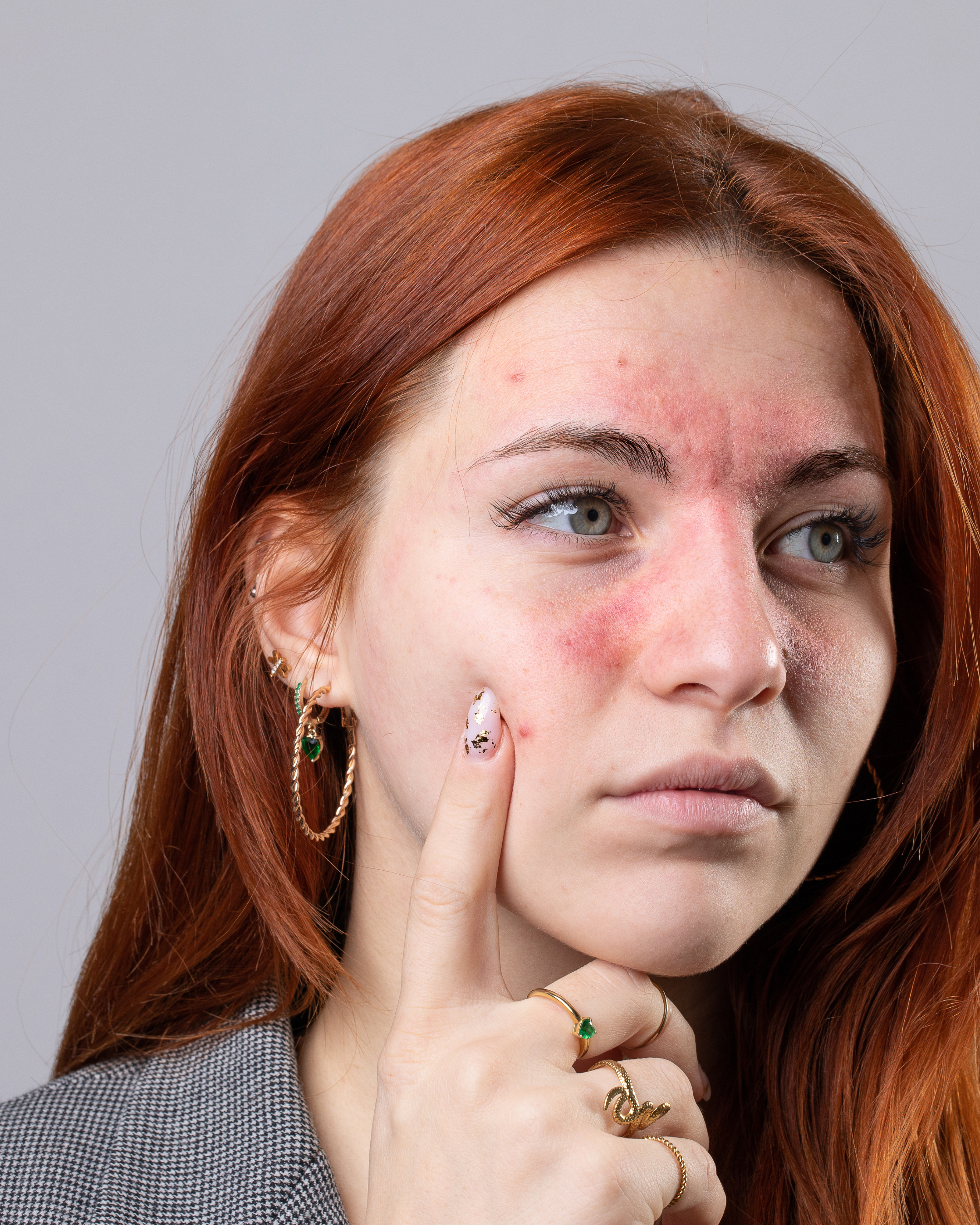
It is a chronic inflammatory skin condition affecting the central face. People typically describe persistent redness that never quite goes, flushing after wine, exercise or warm rooms, a sensation of heat in the skin, stinging when products are applied, adult acne like bumps, and thread veins appearing over time.
One reason it gets missed for years is that it develops gradually. People adapt, assume it is just their skin, and by the time they ask anybody they have been living with it for a long while.
I have written about how to tell it apart from simple sensitivity in rosacea or sensitive skin.
Could It Be a Damaged Skin Barrier?
Very possibly, and it is becoming more common rather than less.
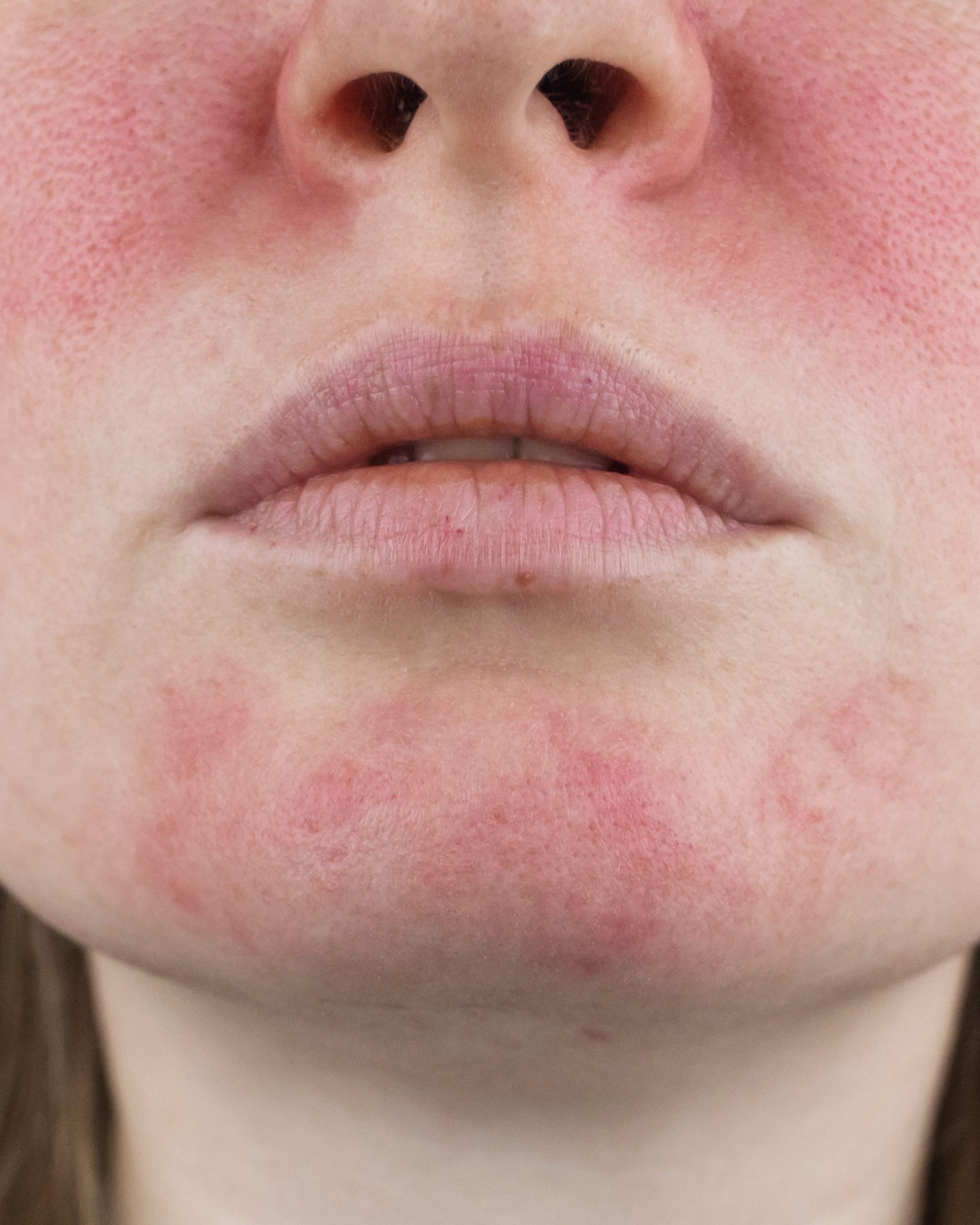
Think of the barrier as a protective shield keeping moisture in and irritants out. When it is damaged, skin becomes more vulnerable, more reactive and more inflamed.
| Common causes | How it happens |
|---|---|
| Over exfoliation | Acids or scrubs used more often than the skin can recover from |
| Too many actives together | Each reasonable alone, compounding in combination |
| Tretinoin introduced too quickly | Straight to nightly rather than building up slowly |
| Harsh cleansers | If your face feels tight afterwards, it was too strong |
| Frequent treatments | Not enough recovery time between them |
| Environmental stress | Wind, cold, central heating, hard water |
The encouraging part is that barrier damage responds well, and often quickly, once it is recognised.
My Honest View: Skincare Culture Is Making This Worse
This might be unpopular, but I think one of the biggest reasons facial redness is becoming more common is modern skincare culture.
People are encouraged to use vitamin C, retinol, glycolic acid, salicylic acid, an exfoliating toner, an acid peel and a barrier serum. Frequently all at once. And then wonder why their skin is increasingly red and reactive.
Social media has created an impression that healthy skin requires a ten step routine. In reality, some of the healthiest skin I see belongs to people using a gentle cleanser, a moisturiser and SPF.
When skin is red and inflamed, the answer is almost always simplification rather than escalation. Sometimes it is not more skincare. Sometimes it is less.
The Menopause Connection
Many women notice redness arriving or worsening during perimenopause and menopause.
Hormonal change affects blood vessel stability, inflammation and barrier function, which is why somebody who has never had reactive skin can suddenly find that everything irritates it. The sentence I hear most often is some version of "I have never had sensitive skin in my life".
Sometimes hormonal change is the whole story. Sometimes it unmasks underlying rosacea. Often it is both. If you are noticing other menopausal symptoms alongside it, that is worth raising with whoever looks after your menopause care, not just treating as a skin problem.
Thread Veins, and What Actually Removes Them
This is the one cause on the list where I want to be very clear, because it is the one people waste the most money on.
Thread veins, or telangiectasia, are tiny visible blood vessels that develop gradually, most often around the nose and cheeks. They are particularly common alongside rosacea.
Once a thread vein has formed, no skincare product will remove it. Not a serum, not a redness cream, not a barrier product. The vessel is physically there, and it needs physically treating.
What does work for individual vessels is advanced electrocautery, which treats them directly. It is quick, it is done under local anaesthetic where needed, and it is one of the treatments I do offer here. It does not treat the underlying tendency to develop them, which is why managing any associated redness alongside matters.
Read more about advanced electrocautery for thread veins and broken capillaries.
Can You Use Tretinoin If Your Face Is Red?
One of the most common questions I get, and the answer is often yes, but timing is everything.
If inflammation is active and the barrier is damaged, introducing tretinoin too early will make redness and irritation worse. Once the skin is calmer, many people tolerate it well.
I remain a strong believer in prescription tretinoin for collagen, skin quality and healthy ageing. The key is introducing it at the right stage rather than the earliest one.
What I Can and Cannot Help With
I would rather be clear about this than have anybody book the wrong appointment.
| What this clinic does | What belongs with your GP |
|---|---|
| Assessing and simplifying your skincare routine | Diagnosing the cause of persistent facial redness |
| Barrier repair and medical grade skincare | Prescription treatment for an inflammatory skin condition |
| Advanced electrocautery for individual thread veins | Ongoing medical management |
| Prescription skincare for skin quality, such as tretinoin | Menopause care |
| Telling you plainly when the answer is not a product | Anything that is not purely cosmetic |
I am an NHS GP as well as an aesthetic doctor, and the most useful thing that background gives me is recognising when what is in front of me is not a skincare problem, and saying so. If that is what I think, I will tell you and point you back to your own GP rather than sell you something.
What to Take to Your GP
If the picture above sounds like rosacea rather than barrier damage, this is what gets you to the right answer fastest in a ten minute appointment.
| Mention | Why it helps |
|---|---|
| Whether redness is present with no trigger at all | The single most useful distinguishing detail |
| Whether you flush, and what sets it off | Flushing episodes point strongly one way |
| Whether you can see thread veins | Easy to overlook and clinically relevant |
| Whether you get bumps or pustules | Changes which treatments are appropriate |
| Any eye grittiness or irritation | Can indicate ocular involvement, which needs its own treatment |
| What you have already tried, and for how long | Saves being sent away to repeat something |
Take a photograph in daylight on a bad day. Skin has an irritating habit of behaving itself in the waiting room.
Frequently Asked Questions
Why is my face always red even when I am not embarrassed?
Persistent redness is most often caused by rosacea, a damaged skin barrier, menopause related flushing, or visible thread veins. These are managed very differently, which is why identifying which one you are dealing with matters more than which cream you buy.
Is redness always rosacea?
No. Rosacea is the most common single cause, but barrier damage, hormonal change and thread veins all produce redness, and plenty of people have more than one at the same time.
Can skincare make facial redness worse?
Yes, and it is one of the most common causes I see. Overuse of acids, retinoids and multiple actives together is a very reliable way to make reactive skin worse.
Will skincare get rid of thread veins?
No. Once a vessel has formed it is physically there and no topical product will remove it. Individual vessels can be treated directly with advanced electrocautery.
Does menopause cause facial redness?
It can. Hormonal change affects blood vessel stability, inflammation and barrier function, and many women notice redness or flushing for the first time during perimenopause.
Should I stop using retinol if my face is red?
Not necessarily, but it is worth pausing it, letting the barrier recover, and reintroducing slowly rather than continuing through the irritation.
Does SPF help?
Yes. UV is one of the most consistently reported aggravating factors for redness, and daily SPF 50 is the recommendation I am least willing to negotiate on.
How do I know if it is rosacea or sensitive skin?
Persistent redness with no trigger, flushing episodes, visible vessels and inflammatory bumps point towards rosacea. Reactive skin tends to flare after a product and then settle. A proper assessment is the only way to confirm it.
Should I see my GP?
If your redness is persistent, you flush regularly, you can see thread veins, or you are getting bumps and pustules, yes. Effective prescription treatments exist and that assessment is what unlocks them.
Skin Consultations in Hale, Altrincham and Cheshire
If you are struggling with facial redness and are not sure what you are dealing with, I would be glad to help with the part I can help with.
What I can do is look honestly at what you are using, tell you what is likely helping and what is almost certainly not, treat individual thread veins directly, and build you a routine simple enough to actually work. For a great many people whose problem is barrier damage, that is the whole answer.
And if what I am looking at needs medical assessment rather than skincare, I will say so and point you to your own GP, because that is the appointment that will help.
Alongside my sister Louise, we have built a female led, family run clinic focused on personalised care and honest advice. Patients travel to us from Hale, Altrincham, Bowdon, Hale Barns, Wilmslow, Knutsford, Sale, Alderley Edge, Stockport and across Cheshire.
You are welcome to book a skin consultation, with no obligation to buy or book anything afterwards.
Further Reading
- Rosacea, Redness and Flushing: What Actually Works
- Rosacea or Sensitive Skin? How to Tell the Difference
- Why Is My Skin Suddenly Sensitive?
- Facial and Chest Thread Veins: Causes and Treatment
- Menopause and Your Face: What Changes and What Genuinely Helps
- Advanced electrocautery for thread veins and broken capillaries
Next Steps
Learn more about Dr Caroline Warden Clinic
Learn more about other treatments offered
About the Author
Dr Caroline Warden is a practising NHS GP and aesthetic doctor with nearly twenty years of clinical experience, an independent prescriber, and holder of a Level 7 postgraduate diploma in cosmetic injectables. She is Medical Director and sole practitioner at Dr Caroline Warden Skin & Aesthetic Clinic, 2 Crown Passages, Hale, Altrincham. GMC number 6157708.
This article is for information only and does not constitute individual medical advice or a diagnosis. Persistent facial redness should be assessed by your own GP or a dermatologist.
References
- Hampton PJ, et al. British Association of Dermatologists guidelines for the management of people with rosacea 2021. British Journal of Dermatology. 2021;185(4):725-735. View guidelines
- British Association of Dermatologists. Rosacea patient information. Read the leaflet
- National Rosacea Society. rosacea.org