Rosacea or Sensitive Skin? How To Tell The Difference
Written by Dr Caroline Warden, NHS GP and Level 7 trained Aesthetic Doctor, Dr Caroline Warden Skin & Aesthetic Clinic, Hale, Cheshire. Last reviewed: September 2026.
One of the most common things I hear is:
I think I just have really sensitive skin.
The description is nearly always the same. Moisturiser stings. Cheeks look permanently pink. Every new product seems to cause irritation. Retinol burns, vitamin C stings, and even things marketed specifically at sensitive skin appear to make it worse.
Sometimes that is exactly what it is. But quite often the description people give me fits something else entirely, and the distinction matters because the two are managed very differently.
The expensive version of this mistake is spending years and several hundred pounds on products for sensitive skin when the underlying problem was never going to respond to a cream.
In this article:
- Why "sensitive skin" is not actually a diagnosis
- What rosacea is
- The differences, side by side
- Whether you can have both
- Why over treating makes either one worse
- What helps barrier damage
- Where rosacea treatment comes from
- What to say to your GP
- What I can and cannot help with
- Frequently asked questions
"Sensitive Skin" Is Not Actually a Diagnosis
This surprises people. Sensitive skin is a description rather than a medical condition. It means skin that reacts more readily than average.
Typically that shows up as burning, stinging, tightness, dryness, irritation after applying products, and reactions to weather or temperature change.
In my experience it is usually a damaged skin barrier, which is genuinely good news, because a damaged barrier can be repaired.
| What commonly damages the barrier | How it happens |
|---|---|
| Over exfoliation | Acids or scrubs used more often than the skin can recover from |
| Too many actives at once | Each one reasonable alone, compounding together |
| Retinoids introduced too fast | Straight to nightly use rather than building up |
| Harsh cleansers | If your face feels tight afterwards, it was too strong |
| Cumulative sun damage | Slow, and rarely the thing people suspect |
| Fragrance | One of the most common irritants in skincare |
What Rosacea Is
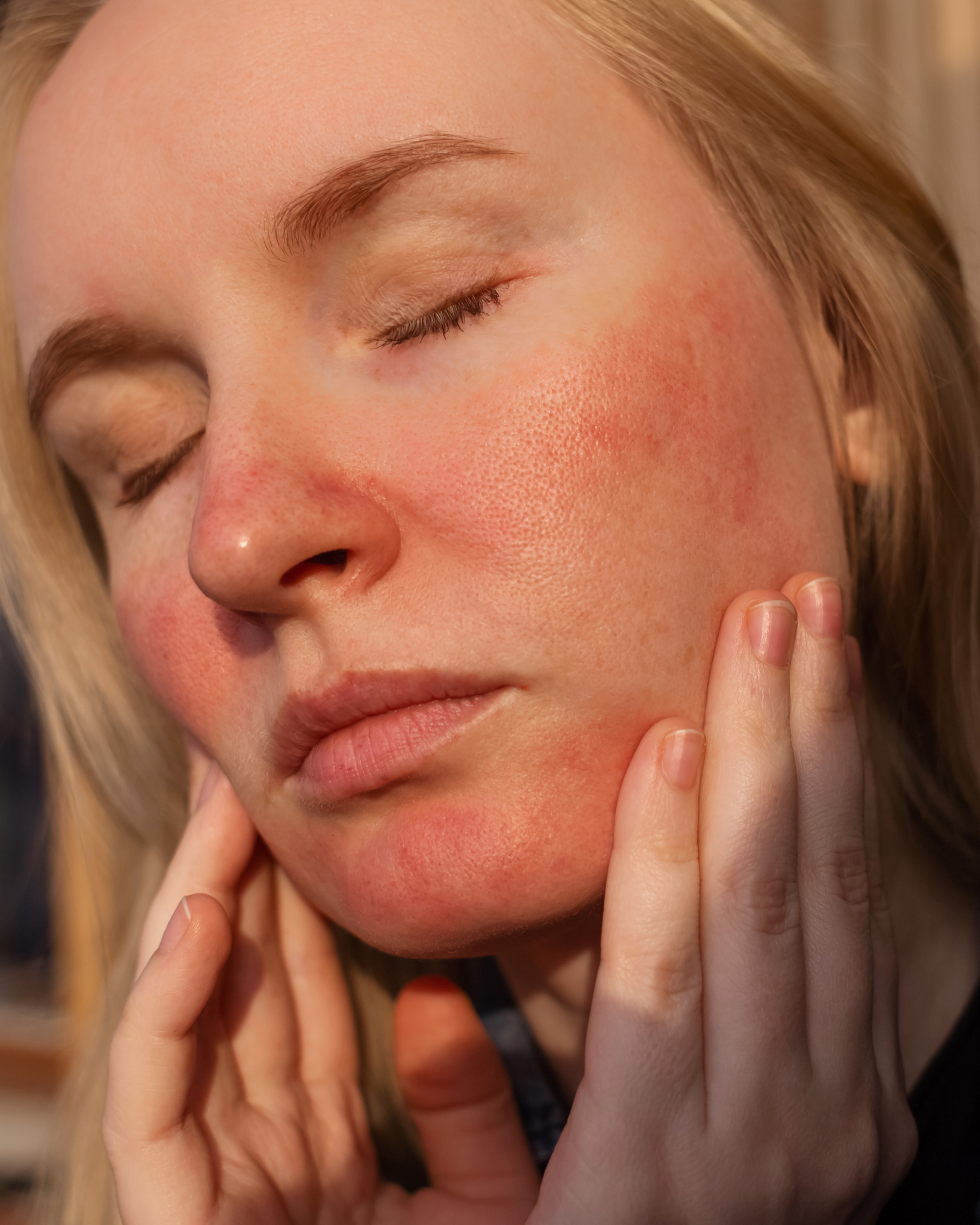
Rosacea is a chronic inflammatory skin condition affecting the central face, most often the cheeks, nose, chin and forehead.
It commonly involves persistent redness, flushing, visible small blood vessels, burning or stinging, inflammatory bumps and pustules, and heightened sensitivity.
Unlike reactive skin, it is an ongoing medical condition that usually needs long term management, and it tends to persist or gradually become more noticeable if it is not addressed.
The Differences, Side by Side
This is the part worth screenshotting.
| Feature | Points towards reactive skin | Points towards rosacea |
|---|---|---|
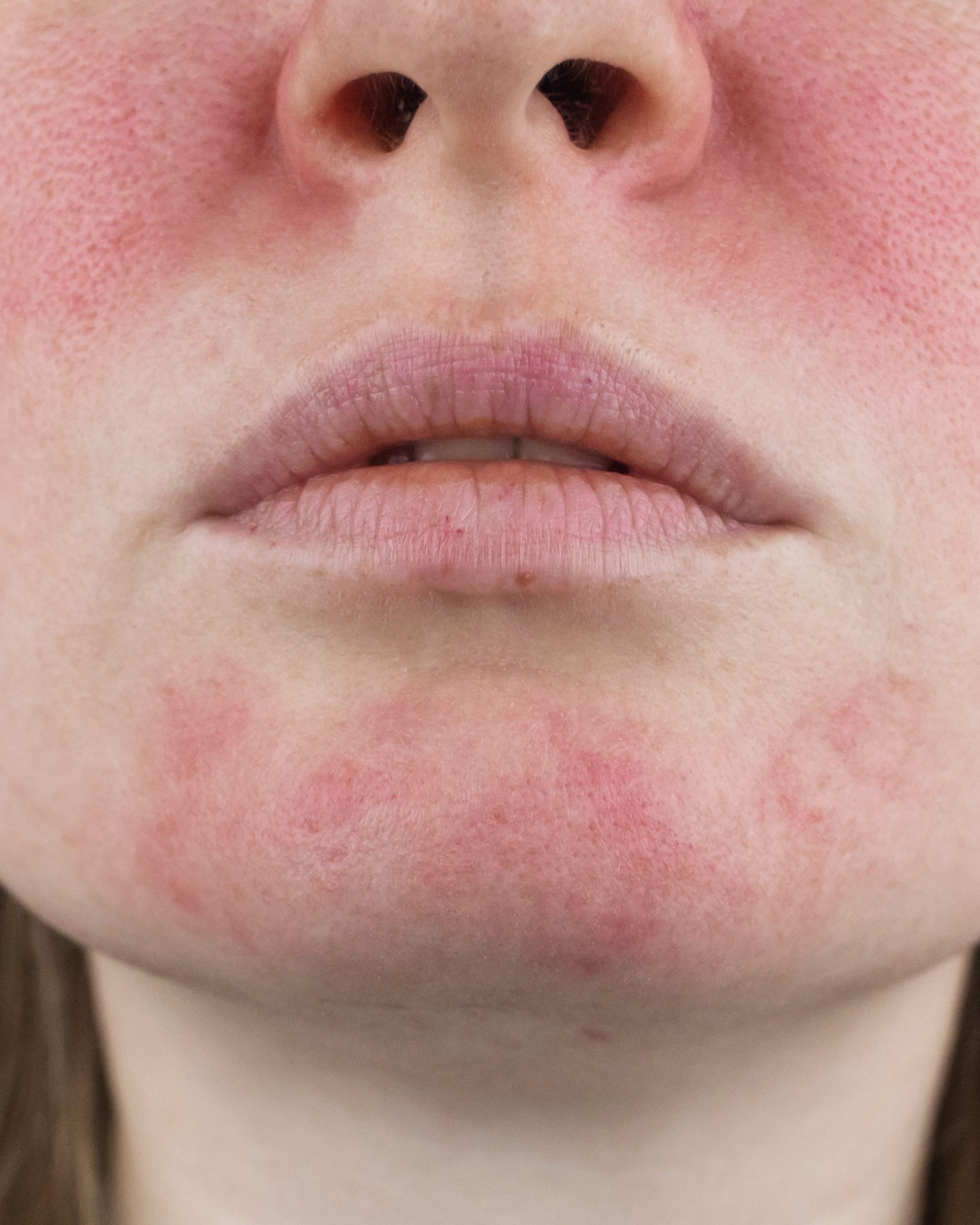
| Redness | Comes and goes. Appears after a product or a trigger, then settles | Persists even with no obvious trigger. Cheeks look permanently pink |
| Flushing | Not usually dramatic | Distinct flushing episodes after alcohol, heat, exercise or stress |
| Visible blood vessels | Not typical | Small visible vessels, called telangiectasia, are a classic feature |
| Bumps and pustules | Not typical | Inflammatory papules and pustules, often mistaken for adult acne |
| Over time | Improves once the barrier is repaired | Persists, and can progress without management |
| Response to simplifying | Often improves substantially within weeks | Improves somewhat, but the underlying inflammation remains |
| What it responds to | Barrier repair and removing irritants | Barrier repair plus medical treatment |
The single most useful question is this. When nothing has touched your face and nothing has triggered it, is the redness still there? If yes, that points towards rosacea.
This is a guide, not a diagnosis. Only a proper assessment by your GP or a dermatologist can establish what you actually have, and several other conditions can look similar.
Can You Have Both?
Very often, yes.
Rosacea itself disrupts the skin barrier, which makes the skin increasingly reactive to products, weather and temperature. That is precisely why so many people feel trapped in a cycle where everything irritates them.
It also explains why partial improvement is so common and so confusing. Repairing the barrier helps, sometimes considerably, but if inflammation is driving things underneath, the redness returns.
Why Over Treating Makes Either One Worse
One of the most common patterns I see is somebody trying increasingly aggressive skincare to fix redness.
They arrive using multiple acids, an exfoliating toner, a scrub, retinol nightly and two or three actives at once. Social media encourages the idea that more products mean better skin.
Irritated skin rarely responds well to being attacked with more products, and it does not matter whether the underlying issue is inflammation, a damaged barrier or both.
Some of the best results I see come from doing less.
| Step | What it looks like |
|---|---|
| Gentle cleansing | Non foaming, fragrance free, and your face should not feel tight afterwards |
| Barrier repair | A ceramide based moisturiser. Unexciting and effective |
| Daily SPF 50 | Every morning, year round. Mineral filters often suit reactive skin better |
| Nothing else, at first | Hold it for eight to twelve weeks before adding anything |
| Then, slowly | One active at a time, with enough gap to see what each one does |
Sometimes the answer is not more skincare. Sometimes it is less.
Common Triggers
These vary enormously between people, which is why there is no universal list and no universal diet. But some come up repeatedly.
| Trigger | Worth knowing |
|---|---|
| Sun exposure | The most consistently reported, and the most avoidable |
| Alcohol, particularly red wine | One of the most frequently identified |
| Hot drinks and spicy food | Often the temperature rather than the spice |
| Heat and sudden temperature change | Including cold outdoors into a warm room |
| Stress | Frequently underestimated |
| Vigorous exercise | Raised body temperature and blood flow |
| Harsh skincare | The one you can do most about today |
A diary kept for a fortnight usually reveals a personal pattern faster than people expect. Most discover that what felt like random redness is actually fairly predictable, which makes it manageable rather than frightening.
Where Rosacea Treatment Comes From
If what you have is rosacea rather than reactive skin, skincare alone will not be enough, and that is not a failure of your routine.
There are genuinely effective prescription treatments, and the evidence behind them is good. British Association of Dermatologists guidance sets out which suit which presentation, covering topical options and, for inflammatory rosacea, oral treatment used at a low anti inflammatory dose rather than as a standard antibiotic course (Hampton et al.).
Those come from your own GP or a dermatologist, who can assess you properly, confirm what you are dealing with and prescribe accordingly. That assessment is worth considerably more than another moisturiser, and it is free.
What to Say to Your GP
This is the part people find hardest, so here is a script. Appointments are short and the right detail gets you to the right answer faster.
| Mention | Why it helps |
|---|---|
| Whether the redness is there when nothing has triggered it | The single most useful distinguishing detail |
| Whether you flush, and what sets it off | Flushing episodes point strongly one way |
| Whether you can see small blood vessels | A classic feature, and easy to overlook |
| Whether you get bumps or pustules, and where | Changes which treatments are appropriate |
| Any eye grittiness, dryness or irritation | Can indicate ocular involvement, which needs its own treatment |
| What you have already tried, and for how long | Saves being sent away to try something you have done |
| How long it has been going on | Duration matters to the assessment |
Take a photograph of your face in daylight on a bad day. Skin has an irritating habit of behaving itself in the waiting room, and a photograph solves that.
Can You Use Tretinoin If You Have Rosacea?
One of the most common questions I am asked, and the answer is often yes, but timing is everything.
If the barrier is damaged and inflammation is poorly controlled, introducing tretinoin too early will make redness and irritation worse. Once things are calmer and the barrier has recovered, many people tolerate it well.
I am a strong believer in its long term benefits for collagen, texture and healthy ageing. The key is introducing it at the right stage rather than the first available one.
What I Can and Cannot Help With
I would rather be clear about this than have anybody book the wrong appointment.
| What this clinic does | What belongs with your GP |
|---|---|
| Assessing and simplifying your skincare routine | Diagnosing the cause of persistent facial redness |
| Barrier repair and medical grade skincare | Prescription treatment for an inflammatory skin condition |
| Prescription skincare for skin quality, such as tretinoin | Ongoing medical management |
| Treatments aimed at skin quality and texture | Anything that is not purely cosmetic |
| Telling you plainly when the answer is not a product | Everything above |
I am an NHS GP as well as an aesthetic doctor, and the most useful thing that background gives me is recognising when what is in front of me is not a skincare problem, and saying so. If that is what I think, I will tell you and point you back to your own GP rather than sell you something.
When to See Your GP Promptly
| What to watch for | Why |
|---|---|
| Eye grittiness, dryness or redness alongside facial redness | Can indicate ocular involvement, which needs its own treatment |
| Thickening or bumpy texture around the nose | An early sign worth assessing |
| Redness that has not improved at all after a few months of simplified skincare | Suggests something that needs assessing rather than another product |
| Rapidly worsening or painful redness | Worth a same week appointment |
Frequently Asked Questions
How do I know if I have rosacea or sensitive skin?
Persistent redness that is there without a trigger, flushing episodes and visible small blood vessels point towards rosacea. Reactive skin tends to flare after a product or a change in weather and then settle. Only a proper assessment can confirm it.
Is sensitive skin a real diagnosis?
Not in the medical sense. It is a description of skin that reacts more readily than average, and it is most often a damaged skin barrier, which can be repaired.
Can a damaged barrier look like rosacea?
Yes, and this is a common source of confusion. A compromised barrier causes redness, burning and sensitivity that can mimic it. Many people have elements of both.
Can rosacea be cured?
Not currently, but it can very often be managed to the point where it is barely noticeable day to day.
Can rosacea develop in your thirties or forties?
Yes. Many people first notice it later in adulthood, including people who have never considered their skin sensitive before.
Does alcohol make it worse?
For many people yes, and red wine is among the most frequently reported triggers.
Should I stop using retinol?
Not necessarily, but it should be introduced once the skin is settled rather than during a flare, and slowly rather than nightly from the start.
Does SPF actually help?
Yes. UV is one of the most consistently reported aggravating factors, and daily SPF 50 is the recommendation I am least willing to negotiate on.
Do I need to see my GP?
If your redness is persistent, you flush regularly, you can see small blood vessels, or you are getting bumps and pustules, yes. That assessment is the thing that unlocks effective treatment.
Skin Consultations in Hale, Altrincham and Cheshire
If you are struggling with redness and are not sure what you are dealing with, I would be glad to help with the part I can help with.
What I can do is look honestly at what you are using, tell you what is likely helping and what is almost certainly not, and build you something simple enough to actually work. For a great many people whose problem is barrier damage, that is the entire answer.
And if what I am looking at needs medical assessment rather than skincare, I will say so and point you to your own GP, because that is the appointment that will help.
Alongside my sister Louise, we have built a female led, family run clinic focused on personalised care, honest advice and natural results. Patients travel to us from Hale, Altrincham, Bowdon, Hale Barns, Wilmslow, Knutsford, Sale, Stockport and across Cheshire.
You are welcome to book a skin consultation, with no obligation to buy or book anything afterwards.
Further Reading
- Rosacea, Redness and Flushing: What Actually Works
- Why Is My Face Always Red?
- Why Is My Skin Suddenly Sensitive?
- Understanding the Skin Barrier
- Menopause and Your Face: What Changes and What Genuinely Helps
- Medical grade skincare in Hale, Altrincham and Cheshire
Next Steps
Learn more about Dr Caroline Warden Clinic
Learn more about other treatments offered
About the Author
Dr Caroline Warden is a practising NHS GP and aesthetic doctor with nearly twenty years of clinical experience, an independent prescriber, and holder of a Level 7 postgraduate diploma in cosmetic injectables. She is Medical Director and sole practitioner at Dr Caroline Warden Skin & Aesthetic Clinic, 2 Crown Passages, Hale, Altrincham. GMC number 6157708.
This article is for information only and does not constitute individual medical advice or a diagnosis. Persistent facial redness should be assessed by your own GP or a dermatologist.
References
- Hampton PJ, et al. British Association of Dermatologists guidelines for the management of people with rosacea 2021. British Journal of Dermatology. 2021;185(4):725-735. View guidelines
- British Association of Dermatologists. Rosacea patient information. Read the leaflet
- National Rosacea Society. rosacea.org