Facial & Chest Thread Veins: Causes, Concerns & Safe Doctor-Led Treatment with Advanced Electrocautery in Hale, Cheshire
Facial and chest thread veins (often called “broken capillaries”) are one of the most common and surprisingly confidence-draining concerns I see in clinic.
They can creep in gradually, then one day you notice your cheeks look permanently flushed, or your décolletage looks red and “crepey” in certain lighting, no matter how good your skincare is.
If you’re dealing with visible red veins on the face or chest, this guide explains what thread veins are, why they appear, how we assess them medically, and how we can treat suitable vessels with precise, doctor-led electrocautery/electrosurgery at our clinic in Hale, welcoming patients from Altrincham and across South Manchester.
What Are Thread Veins?
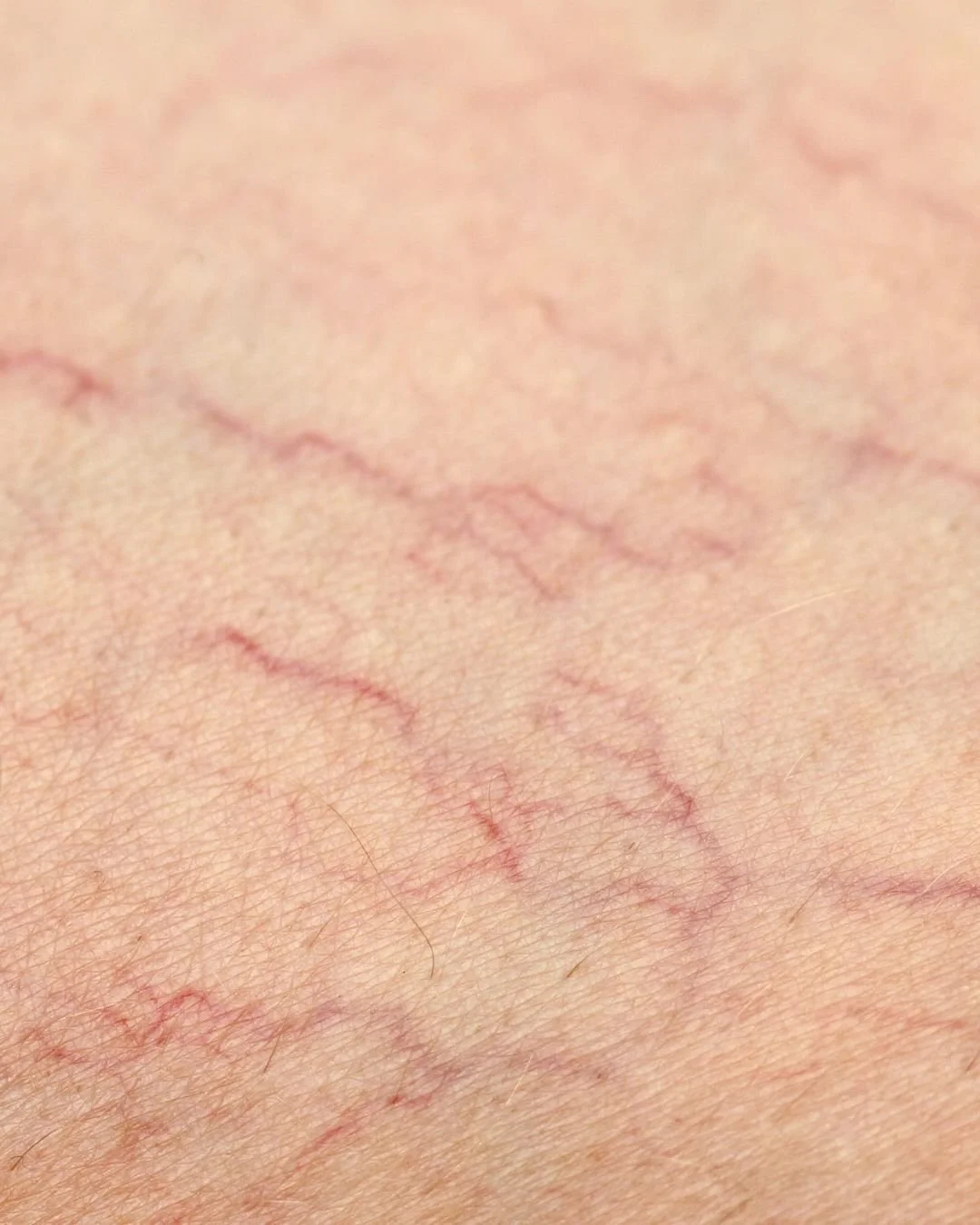
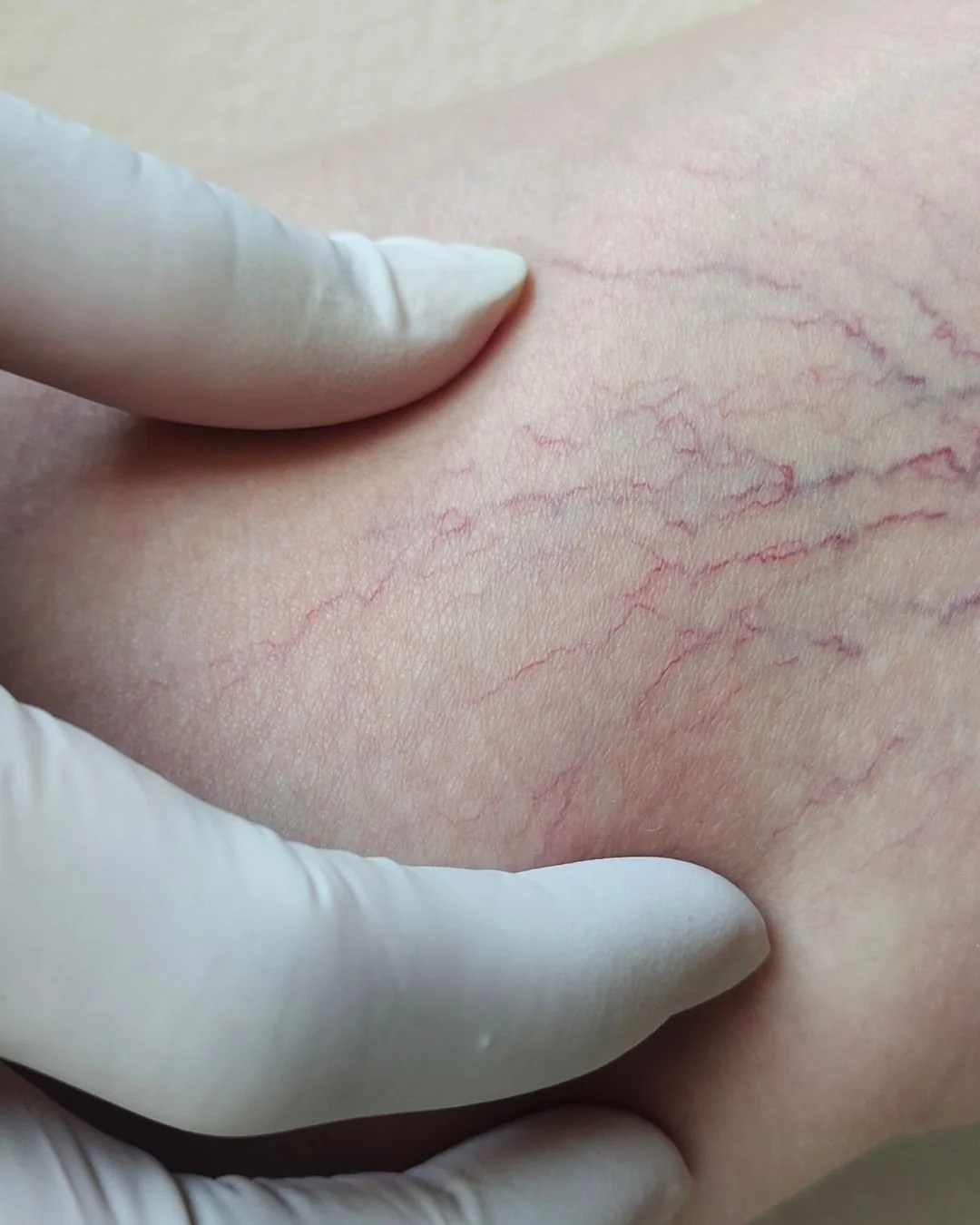
Thread veins are small, permanently dilated surface blood vessels called telangiectasia. They typically appear as:
Fine red, pink or purple lines
Branching or web-like patterns
Flat (not raised)
Persistent (they don’t usually fade away on their own) (DermNet®)
Common areas include:
Cheeks and nose (including nasal folds)
Chin and jawline
Chest / décolletage (DermNet®)
Why Do Facial & Chest Thread Veins Appear?
Thread veins form when small superficial vessels become chronically dilated. The “why” is often multifactorial, including:
Genetics
Sun exposure (particularly important on the chest)
Rosacea and flushing-prone skin
Hormonal change (pregnancy, perimenopause/menopause)
Topical steroid use (especially on the face)
Skin thinning with age
Heat triggers (saunas, hot yoga, very hot showers)
Alcohol/spicy foods in susceptible individuals (often via flushing pathways) (DermNet®)
Why the chest is a common “surprise” area
The décolletage has thin skin and tends to accumulate sun damage, which makes surface vessels more visible and more likely to persist.
Can Thread Veins Go Away Naturally?
Usually, no. Once telangiectasia are established:
Skincare can support the barrier but won’t remove the vessel
Makeup only camouflages temporarily
Without treatment, they may gradually increase over time (DermNet®)
The Most Important First Step: Correct Diagnosis
“Redness” is not always purely vascular. In clinic, we assess whether this is:
True telangiectasia (individual visible vessels)
Diffuse erythema from rosacea or inflammation
Other benign vascular lesions (e.g., cherry angiomas)
Less commonly, conditions that warrant medical investigation if there are wider features (Primary Care Dermatology Society)
This matters because the best treatment (and the safest plan) depends on what’s actually driving the redness.
Treatment Options: Electrocautery vs Laser/IPL
For facial telangiectasia, common treatment options include electrosurgery/electrocautery, IPL, and vascular laser. (DermNet®)
Laser/IPL can be excellent for diffuse redness and broader vascular patterns (but isn’t always ideal for every vessel type, skin type, or budget). (DermNet®)
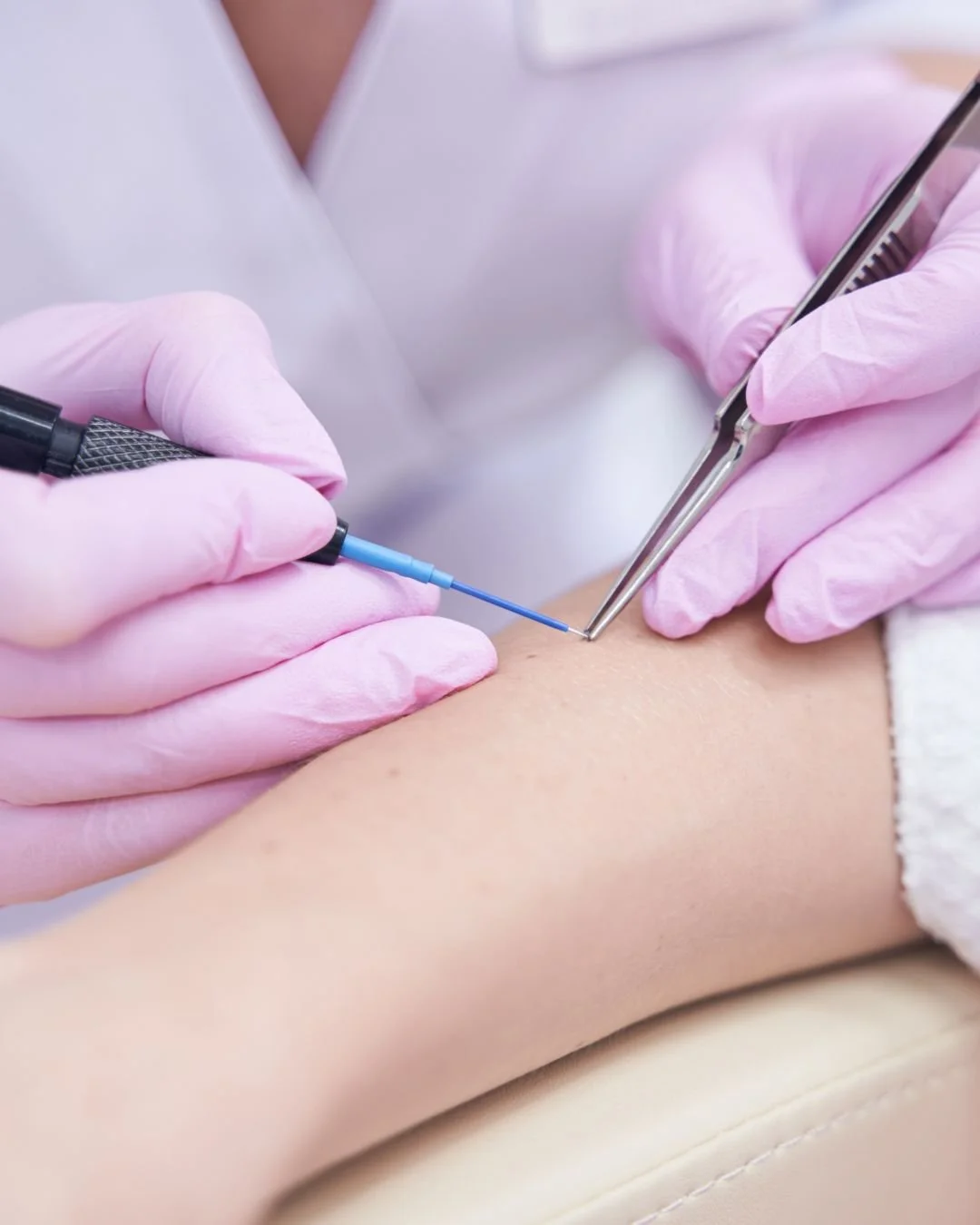
Electrocautery/electrosurgery (thermocoagulation) can be particularly useful for very fine, superficial, individual vessels or small clusters—especially when a targeted approach is preferred. (DermNet®)
At our Hale clinic, we use advanced medical electrocautery/electrosurgery for suitable facial and chest thread veins, after careful assessment.
How Advanced Electrocautery Works for Thread Veins
Using a very fine tip and controlled settings, the aim is to:
Seal/collapse the tiny surface vessel
Minimise trauma to surrounding skin
Allow the body to reabsorb the treated vessel over time (DermNet®)
During treatment, a vessel may blanch/darken briefly. Afterward, it’s normal to see temporary redness, and occasionally tiny surface crusting in pinpoint areas.
Why Doctor-Led Treatment Matters (Face & Décolletage)
The face and chest are high-visibility areas where we want predictable healing and minimal risk.
A doctor-led approach helps by ensuring:
Accurate diagnosis (not all redness is vascular)
Appropriate energy choice for skin type and vessel size
Conservative technique to reduce risk of pigment change, especially on the chest
A plan that considers coexisting rosacea/inflammation rather than simply “zapping what we see” (Primary Care Dermatology Society)
What Can Be Treated in One Appointment?
Depending on time, comfort, and skin response, we can often combine concerns in one session, for example:
Facial thread veins + cherry angiomas
Chest thread veins + “blood spots”
Thread veins + milia or skin tags
We prioritise skin response and safety over rushing—particularly on the décolletage, where staged treatment can be the most elegant approach.

Pricing & Appointment Details (Hale, Cheshire)
30-minute appointment: £220
Includes:
Doctor-led consultation and assessment
Treatment time (often ~15 minutes of active treatment within the appointment)
Add extra treatment time
+15 minutes for £99
Ideal for:
Larger areas
Multiple clusters
Combined concerns
Typical averages treated in ~15 minutes (estimates)
Thread veins: ~2–3 cm of vessels
Cherry angiomas / blood spots: ~5–8
Milia: ~10
Skin tags: ~5 (depending on size/type)
Follow-up sessions (if needed)
Some thread veins respond well in one session; others (especially on the chest) can require staged treatment:
£150
Typically 4+ weeks apart
Consultation-only option
£50
If you proceed with treatment later, the £50 is deducted from your treatment cost
Patch Test (When We Recommend It)
A patch test may be advised if you:
Have very sensitive/reactive skin or eczema
Have a history of post-inflammatory pigmentation
Are nervous about treating visible areas
Are treating the chest/décolletage for the first time
We treat a small discreet area and review healing after 3–4 weeks before proceeding.

Healing & Aftercare: What to Expect
After thread vein treatment, you may notice:
Temporary redness or warmth
Mild swelling
Occasional bruising (more common on the chest)
Typical aftercare includes:
Avoiding heat, saunas, hot showers and strenuous exercise for a short period
Gentle skincare only initially
Strict SPF on treated areas (especially décolletage)
Guidance on when to restart actives (retinoids/acids)
Most patients return to normal activities the same day.

Facial & Chest Thread Vein Treatment in Hale, Altrincham & South Manchester
If you’re looking for thread vein treatment in Hale, delivered in a calm, discreet, doctor-led environment—with patients travelling from Altrincham and across South Manchester—advanced electrocautery can be an excellent option for suitable vessels.
We’re a female-led, family-run clinic focused on:
Medical safety
Honest assessment
Conservative technique
Natural-looking skin improvements

Frequently Asked Questions (FAQ)
Are thread veins dangerous?
Most facial/chest thread veins are harmless and treated for cosmetic reasons. Occasionally, widespread patterns can be associated with other conditions—so assessment matters. (Primary Care Dermatology Society)
Is it rosacea or thread veins?
Rosacea often causes diffuse persistent redness and flushing, sometimes with spots/sensitivity; thread veins are individual visible vessels. Many patients have a combination, and treatment is tailored accordingly. (DermNet®)
Can skincare remove thread veins?
Skincare can support the barrier and reduce irritation triggers, but it can’t remove established vessels. (DermNet®)
Is electrocautery painful?
Most patients describe brief heat/stinging. Treatment is quick, and we work conservatively—especially on the chest.
Will it scar?
Scarring is uncommon with correct technique and aftercare, but the chest can be more reactive and is treated cautiously.
Is laser better than electrocautery?
Laser/IPL can be excellent for diffuse redness; electrocautery can be very effective for fine, isolated vessels. The best option depends on vessel type, skin type, and the pattern of redness. (DermNet®)
How many sessions will I need?
Some vessels respond in one session; others need staged treatment, especially on the décolletage where we prioritise gentle healing.
Can thread veins come back?
Treated veins usually do not reopen, but new vessels can develop over time—especially with sun exposure or flushing triggers. (DermNet®)
What should I avoid after treatment?
Heat (saunas/hot showers), vigorous exercise immediately after, and strong actives until healed. We’ll give you personalised aftercare.
Can you treat leg thread veins the same way?
Facial/chest thread veins are different from leg veins. Leg veins often require different approaches (e.g., sclerotherapy) and should be assessed separately. (PMC)

Book in for a Consultation at your local, female doctor-led, family-run skin & aesthetics sanctuary for natural, bespoke results
Dr Caroline Warden is an experienced NHS GP and aesthetic doctor. She has been a medical doctor for over 18 years. She runs the female-led family business with her sister Louise Devereux (creative director & patient co-ordinator)
Their main Skin and Aesthetic Clinic is located in Hale, Cheshire but they also run a pop-up clinic in Disley, Stockport one evening a week.
You will only ever see and have treatments with Dr Caroline Warden.
Whether you're new to aesthetic treatments or ready to refine your routine, her bespoke skin assessments are the best place to start. Dr Caroline Warden will design a tailored plan based on your skin goals, lifestyle, and timeline.
Book your consultation at the clinic in Hale, Cheshire and experience aesthetic medicine.
You’ll be guided through your medical history, goals, and expectations so you can make an informed choice.

Where our clinic is local to:
Our Hale clinic is conveniently located for patients travelling from:
Alderley Edge, Altrincham, Bowdon, Bramhall, Hale Barns, Knutsford, Manchester, Mobberley, Sale, Timperley, Urmston, Wilmslow, Handforth, Poynton, Cheadle, Didsbury and Warrington.
References
DermNet NZ, Telangiectasia, overview and treatment options
[https://dermnetnz.org/topics/telangiectasia](https://dermnetnz.org/topics/telangiectasia)
DermNet NZ, Electrosurgery and thermocautery, includes small blood vessels, telangiectasia
[https://dermnetnz.org/topics/electrosurgery](https://dermnetnz.org/topics/electrosurgery)
PCDS UK, Telangiectases, causes, clinical points, when to consider underlying issues
DermNet NZ, Rosacea, background and triggers
[https://dermnetnz.org/topics/rosacea](https://dermnetnz.org/topics/rosacea)
Liapakis IE, et al. Management of Facial Telangiectasias with Hand Cautery, 2015
Nakano LCU, et al. Treatment for telangiectasias and reticular veins, review
