Summer Skin Tag and Cherry Angioma Removal Before Your Holiday

There is something about summer that makes people suddenly notice every tiny mark on their skin.
The neckline is lower. The arms are out. The chest is exposed. Holiday photos are being planned. The summer dress is finally out of the wardrobe. And suddenly, the little skin tag on the neck or the bright red “blood spot” on the chest that has been ignored all winter becomes impossible to unsee.
At Dr Caroline Warden Skin & Aesthetic Clinic in Hale, Cheshire, summer is one of the most common times patients ask about removing small benign skin lesions such as skin tags and cherry angiomas.
These are usually harmless, but that does not mean they are not annoying. They can catch on jewellery, rub on collars, bleed when shaved over, show in photographs or simply make someone feel less confident in their skin.
The good news is that when the lesion is suitable, removal is usually quick, precise and straightforward. The important part is timing it sensibly before a holiday.
Why summer is the season people suddenly notice skin tags and cherry angiomas
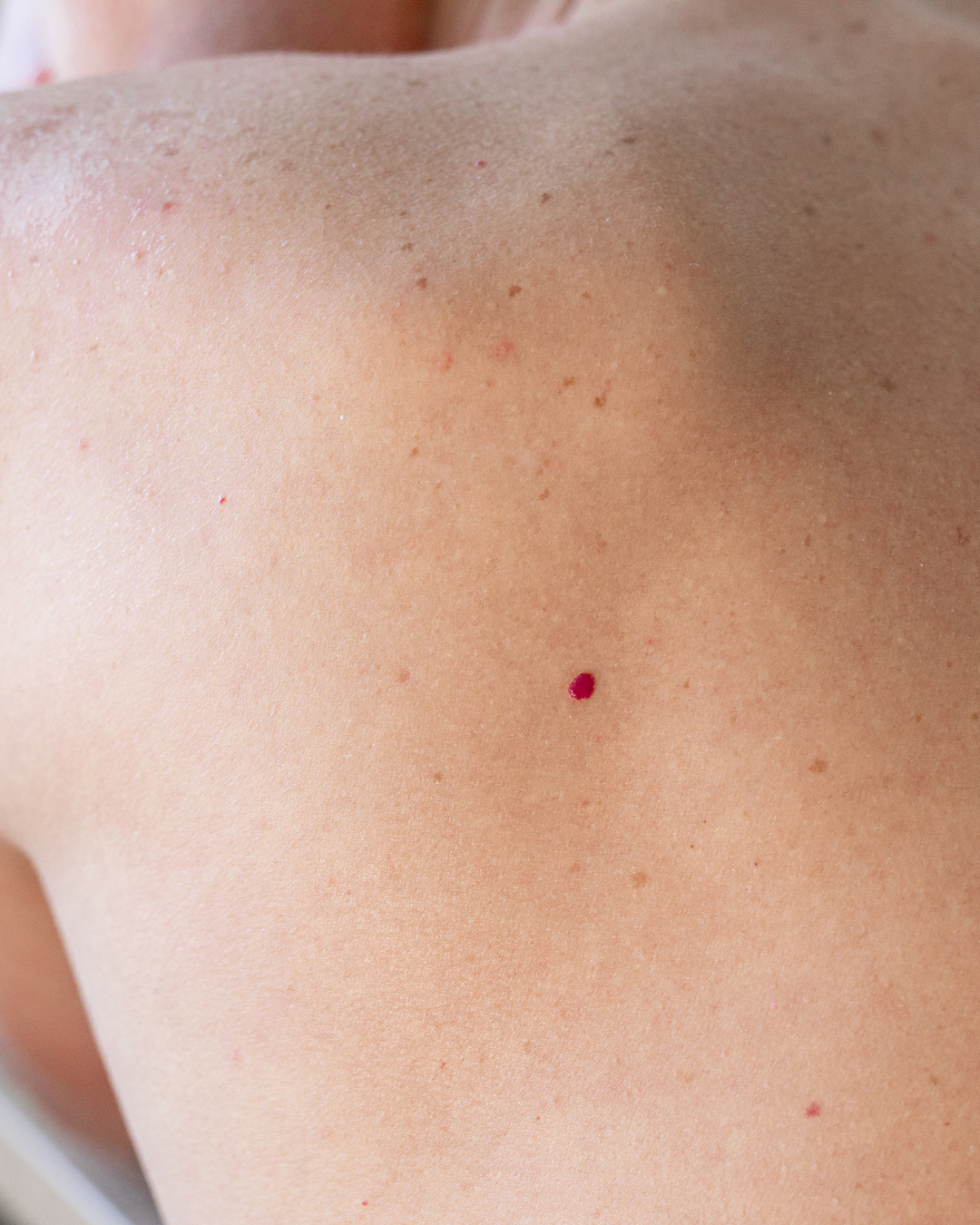
During winter, small skin lesions often hide under jumpers, scarves and long sleeves.
By June, everything changes.
Patients start noticing tiny raised tags around the neck, underarms, bra line, chest, abdomen or groin. Others notice small red dots on the chest, torso, shoulders or arms. These may be cherry angiomas, also called Campbell de Morgan spots or, more casually, blood spots.
Neither skin tags nor cherry angiomas usually need removing for medical reasons, but they are incredibly common reasons for cosmetic removal.
The most frequent things I hear are:
“I keep catching it on my necklace.”
“It bleeds when I shave.”
“I can see it in every holiday photo.”
“It makes me feel self conscious in swimwear.”
“I know it is tiny, but I just want it gone.”
That is completely reasonable. Small skin concerns can have a surprisingly large effect on confidence, especially before a holiday, wedding, birthday, hen do or summer event.
What are skin tags?
Skin tags are small, soft, harmless growths of skin.
They often look like little flaps or tags attached to the skin by a narrow stalk. They can be skin coloured, slightly darker or occasionally pinker if irritated.
They are most common in areas where skin rubs against skin, clothing or jewellery. Typical places include the neck, underarms, eyelids, bra line, groin and under the breasts.
Skin tags are benign, but they can become annoying. They may twist, catch, bleed, itch or become sore from repeated friction.
Although they are usually easy to recognise clinically, any lesion that is changing, pigmented, irregular, painful, ulcerated, rapidly growing or bleeding without obvious trauma needs proper medical assessment before cosmetic removal.
What are cherry angiomas?
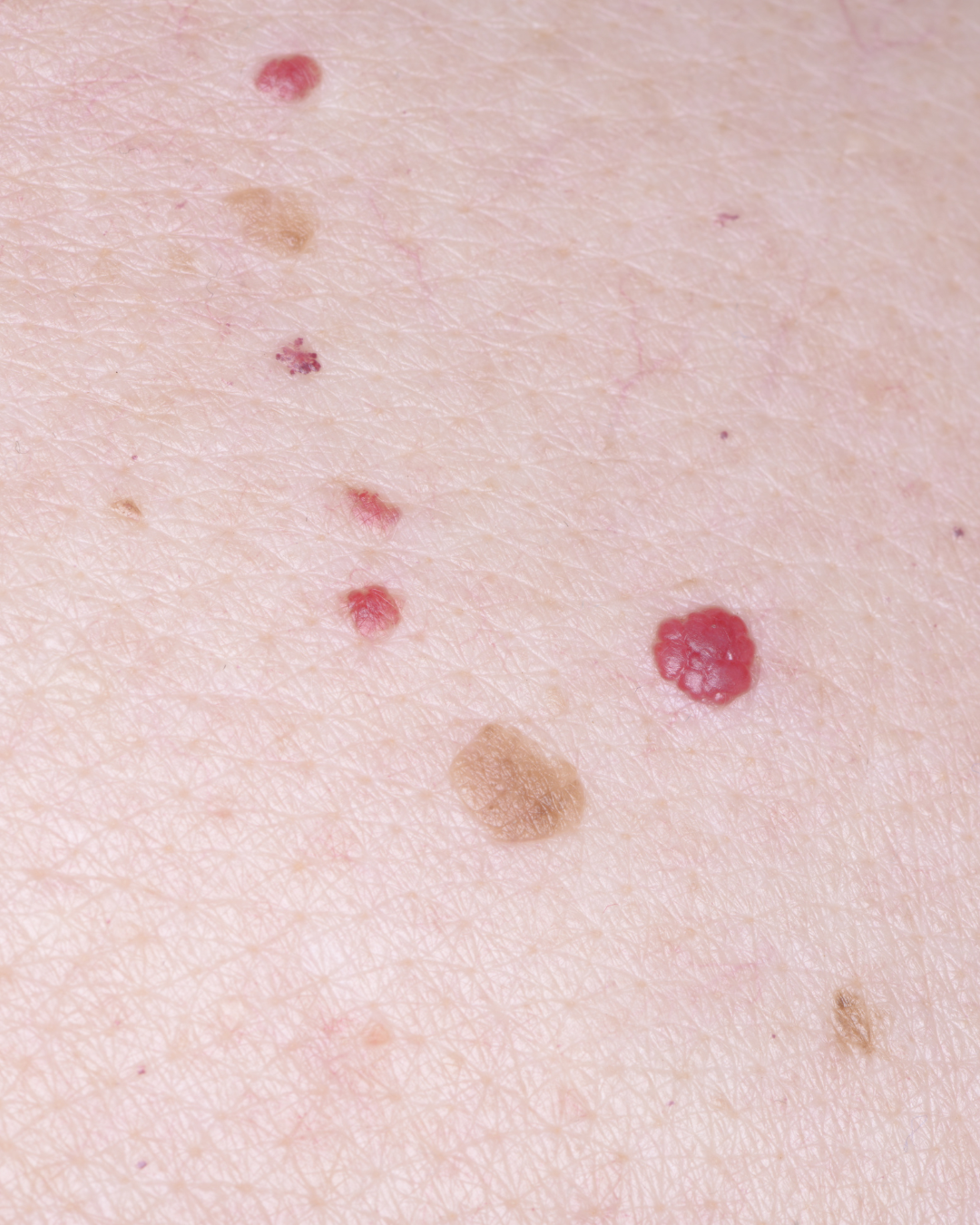
Cherry angiomas are small red, purple or cherry coloured vascular spots made up of tiny blood vessels.
They often appear on the chest, abdomen, back, arms and shoulders, and they become more common with age. Some people have one or two. Others develop lots.
They are usually harmless and do not need treatment. But because they are vascular, they can bleed if scratched, shaved over or knocked. They can also be very visible on pale skin, especially across the chest and décolletage.
Many patients call them red moles, blood spots or cherry spots.
The important thing is that not every red or dark lesion should be assumed to be a cherry angioma. If something is changing, irregular, crusting, ulcerating, bleeding repeatedly or does not look typical, it should be assessed medically and may need referral rather than cosmetic treatment.
Why remove them before a holiday?
The best reason is simple: it gives the skin time to settle before sun exposure, swimming, heat, fake tan and holiday photographs.
After electrocautery or advanced electrolysis, the treated area may look red, slightly darker, crusted or scabbed for a short period. This is part of normal healing. It is not usually dramatic, but it is still visible.
If you have removal done the day before flying, you may spend the first week of your holiday trying to protect, hide and not pick the area.
That is not ideal.
For most people, I would suggest booking removal around two to three weeks before a holiday where possible. This gives the skin a much better chance to heal and reduces the risk of irritation from sun, sweat, SPF, salt water, swimming pools and clothing friction.
If the area is large, delicate, frequently rubbed or very visible, it may be sensible to allow even longer.
Why two to three weeks before holiday is ideal
Two to three weeks is a practical window because it allows time for the initial healing phase.
Immediately after treatment, the area can look pink, white, grey, brown or crusted, depending on the lesion and technique used. A tiny scab may form. This should be left alone and allowed to come away naturally.
Picking early can increase the chance of delayed healing, pigmentation change or a more noticeable mark.
By booking a few weeks before travel, you give yourself time for:
initial redness to settle
small scabs to come away naturally
the skin barrier to recover
any tenderness or irritation to calm
safer use of SPF and clothing over the area
less worry about pool water, sweat and sun exposure
It is still important to protect the area from UV while it is healing. Freshly treated skin is more vulnerable to pigmentation change, especially on the chest, neck and face.

How are skin tags and cherry angiomas removed?
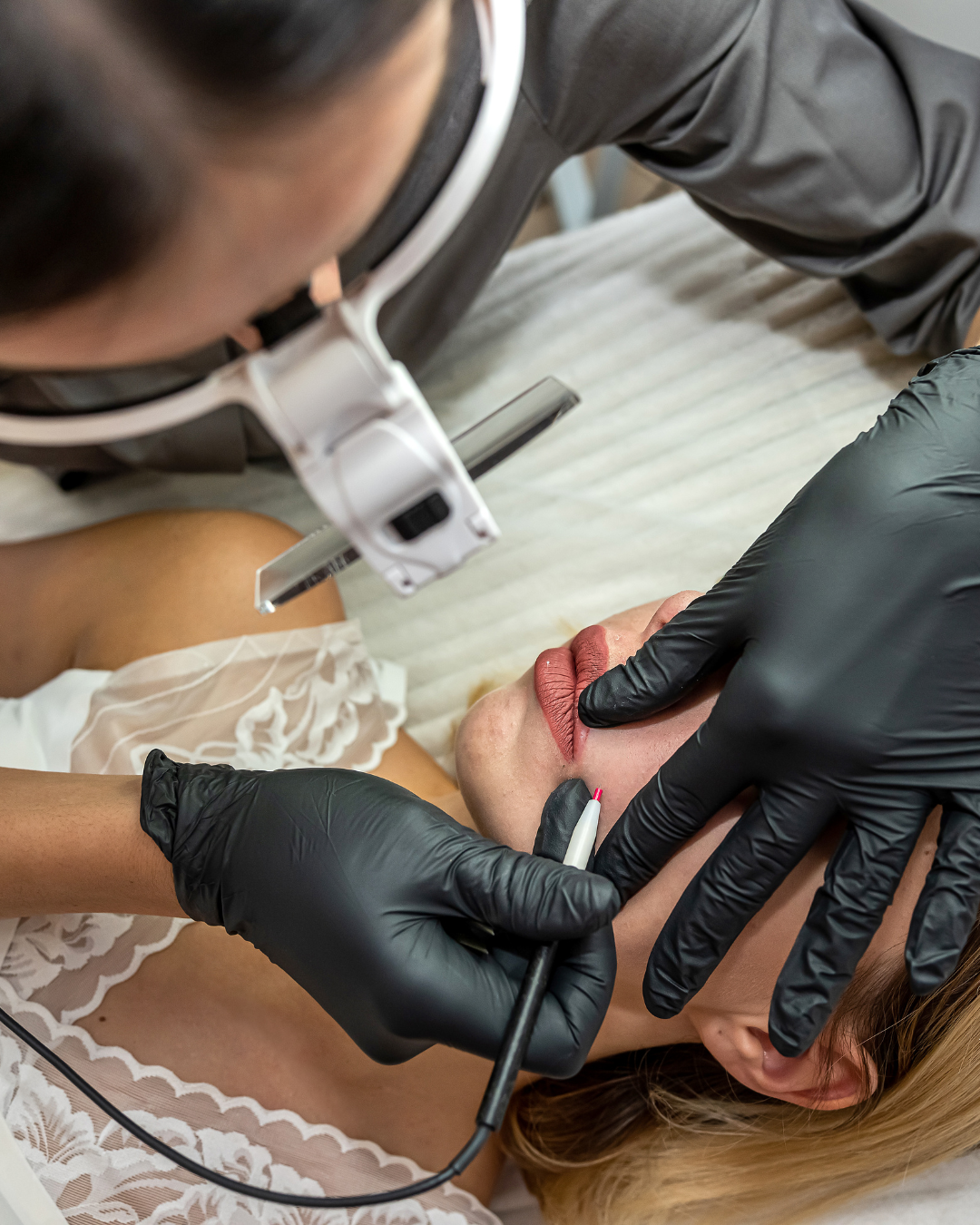
At Dr Caroline Warden Skin & Aesthetic Clinic, suitable benign lesions can be treated using advanced electrolysis or electrocautery.
This uses controlled heat energy to treat tiny areas of tissue very precisely.
For a skin tag, treatment often works by drying or cauterising the narrow attachment, the stalk, so the tag can shrink away or be removed. Some patients describe this as the “jacket coming off” effect, because the loose outer tag is treated at its base and the skin heals beneath.
For a cherry angioma, the heat is used to target the tiny vascular spot. The treated area may darken temporarily, crust and then gradually settle as the skin heals.
The appointment is usually short. The number of lesions that can be treated depends on size, location, complexity, sensitivity and whether anything needs further medical assessment first.
Does it hurt?
Most patients tolerate treatment well.
The sensation is often described as a hot scratch, tiny sting or quick zap. Very small lesions can be extremely quick to treat. More sensitive areas, such as the neck, chest, underarms or around the bra line, can feel sharper, but the discomfort is usually brief.
Topical numbing may be considered depending on the area, number of lesions and patient preference, although it is not always necessary for very small lesions.
What does the skin look like afterwards?
Immediately afterwards, the area may look red, slightly swollen, pale, grey, brown or crusted. That is expected.
Over the next few days, a small dry scab or crust may form. This should be kept clean, protected and left alone. It is tempting to pick, especially when the scab looks tiny, but picking is one of the biggest reasons for prolonged redness or pigmentation change.
Healing varies from person to person and depends on the site treated. The chest, neck and areas of friction can sometimes stay pink for longer than expected. This is not necessarily a problem, but it is why timing before a holiday matters.
Can I go in the sun afterwards?
I advise caution with sun exposure after treatment.
Freshly treated skin is more delicate and more likely to pigment if exposed to UV. If you are having lesions removed before a sunny holiday, you need to be prepared to protect the area properly.
That means high factor SPF, shade where possible, protective clothing if needed and avoiding deliberate tanning over the treated area while it is healing.
Fake tan should also be avoided directly over newly treated skin until the surface has healed, because it can irritate and catch in crusted areas.
Can I swim afterwards?
I would avoid swimming pools, hot tubs, saunas and open water while the area is still open, crusted or not fully healed.
This is mainly to reduce irritation and infection risk. Once the skin has sealed and the crust has come away naturally, normal activity can usually resume, but individual aftercare may vary depending on the site and treatment.
If you are going on holiday shortly after treatment, it is worth discussing your travel date at the appointment so the plan can be adapted sensibly.
Why not remove it yourself?
Please do not tie, cut, burn, pick, freeze or use internet removal kits on lesions at home.
There are several reasons.
First, diagnosis matters. A skin tag, mole, wart, seborrhoeic keratosis, angioma and skin cancer can sometimes be confused by non clinicians.
Second, home removal can cause bleeding, infection, burns, scarring or pigmentation change.
Third, if tissue is destroyed without proper assessment, it may delay diagnosis of something that needed medical attention.
Professional assessment and treatment is not just about making the skin look better. It is also about knowing when not to treat.

Who may not be suitable for cosmetic removal?
Treatment may not be appropriate if the lesion looks suspicious, is changing rapidly, is irregularly pigmented, repeatedly bleeds without trauma, is painful, ulcerated or difficult to diagnose.
Extra caution may be needed if you:
are pregnant
have a pacemaker or implanted electrical device
are prone to keloid or hypertrophic scarring
have poor wound healing
are immunosuppressed
are taking blood thinning medication
have active infection or inflammation in the area
have recently tanned or sunburnt skin
are about to go on a sunny holiday within a few days
Sometimes the safest and most professional advice is not to treat cosmetically and to recommend GP or dermatology review instead.
Case study, the pre holiday neck skin tag
A patient came to clinic before a summer holiday because a small skin tag on the side of her neck kept catching on necklaces and shirt collars. It had been there for years, but she had become more aware of it because she was going away and planned to wear her hair up.
The lesion looked typical of a benign skin tag. We discussed treatment, aftercare and the importance of not picking the tiny crust afterwards. Treatment itself took only a short time.
The key part was timing. She had booked a few weeks before travel, which meant the skin had time to settle before sun exposure, swimming and holiday photos.
This is exactly the kind of concern patients often think is too small to mention, but once it is dealt with safely, they are relieved they finally booked.
This example is representative rather than an identifiable patient, but it reflects a very common summer clinic request.

Why choose a doctor led clinic?
Skin lesion removal should be treated with respect.
Most skin tags and cherry angiomas are harmless, but that does not mean every bump or red spot should automatically be zapped.
At Dr Caroline Warden Skin & Aesthetic Clinic in Hale, your skin is assessed by a doctor before treatment. If something does not look suitable for cosmetic removal, or if there are features that require medical review, I will tell you.
The aim is safe, careful, appropriate treatment, not rushed removal of anything that appears on the skin.
Our clinic is female led, family run and appointment only, based in Hale, Cheshire, welcoming patients from Altrincham, Bowdon, Hale Barns, Timperley, Sale, Wilmslow, Knutsford, Stockport and across South Manchester.

Frequently asked questions
How long before holiday should I remove a skin tag?
Ideally, book around two to three weeks before travel. This gives the treated area time to crust, heal and settle before sun, swimming, SPF, heat and holiday photographs.
Can cherry angiomas be removed before summer?
Yes, if they are clinically suitable. Cherry angiomas are usually harmless vascular spots, but treatment should still be preceded by proper assessment, especially if a lesion is changing or atypical.
Will skin tag removal leave a scar?
Any procedure on the skin can leave a mark, but small skin tags often heal very well when treated carefully and aftercare is followed. The risk of a mark is higher if the area is picked, irritated, exposed to sun too early or slow to heal.
Do cherry angiomas come back?
A treated cherry angioma may settle well, but new cherry angiomas can develop elsewhere over time. Removal does not stop your skin from forming new ones.
Can I have lots treated at once?
Often, several small suitable lesions can be treated in one appointment, but this depends on size, location, sensitivity, healing considerations and whether all lesions look appropriate for cosmetic treatment.
Is treatment safe on the neck and chest?
The neck and chest are commonly treated areas, but they can be more prone to visible redness, pigmentation change and friction while healing. Careful aftercare and sun protection are especially important.
Can I wear fake tan afterwards?
Avoid fake tan directly over treated skin until the surface has healed fully. Fake tan can irritate broken skin and may collect around small crusts.
Can I exercise after treatment?
Light activity is usually fine, but heavy sweating, friction and tight clothing over the treated area may irritate healing skin. Advice depends on the area treated.
Can I go swimming after removal?
Avoid swimming pools, hot tubs, saunas and open water while the treated area is still crusted, open or healing.
Can skin tags be removed on the NHS?
Skin tag removal is usually considered cosmetic and is not generally available on the NHS unless there is a specific clinical reason or diagnostic concern.
When should I worry about a skin lesion?
Seek medical review if a lesion is changing, growing quickly, irregular in colour or shape, painful, ulcerated, bleeding without trauma, crusting repeatedly or looks different from your other marks.

Book skin tag and cherry angioma removal in Hale, Cheshire
If you are preparing for a holiday, wedding, summer event or simply want to feel more confident in your skin, you can book a consultation for skin tag or cherry angioma removal at Dr Caroline Warden Skin & Aesthetic Clinic in Hale.
For the best pre holiday timing, try to book around two to three weeks before travel where possible.
Dr Caroline Warden is an NHS GP and aesthetic doctor with nearly 20 years of medical experience. The clinic is doctor led, female led and family run, offering careful, honest and safety focused skin treatments in a quiet appointment only setting in Hale, Cheshire.
We welcome patients from Hale, Altrincham, Bowdon, Hale Barns, Timperley, Sale, Wilmslow, Stockport, Knutsford and across South Manchester.
Further Reading
If you found this useful, these related articles from the clinic explore common skin blemishes and safe, doctor-led removal.
- New Service Launch: Advanced Electrocautery Skin Treatments in Hale
- Cherry Angiomas (Blood Spots): Causes and When to Worry
- Skin Tag Removal in Hale and Altrincham
- Milia: What They Are and Safe Doctor-Led Removal
- Facial and Chest Thread Veins
Explore the treatment: Advanced Electrocautery for skin blemishes in Hale, Altrincham and Cheshire
Next steps

References and further reading
This article is for general educational information only and does not replace individual medical assessment. Any lesion that is changing, bleeding, painful, irregular, pigmented, ulcerated or difficult to diagnose should be medically assessed before cosmetic treatment.
