Last updated: 27 October 2026
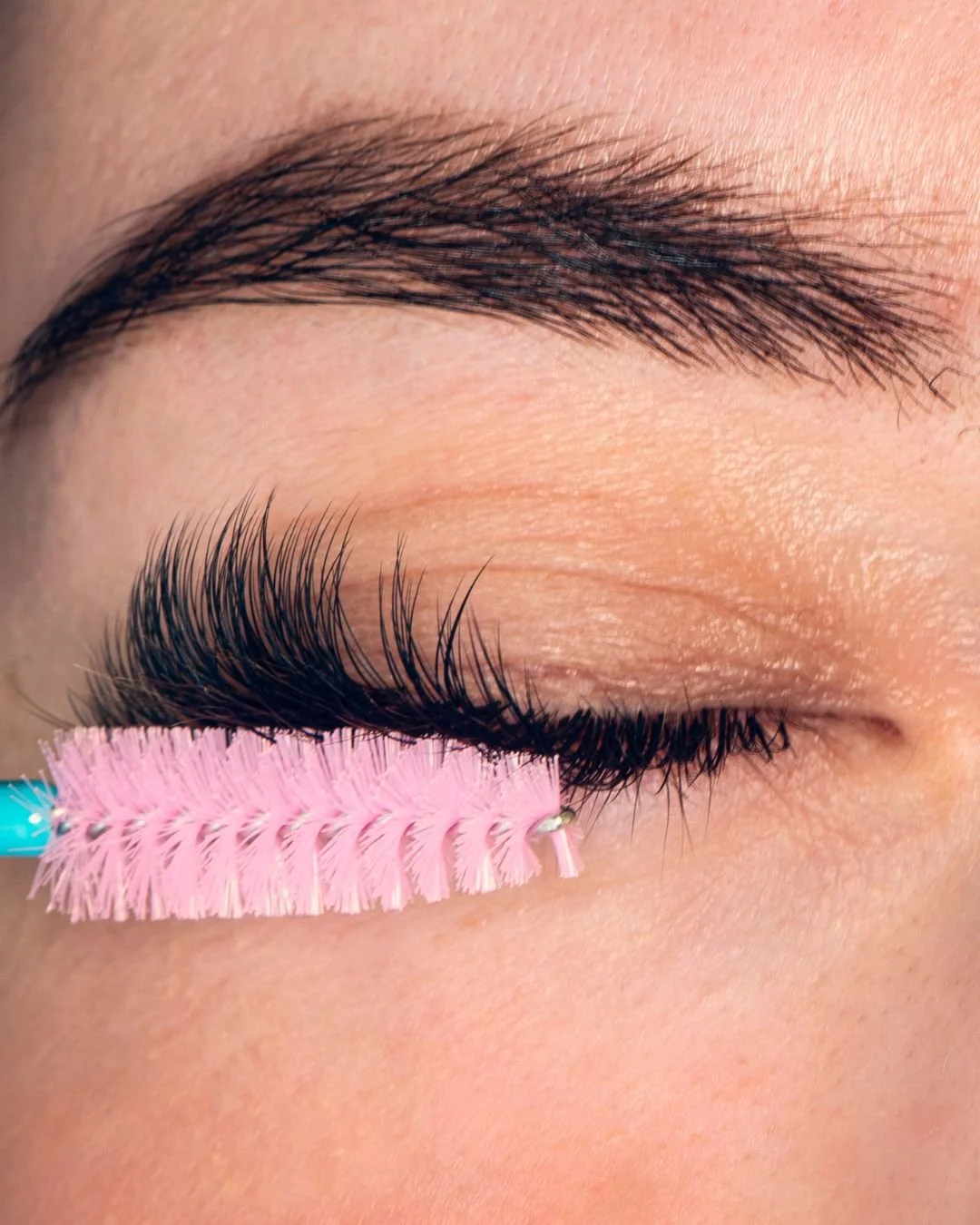
I have always had reasonable eyelashes, but I cannot tolerate false lashes for more than an hour and I disliked the lash lift process enough to never repeat it. So when lash and brow serums became something half my patients in Hale and Altrincham were asking about, I did what I do with every product I am asked to recommend: I read the ingredients and the evidence, and then I tested it on myself for twelve weeks.
The short answer is that the serums that visibly work mostly share one family of ingredients, and once you know which family, you know both why they work and what you need to be careful about. This article explains that, sets out the evidence and the side effects without flinching, and then gives you my own results with Obagi Nu-Cil, a serum I stock at the clinic and which, I should say plainly at the outset, belongs to that ingredient family.
In this article:
- How do lash and brow serums work?
- The ingredient that decides: prostaglandin analogues
- What the clinical evidence shows
- What is actually in Obagi Nu-Cil?
- Side effects and who should not use a prostaglandin serum
- What the regulators say
- My 12-week results with Nu-Cil
- How to use a lash serum safely
- Frequently asked questions
How do lash and brow serums work?
Every lash and brow hair moves through the same three-phase cycle: anagen, the growth phase, which for an eyelash lasts only a few weeks; catagen, a short transition; and telogen, the resting phase before the hair sheds and a new one begins. Lashes are short because anagen is short. A serum can only do three things: keep more hairs in anagen for longer, make each hair thicker and darker as it grows, or condition the hair shaft so fewer break off. The first two change the hair. The third changes how it looks.
Most serums on the shelf are a mix: conditioning ingredients on the front of the box, and a prostaglandin analogue somewhere in the ingredient list. The conditioning ingredients make the lashes look nice. The prostaglandin makes them grow.
The ingredient that decides: prostaglandin analogues
The story begins with glaucoma. Patients using prostaglandin eye drops such as latanoprost and bimatoprost to lower eye pressure noticed, as a side effect, that their lashes grew longer, thicker and darker. The drug company turned the side effect into a licensed product, and the cosmetics industry followed with chemical cousins of the same molecules at cosmetic concentrations, which is how a pharmacologically active glaucoma derivative came to be sold next to mascara.
These analogues are potent at very low concentrations, which is the point, and they are applied millimetres from the eye, which is the problem. The European Scientific Committee on Consumer Safety, asked to assess them, described the class this way:
"Prostaglandins and synthetic analogues are widely known to be potent pharmacologically active substances."
Scientific Committee on Consumer Safety, Opinion SCCS/1635/21, 2022
None of this means the serums are dangerous for everyone. It means they are active products with real effects and real side effects, and should be chosen and used that way, rather than as a cosmetic conditioner.
What the clinical evidence shows
For prescription bimatoprost, the evidence is excellent and gives us the benchmark for what a prostaglandin serum can do.
That was a randomised, double-blind, placebo-controlled trial of 278 adults published in the Journal of the American Academy of Dermatology in 2012, funded by the manufacturer. A smaller randomised trial found the same drug improved sparse eyebrows. The effect wears off over two to three months when you stop.
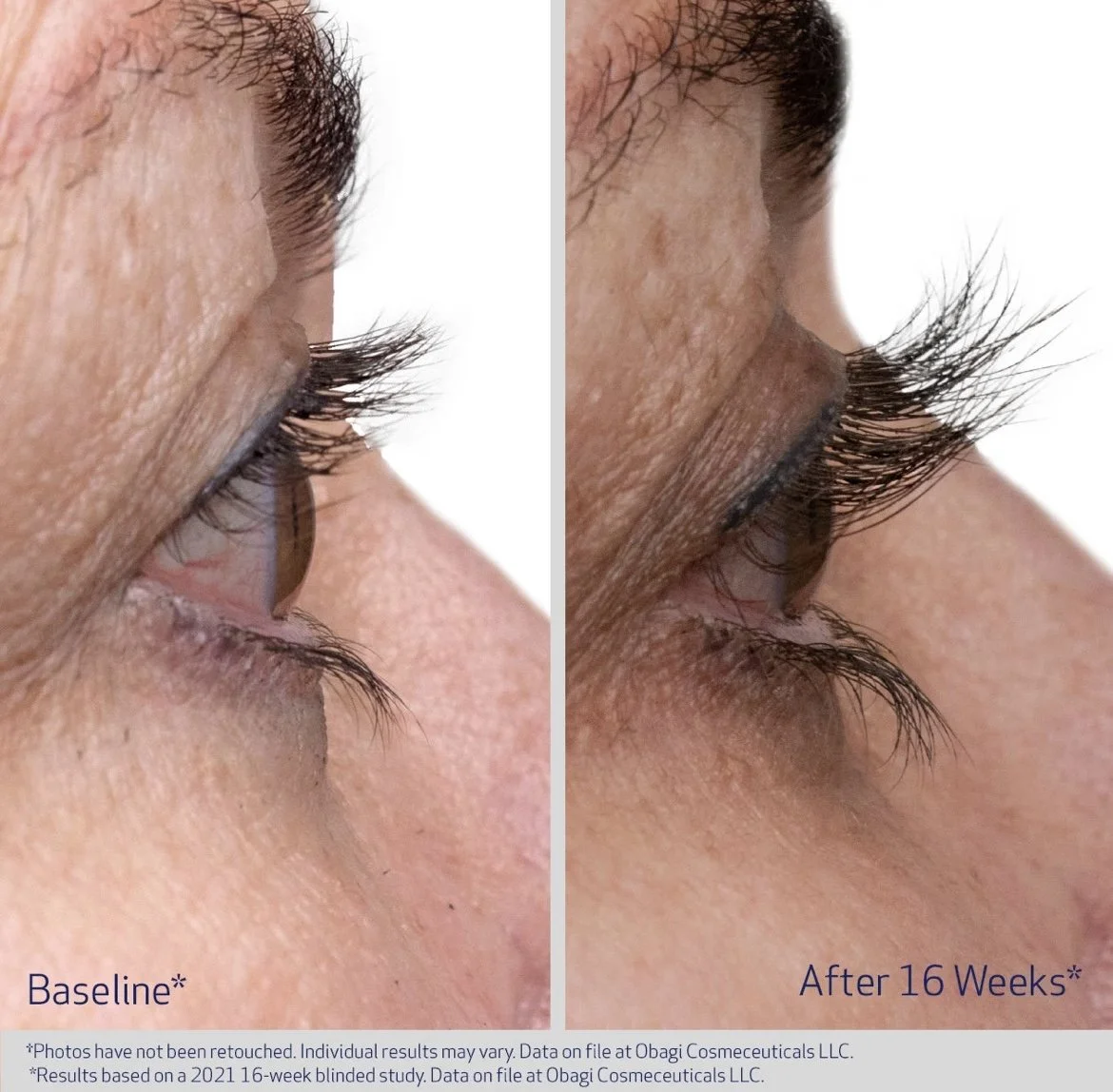
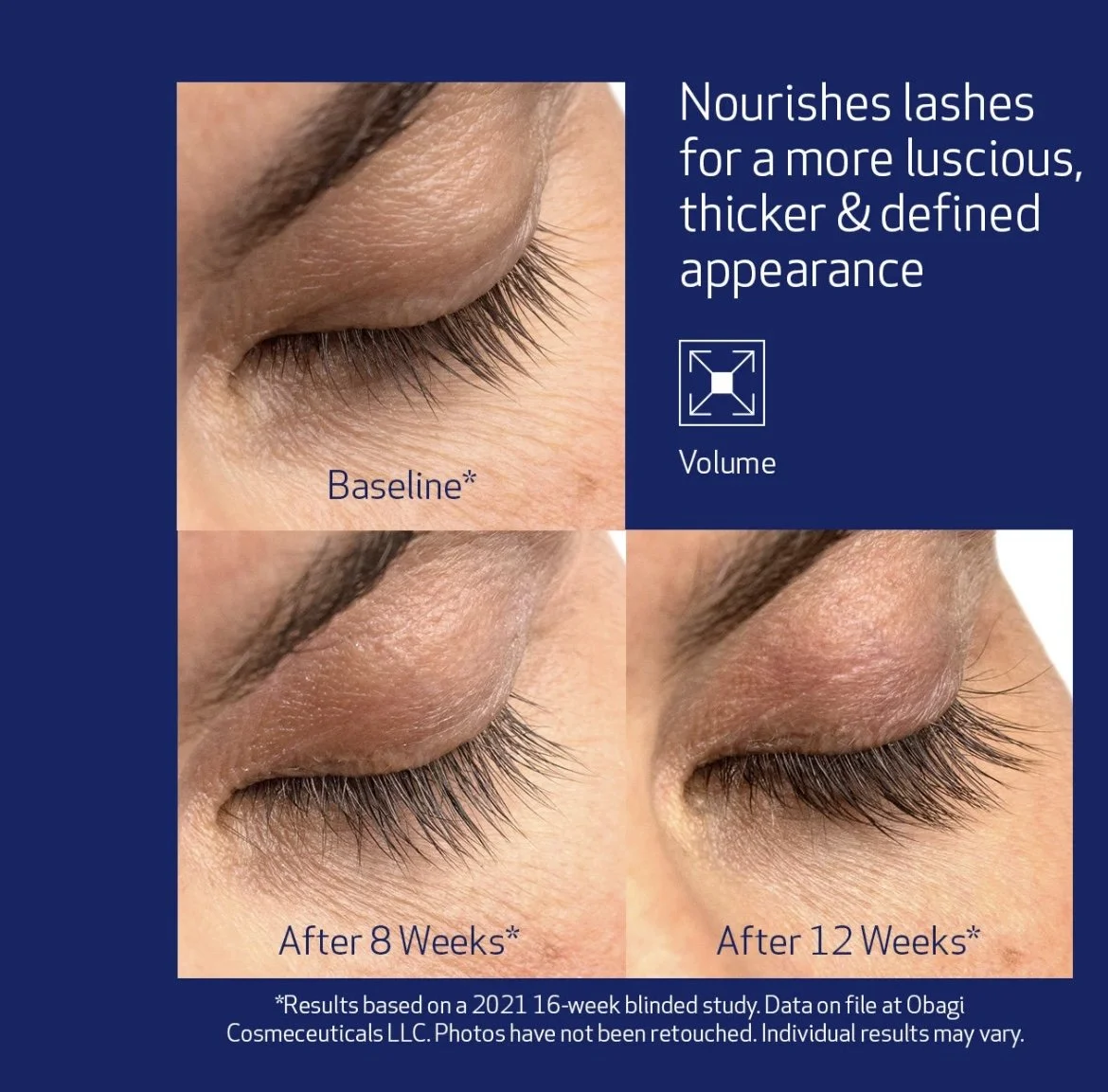
For the cosmetic analogues, including the one in Nu-Cil, the evidence is thinner and comes from manufacturers rather than independent trials. Obagi reports a 16-week double-blind study in which 93% of participants said their lashes showed visible improvement and 89% said they looked thicker and more densely packed, and a 12-week brow study with high response rates; both are data on file with the company. Given the shared mechanism, results of that order are plausible, but they are the brand's figures, not peer-reviewed ones.
For pure conditioning serums, there is no trial showing lash growth. They can make lashes look better. They do not make more of them.
What is actually in Obagi Nu-Cil?
I stock Nu-Cil and I use it, so this section is written against my own commercial interest, which is the only way it is worth writing.
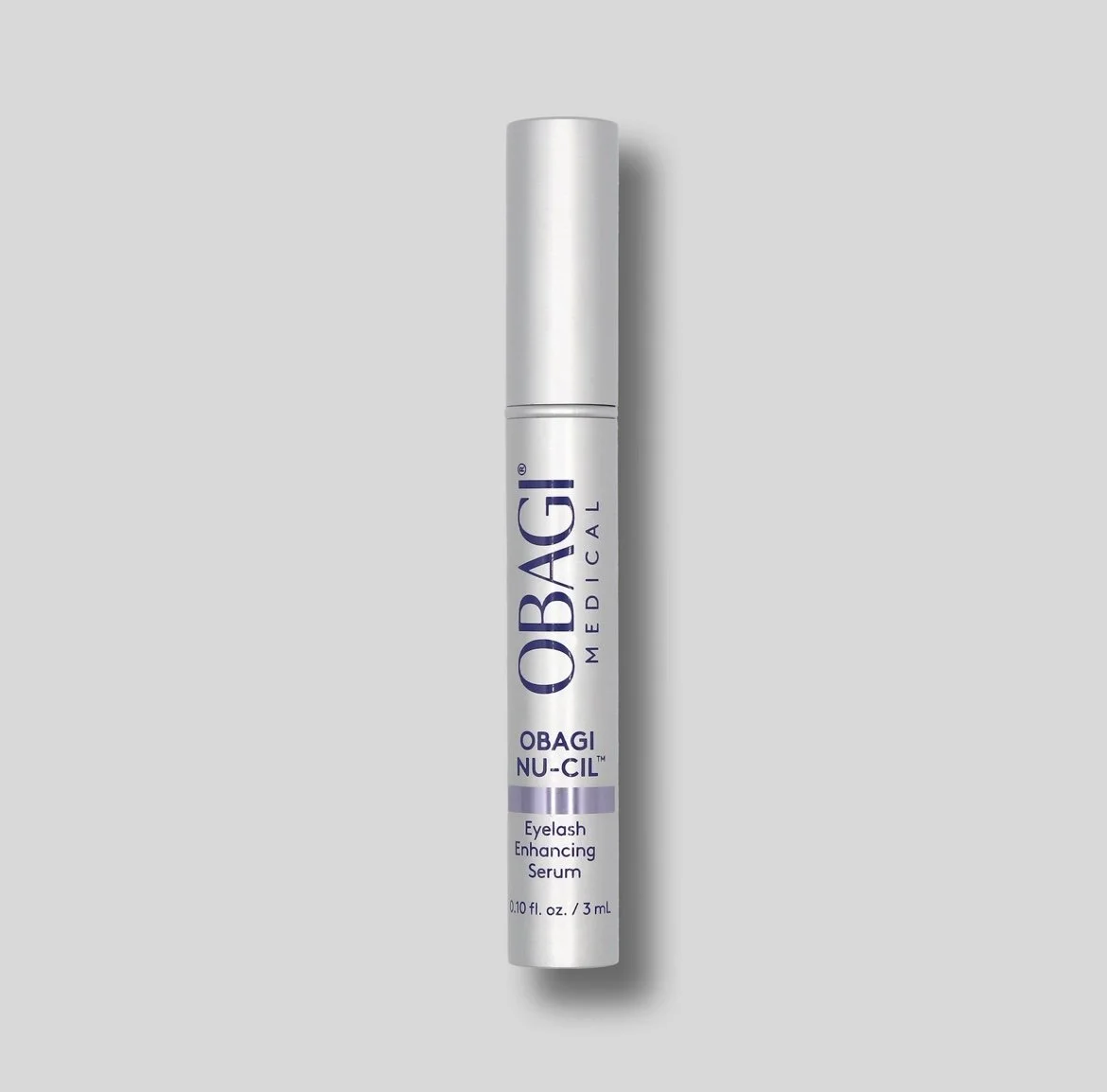
Obagi describes Nu-Cil's active complex, NouriPlex, as a blend of biotin, panthenol, sodium hyaluronate and "a proprietary lipid compound". The full ingredient list names that compound: dehydrolatanoprost, listed second after water. Dehydrolatanoprost is a derivative of latanoprost, the glaucoma drug, and it is a prostaglandin analogue. In other words, Nu-Cil is a prostaglandin-analogue lash serum, which is why it works and why the warnings on its packaging read the way they do.
I say this not to put you off the product, which gave me a good result, but because a doctor recommending it should tell you what it is. If you have read elsewhere, including in an earlier version of this article, that Nu-Cil works by conditioning alone, that was wrong, and I have corrected it. [If the UK-supplied formula differs from the US ingredient list, amend this section accordingly before publishing.]
Side effects and who should not use a prostaglandin serum
This applies to every lash and brow serum containing a prostaglandin analogue, Nu-Cil included, and it comes from the prescription drug data and the manufacturers' own warnings.
Do not use a prostaglandin-analogue serum if you are pregnant, breastfeeding or trying to conceive; have glaucoma, raised eye pressure or use any prescription eye drops; have had eye surgery, uveitis or macular problems; have an active eye infection, blepharitis flare or eczema on the lids; or are undergoing cancer treatment. If you are prone to dry eyes or styes, check with your GP or optician first. Remove contact lenses before applying and wait fifteen minutes before reinserting.
What the regulators say
You should also know that the regulatory position on these ingredients in cosmetics is unsettled, and moving in one direction.
Dehydrolatanoprost, the analogue in Nu-Cil, was not among the three the European committee assessed by name. It belongs to the same class with the same pharmacology, and I would treat the committee's reasoning as applying to it until shown otherwise. I will update this article if the UK position changes.
My 12-week results with Nu-Cil
With all of that said, here is what happened when I used the lash and brow serums nightly for twelve weeks, knowing what was in them, with photographs at the start, at six weeks and at twelve. These are one person's results and no more.
I had no irritation, no redness, no darkening of the lid skin and no change to my eye colour. I was careful about application, which I think matters a great deal, and I had none of the risk factors above. The result was exactly what the mechanism predicts: a natural but real increase in density and a modest gain in length, building from about week six.
Would I recommend it? Yes, to the right person: an adult with none of the exclusions above, who understands that this is an active prostaglandin-analogue product rather than a conditioner, who will apply it precisely, and who is prepared to stop if her eyelids darken or her eye area begins to hollow. For someone who wants shinier, better-behaved lashes with no pharmacological activity at all, a conditioning serum is the right choice, and I would say so.
How to use a lash serum safely
A lash serum that works is a medicine in a cosmetic bottle. Use it with the respect you would give the medicine, and it is a very good product.
Frequently asked questions
Do eyelash serums actually work?
The ones containing a prostaglandin analogue do, with good evidence for the prescription version and manufacturer evidence for the cosmetic ones. Conditioning-only serums improve the look of lashes but have no evidence of growth.
Does Obagi Nu-Cil contain a prostaglandin?
Yes. Its active "proprietary lipid compound" is dehydrolatanoprost, a prostaglandin analogue related to the glaucoma drug latanoprost. That is why it works and why its packaging carries prostaglandin warnings.
How long before I see results?
Lashes typically show change at six to eight weeks with best results by twelve to sixteen. Brows are slower, eight to twelve weeks or more. The cycle is the limiting factor, and no serum can hurry it.
Will my lashes go back to normal if I stop?
Yes, over two to three months as the hair cycle turns over. Maintenance every other night preserves most of the result.
Can a lash serum change my eye colour?
Permanent darkening of the iris is a documented effect of prostaglandin analogues. It is rare when the product is applied correctly to the skin of the upper lid and never inside the eye or on the lower lid, but it is why those application rules matter.
Can lash serums cause hollow eyes?
Loss of fat around the eye is a recognised effect of prostaglandin glaucoma drops and has been reported with lash use of the same drug. It is uncommon and slowly reversible on stopping. Watch for a deeper upper lid in your progress photographs.
Are prostaglandin lash serums banned?
Not in the UK as of this update. Canada banned one in 2019, and the EU's scientific committee has concluded that the three it assessed are not safe for cosmetic lash use, so an EU restriction is possible. I will update this article if the position changes.
Can I use a lash serum in pregnancy or while breastfeeding?
No. Prostaglandin analogues should be avoided entirely in pregnancy, when breastfeeding and when trying to conceive.
Can I use a lash serum with extensions or a lash lift?
Yes, but pause for 48 to 72 hours after the procedure, avoid saturating the adhesive area, and follow your technician's aftercare.
Is a prescription option available in the UK?
Bimatoprost 0.03% is licensed for lashes in the US and can be prescribed off-licence in the UK by a doctor who has assessed you. It has the strongest evidence and the same side-effect profile. Discuss it with your GP or at a consultation.
Further reading
- We Are Now an Official Obagi Ambassador Clinic
- Is Your Obagi Genuine? How to Buy Obagi Safely in the UK
- Skincare Ingredients I Would Be Careful With
- Hair Loss: Shedding vs Thinning and What Actually Helps
- Under-eye treatment in Hale, for the skin around the lashes
- Medical-grade skincare in Hale, where Nu-Cil fits into a routine
Next steps
Learn more about Dr Caroline Warden Clinic
Learn more about other treatments offered
About the author
Dr Caroline Warden is an NHS GP with nearly twenty years in medicine, an independent prescriber, and holds a Level 7 postgraduate diploma in cosmetic injectables. She is the sole treating practitioner at Dr Caroline Warden Skin & Aesthetic Clinic, 2 Crown Passages, Hale, Altrincham, Cheshire, an official Obagi Ambassador clinic. GMC number 6157708. The clinic stocks and sells Obagi Nu-Cil; the results described are the author's own, and the clinical study figures quoted for Nu-Cil are the manufacturer's data on file.
References
- Smith S, Fagien S, Whitcup SM, et al. Eyelash growth in subjects treated with bimatoprost: a multicenter, randomized, double-masked, vehicle-controlled, parallel-group study. Journal of the American Academy of Dermatology. 2012;66(5), pages 801 to 806. Read the abstract.
- Beer KR, Dunn M, Wilson F. Treatment of eyebrow hypotrichosis using bimatoprost: a randomized, double-blind, vehicle-controlled pilot study. Dermatologic Surgery. 2013. Read the study.
- Sira M, Verity DH, Malhotra R. Topical bimatoprost 0.03% and iatrogenic eyelid and orbital lipodystrophy. Aesthetic Surgery Journal. 2012. Read the abstract.
- Scientific Committee on Consumer Safety. Opinion on prostaglandins and prostaglandin-analogues used in cosmetic products, SCCS/1635/21, adopted 3 February 2022. Read the opinion.
- Scientific Committee on Consumer Safety. Further opinion on prostaglandin analogues in cosmetics (IPCP, DDDE and MDN), 2025 to 2026, summarised by ChemLinked. Read the summary.
- Obagi Nu-Cil Eyelash Enhancing Serum: full ingredient list, clinical claims and warnings as published by an authorised retailer. Read the listing.
- Obagi Medical releases new Nu-Cil eyelash serum. Aesthetics Journal. Read the article.

