Cherry Angiomas (Blood Spots): Causes, When to Worry & Doctor-Led Electrocautery in Hale, Cheshire
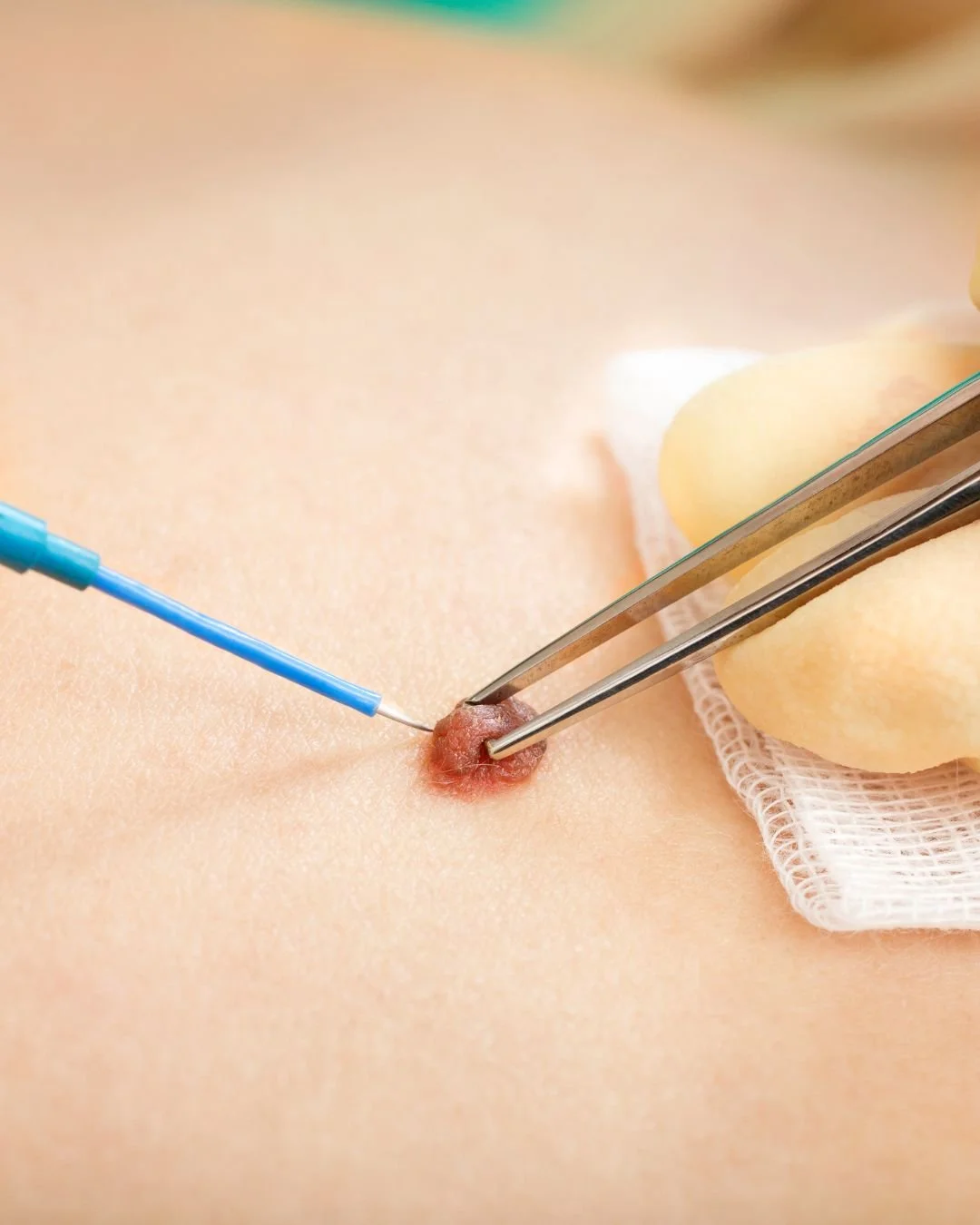
Cherry angiomas (often called blood spots or red moles) are one of the most common benign vascular lesions I see in clinic. They’re harmless, very common, and yet understandably frustrating when they multiply on the chest, abdomen, arms or face.
If you’re noticing new red dots appearing over time (or you’ve had them for years and want them removed safely), this guide explains what they are, why they happen, and how we treat them with medical electrocautery in our doctor-led clinic in Hale, Cheshire.
What Are Cherry Angiomas?
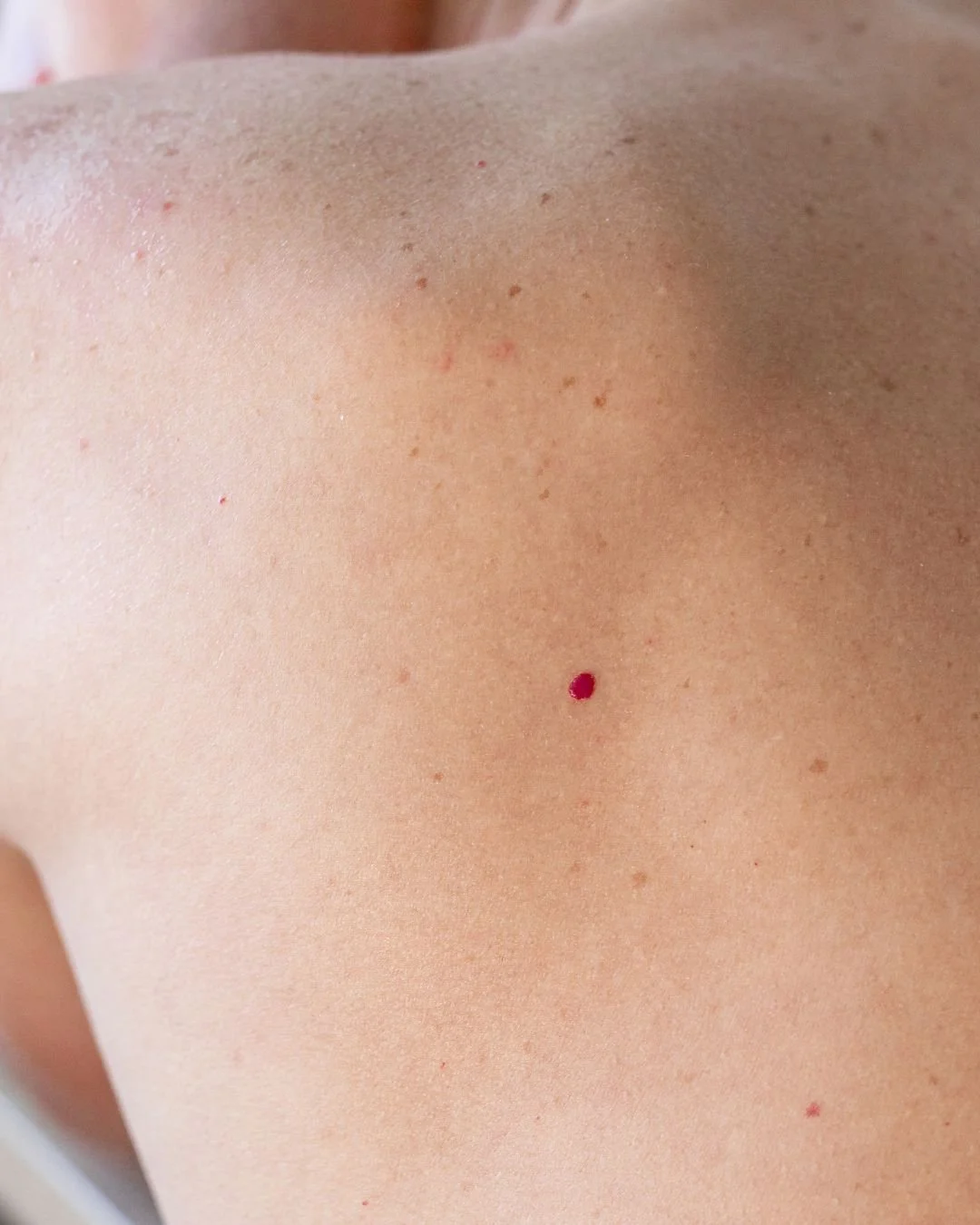
Cherry angiomas are benign (non-cancerous) clusters of tiny blood vessels in the skin. They typically look like:
Bright red, ruby or purple dots
Flat or slightly raised
Smooth surface
Usually 1–5 mm, sometimes larger
They’re also known as Campbell de Morgan spots. (DermNet®)
They are not contagious and are not skin cancer—but they can increase in number as we age. In fact, they’re extremely common in later life. (Patient)
Why Do Cherry Angiomas Appear?
There isn’t one single cause, but common contributing factors include:
Ageing (more common after 30–40 and increase over time) (Patient)
Genetics (often run in families) (DermNet®)
Hormonal influences (pregnancy-related associations are reported) (Patient)
General health/immune factors (reported associations in certain groups, though uncommon) (Patient)
Once they appear, they don’t usually go away on their own.
When Should a “Blood Spot” Be Checked?
Most cherry angiomas are straightforward. That said, you should seek medical review if a lesion:
Changes quickly in size/shape/colour
Bleeds repeatedly without trauma
Looks very different to your other spots (“odd one out”)
Has diagnostic uncertainty
If I’m not happy it’s a typical cherry angioma on assessment, I won’t treat it cosmetically and will advise the appropriate next step. (Patient)
Can Cherry Angiomas Be Removed?
Yes—very effectively.
Treatment is cosmetic in most cases. Primary care dermatology resources commonly list removal options such as electrocautery/electrosurgery, curettage or laser, depending on lesion and location. (Patient)
Electrocautery for Cherry Angiomas: How It Works
At our Hale clinic we use medical electrocautery/electrosurgery to precisely treat the blood vessel cluster while protecting surrounding skin.
Electrocautery works by delivering controlled heat through a very fine tip to:
Seal the tiny abnormal vessels
Treat the angioma at its source
Minimise bleeding
Support clean healing
After treatment, the spot typically darkens and forms a small crust, which sheds over 1–2 weeks, revealing clearer skin underneath.

Why Choose Doctor-Led Electrocautery?
This is where safety matters—especially on the face, chest, neck, or near the eyes.
A doctor-led approach means:
Correct diagnosis first (treating the wrong lesion is a real risk with DIY/salon approaches) (NCBI)
Settings tailored to your skin type and healing history
Reduced risk of unnecessary trauma and avoidable pigment change
Appropriate aftercare and safety-netting
Important note: any treatment that uses heat (including electrosurgery) can carry a small risk of pigment change or scarring, which is why careful technique and aftercare are key. (PubMed)
What Can Be Treated in One Appointment?
One of the benefits of electrocautery is efficiency. In many cases, we can treat multiple benign lesions in one session (time and skin sensitivity dependent), for example:
Cherry angiomas + skin tags
Milia + blood spots
Thread veins + cherry angiomas
Everything is tailored—no “one-size-fits-all”.
Pricing & Appointment Details (Hale, Cheshire)
£220 – 30-minute appointment
Includes:
Doctor-led assessment and consent
Treatment time (often ~15 minutes within the appointment)
Add 15 minutes extra treatment time: £99
Ideal for multiple lesions or more than one area.
Follow-up session (if needed for persistent/larger lesions): £150
Usually spaced 4+ weeks apart.
Consultation-only: £75 (deducted from treatment cost if you proceed)
Patch Test Option (When Recommended)
If you have sensitive/reactive skin, eczema history, multiple allergies, poor wound healing—or you’d simply prefer caution—I may recommend a small test area first, then review at 3–4 weeks before treating more widely.
Healing & Aftercare
Most patients can return to normal activities immediately. You may notice:
Mild redness
Tiny crust/scab
Gradual fading over 1–2 weeks
Aftercare usually focuses on:
Gentle cleansing
Avoiding friction/heat for a short period
Strict SPF on exposed areas
Watching for rare infection signs
Cherry Angioma Removal in Hale, Cheshire
If you’re looking for safe, effective cherry angioma removal in Hale (near Altrincham / Cheshire) in a calm, discreet medical setting, we’re happy to guide you to the safest option for your skin.

Frequently Asked Questions
Are cherry angiomas dangerous?
No—these are benign vascular lesions. (DermNet®)
Do they come back?
A treated lesion usually doesn’t return, but new ones can develop over time.
Is electrocautery painful?
Most people describe a brief sharp heat sensation. It’s quick and typically very tolerable.
Can I remove them at home?
I don’t recommend it—misdiagnosis and scarring risk are higher without medical assessment. (NCBI)
References
DermNet NZ – Cherry angioma: https://dermnetnz.org/topics/cherry-angioma
Patient.info – Campbell de Morgan spots (cherry angiomas): https://patient.info/doctor/dermatology/campbell-de-morgan-spot
NCBI Bookshelf (StatPearls) – Cherry hemangioma: https://www.ncbi.nlm.nih.gov/books/NBK563207/
PCDS patient leaflet – Angioma: https://www.pcds.org.uk/patient-info-leaflets/angioma
PCDS clinical guidance – Cherry angioma: https://www.pcds.org.uk/clinical-guidance/cherry-angioma-syn-campbell-de-morgan-spot
PubMed – Review of treatment modalities for cherry angiomas: https://pubmed.ncbi.nlm.nih.gov/33252464/
NHS leaflet (PDF) – Campbell de Morgan spots: https://www.wwl.nhs.uk/media/.leaflets/5fdb5b2e03ea05.88377064.pdf
