Why Mounjaro Face May Be One of the Best Reasons to Consider Sculptra

The Weight Loss Success Story Nobody Talks About
Mounjaro has undoubtedly changed lives.
As both an NHS GP and aesthetic doctor, I have seen patients achieve remarkable improvements in their health through weight loss. Blood sugar control improves. Mobility improves. Confidence returns. Clothes fit differently. Many patients tell me they feel like themselves again.
But increasingly, there is one unexpected consequence that patients are mentioning in clinic.
"I love my weight loss, but I hate what it has done to my face."
They often arrive feeling conflicted.
Healthier than they have felt in years.
Yet somehow looking more tired in photographs.
More hollow. More drawn. Sometimes older.
Social media has labelled this phenomenon "Mounjaro face" or "Ozempic face", but whilst the name may be new, the underlying issue is not.
And interestingly, the treatment that may offer one of the most elegant solutions was never originally designed for cosmetic patients at all.

Mounjaro Is Not Ageing Your Face
This is one of the biggest misconceptions I hear.
Patients often assume the medication itself is somehow accelerating ageing.
In reality, Mounjaro is not damaging the face.
What it is doing is helping people lose weight, sometimes very successfully and very quickly.
The problem is that facial fat plays a surprisingly important role in how youthful we appear.
As we age, we naturally lose:
Collagen.
Skin thickness.
Bone support.
Facial fat.
Ligament support.
When weight loss is added on top of this, those changes can suddenly become much more obvious.
The cheeks may appear flatter.
The jawline may seem heavier.
The skin may appear looser.
Patients often tell me they look tired despite feeling better.
And honestly, I completely understand why this can feel frustrating.
The Treatment Was Never Designed for Aesthetic Patients
One of the most fascinating things about Sculptra is that it was never originally developed to help women and men look younger.
Its roots lie in HIV medicine.
During the late 1990s and early 2000s, doctors began seeing a distressing problem amongst patients living with HIV.
Many developed profound facial fat loss, known as facial lipoatrophy.
The hollowing could be severe. Patients often lost volume through the cheeks, temples and mid face, creating a gaunt appearance that affected confidence and quality of life.
In some cases, patients felt their facial appearance revealed their diagnosis before they had even spoken.
Doctors needed a solution.
Researchers began studying poly L lactic acid, the ingredient that would eventually become Sculptra.
What they discovered changed aesthetic medicine forever.
Rather than simply filling the face, poly L lactic acid appeared to stimulate the body's own collagen production, gradually rebuilding support within the tissues themselves.
Sculptra was subsequently approved to treat HIV associated facial lipoatrophy and became one of the most successful treatments available for facial volume loss.
Twenty years later, we are applying the same principle to a completely different group of patients.
People who have successfully lost weight and want their face to reflect how healthy they actually feel.

Why Mounjaro Face Is Not Just a Volume Problem
One of the biggest mistakes in aesthetics is assuming every hollow face needs filler.
Sometimes it does.
But very often, particularly after significant weight loss, the issue is more complex.
What I often see in clinic is a combination of volume loss, collagen loss, skin thinning and reduced structural support.
That distinction matters enormously.
Because whilst filler can replace volume, it does not necessarily improve the quality of the tissue itself.
Many patients tell me they do not actually want bigger cheeks.
They simply want to look healthier.
More rested.
Less tired.
More like themselves.
That is why regenerative treatments have become so exciting.
Why Sculptra Makes More Sense Than Simply Adding Filler
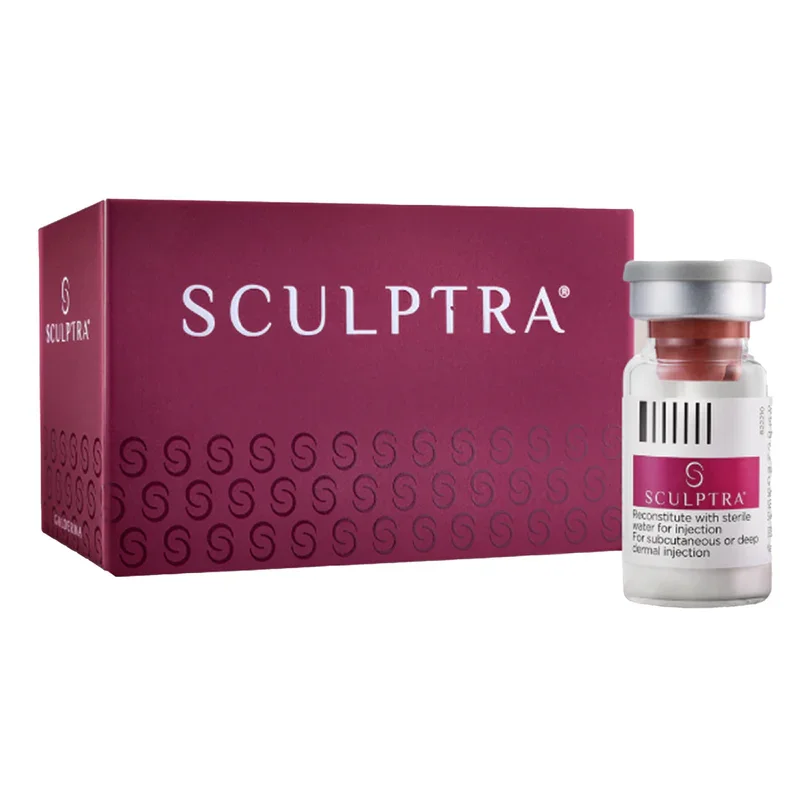
Unlike traditional filler, Sculptra does not primarily work by occupying space.
Instead, it encourages your body to gradually produce more collagen.
Collagen is one of the most important structural proteins in the skin. It helps maintain firmness, support and resilience.
Unfortunately, collagen production declines steadily with age.
When weight loss occurs on top of this, the effects can become much more noticeable.
Sculptra works by gradually rebuilding some of that support over several months.
The result is often not a larger face.
It is a healthier looking face.
Patients frequently tell me they look less drawn, less gaunt and less tired.
Friends often comment that they look well, without being able to identify exactly what has changed.
And honestly, those are usually my favourite results.
Why the Results Look So Natural
One of the reasons I love Sculptra is that it does not create dramatic overnight transformation.
Modern patients are increasingly nervous about looking overfilled.
They do not want obvious cosmetic work.
They do not want people asking what they have had done.
They simply want to look fresher.
Because Sculptra stimulates your own collagen gradually, the changes develop slowly over time.
There is no sudden shift in appearance.
Instead, the face gradually becomes more supported, more resilient and more youthful looking.
In many ways, it mirrors the way healthy ageing should look.
Subtle.
Elegant.
Natural.

Can Sculptra Replace a Facelift?
This is probably one of the most common questions I am asked.
The honest answer is no.
A facelift physically repositions tissues and removes excess skin.
Sculptra cannot do that.
However, in the right patient, it can create some of the softer improvements people are often hoping to achieve.
Improved facial support.
Better cheek structure.
Healthier skin quality.
Reduced facial hollowing.
Improved skin thickness.
More youthful facial proportions.
For patients who are not ready for surgery, it can be an incredibly attractive option.
A Case Study

Sarah, Age 51, Alderley Edge
Sarah attended clinic after losing over three stone with Mounjaro.
She was delighted with her weight loss and felt healthier than she had in years.
But every photograph seemed to tell a different story.
She felt her face looked tired and hollow.
When we assessed her face, the issue was not simply lost volume.
There was also reduced skin support, collagen depletion and early facial laxity.
Rather than trying to fill every hollow area, we discussed a regenerative approach using Sculptra.
Over the following months, Sarah noticed gradual improvements in facial support, skin quality and overall freshness.
The comments she received were not:
"You've had filler."
Instead they were:
"You look amazing."
"You look rested."
"You look really healthy."
And honestly, that is exactly what good aesthetic medicine should achieve.

Why I Believe Regenerative Aesthetics Is the Future
One of the reasons I have become increasingly passionate about treatments such as Sculptra is because I think the future of aesthetics is moving away from overfilling and towards regeneration.
Patients are becoming more educated.
They understand that ageing is not simply about wrinkles.
It is about tissue quality.
Collagen.
Skin health.
Structural support.
Longevity.
That is also one of the reasons both myself and Louise are proud Obagi Ambassadors.
We are passionate about combining regenerative treatments, evidence based skincare and collagen preservation to help patients age confidently and naturally.
Because ultimately, the goal is not to look different.
It is to look like the healthiest version of yourself.

Frequently Asked Questions
Does Mounjaro actually cause facial ageing?
No. Mounjaro does not directly age the face. Weight loss simply reveals age related changes that may have previously been less visible.
Was Sculptra really developed for HIV patients?
Yes. Sculptra was originally developed and approved to treat HIV associated facial lipoatrophy, a condition involving significant facial volume loss.
Is Sculptra filler?
Not in the traditional sense. Sculptra primarily works by stimulating collagen production rather than immediately replacing lost volume.
How long does Sculptra last?
Many patients enjoy results lasting around two years or longer, although maintenance treatments are usually recommended.
Am I too old for Sculptra?
Not necessarily. Many patients in their forties, fifties, sixties and beyond are excellent candidates.
Book a Consultation

If you have lost weight with Mounjaro and feel your face no longer reflects how healthy you feel, a consultation can help determine whether Sculptra may be suitable for you.
Dr Caroline Warden is an experienced NHS GP and aesthetic doctor with a strong focus on regenerative aesthetics, collagen stimulation and natural results. Alongside her sister Louise Devereux, she has created a female led, family run clinic in Hale, Cheshire focused on helping patients age confidently and naturally.
Patients travel to the clinic from Hale, Altrincham, Bowdon, Wilmslow, Knutsford, Sale and across Cheshire for bespoke, doctor led regenerative aesthetic consultations.